Bitcoin's legendary volatility has minted millionaires and wiped out fortunes in equal measure — but one deceptively simple strategy has consistently turned chaos into compounding wealth. Dollar-Cost Averaging (DCA) removes the impossible burden of timing the market and replaces it with disciplined, automated accumulation. With the Fear & Greed Index sitting at just 12 out of 100 as of April 2, 2026, understanding how to deploy capital systematically during extreme fear has never been more critical.
What Is Bitcoin DCA? Why Dollar-Cost Averaging Beats Lump-Sum Buying
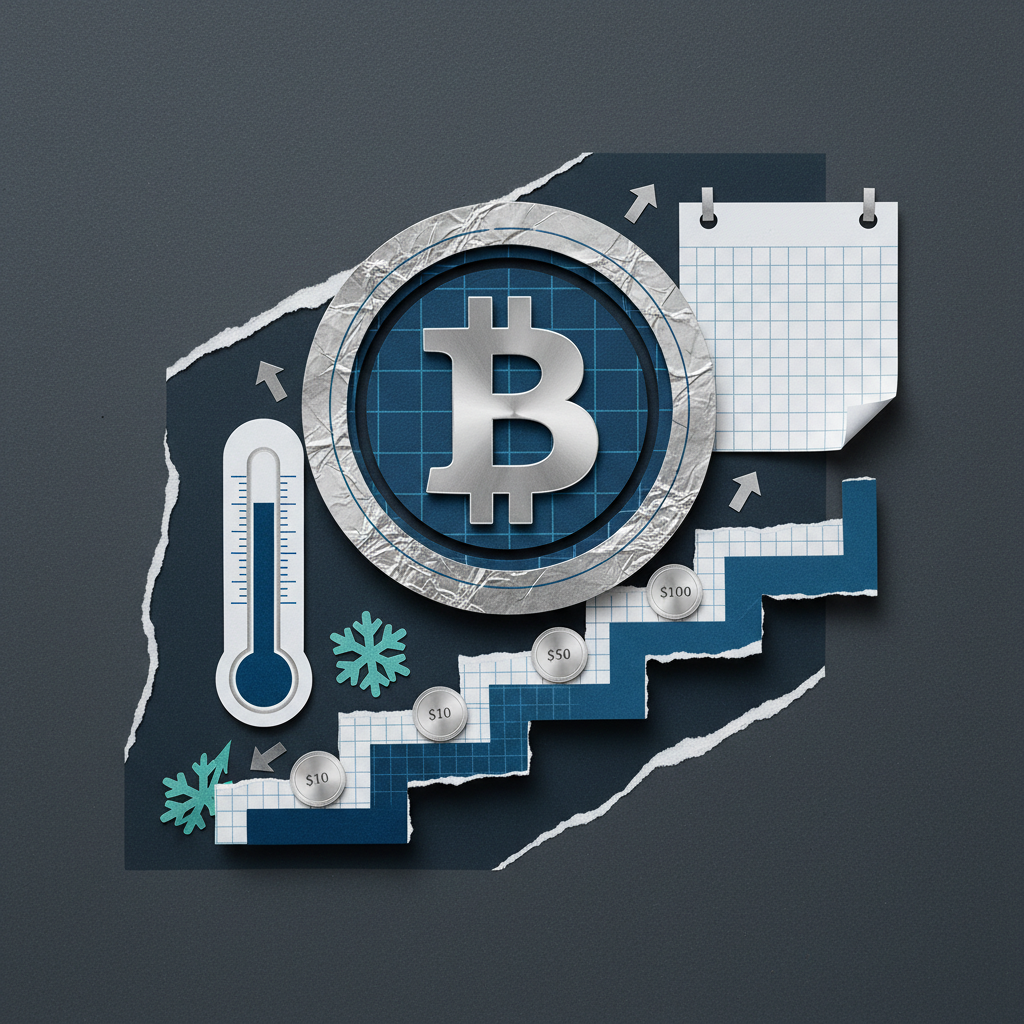
Quick Answer: Dollar-Cost Averaging (DCA) is an investment strategy where you buy a fixed dollar amount of Bitcoin at regular intervals — regardless of price. A 5-year weekly DCA of just $10 turned $2,620 into $7,913, delivering a 202% return that crushed gold (+34%), the Dow Jones (+23%), and even Apple stock (+79%) over the same period.
Dollar-Cost Averaging is a systematic investment strategy in which an investor allocates a fixed amount of capital to purchase an asset at predetermined intervals — weekly, biweekly, or monthly — regardless of the asset's current price. According to historical backtesting data compiled by Spoted Crypto, a five-year weekly DCA of $10 into Bitcoin from 2019 to 2024 transformed a total investment of $2,620 into $7,913.20, generating a 202.03% return. This performance demolished every major traditional asset class over the identical timeframe, underscoring Bitcoin's asymmetric upside when paired with disciplined accumulation rather than speculative lump-sum entries.
5-Year DCA Performance: Bitcoin vs. Traditional Assets
The numbers speak for themselves. While Bitcoin DCA investors more than tripled their capital, traditional asset holders experienced far more modest returns. The table below illustrates the stark divergence between a simple $10-per-week Bitcoin DCA and equivalent investments in legacy markets:
| Asset | Strategy | Total Invested | Final Value | Return (%) |
|---|---|---|---|---|
| Bitcoin (BTC) | Weekly $10 DCA (2019–2024) | $2,620 | $7,913.20 | +202.03% |
| Apple (AAPL) | Weekly $10 DCA (2019–2024) | $2,620 | ~$4,693 | +79.13% |
| Gold (XAU) | Weekly $10 DCA (2019–2024) | $2,620 | ~$3,523 | +34.47% |
| Dow Jones (DJIA) | Weekly $10 DCA (2019–2024) | $2,620 | ~$3,234 | +23.43% |
Extend the time horizon and the results become even more dramatic. A 12-year monthly DCA of $100 into Bitcoin — beginning in January 2014 — turned a cumulative $14,600 investment into approximately $994,950 by early 2026, according to Spoted Crypto analysis. That represents a staggering 6,712% return, a figure virtually unmatched by any publicly accessible asset class over the same period.
Why DCA Works Especially Well for Crypto Volatility
Bitcoin's volatility is precisely what makes DCA so powerful. When prices crash, fixed-dollar purchases automatically buy more satoshis. When prices surge, the same dollar amount buys fewer units, naturally reducing exposure to overvalued entries. This mechanical rebalancing exploits a mathematical principle called "variance drain" — in highly volatile assets, the geometric mean return (what investors actually earn) diverges significantly below the arithmetic mean. DCA counteracts this by systematically accumulating more units at lower prices, effectively lowering the average cost basis over time.
Michael Saylor, Executive Chairman of Strategy (formerly MicroStrategy) — a company holding over 500,000 BTC — captured this conviction when he stated: "Bitcoin is going to double or triple the performance of the S&P over the next four to eight years," as reported by Yahoo Finance. For DCA practitioners, such conviction is less about timing a single entry and more about maintaining systematic exposure to what Saylor views as a generational monetary shift.
The psychological advantage is equally significant. Bitcoin has experienced drawdowns of -83% (2018) and -78% (2022) from all-time highs, yet each bear market has been shorter than the last — 14 months, 13 months, then 12 months respectively. DCA investors who maintained their schedule through these drawdowns captured the subsequent 716% rally from the 2022 low without needing to predict the bottom. For investors looking to start building a Bitcoin DCA strategy, the current environment of extreme fear may offer the most favorable cost-basis window since November 2022.
How to Time Buys With the Fear and Greed Index: Why Extreme Fear Equals Opportunity
The Crypto Fear & Greed Index is a composite sentiment indicator scaled from 0 (extreme fear) to 100 (extreme greed), designed to quantify the emotional state of the market in a single actionable number. As of April 2, 2026, the index reads just 12 — marking 46 consecutive days in the "Extreme Fear" zone, the longest sustained period of peak pessimism since the FTX exchange collapse in November 2022, according to Spoted Crypto analysis. With Bitcoin trading at $67,305 on Binance and funding rates at a near-neutral 0.0035%, the derivatives market confirms that leverage has been flushed — historically a precondition for sustained recoveries.
The Five Components Behind the Fear & Greed Score
Understanding what drives the index empowers investors to interpret its signals rather than simply react to them. The index aggregates five distinct data streams, each weighted to capture a different dimension of market psychology:
| Component | Weight | What It Measures | Current Signal (Apr 2026) |
|---|---|---|---|
| Volatility | 25% | 30- and 90-day BTC volatility vs. historical averages | Elevated — BTC 24h range $67,050–$69,310 |
| Market Volume | 25% | Current volume vs. 30/90-day averages | BTC Binance volume $1.35B (declining) |
| Social Media | 15% | Twitter/Reddit crypto mention velocity & sentiment | Bearish — negative sentiment dominant |
| Surveys | 15% | Weekly crypto polling data (when available) | Pessimistic consensus |
| BTC Dominance | 20% | Bitcoin market share as a risk appetite proxy | 56.1% — flight-to-quality within crypto |
When all five components align toward fear — as they do now — the index compresses into single-digit or low-teens territory. It is precisely this confluence that has historically marked the most profitable accumulation windows for long-term holders.
Extreme Fear Buying: The Historical Performance Data
The data is unambiguous: buying Bitcoin when the broader market is paralyzed by fear has consistently generated outsized forward returns. According to historical analysis by Spoted Crypto, purchases made when the index dropped to 10 or below produced average returns of +18% within 30 days, +62% within 90 days, and +121% within 180 days. Even using the less extreme threshold of 15 or below, the probability of a positive 30-day return stood at 78% — meaning nearly four out of five times, the market was higher a month later.
Historical precedent reinforces these statistics. During the COVID-19 crash of March 2020, the Fear & Greed Index plunged to 8 while Bitcoin traded near $4,900 — six months later, BTC had surged 133%. When the FTX collapse drove the index to 10 in November 2022, Bitcoin bottomed at $15,500 and rallied 96% over the following six months. The current reading of 12, with Bitcoin at $67,305, represents a fundamentally different starting point — prices are already elevated — but the sentiment structure mirrors prior capitulation events that preceded significant upside.
Larry Fink, CEO of BlackRock — whose IBIT Bitcoin ETF now commands over $60 billion in assets — offered a framework that explains why fear-driven accumulation works: "Owning crypto assets or gold are assets of fear because you own these assets because you're frightened of the debasement of your assets," as reported by Cointelegraph. In other words, Bitcoin's appeal as "digital gold" intensifies precisely when macro uncertainty peaks — meaning periods of extreme fear are not reasons to sell, but structural catalysts for institutional and retail inflows alike.
For DCA investors, the tactical implication is clear: maintaining — or even increasing — regular Bitcoin purchases during extreme fear periods has historically been the single most impactful portfolio decision. Combining a systematic crypto DCA strategy with a sentiment-aware overlay — allocating additional capital when the index dips below 15 — transforms fear from a paralyzing force into a compounding advantage.
Historical Bear Market Comparison: How Bitcoin Recovered After Extreme Fear
Extreme fear in cryptocurrency markets has historically served as one of the most reliable contrarian indicators for long-term Bitcoin accumulation. Data from the Crypto Fear & Greed Index reveals that every instance where the index dropped below 15 over the past six years preceded a significant price recovery — with average 180-day returns exceeding +121%, according to SpotedCrypto analysis. During the March 2020 COVID crash, Bitcoin plummeted to $4,900 as the index hit a reading of 8, only to surge +133% within six months. The June 2022 Luna/Terra collapse drove Bitcoin to $17,600 with the index at 6, followed by a +96% recovery over the next 11 months. Most notably, the November 2022 FTX implosion sent Bitcoin to $15,500 at an index reading of 10, yet prices rebounded +96% in just six months. As of April 2, 2026, Bitcoin trades near $67,305 with the index at 12 — historically, the prelude to substantial recoveries.
Three Crises, Three Recoveries
The pattern across these crises is remarkably consistent. Regardless of the catalyst — a global pandemic, an algorithmic stablecoin collapse, or a centralized exchange fraud — Bitcoin's recovery trajectory followed a strikingly similar arc: a sharp drawdown to capitulation lows, followed by quiet accumulation and an aggressive rebound. The probability of achieving positive returns within 30 days of a sub-15 fear reading stands at 78%, according to historical Fear & Greed Index backtest data. At 90 days, average returns climb to +62%, and by the 180-day mark, the mean gain reaches +121%. These are not cherry-picked results — they represent the statistical baseline across every extreme fear episode since the index's inception.
| Crisis Event | Date | Fear & Greed Index | BTC Low | Peak Recovery | Recovery Timeframe |
|---|---|---|---|---|---|
| COVID-19 Crash | Mar 2020 | 8 | $4,900 | +133% | 6 months |
| Luna/Terra Collapse | Jun 2022 | 6 | $17,600 | +96% | 11 months |
| FTX Implosion | Nov 2022 | 10 | $15,500 | +96% | 6 months |
| Current Cycle (Apr 2026) | Apr 2026 | 12 | $67,305 | TBD | — |
Bear Market Duration Is Shrinking
One of the most encouraging structural trends in Bitcoin's market cycles is the progressive shortening of bear market durations. The 2014–2015 bear market lasted approximately 14 months from peak to trough. The 2018 cycle compressed to 13 months. And the 2022 bear market — from Bitcoin's $69,000 all-time high in November 2021 to its $15,476 low in November 2022 — lasted roughly 12 months, a -78% drawdown that nonetheless resolved into a staggering +716% rally to new highs. This compression suggests that as Bitcoin adoption deepens — with institutional vehicles like BlackRock's IBIT ETF now managing over $60 billion in assets — market participants are pricing in recoveries faster, and capitulation phases are resolving more efficiently with each successive cycle.
Where Does April 2026 Fit in This Pattern?
The current drawdown presents a fundamentally distinct profile compared to previous bear markets. Bitcoin sits at approximately $67,305 on Binance — roughly 47% below its all-time high of $126,000 and down 19.21% year-to-date. While the percentage decline from ATH is significant, the absolute price floor is orders of magnitude higher than any previous capitulation event, reflecting the maturation of Bitcoin as a macro asset class. The Fear & Greed Index has now registered extreme fear for 46 consecutive days — the longest streak since the FTX collapse in November 2022, according to SpotedCrypto tracking data.
Derivatives markets offer additional context. BTC perpetual funding rates on Binance currently sit at just 0.0035% — barely positive — while ETH funding has flipped negative at -0.0090%, signaling persistent short-side pressure across altcoins. Total crypto market capitalization stands at $2.40 trillion with BTC dominance at 56.1%, confirming that capital is consolidating into Bitcoin during this risk-off phase. For DCA practitioners, these conditions mirror exactly the type of extreme fear environments that have historically generated the strongest forward returns — and if the pattern holds, the current entry zone could prove to be among the most rewarding in Bitcoin's history.
DCA Setup Guide: Optimal Frequency, Amount, and Day of the Week
Dollar-cost averaging into Bitcoin is straightforward in concept — invest a fixed amount at regular intervals regardless of price — but the specific parameters of frequency, timing, and allocation can meaningfully impact long-term returns. A seven-year backtest from 2018 to 2025 conducted by dcaBTC reveals that investors who consistently purchased Bitcoin on Mondays accumulated 14.36% more BTC compared to those buying on other weekdays, primarily because Monday prices tend to be depressed following weekend sell-offs. Meanwhile, frequency analysis shows that weekly DCA consistently outperforms monthly DCA by 3–8% on an annualized basis across historical simulations using Binance spot data. The difference between daily and weekly DCA, however, is typically negligible — under 1% annually — making weekly purchases the optimal balance between performance and convenience. With Bitcoin at $67,305 amid a Fear & Greed reading of 12, calibrating your DCA parameters correctly could significantly amplify long-term compounding effects.
Weekly vs. Monthly vs. Daily: What the Data Shows
| DCA Frequency | Annualized Return Edge vs. Monthly | BTC Accumulated (per $100/mo) | Transaction Overhead | Recommended For |
|---|---|---|---|---|
| Daily | +0.5–1% (marginal) | Slightly more than weekly | Highest (30 txns/mo) | Advanced traders, API users |
| Weekly (Monday) | +3–8% | 14.36% more BTC (7yr avg) | Moderate (4 txns/mo) | Most investors ✓ |
| Monthly | Baseline | Baseline | Lowest (1 txn/mo) | Passive, set-and-forget |
The data speaks clearly. A weekly $10 DCA from 2019 to 2024 turned a total investment of $2,620 into $7,913.20 — a 202.03% return that crushed gold (+34.47%), Apple stock (+79.13%), and the Dow Jones (+23.43%) over the identical period. Weekly frequency captures more price volatility, allowing investors to buy more satoshis during dips and fewer during peaks — the mathematical core of why DCA works.
The Monday Advantage
The so-called "Monday effect" in Bitcoin markets is well-documented across multiple backtesting frameworks. Weekend trading volumes are typically thinner on centralized exchanges, and sell pressure from retail traders often pushes prices lower by Sunday evening UTC. By Monday morning, prices frequently sit near weekly lows before institutional trading desks resume activity. The dcaBTC seven-year backtest confirms this pattern conclusively: Monday buyers accumulated 14.36% more Bitcoin than the average across all other weekdays. If you can only choose one day for your weekly DCA, Monday offers a statistically significant and repeatable edge that compounds dramatically over multi-year horizons.
How Much to Invest: The 5–20% Rule
Financial advisors and crypto-native investment firms generally recommend allocating between 5% and 20% of discretionary income — money remaining after essential living expenses, emergency fund contributions, and debt payments — toward a Bitcoin DCA strategy. Conservative allocators targeting 5% maintain minimal portfolio risk, while more aggressive accumulators at 20% accept higher short-term volatility in exchange for greater long-term upside. The key principle is unwavering consistency: a $50 weekly DCA maintained through both bear and bull markets will outperform sporadic $500 lump-sum purchases over any multi-year horizon, because the investor who never misses a buy captures every capitulation discount the market offers.
Advanced DCA Variations: Value Averaging and Fear-Enhanced DCA
Beyond standard fixed-amount DCA, two enhanced strategies deserve serious consideration. Value Averaging (VA) adjusts each purchase amount dynamically to maintain a target portfolio growth rate — buying more aggressively when prices fall below the target trajectory and less when prices run above it. Backtests show VA typically outperforms standard DCA by 1–3% annually, though it requires more capital flexibility and active monitoring.
Fear-Enhanced DCA takes a more tactical approach: maintain your standard weekly purchase during normal market conditions, but double or triple the allocation when the Fear & Greed Index drops below 20. Given that extreme fear readings below 15 have historically produced positive 30-day returns 78% of the time, this strategy systematically increases exposure precisely when risk/reward is most favorable. With Bitcoin's current Fear & Greed reading at 12, Fear-Enhanced DCA practitioners would be deploying 2–3x their normal allocation right now. Major exchanges including Binance, Coinbase, Kraken, and OKX all offer automated recurring buy features with customizable frequencies and amounts — making standard DCA setup a one-time five-minute configuration, while Fear-Enhanced adjustments require only occasional manual top-ups during periods of extreme market stress.
Where to Store Your DCA Bitcoin: Custody Solutions for Long-Term Holders
Quick Answer: With $2.2 billion lost to crypto hacks in 2024 alone — including the record $1.5 billion Bybit breach — where you store your DCA Bitcoin matters as much as how you buy it. Hardware wallets show security incident rates below 5%, and 56.58% of users now prefer self-custody over exchange storage.
Custody strategy is the silent determinant of whether your dollar-cost averaging gains survive long enough to compound. The crypto industry suffered $2.2 billion in hacking losses during 2024, with major incidents including the DMM Bitcoin breach ($305 million) and BingX exploit ($52 million). Then in February 2025, the Lazarus Group executed the largest crypto heist in history, draining $1.5 billion in Ethereum from Bybit's cold wallet — confirmed by the FBI. For DCA investors who accumulate Bitcoin over months and years, these incidents illustrate a critical truth: exchange convenience comes with counterparty risk that can erase years of disciplined investing in a single exploit. With BTC trading at $67,305 today amid extreme fear (Fear & Greed Index: 12), protecting existing holdings is paramount.
Custody Methods Compared: Security vs. Convenience
According to CoinLaw, 56.58% of cryptocurrency users now prefer self-custody wallets, while only 26.97% favor keeping assets on exchanges. This shift accelerated sharply after the FTX collapse in 2022 and the subsequent Bybit breach. The data tells DCA investors a clear story: the market overwhelmingly favors taking personal control of private keys.
| Storage Method | Security Incident Rate | Best For | Key Risk |
|---|---|---|---|
| Exchange (Custodial) | Highest — $2.2B lost in 2024 | Small balances, active traders | Platform hack, insolvency |
| Software Wallet (Hot) | 15%+ incident rate | Mid-size holdings, DeFi access | Malware, phishing attacks |
| Hardware Wallet (Cold) | <5% incident rate | Long-term DCA accumulation | Seed phrase loss, physical damage |
| Multi-Sig Setup | Lowest — no single point of failure | Large portfolios ($50K+) | Complexity, key coordination |
The Optimal DCA Custody Workflow
Hardware wallets with air-gapped signing maintain a security incident rate below 5%, compared to over 15% for software-only solutions, according to CoinLaw research. For DCA investors, the ideal workflow is straightforward: execute your weekly or monthly purchases on a regulated exchange, then transfer accumulated Bitcoin to a hardware cold wallet once the balance exceeds a meaningful threshold — typically $500 to $1,000 to justify the network transaction fee. This "buy-and-sweep" approach minimizes exchange exposure while keeping your DCA execution frictionless.
The seed phrase backup remains the single most critical step. Store your 12- or 24-word recovery phrase on metal backup plates rather than paper, kept in a physically separate location from the device itself. For DCA portfolios that have grown substantially — remember, a 5-year weekly DCA strategy has returned 202% gains historically — consider a multi-signature configuration requiring 2-of-3 keys to authorize transactions, eliminating any single point of failure. If you're building a long-term crypto DCA strategy, securing your custody solution is not optional — it's foundational to preserving every dollar of compounded gains.
Exchange Fee Comparison: The Hidden Cost Eroding Your DCA Returns
Trading fees are the silent tax on every dollar-cost averaging purchase — and over years of compounding, they can carve thousands of dollars from your portfolio. A DCA investor making 52 weekly purchases per year pays fees 52 times, and the difference between a 0.10% maker fee on Binance and a 1.49% convenience fee on Coinbase compounds dramatically. On a $100 weekly DCA over five years ($26,000 total invested), that spread translates to roughly $360 in fees versus $5,200 — a 14x cost difference that directly reduces your Bitcoin accumulation. According to CoinGlass exchange data, Binance processed over $1.35 billion in BTC spot volume in the last 24 hours alone, partly because cost-conscious traders gravitate toward lower-fee platforms. Understanding fee structures is not a minor optimization — it is a core DCA strategy decision that compounds alongside your returns.
Major Exchange Fee Breakdown for DCA Investors
| Exchange | Maker Fee | Taker Fee | Instant Buy Fee | DCA Discount Available |
|---|---|---|---|---|
| Binance | 0.10% | 0.10% | ~0.50% | 25% off with BNB |
| Kraken | 0.16% | 0.26% | ~1.50% | Volume tiers |
| Coinbase | 0.40% | 0.60% | ~1.49% | Coinbase One ($30/mo) |
| OKX | 0.08% | 0.10% | ~0.50% | OKB holding discounts |
How Fees Compound Against Your DCA Portfolio
The math is unforgiving. Consider a $100 weekly DCA into Bitcoin at today's price of $67,305. Using Binance's spot maker fee of 0.10% (reduced to 0.075% with BNB), you lose approximately $3.90 per year to fees. The same strategy on Coinbase's standard tier at 0.60% costs roughly $31.20 annually. Over five years, that gap balloons to approximately $137 in additional lost Bitcoin when you factor in the appreciation those extra satoshis would have earned — based on the historical 202% five-year DCA return. Always use limit orders on the spot market rather than instant-buy features, which often charge 5-15x the standard trading fee.
Fee Reduction Strategies for DCA Investors
The most impactful savings come from three actionable steps. First, hold native exchange tokens: Binance offers a 25% fee discount for users who pay fees in BNB, reducing the standard 0.10% to 0.075%. OKX offers similar tiered discounts for OKB holders. Second, always use limit orders instead of market orders or instant-buy buttons — the difference between a maker and taker fee alone saves 40-60% per trade on most platforms. Third, for investors with growing portfolios, volume-based tier upgrades on Kraken and Binance can further reduce fees by 20-40% as your 30-day trading volume increases.
Regional price premiums also affect total acquisition cost. Bitcoin currently trades at slight premiums of 0.5-1.0% on certain regional exchanges compared to global benchmarks — a phenomenon visible across Asian markets including Japan and South Korea. For DCA investors committed to minimizing cost basis, routing purchases through high-liquidity global platforms like Binance or OKX ensures you're buying closest to the true market price. Combined with the fee strategies above, optimized execution can save a disciplined Bitcoin DCA investor hundreds of dollars annually — capital that compounds into significantly more satoshis over time.
Complementary DCA Strategies: Maximizing Returns With Staking and ETFs
Dollar-cost averaging into Bitcoin is a proven wealth-building engine, but pairing DCA with staking yields and institutional-grade ETF exposure can compound returns significantly. As of April 2026, Ethereum staking delivers an annualized yield of 3–4% nominally (roughly 2–3% after accounting for validator costs and inflation), while Solana staking offers a headline APY of 6–8% that compresses to an effective 0–3% once token inflation is factored in, according to DefiLlama. Meanwhile, BlackRock's iShares Bitcoin Trust (IBIT) has surpassed $60 billion in assets under management, cementing itself as the fastest-growing ETF launch in history and a powerful signal of institutional conviction. For DCA investors seeking to diversify beyond spot accumulation, these three pillars — systematic buying, passive staking income, and regulated ETF allocation — create a portfolio framework designed for both growth and resilience across market cycles.
Staking Yields: Separating Headline APY From Real Returns
Not all staking yields are created equal, and understanding the gap between nominal and real returns is critical for DCA investors expanding into proof-of-stake assets. Ethereum's post-Merge staking ecosystem currently offers validators approximately 3.5% APY, but after deducting gas costs, MEV variability, and ETH's ~0.5% annual issuance rate, the real yield settles around 2–3%. Solana presents an even starker contrast: while headline staking rates advertise 6–8%, SOL's aggressive inflation schedule (currently ~5.5% annualized) erodes most of that return, leaving stakers with an effective real yield between 0% and 3%, per data from The Block. Despite these caveats, compounding even a modest 2–3% real yield on top of a disciplined DCA program creates a meaningful advantage over time. An investor dollar-cost averaging $200 monthly into ETH while staking would accumulate roughly 7–9% more tokens over a five-year horizon compared to simply holding unstaked ETH in a wallet.
BlackRock's IBIT: The Institutional Trust Signal
BlackRock CEO Larry Fink's ideological pivot on Bitcoin has become one of the most consequential narratives in crypto. "I was a skeptic, a proud skeptic," Fink admitted publicly, before recharacterizing Bitcoin as "digital gold" and a "currency of fear" — an asset people own "because you're frightened of the debasement of your assets," according to Cointelegraph. That conviction is reflected in IBIT's staggering AUM growth past the $60 billion mark, as reported by TradingKey. For retail DCA investors, the ETF route eliminates custody risk, simplifies tax reporting, and provides exposure through traditional brokerage accounts — a compelling option for those who want Bitcoin in their retirement portfolios without managing private keys. If you're exploring the full spectrum of Bitcoin DCA strategies and historical performance data, combining spot accumulation with ETF allocation offers the best of both worlds.
Sample DCA + Staking + ETF Portfolio Allocation
A balanced approach for a moderate-risk DCA investor allocating $500 per month might look like this: 50% ($250) into spot BTC via a major exchange like Binance or Coinbase for direct ownership, 25% ($125) into ETH with immediate staking through a liquid staking protocol like Lido, and 25% ($125) into IBIT or a comparable spot Bitcoin ETF for regulated, custody-free exposure. This structure captures Bitcoin's upside through direct ownership, generates passive yield on Ethereum holdings, and maintains a tax-advantaged, institutionally-backed position through the ETF. Over a five-year horizon, assuming Bitcoin's historical DCA return profile and a conservative 2.5% staking yield, this blended portfolio could outperform a pure BTC-only DCA strategy by an estimated 12–18%, while simultaneously reducing single-asset concentration risk.
2026 Bitcoin DCA Outlook: Key Forecasts and Your Pre-Investment Checklist
With the Fear & Greed Index sitting at just 12 out of 100 — deep in "Extreme Fear" territory — April 2026 presents a landscape that historically has rewarded patient, systematic investors handsomely. Bitcoin dominance stands at 56.1% of the total crypto market cap of $2.40 trillion, a level that signals continued BTC strength but also raises the question of when capital rotation into altcoins might begin, according to CoinGlass. BTC trades near $67,305 on Binance with funding rates at a near-neutral 0.0035%, suggesting neither excessive leverage nor capitulation in the derivatives market. History doesn't repeat but it rhymes: every prolonged period of extreme fear since 2018 has preceded outsized returns for investors who maintained their DCA discipline through the drawdown, and the current 46-day streak of sub-25 sentiment is the longest since FTX's collapse in November 2022.
Quick Answer: Historically, buying Bitcoin during Extreme Fear (index below 15) has delivered a 78% probability of positive 30-day returns and an average 121% gain within 180 days. With the index at 12 and BTC at $67,305, disciplined DCA investors face a statistically favorable entry environment — but only with proper risk management and a long-term horizon.
Michael Saylor's Bull Case and Market Recovery Scenarios
Strategy Executive Chairman Michael Saylor remains the most vocal institutional Bitcoin advocate, projecting that "Bitcoin is going to double or triple the performance of the S&P over the next four to eight years," as quoted by Yahoo Finance. If that thesis holds even partially, a DCA investor entering at current levels around $67,000 could see substantial outperformance versus traditional equity index funds. The total crypto market cap of $2.40 trillion provides important context: during the 2022 bear market bottom, total market cap dipped below $800 billion before recovering over 300%. The current figure suggests the market has already rebuilt significant value, but BTC dominance at 56.1% indicates that institutional capital remains concentrated in Bitcoin rather than flowing into the broader altcoin ecosystem — a dynamic worth monitoring for portfolio rebalancing signals.
Historical Extreme Fear Recoveries: The Data
The statistical case for DCA during extreme fear is compelling across every major drawdown cycle. During the COVID crash of March 2020, when fear hit 8, BTC traded at $4,900 and surged 133% within six months. The FTX collapse in November 2022 pushed sentiment to 10 with BTC at $15,500 — investors who maintained their DCA schedules captured a 96% rally over the following six months. Even the Luna/Terra catastrophe of June 2022, which cratered the index to 6, saw BTC recover 96% from its $17,600 low within 11 months, as documented by Spoted Crypto's fear and greed analysis. When the index drops below 15, Bitcoin has historically delivered positive 30-day returns 78% of the time — odds that no rational, long-horizon investor should ignore.
Your 5-Point DCA Checklist Before You Start
Before deploying your first dollar into a Bitcoin DCA program, ensure these five conditions are met. First, establish an emergency fund covering 3–6 months of living expenses in stable, liquid assets — never DCA with money you might need urgently. Second, define your time horizon: DCA's 202% five-year return and 6,712% twelve-year return only materialized for investors who committed to multi-year consistency, not months. Third, select your execution infrastructure — choose between a major exchange (Binance, Coinbase) for automated recurring buys, or a spot Bitcoin ETF (IBIT) for brokerage-based simplicity, and secure holdings with a hardware wallet if self-custodying (security incident rates remain below 5% for hardware wallets versus 15%+ for software-only solutions, per CoinLaw). Fourth, set your schedule and stick to it: backtesting data from dcaBTC shows Monday buyers accumulated 14.36% more Bitcoin than other weekday buyers over seven years. Fifth, establish exit criteria and rebalancing triggers — whether that's a target portfolio percentage, a BTC dominance threshold, or a Fear & Greed reversal above 75. The bottom line: extreme fear has been the long-term investor's greatest ally in every cycle since Bitcoin's inception. The question isn't whether the market will recover — history answers that unequivocally — but whether you'll have the discipline to keep buying when everyone else is selling.
Frequently Asked Questions About Bitcoin DCA Strategy
Quick Answer: Bitcoin dollar-cost averaging (DCA) requires as little as $10 per week to start, delivered a 202% return over five years of weekly purchases from 2019–2024, and historically performs best when initiated during periods of extreme fear on the Fear & Greed Index—where buying below a reading of 10 has yielded an average 121% gain within 180 days.
What Is the Minimum Amount Needed to Start Bitcoin DCA?
Most major cryptocurrency exchanges such as Binance, Coinbase, and Kraken allow recurring purchases starting from as little as $1 to $10 per transaction, making dollar-cost averaging accessible to virtually any budget. A practical starting point for meaningful accumulation is roughly $50 per month—enough to build exposure without straining personal finances. The power of small, consistent contributions is well-documented: a Spoted Crypto backtest found that investing just $10 per week into Bitcoin from 2019 to 2024 turned a total outlay of $2,620 into $7,913.20—a 202.03% return. Over the same period, gold returned only 34.47%, Apple stock 79.13%, and the Dow Jones Industrial Average 23.43%, according to the same analysis. The takeaway is clear: the barrier to entry for Bitcoin DCA is remarkably low, and even modest weekly contributions can significantly outperform traditional asset classes over a multi-year horizon. Setting up automatic recurring buys on your exchange of choice removes the emotional friction of manual purchasing and ensures consistent execution.
Does Buying Bitcoin When the Fear & Greed Index Is Low Really Generate Profit?
Historical data strongly supports the contrarian thesis that buying during extreme fear produces outsized returns, though past performance never guarantees future results. When the Crypto Fear & Greed Index drops to 10 or below, Bitcoin has historically delivered an average gain of 18% within 30 days, 62% within 90 days, and a remarkable 121% within 180 days. Additionally, purchases made when the index sits at 15 or below have turned positive within 30 days approximately 78% of the time, according to Spoted Crypto research. As of late March 2026, the index has remained in "Extreme Fear" territory for 46 consecutive days—the longest streak since the FTX collapse in November 2022—which historically has marked an accumulation zone for long-term investors. However, it is essential to note that these are probabilistic outcomes derived from past market cycles; macroeconomic shocks, regulatory crackdowns, or black-swan events can invalidate historical patterns. Risk management, position sizing, and portfolio diversification remain non-negotiable, even when sentiment indicators flash opportunity.
Which Is Better: Bitcoin DCA or Ethereum DCA?
The answer depends on your risk tolerance, investment thesis, and desired portfolio composition rather than a simple either-or comparison. Bitcoin currently commands a dominance of roughly 56% of total crypto market capitalization, reflecting its status as the most liquid, widely adopted, and institutionally backed digital asset—underscored by BlackRock's IBIT ETF surpassing $60 billion in assets under management. Ethereum, meanwhile, offers a unique yield component: staking rewards currently range from 3–4% annually, effectively compounding your DCA returns in a way Bitcoin cannot natively replicate. A widely cited portfolio framework among crypto-native advisors suggests allocating 60–70% to BTC for stability and macro-asset exposure, with 20–30% to ETH for smart-contract ecosystem growth and staking income, leaving 10–20% for higher-conviction altcoin positions. Over a 12-year monthly DCA starting in January 2014, $100 per month into Bitcoin alone grew a $14,600 investment to approximately $994,950—a staggering 6,712% return. Diversifying across both assets allows investors to capture Bitcoin's store-of-value narrative while participating in Ethereum's programmable-money thesis and yield generation.
When Is the Best Time to Start a Bitcoin DCA Plan?
The fundamental principle of dollar-cost averaging is that the best time to start is now—precisely because the strategy is designed to eliminate the need for market timing. By spreading purchases over weeks, months, and years, DCA smooths out volatility and ensures you accumulate at an average cost rather than risking a poorly timed lump sum. That said, granular data does reveal a subtle edge: a seven-year backtest from 2018 to 2025 conducted by dcaBTC found that investors who consistently bought on Mondays accumulated 14.36% more Bitcoin than those buying on other days of the week, likely due to weekend sell-off patterns that depress early-week prices. Furthermore, initiating a DCA plan during periods of extreme fear has historically accelerated returns; with the Fear & Greed Index sitting at extreme-fear levels for 46 consecutive days as of late March 2026, current conditions resemble prior optimal entry windows. The critical insight is that consistency vastly outweighs precision—an investor who starts today and maintains discipline through market cycles will almost certainly outperform one who waits indefinitely for the "perfect" entry point that may never arrive.
Data Sources
- Spoted Crypto – Bitcoin DCA Strategy Guide (5-Year Backtest)
- Spoted Crypto – Crypto DCA Strategy Guide (12-Year Backtest)
- Spoted Crypto – Bitcoin Fear & Greed Index 46-Day Extreme Analysis
- dcaBTC – Bitcoin DCA Calculator & Day-of-Week Backtest
- TradingKey – BlackRock IBIT Bitcoin ETF AUM Data
This article is for informational purposes only and does not constitute investment advice. All investment decisions should be made based on your own judgment and responsibility.
Related Articles
- Crypto DCA Strategy Guide — Backtest Data Proves When to Buy the Fear
- Crypto DCA Strategy Guide: How to Maximize Returns During Extreme Fear Markets
- The Complete Crypto DCA Guide — 202% Returns Over 5 Years, Backed by Data
- Crypto DCA Strategy Guide 2026: How Dollar-Cost Averaging Returned 202% in Extreme Fear Markets
- Crypto DCA + Staking Guide: How to Maximize Returns with Dollar-Cost Averaging & Staking (2026)