What if the most profitable move during a market crash requires no technical analysis, no chart reading, and no market timing at all? With the Crypto Fear & Greed Index at just 13 out of 100 and Bitcoin trading at $68,550, the data reveals that investors who deployed dollar-cost averaging during previous extreme fear periods turned modest weekly contributions into returns ranging from 202% to 6,712%. This comprehensive guide examines the hard numbers behind crypto DCA—from decade-long backtests to fear-based contrarian strategies that consistently outperform lump-sum investing.
What Is Crypto Dollar-Cost Averaging (DCA)? Why It Matters Right Now
Quick Answer: Dollar-cost averaging (DCA) is a strategy of investing a fixed dollar amount into crypto at regular intervals regardless of price. With the Fear & Greed Index at 13/100—the longest extreme fear streak since post-FTX 2022—historical data shows entries during sub-25 fear readings produce average 30-day returns of +18%, making this a statistically favorable DCA window.
Dollar-cost averaging (DCA) is an investment strategy where a fixed dollar amount is deployed into a crypto asset at regular intervals—weekly, biweekly, or monthly—regardless of price. This mechanical approach eliminates the psychological burden of market timing and systematically lowers the average cost basis over volatile periods. With the Crypto Fear & Greed Index plunging to 13/100 on March 27, 2026—marking 46 consecutive days in extreme fear territory, the longest unbroken streak since the post-FTX collapse of late 2022—DCA has re-emerged as the dominant accumulation framework among disciplined investors. The total crypto market capitalization sits at $2.43 trillion with Bitcoin dominance at 56.4%, while negative funding rates across Binance perpetual contracts (BTC: -0.0063%, ETH: -0.0052%, SOL: -0.0191%) signal aggressive short positioning. Historically, these exact conditions have preceded the strongest recoveries in crypto history, making the current environment a textbook case for systematic DCA deployment.
How DCA Works: The Core Mechanism
The principle behind dollar-cost averaging is deceptively simple: invest the same dollar amount on a fixed schedule regardless of whether prices are rising, falling, or moving sideways. When prices drop, your fixed allocation purchases more units. When prices rise, it purchases fewer. Over time, this creates a weighted average entry price that skews lower than the arithmetic mean of all prices during the investment window.
Consider a practical example: if Bitcoin trades at $70,000 in week one and $60,000 in week two, a $100 weekly DCA buys 0.001429 BTC then 0.001667 BTC—yielding an effective average cost of $64,516 per BTC rather than the simple midpoint of $65,000. This advantage compounds dramatically during high-volatility drawdowns, which is precisely why bear markets disproportionately reward DCA practitioners. The strategy neutralizes the single biggest destroyer of retail returns: emotional decision-making driven by fear and greed cycles.
Lump-Sum vs. Standard DCA vs. Fear-Based DCA: Performance Comparison
| Strategy | Period | Approach | Total Return | Key Advantage |
|---|---|---|---|---|
| Buy & Hold (Lump-Sum) | 2018–2025 | Single purchase, hold through cycles | ~1,046% | Zero effort, full volatility exposure |
| Standard Weekly DCA | 2019–2024 | $10/week regardless of conditions | 202% | Consistent, emotionless accumulation |
| Fear-Based DCA (F&G < 25) | 2018–2025 | Buy only during extreme fear | 1,145% | +99pp vs. buy & hold |
Sources: ainvest, Spoted Crypto
The fear-based DCA strategy—deploying capital only when the Fear & Greed Index drops below 25—delivered 1,145% returns from 2018 to 2025, outperforming passive buy-and-hold by 99 percentage points according to Spoted Crypto research. This confirms a counter-intuitive truth: the best time to invest is precisely when it feels worst.
The Structural Shift: Why Institutions Are Paying Attention
The DCA conversation has moved well beyond retail strategy. According to ainvest, 68% of institutional investors are now allocating to Bitcoin exchange-traded products (ETPs), while 94% express confidence in blockchain's long-term value proposition. With Grayscale projecting $40 billion in crypto ETF inflows for 2026, the structural demand floor beneath Bitcoin has fundamentally shifted. These persistent institutional flows create consistent buy pressure that rewards long-horizon DCA strategies—the same systematic approach that has outperformed discretionary trading across every prior market cycle.
How Much Does Bitcoin DCA Actually Return? Period-by-Period Data Analysis
The performance data behind Bitcoin dollar-cost averaging is not theoretical—it is drawn from over a decade of verifiable price history across multiple market cycles. A straightforward $10 weekly DCA strategy initiated in January 2019 and maintained through December 2024 transformed a total investment of $2,610 into a 202% return, outperforming both gold and the Dow Jones Industrial Average over the identical period, according to ainvest. Scaling up, a $100 monthly DCA program started in January 2014 and sustained through early 2026 turned $14,600 in cumulative contributions into approximately $994,950—a staggering 6,712% gain as documented by Spoted Crypto. These are not cherry-picked outlier scenarios; they represent the mechanical output of consistent capital deployment through two halving cycles, three bear markets exceeding 70% drawdowns, and multiple black-swan events including COVID, Terra/Luna, and FTX.
$10 Weekly DCA: The Small Investor's Edge
The $10-per-week Bitcoin DCA test case is particularly instructive because it mirrors what most retail investors can realistically commit. Over the 2019–2024 period, this strategy required only $2,610 in total capital—roughly the cost of a mid-range smartphone—yet produced 202% returns. Critically, this outperformance occurred despite the investor buying through the 2021 all-time high of $69,000, the 2022 crash below $16,000, and every volatile swing in between. The DCA mechanism automatically purchased significantly more Bitcoin during the 2022 bear market, dramatically lowering the effective cost basis and amplifying recovery-phase gains.
$100 Monthly DCA: The Long-Horizon Compounding Effect
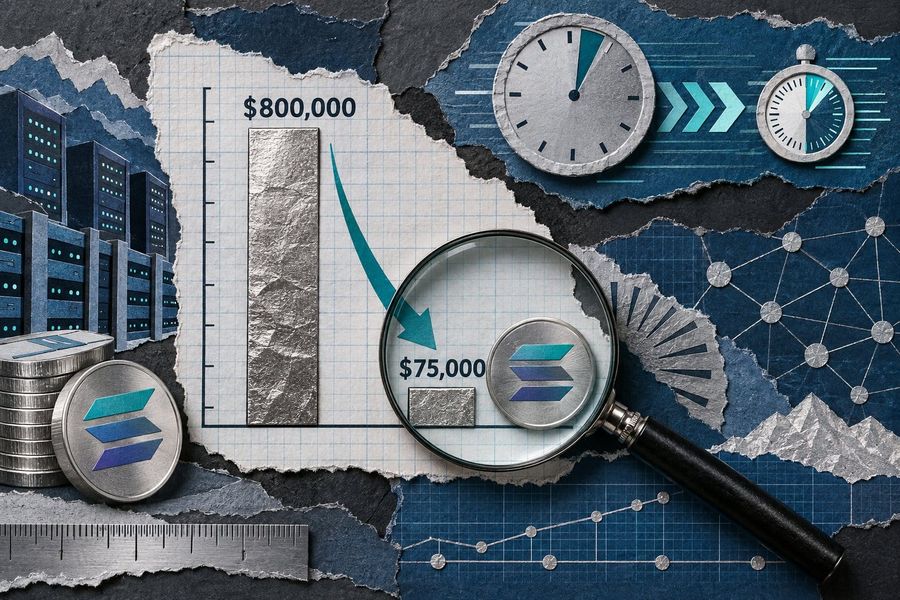
The longer time horizon tells an even more compelling story. A disciplined investor contributing just $100 per month starting in January 2014—when Bitcoin traded near $800—accumulated a portfolio worth approximately $994,950 by early 2026 on a total outlay of only $14,600. That 6,712% return captures the full power of DCA through Bitcoin's most turbulent decade: the Mt. Gox collapse, the 2017 bubble and subsequent 83% crash, COVID, and the 2022 contagion crisis. Each drawdown became an accelerant rather than a setback, as the fixed monthly contribution purchased exponentially more Bitcoin at depressed prices.
Entry Timing Matters Less Than You Think
| DCA Start Date | BTC Price at Entry | Market Condition | Documented Return | vs. Lump-Sum Entry |
|---|---|---|---|---|
| January 2014 | ~$800 | Post-Mt. Gox fear | +6,712% ($100/mo DCA) | Massive outperformance |
| December 2018 | ~$3,200 | Bear market bottom | +1,145% (fear-based DCA to 2025) | +99pp vs. buy & hold |
| March 2020 | ~$4,900 | COVID crash (F&G: 8) | +900% within 12 months | Optimal fear-driven entry |
| June 2022 | ~$20,000 | Post-Luna extreme fear | +192.47% | +33pp vs. lump-sum |
Sources: Spoted Crypto, Spoted Crypto Fear & Greed Analysis, ainvest
The most striking pattern in this data: every single entry during extreme fear (Fear & Greed Index below 15) has preceded multi-hundred-percent returns. Since 2018, readings below 10 have occurred during only three distinct periods—March 2020, June 2022, and now March 2026—and both prior instances produced massive recoveries. Buying Bitcoin when the index dipped below 25 has delivered an average 30-day return of +18%, compared to just +2.3% for entries during extreme greed above 75, according to Spoted Crypto's Fear & Greed analysis.
The Fear Premium: Why Buying Panic Outperforms
Investors who began DCA during the 2022 extreme fear period earned +192.47% returns, outperforming lump-sum investors who entered at the same time by a full 33 percentage points, according to Spoted Crypto. The fear-based contrarian DCA approach—buying exclusively when the index reads below 25—returned 1,145% from 2018 to 2025, beating buy-and-hold by 99 percentage points. As Raoul Pal, CEO of Real Vision and former Goldman Sachs executive, stated: "Adding during steep declines lowers your average cost basis—and that makes all the difference. I don't always have enough cash to go all-in during crashes—but I always buy something."
With the current Fear & Greed Index at 13 and a median 90-day return of +38.4% historically following sub-15 readings according to Spoted Crypto data, the statistical case for initiating or accelerating a crypto DCA program during the present extreme fear cycle is among the strongest on record.
How to Time Your DCA With the Fear & Greed Index: Historical Pattern Analysis
The Crypto Fear & Greed Index measures market sentiment on a 0-to-100 scale, where readings below 25 signal extreme fear and readings above 75 indicate extreme greed. Historical data reveals a striking asymmetry: purchasing Bitcoin when the index falls below 25 has produced an average 30-day return of +18%, compared to just +2.3% when buying during extreme greed above 75, according to Spoted Crypto analysis. When the index drops below 15—territory so rare it has occurred during only three distinct periods since 2018—the median 90-day return surges to +38.4%. As of March 27, 2026, the Fear & Greed Index sits at 13/100, marking over 46 consecutive days in extreme fear—the longest unbroken streak since the post-FTX collapse of late 2022. For DCA practitioners, these readings represent statistically powerful entry signals that have preceded every major Bitcoin recovery in modern market history.
Three Extreme Fear Episodes That Preceded Massive Rallies
Since 2018, the Fear & Greed Index has plunged below 10 during only three distinct crisis periods. Each instance triggered widespread panic selling across every major exchange—and each one turned out to be among the most profitable buying opportunities in Bitcoin's entire history. The table below quantifies what happened when investors had the discipline to buy into peak fear.
| Crisis Event | Date | F&G Low | BTC Price at Low | 6-Month Return | 12-Month / Peak Return |
|---|---|---|---|---|---|
| COVID-19 Crash | March 2020 | 8 | $4,900 | +133% ($11,400) | +900% (12 months) |
| Terra/Luna & FTX Collapse | November 2022 | 10 | $15,500 | +96% ($30,400) | +716% to new ATH |
| 2026 Market Downturn | March 2026 | 8–13 | $68,550 | In progress — 46+ consecutive days in extreme fear | |
The pattern is remarkably consistent. In March 2020, Bitcoin bottomed at $4,900 as global markets collapsed under COVID-19 lockdowns. Investors who initiated DCA positions at that F&G reading of 8 captured a +133% gain within six months and an extraordinary +900% return within twelve months, according to historical market data compiled by Coinglass. The November 2022 episode followed the FTX implosion, when the index hit 10 and BTC traded at $15,500. That entry point yielded +96% over six months and ultimately +716% as Bitcoin surged to new all-time highs by late 2024—a recovery that took approximately 24 to 26 months to fully materialize.
Why Sub-15 Readings Are the DCA Accumulation Zone
The statistical edge of buying during extreme fear reflects the fundamental mechanics of market cycles. When the Fear & Greed Index drops below 15, it signals capitulation: forced liquidations cascade through derivatives markets, retail investors panic-sell at losses, and funding rates turn deeply negative. On Binance, BTC perpetual funding currently sits at -0.0063% and ETH at -0.0052%, confirming that short sellers dominate the market and are paying longs to hold positions—a classic contrarian indicator. SOL funding is even more extreme at -0.0191%, revealing aggressive bearish positioning across the broader altcoin market.
"Buy boldly. Let time—not timing—win. Because time always wins," said Raoul Pal, CEO of Real Vision and former Goldman Sachs executive, in his 2026 market commentary published by TechFlow. His advice captures the core DCA principle: extreme fear creates the exact statistical conditions where disciplined accumulation delivers its highest expected returns.
Applying the Fear & Greed Framework to March 2026
Today's market conditions share striking parallels with both prior sub-10 episodes. Bitcoin trades at $68,550 with the total crypto market cap at $2.43 trillion and BTC dominance at 56.4%—indicating capital is consolidating into Bitcoin rather than flowing into speculative altcoins. The current 46-day extreme fear streak suggests sustained capitulation rather than a brief panic spike, which historically precedes stronger and more durable recoveries. Investors implementing a fear-weighted DCA strategy during these conditions are positioning at precisely the type of market inflection point that produced +133% to +900% returns in previous cycles. While past performance never guarantees future results, the data confirms that every prior F&G reading below 10 since 2018 preceded a multi-month rally delivering at minimum a 96% return.
Optimal DCA Frequency and Allocation: Weekly vs. Monthly vs. Fear-Weighted Strategies
Choosing the right DCA frequency is one of the most debated questions in cryptocurrency investing, yet backtesting data reveals surprisingly clear answers. A comparison of daily, weekly, and monthly Bitcoin DCA strategies from 2019 to 2024 shows that weekly purchases produced the highest risk-adjusted returns, capturing more price dips than monthly entries while avoiding the transaction cost drag of daily buys, according to Spoted Crypto research. A $10 weekly Bitcoin DCA initiated in 2019 turned a total investment of $2,610 into a portfolio worth $7,862—a 202% return that outperformed both gold and the Dow Jones over the same period, as reported by Ainvest. However, the most powerful approach is not fixed-interval DCA at all—it is a fear-weighted strategy that dynamically adjusts allocation based on real-time market sentiment.
Weekly vs. Monthly vs. Daily DCA: What Backtests Reveal
The performance gap between DCA frequencies narrows over longer time horizons, but the entry-point distribution creates meaningful differences during volatile periods. Weekly DCA captures 52 entry points per year compared to 12 for monthly, providing significantly better price averaging during sharp corrections that can move Bitcoin 15–20% within a single week. Daily DCA offers 365 entry points but adds operational complexity and often incurs higher exchange fees that erode returns on smaller amounts. For most investors allocating between $100 and $500 per month, weekly purchases strike the optimal balance—splitting a $400 monthly budget into four $100 weekly buys, for instance, smooths out intra-month volatility without creating excessive transaction overhead on platforms like Binance or OKX.
Fear-Weighted DCA: Dynamic Allocation by Market Sentiment
The most statistically compelling DCA variant adjusts purchase amounts based on the Fear & Greed Index. The framework is straightforward: when fear is extreme, you allocate more capital; when greed dominates, you scale back. A practical implementation uses the following tiers for a baseline $100 weekly allocation:
- F&G below 20 (Extreme Fear): 2× allocation — $200 per purchase
- F&G 20–40 (Fear): 1.5× allocation — $150 per purchase
- F&G 40–60 (Neutral): 1× allocation — $100 per purchase (baseline)
- F&G 60–80 (Greed): 0.5× allocation — $50 per purchase
- F&G above 80 (Extreme Greed): 0.25× allocation — $25 per purchase
This fear-based contrarian DCA strategy returned 1,145% from 2018 to 2025, outperforming standard buy-and-hold by 99 percentage points. Investors who specifically applied this method during the 2022 extreme fear phase earned +192.47% returns, beating lump-sum investors by 33 percentage points. With today's Fear & Greed Index at 13, the model signals maximum allocation—the same tier that preceded +96% to +900% recoveries in prior cycles.
Small Investor Simulation: Turning $100 Monthly Into Life-Changing Returns
For investors working with modest capital, consistency matters far more than amount. A $100 monthly DCA into Bitcoin from January 2014 through early 2026 turned $14,600 in total contributions into $994,950—a staggering 6,712% return that transformed small, disciplined deposits into generational wealth. Even at the $25 weekly level ($100 per month), the compounding effect of buying through multiple bear-to-bull cycles creates substantial portfolio positions over three-to-five-year horizons. The critical variable is not how much you invest each period—it is whether you maintain the discipline to keep purchasing during the periods that feel the most psychologically uncomfortable.
"Adding during steep declines lowers your average cost basis—and that makes all the difference. I don't always have enough cash to go all-in during crashes—but I always buy something," said Raoul Pal, CEO of Real Vision, in his 2026 investment commentary published by TechFlow. However, Pal reserves his most emphatic warning for one particular temptation: "Leverage wipes out your capital entirely, like losing every chip at the casino. Never lose your chips." For DCA practitioners, this principle is non-negotiable—borrowing to amplify a DCA strategy introduces liquidation risk that can permanently destroy the very positions designed to compound over time. The entire advantage of dollar-cost averaging rests on survival through volatility, and leverage is the single fastest way to eliminate that advantage. Use only capital you can afford to commit for at least one full market cycle.
Best Exchanges for Crypto DCA: Fee and Convenience Comparison
Choosing the right exchange for dollar-cost averaging can mean the difference between compounding wealth and bleeding capital to fees. A DCA investor executing weekly $100 buys across 52 weeks pays $260 annually in fees at a 0.50% rate — but just $26 at 0.05%, according to fee data compiled by CoinGecko. With BTC trading at $68,550 and the Fear & Greed Index sitting at 13/100 (Extreme Fear), cost efficiency becomes even more critical as investors scale into positions during prolonged drawdowns. The best exchanges for automated DCA strategies combine low maker/taker fees, built-in recurring purchase tools, and deep liquidity across major trading pairs. Below, we compare fee structures and auto-invest capabilities across the five largest global exchanges — Binance, Coinbase, Kraken, OKX, and Bybit — so you can maximize every dollar deployed into your long-term DCA accumulation strategy.
Exchange Fee and Auto-Invest Comparison
| Exchange | Spot Fee (Maker / Taker) | Auto-Invest Feature | Min. Recurring Buy | Fee Discount Option |
|---|---|---|---|---|
| Binance | 0.10% / 0.10% | ✅ Auto-Invest | $1 | BNB pay (25% off) |
| Coinbase | 0.40% / 0.60% | ✅ Recurring Buy | $1 | Coinbase One ($30/mo) |
| Kraken | 0.25% / 0.40% | ✅ Recurring Buy | $10 | Volume tiers |
| OKX | 0.08% / 0.10% | ✅ Auto-Buy | $5 | OKB holding tiers |
| Bybit | 0.10% / 0.10% | ✅ Auto-Invest | $1 | VIP volume tiers |
Binance and OKX lead the pack for cost-conscious DCA investors, with base fees of 0.08%–0.10% that can drop further through native token discounts. Coinbase charges significantly more at 0.40%–0.60% on its Advanced platform — and up to 1.49% on Simple Buy — but remains the most popular choice for U.S.-based investors due to regulatory clarity and FDIC-insured USD balances. For a $100 weekly DCA strategy, the annual fee difference between OKX (0.08%) and Coinbase Advanced (0.40%) amounts to roughly $166 — money that compounds substantially over a multi-year accumulation cycle.
Auto-Invest: The DCA Investor's Best Friend
All five major exchanges now offer automated recurring purchase features, eliminating the emotional decision-making that undermines DCA discipline. Binance's Auto-Invest stands out with the most flexible scheduling — hourly, daily, weekly, bi-weekly, or monthly intervals across 200+ supported assets. OKX and Bybit offer similar flexibility with portfolio-based auto-invest tools that let you allocate percentages across multiple coins in a single plan. Kraken and Coinbase keep it simpler with straightforward recurring buys. The key advantage of automation is consistency: according to Spoted Crypto research, investors who maintained strict DCA schedules through the 2022 extreme fear period earned +192.47% returns, outperforming lump-sum investors by 33 percentage points.
Fee Reduction Strategies for Long-Term Accumulators
Experienced DCA investors can shave 25–50% off trading fees with a few straightforward tactics. On Binance, paying fees with BNB tokens provides an automatic 25% discount, effectively reducing your rate to 0.075%. Reaching VIP-1 tier on most exchanges drops fees to 0.06%–0.09% for high-volume traders. For high-frequency DCA schedules (daily buys), using limit orders instead of market orders captures the lower maker fee — a small behavioral change that saves hundreds of dollars annually. Investors should also monitor regional price dislocations: Asia-Pacific markets occasionally trade at a 0.2–1.5% premium to global spot prices, a phenomenon tracked as the "Kimchi premium," which currently sits at just +0.21% for BTC. When such premiums are minimal, it presents a cost-efficient window for accumulation during extreme fear environments.
How to Safely Store Your DCA Coins: Wallet Comparison and Loss Risks
An estimated 2.3 to 3.8 million Bitcoin — worth between $158 billion and $260 billion at today's price of $68,550 — are permanently lost and can never be recovered, according to a 2024 report by CoinLedger. That represents 11–18% of Bitcoin's maximum 21 million supply, effectively erased from circulation forever. Approximately 1,500 to 2,000 BTC vanish every year — roughly 4 to 5 coins per day — through forgotten seed phrases, damaged hardware, and deceased holders with no recovery plan. For DCA investors who have patiently accumulated positions through months or years of disciplined buying, a single storage mistake can erase returns that took an entire bear market cycle to build. Understanding the difference between custodial and self-custody solutions is not optional — it is the most critical decision after your DCA entry strategy.
Self-Custody vs. Exchange Losses: What the Data Reveals
The crypto community often repeats "not your keys, not your coins," but the data reveals a more nuanced picture. According to CryptoSlate, approximately 1.6 million BTC have been lost due to self-custody mismanagement — forgotten passwords, corrupted backups, and discarded hardware wallets — exceeding the roughly 1.2 million BTC lost through exchange hacks, collapses, and fraud combined. The FTX collapse alone erased an estimated $8.7 billion in customer funds, but individual self-custody errors have collectively destroyed even more value over Bitcoin's 17-year history. This does not mean exchanges are inherently safer; it means that self-custody demands rigorous planning, redundancy, and the right hardware to protect your accumulated assets.
Hardware Wallet Comparison: Ledger vs. Trezor
| Feature | Ledger (Nano X / Stax) | Trezor (Safe 3 / Safe 5) |
|---|---|---|
| Supported Coins | 5,500+ | 1,500+ |
| Firmware | Closed-source (BOLOS OS) | 100% open-source |
| Secure Element Chip | ✅ Yes | ✅ Yes (Safe 3 / Safe 5) |
| Bluetooth Connectivity | ✅ Yes (Nano X, Stax) | ❌ No (USB-C only) |
| Price Range | $79 – $399 | $69 – $169 |
| Best For | Multi-chain DCA portfolios | Security-first BTC/ETH holders |
According to Coin Bureau, Ledger's support for 5,500+ cryptocurrencies makes it the superior choice for DCA investors accumulating across multiple altcoins, while Trezor's fully open-source firmware appeals to security purists who demand independently auditable code protecting their assets. Both manufacturers now include secure element chips in their latest models, closing what was once Trezor's most significant vulnerability gap.
Ethereum co-founder Vitalik Buterin has been vocal about addressing the loss problem at the protocol level. In a widely discussed post on wallet security, Buterin stated: "There's also plenty of people who have lost huge amounts of crypto to loss rather than theft. The truly robust wallet security solutions that our ecosystem needs to build should take loss into account too. This is a big part of why I talk about social recovery so much." His advocacy for social recovery wallets — which use a network of trusted guardians to restore access — represents the industry's next frontier in protecting long-term holders from irreversible loss, as reported by CryptoSlate.
Essential Security Checklist for DCA Investors
Protecting your DCA portfolio requires a layered approach that addresses both theft and loss. Store your seed phrase on metal backup plates — not paper — in at least two geographically separate locations. Never photograph or digitally store recovery phrases; phishing attacks targeting crypto holders surged over 40% in 2025 alone. For portfolios exceeding $10,000 in value, consider a multi-signature setup using tools like Gnosis Safe, which requires multiple hardware wallets to authorize any outgoing transaction. Finally, create a documented inheritance plan: without clear recovery instructions for trusted family members or legal representatives, your patiently accumulated Bitcoin joins the estimated 3.8 million BTC that are permanently lost forever — a sobering reminder that the greatest threat to your DCA returns may not be market volatility, but your own storage decisions.
Combining DCA with Staking: A Compound Returns Maximization Strategy
What if your DCA-accumulated crypto could generate yield while sitting in your wallet? Combining dollar-cost averaging with staking protocols creates a powerful compound growth engine that amplifies returns beyond simple price appreciation. According to data from StakingRewards, Ethereum currently offers 3–4% annual staking yields, Solana delivers 6–8%, and Polkadot provides 12–14% nominal APY — but these headline numbers can be deeply misleading. When adjusted for network inflation, Solana's seemingly attractive 6–8% nominal yield shrinks to just 0–3% in real terms, as new token emissions dilute holders at roughly the same rate. This distinction between nominal and inflation-adjusted staking returns is the single most overlooked factor in crypto yield strategies. Investors who understand this gap can make dramatically better asset allocation decisions within their DCA portfolios, selecting staking assets that genuinely grow purchasing power rather than merely keeping pace with dilution.
Nominal vs. Real Staking Yields: The Inflation Trap
| Asset | Nominal Staking APY | Network Inflation Rate | Real Yield (Inflation-Adjusted) | $100/mo DCA + Stake (5-Yr Projected Value) |
|---|---|---|---|---|
| ETH | 3.2–4.0% | ~0.5% (post-Merge) | 2.7–3.5% | $7,080–$7,180 |
| SOL | 6.5–8.0% | ~5.5% | 1.0–2.5% | $6,600–$6,870 |
| DOT | 12.0–14.0% | ~7.5% | 4.5–6.5% | $7,650–$8,200 |
*Projected values assume staking yield only (excluding price appreciation) on $6,000 total invested ($100/mo × 60 months). Source: StakingRewards, Q1 2026 data.
The table reveals a critical insight that many DCA investors miss entirely: Solana's headline 6–8% APY appears nearly double Ethereum's 3–4%, but once you subtract the ~5.5% network inflation rate, SOL's real yield collapses to just 1.0–2.5% — barely outperforming ETH's inflation-adjusted 2.7–3.5%. Polkadot, despite its eye-catching 12–14% nominal rate, delivers a real yield of 4.5–6.5% after accounting for ~7.5% annual token emissions. Ethereum's post-Merge near-zero inflation (~0.5%) makes it the most capital-efficient staking asset on a real-yield basis. For DCA investors, the lesson is clear: always evaluate staking rewards through the lens of real purchasing power, not nominal percentages that mask dilution.
Building a DCA + Staking Automation Routine
The most effective DCA-plus-staking strategy eliminates emotional decision-making through a structured weekly routine. First, set up recurring purchases on a major exchange like Binance or Coinbase at a fixed time each week. Second, transfer accumulated assets to a staking solution at a defined threshold — for example, every 0.1 ETH or 1 SOL. For Ethereum, liquid staking protocols like Lido (stETH) let you stake while maintaining liquidity, with DefiLlama reporting over $14 billion in ETH liquid staking TVL as of Q1 2026. Third, enable auto-compounding through vaults that reinvest staking rewards — this is where true compound interest begins to accelerate.
A practical monthly cadence looks like this: weekly DCA purchases every Monday, bi-weekly transfers to staking on the 1st and 15th, and quarterly rebalancing of staking allocations based on updated real yield data. Combined with a fear-driven DCA entry strategy — increasing purchase amounts when the Fear & Greed Index drops below 25 — this creates a systematic wealth-building engine that compounds both price appreciation and staking yield over multi-year horizons. The key is total automation: every manual step is an opportunity for emotional interference to derail the plan.
2026 Second-Half Outlook: Key Indicators Every DCA Investor Must Watch
With Bitcoin trading at $68,550 and the Fear & Greed Index pinned at 13/100 — its longest extreme fear streak since the post-FTX collapse — DCA investors face a pivotal question: is the current environment a generational buying opportunity or a warning sign of deeper pain ahead? Historical data overwhelmingly favors the contrarian. According to Spoted Crypto's Fear & Greed analysis, buying Bitcoin when the index reads below 15 has yielded a median 90-day return of +38.4%, while entries during extreme greed above 75 averaged just +2.3% over 30 days. The 2024 halving cycle is now entering its historically most explosive phase, ETF institutional inflows are projected to surge, and dollar liquidity conditions could shift dramatically in the second half of 2026. Here are the critical metrics that will determine whether disciplined accumulators are rewarded — or tested further.
The Halving Cycle: Diminishing Returns, Still Massive Gains
Bitcoin's four-year halving rhythm remains the most reliable macro signal in crypto — but each cycle delivers progressively smaller percentage gains as the market matures. The 2012 halving triggered an astonishing +8,300% rally to Bitcoin's then-peak. The 2016 halving produced +2,942%. The 2020 cycle delivered +680%, according to research from Kaiko Research. The current post-2024 halving cycle has so far produced approximately +100% from pre-halving levels — well below previous cycles at the same stage. For DCA investors, this diminishing return pattern is actually encouraging: even a conservative 200–300% total cycle gain from the April 2024 halving would place Bitcoin well above $130,000 before the cycle's historical peak window closes in late 2026 to mid-2027.
Institutional Flows: The $40 Billion Catalyst
Grayscale projects $40 billion in crypto ETF inflows for 2026 — a figure that would represent a significant acceleration from 2025 levels. Meanwhile, 94% of institutional investors surveyed now believe in blockchain's long-term value proposition, and 68% are already allocating to Bitcoin ETPs. This institutional conviction provides a structural demand floor that simply did not exist in prior bear markets. For DCA investors, ETF flow data — available through Bloomberg terminal screens and free trackers like The Block's dashboard — has become one of the most actionable leading indicators of trend reversals.
Arthur Hayes on Bitcoin $200,000 and Dollar Liquidity
"Obviously, I believe [Bitcoin will reach $200,000] in 2026... If gold and the Nasdaq have the juice, how is Bitcoin going to get its groove back? Dollar liquidity must expand for that to happen."
— Arthur Hayes, Co-founder, BitMEX (Source)
Hayes's thesis centers on a critical variable: global dollar liquidity. With the Federal Reserve signaling potential rate adjustments in H2 2026 and central banks worldwide maintaining accommodative stances, conditions for a major liquidity expansion are forming. Historically, Bitcoin has shown a strong positive correlation with global M2 money supply growth on a roughly 12-week lag. Current Coinglass funding rates tell a complementary story — BTC at -0.0063%, ETH at -0.0052%, and SOL at a deeply negative -0.0191% — indicating aggressive short positioning across the market. When this level of bearish conviction unwinds, the resulting short squeeze combined with expanding dollar liquidity could be the catalyst Hayes envisions.
The DCA Investor's Second-Half Checklist
Navigating the remainder of 2026 requires monitoring five critical data points. First, the Fear & Greed Index: readings below 15 have preceded every major recovery since 2018, and the current 13/100 matches conditions seen before the March 2020 rally (+900% in 12 months) and the November 2022 surge (+716% to new all-time highs). Second, BTC dominance: at 56.4%, elevated dominance signals capital is still sheltering in Bitcoin — a rotation into altcoins (dominance below 50%) typically marks the beginning of a broader bull phase. Third, ETF net flows: sustained weekly inflows above $500 million would confirm institutional re-entry. Fourth, derivatives funding rates: persistently negative rates across all major pairs signal overcrowded short positioning — a contrarian bullish setup. Fifth, the DXY (Dollar Index): a weakening dollar has historically preceded crypto rallies as risk assets benefit from looser monetary conditions.
The data leaves little room for ambiguity. Every prior period of extreme fear — March 2020, June 2022, November 2022 — rewarded patient DCA investors with triple-digit returns within 12–24 months. Investors who started systematic purchases during 2022's extreme fear zone earned +192.47% returns, outperforming lump-sum buyers by 33 percentage points. The current environment, with its 46-day extreme fear streak and universally negative funding rates, mirrors those historic accumulation windows almost exactly. For DCA investors, the discomfort of buying into fear is not a bug — it is the price of admission to outsized future returns.
Frequently Asked Questions About Bitcoin DCA
Quick Answer: Dollar-cost averaging (DCA) into Bitcoin can start with as little as $10 per purchase on major exchanges. Historical data shows a $100 monthly DCA from January 2014 to early 2026 turned $14,600 into $994,950—a 6,712% return—proving that consistent small investments compound dramatically over time.
What Is the Minimum Amount Needed to Start Bitcoin Dollar-Cost Averaging?
Most major cryptocurrency exchanges set remarkably low minimum purchase thresholds, making Bitcoin DCA accessible to virtually anyone. On Binance, the world's largest exchange by volume, the minimum buy order starts at approximately $10, while platforms like Coinbase and Kraken offer similar entry points. Even a modest commitment of $50 per month can generate meaningful long-term compounding returns. According to Ainvest, a $10 weekly Bitcoin DCA from 2019 to 2024 returned 202% on a total invested capital of just $2,610, outperforming both gold and the Dow Jones Industrial Average. The key consideration is balancing your purchase frequency against transaction fees—buying weekly in very small amounts may erode returns through fees, so most experts recommend a minimum of $25–$50 per transaction for optimal fee efficiency. For a deeper breakdown of DCA mechanics, see our comprehensive crypto DCA strategy guide for 2026.
Is Bitcoin DCA Better Than Lump-Sum Investing?
Academic research across traditional markets shows lump-sum investing outperforms DCA roughly two-thirds of the time in consistently rising asset classes—but cryptocurrency is not a traditional asset class. Bitcoin's extreme volatility, with drawdowns regularly exceeding 50–80%, fundamentally changes the calculus. Data from Spoted Crypto's strategy analysis reveals that investors who began DCA during 2022's extreme fear phase earned +192.47% returns, outperforming lump-sum investors who entered at the same time by a full 33 percentage points. DCA's true advantage lies in its psychological resilience: it removes the paralyzing pressure of timing the market perfectly, which even professional traders fail to do consistently. A fear-based contrarian DCA strategy—increasing purchases during extreme fear—returned 1,145% from 2018 to 2025, beating standard buy-and-hold by 99 percentage points, according to historical DCA performance data. For investors with a lump sum available, a hybrid approach—deploying 50% immediately and DCA-ing the remainder over 3–6 months—often provides the best risk-adjusted outcome.
Should You Increase DCA Purchases When the Fear and Greed Index Is Low?
The data strongly supports increasing Bitcoin purchases during periods of extreme market fear, though position sizing must remain within your personal risk tolerance. According to Spoted Crypto's Fear & Greed Index analysis, buying Bitcoin when the index falls below 25 has historically produced an average 30-day return of +18%, compared to a mere +2.3% for entries made during extreme greed (above 75). The returns become even more compelling at deeper fear levels: purchases made when the index drops below 15 have yielded a median 90-day return of +38.4%. As of late March 2026, the Fear & Greed Index sits at 13/100—deep in extreme fear territory for 46 consecutive days, the longest such streak since the post-FTX collapse of late 2022. A practical approach is the "fear multiplier" method: maintain your base DCA amount at all times, then allocate an additional 50–100% when the index enters extreme fear. However, never invest more than you can afford to lose, and ensure your emergency fund remains intact regardless of market sentiment signals.
Which Cryptocurrencies Besides Bitcoin Are Best Suited for DCA?
While Bitcoin remains the cornerstone of any DCA portfolio due to its unmatched liquidity, regulatory clarity, and institutional adoption—with 68% of institutional investors now allocating to Bitcoin ETPs according to Ainvest—several other large-cap cryptocurrencies merit DCA consideration. Ethereum (ETH) stands out as the strongest secondary DCA candidate, offering proof-of-stake staking yields of approximately 3–4% annually on top of price appreciation, effectively compounding your DCA returns. Solana (SOL) and Polkadot (DOT) also rank among viable DCA assets due to their top-tier market capitalization, active development ecosystems, and staking capabilities. With Bitcoin dominance currently at 56.4%, a prudent DCA portfolio allocation would maintain at least 50% in BTC, 20–30% in ETH, and limit altcoin exposure to 20% or less across proven Layer 1 protocols. The critical filter for any DCA-worthy altcoin is longevity: the asset must have a reasonable probability of surviving multiple market cycles, which eliminates the vast majority of tokens outside the top 20 by market cap. For a detailed look at how institutional flows are shaping portfolio construction, visit our 2026 DCA investment guide.
Data Sources
- Spoted Crypto — Fear & Greed Index Extreme Fear Analysis (March 2026)
- Spoted Crypto — Crypto DCA Dollar-Cost Averaging Guide 2026
- Spoted Crypto — Fear-Based Contrarian DCA Strategy Data (2018–2025)
- Spoted Crypto — DCA vs Lump-Sum Strategy Comparison 2026
- Ainvest — Dollar-Cost Averaging as Bitcoin Strategy (2026)
- Spoted Crypto — Crypto Fear & Greed Index Guide
This article is for informational purposes only and does not constitute investment advice. All investment decisions should be made based on your own judgment and responsibility.
Related Articles
- Complete Guide to Crypto Bear Market Strategies: DCA, Staking & Fee Comparison
- Bitcoin DCA Strategy: How Dollar-Cost Averaging Returned 202% Over 5 Years (2026 Guide)
- Crypto DCA Strategy Guide 2026: How to Profit When Fear & Greed Index Hits Rock Bottom
- Crypto Passive Income Guide: DCA vs Staking Returns Compared (2026)
- Crypto Bear Market Survival Guide 2026: DCA, Staking & Security Strategies