With the Fear & Greed Index locked at 10 — its longest consecutive stretch of extreme fear ever recorded — most crypto investors are paralyzed by uncertainty. Yet historical data tells a counterintuitive story: the moments that feel most dangerous have consistently produced the highest long-term returns for disciplined buyers. This guide breaks down proven bear market strategies, from dollar-cost averaging to staking optimization, backed by real performance data and institutional insights.
What Do Profitable Bear Market Investors Have in Common?
Quick Answer: Buying Bitcoin during periods of extreme fear (index below 15) has historically produced a median 90-day return of +38.4%, while a simple $10/week DCA strategy over five years delivered +202% gains. Bear markets have consistently been the single most profitable entry point for patient, long-term investors.
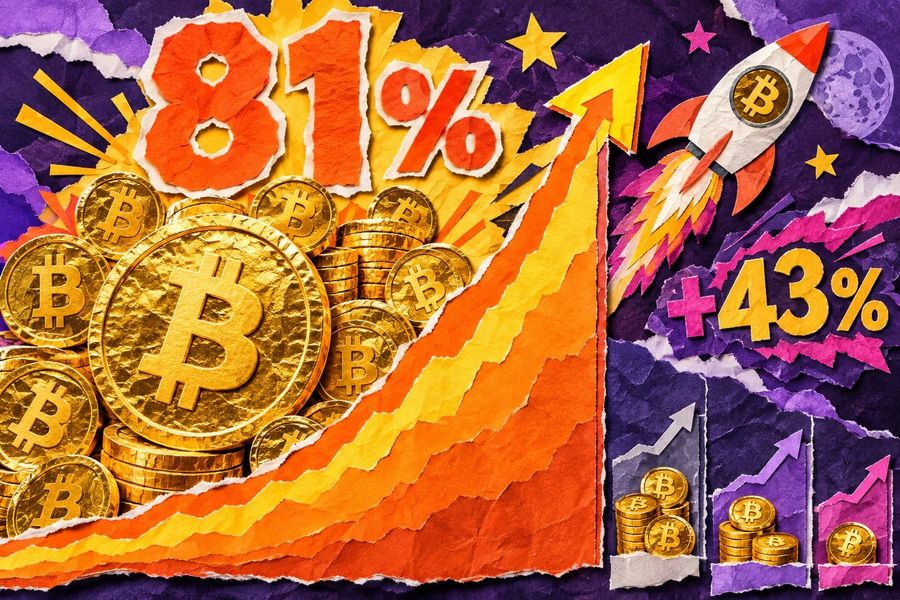
Bear market investing is the discipline of deploying capital when sentiment is at its most negative — a strategy that separates long-term wealth builders from emotional traders who capitulate at cycle lows. The Fear & Greed Index, a composite metric tracking volatility, momentum, social media sentiment, and Bitcoin dominance, currently sits at just 10 out of 100, deep in "Extreme Fear" territory for 46 consecutive days as of March 26, 2026, according to data tracked by Glassnode. This is the most prolonged fear cycle on record, surpassing both the Terra/Luna collapse of 2022 (index low: 6) and the COVID-19 crash of March 2020 (index low: 8). On February 6, 2026, the index reached an all-time low of 5. Yet investors who purchased during prior extreme fear windows (index below 15) achieved a median 90-day return of +38.4%, suggesting the current environment — while psychologically brutal — may mirror the exact conditions that preceded crypto's largest historical rallies.
The Fear-to-Fortune Pattern: Historical Evidence
The correlation between extreme fear and outsized future returns is not anecdotal — it is one of the most consistent patterns in crypto market history. Current perpetual futures funding rates on Binance remain near neutral — BTC at 0.0024% and ETH at 0.0045% — indicating that derivatives markets are not pricing in aggressive further downside despite the historically low sentiment reading. Each major fear event of the past six years was followed by substantial price recoveries within 6 to 12 months.
| Event | Fear Index Low | BTC Price at Low | 6-Month Return | 12-Month Return |
|---|---|---|---|---|
| COVID-19 Crash (Mar 2020) | 8 | $4,900 | +133% | +900%+ |
| Terra/Luna Collapse (Jun 2022) | 6 | $15,476 | +44% | +88% |
| Current Cycle (Feb–Mar 2026) | 5 (All-Time Low) | $71,254* | — | — |
*BTC price as of March 26, 2026, via Binance. Source: Glassnode, Spoted Crypto
The 2020 COVID crash offers the most dramatic parallel. Bitcoin plummeted to approximately $4,900 in March 2020 when the Fear & Greed Index hit 8. Within six months, the price surged 133% to $11,400. Twelve months later, it had climbed more than 900%. The 2022 Terra/Luna crisis followed a similar trajectory: Bitcoin fell from $69,000 to $15,476 — a 78% drawdown lasting roughly 12 months. From that cycle low, BTC eventually rallied +716% to new all-time highs within 24–26 months, according to on-chain data from Glassnode. The takeaway is unmistakable: every period of extreme fear in Bitcoin's history has eventually resolved with significant upside for those who accumulated during the downturn.
Institutional Conviction During Peak Fear
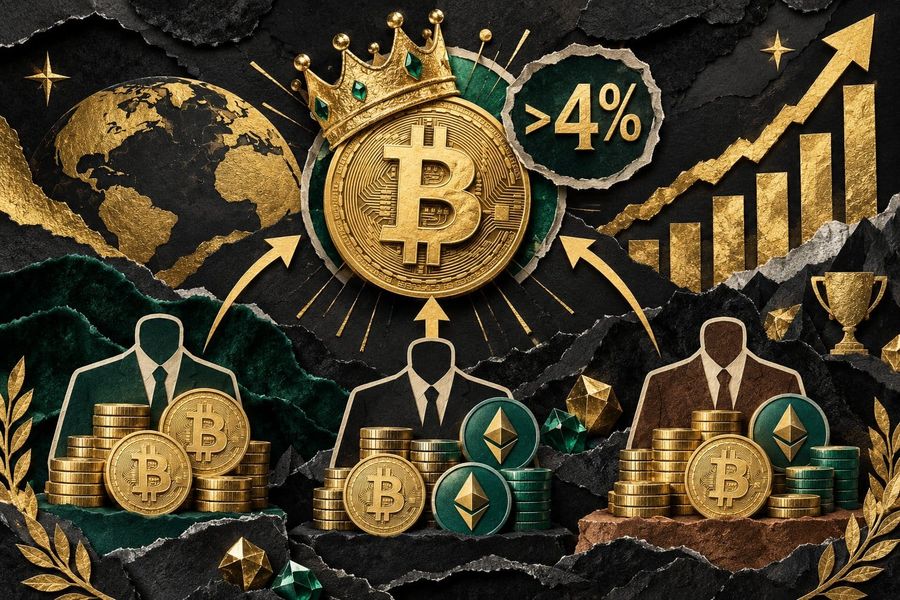
It is not only retail contrarians who buy the fear. Institutional capital has increasingly positioned itself during periods of maximum pessimism. BlackRock, the world's largest asset manager, held approximately 771,000 BTC through its IBIT spot ETF as of December 31, 2025, with digital asset-related assets under management reaching approximately $150 billion, according to Bitcoin.com. Its stablecoin reserves under management reached $65 billion, and digital asset ETPs stood at approximately $80 billion, per BlackRock's 2026 annual letter.
"As I became a student of crypto, it was very clear to me that crypto is a currency of fear."
— Larry Fink, CEO, BlackRock (Decrypt, January 2025 — Davos World Economic Forum)
Fink's thesis is straightforward: when trust in sovereign currencies erodes — through ballooning deficits, geopolitical instability, or monetary debasement — capital flows toward decentralized alternatives. In his 2026 chairman's letter, Fink warned that "if the U.S. doesn't get its debt under control, America risks losing [its reserve currency] position to digital assets like Bitcoin." For individual investors, the implication is stark: if the institution managing $10 trillion in global assets treats fear as a buying signal, retail traders ignoring the same data may be leaving generational returns on the table. For a deeper analysis of the current fear cycle, see our Fear & Greed Index extreme fear analysis for March 2026.
Why Dollar-Cost Averaging Outperforms in Bear Markets
Dollar-cost averaging (DCA) is an investment strategy where a fixed dollar amount is deployed at regular intervals — weekly, biweekly, or monthly — regardless of the asset's current price, systematically reducing the average cost basis during volatile downturns. A five-year DCA simulation investing just $10 per week in Bitcoin from 2019 to 2024 turned a total outlay of $2,610 into $7,913 — a cumulative return of +202.03%, according to analysis published by Spoted Crypto. Over the same timeframe, gold returned +34.47% and the Dow Jones Industrial Average gained +23.43%, making Bitcoin DCA approximately six times more profitable than traditional safe-haven assets. The strategy's edge is purely mechanical: by purchasing more units when prices are depressed and fewer when prices are elevated, DCA investors naturally concentrate capital in undervalued zones — precisely the conditions that define a bear market. With Bitcoin currently trading at $71,254 amid a Fear & Greed Index of 10, the present environment represents exactly the type of discounted accumulation window where DCA has historically excelled.
DCA vs. Lump-Sum Investing: The 2022 Bear Market Case Study
The 2022 bear market provides a textbook illustration of DCA's advantage over lump-sum deployment. An investor who allocated their entire capital to Bitcoin in January 2022 entered at approximately $43,000 — just months before the market shed 78% of its value following the Terra/Luna collapse. A DCA investor making equal weekly purchases throughout 2022 achieved an average entry price of approximately $35,000, representing a 23% lower cost basis, according to Spoted Crypto's DCA analysis.
That 23% cost advantage compounded dramatically during the recovery. When Bitcoin reclaimed $69,000 in early 2024, the lump-sum investor had barely broken even while the DCA investor was sitting on a substantial gain — a profit gap exceeding 33 percentage points. This asymmetry illustrates why DCA is particularly powerful during prolonged drawdowns: the strategy mechanically front-loads purchases into the cheapest portion of the cycle.
| Strategy / Asset | Period | Total Invested | End Value / Avg Entry | Cumulative Return |
|---|---|---|---|---|
| BTC DCA ($10/week) | 2019–2024 | $2,610 | $7,913 | +202.03% |
| BTC Lump Sum (Jan 2022) | 2022 | — | Entry: ~$43,000 | Break-even by early 2024 |
| BTC DCA (weekly, 2022) | Jan–Dec 2022 | — | Avg Entry: ~$35,000 | 23% lower cost basis |
| Gold (Buy & Hold) | 2019–2024 | — | — | +34.47% |
| Dow Jones (Buy & Hold) | 2019–2024 | — | — | +23.43% |
Source: Spoted Crypto, Yahoo Finance
How to Execute a DCA Strategy: Practical Framework
Implementing an effective DCA strategy requires three core decisions: frequency, amount, and automation. Getting these right is the difference between a strategy that compounds wealth and one that gets abandoned at the worst possible moment.
Frequency: Weekly purchases tend to marginally outperform monthly purchases in volatile assets like Bitcoin because they capture more price points during rapid drawdowns. That said, the difference is modest — consistency over months and years matters far more than the specific interval chosen. Biweekly schedules offer a practical middle ground for investors who want to align purchases with pay cycles.
Amount: Financial advisors commonly recommend allocating 1–5% of investable assets to cryptocurrency. For a $500/month investment budget, this translates to $25–$100/month dedicated to BTC DCA. The cardinal principle is selecting an amount that remains sustainable through the deepest part of a bear market without creating financial pressure that could force early liquidation.
Automation: Most major exchanges now offer built-in recurring purchase features that execute DCA on autopilot. Binance offers "Auto-Invest" with daily, weekly, biweekly, or monthly intervals. Coinbase provides "Recurring Buys" linked directly to bank accounts. OKX and Kraken offer similar "Recurring Buy" tools accessible via both app and desktop platforms.
The critical behavioral advantage of automation is that it eliminates the temptation to time the market. When the Fear & Greed Index sits at 10 and headlines scream capitulation, the last thing most investors want to do is click "buy." Automated DCA removes emotional interference entirely — and it is precisely this mechanical discipline that has driven the strategy's +202% five-year outperformance against every major traditional asset class. For a step-by-step walkthrough of configuring automated Bitcoin DCA across major exchanges, see our complete Bitcoin DCA strategy guide.
How Long Did Past Crypto Bear Markets Take to Recover?
Understanding historical bear market recovery timelines is one of the most powerful tools for investors navigating current drawdowns. Bitcoin has experienced three major crashes since 2017, each following a remarkably consistent pattern: a steep decline of 78–83% from all-time highs, followed by a prolonged accumulation phase, and ultimately an explosive recovery that eclipsed previous peaks within 24–26 months. According to CoinGlass historical data, every bear market bottom has coincided with extreme fear readings below 10 on the Fear & Greed Index — precisely where the market sits today at 10/100. With 46 consecutive days of extreme fear as of March 2026, the current sentiment mirrors the capitulation phases that preceded every major rally in Bitcoin's history. The question is not whether recovery will come, but how closely the current cycle will mirror its predecessors.
Quick Answer: Bitcoin has recovered from every major bear market within 24–26 months of the bottom. The 2018 crash saw an 83% drawdown recovering in ~26 months, while the 2022 crash dropped 78% before surging +716% to new highs. With the Fear & Greed Index at 10/100 for 46 straight days, historical patterns suggest a potential inflection point.
Bear Market Recovery Timeline: A Cycle-by-Cycle Breakdown
Each Bitcoin bear market has followed a strikingly similar script. The 2017–2018 cycle peaked at $19,100 in December 2017 before plunging 83% to $3,200 by December 2018 — a brutal 12-month descent. From that bottom, it took approximately 26 months for BTC to reclaim its previous all-time high in late 2020, according to CoinDesk historical pricing data.
The 2021–2022 cycle exhibited near-identical behavior. After reaching $69,000 in November 2021, Bitcoin collapsed 78% to $15,476 by November 2022. What followed was even more dramatic — a +716% surge from the bottom to new all-time highs, with full recovery achieved in roughly 24–26 months. Investors who deployed a dollar-cost averaging strategy during the 2022 bear market entered at an average cost basis near $35,000 — 23% below those who attempted to time a single lump-sum purchase at $43,000.
| Bear Market | Peak → Trough | Max Drawdown | Recovery Period | Gain from Bottom | Fear & Greed at Low |
|---|---|---|---|---|---|
| 2018 Crash | $19,100 → $3,200 | −83% | ~26 months | +497% | ~11 |
| 2020 COVID Crash | $10,500 → $4,900 | −53% | ~6 months | +133% (6-mo) | 8 |
| 2022 Crash | $69,000 → $15,476 | −78% | ~24–26 months | +716% | 6 |
| 2026 Current | ATH → $71,254* | TBD | Ongoing | TBD | 5 (Feb 6 low) |
*BTC price as of March 26, 2026. Sources: CoinGlass, Glassnode
The Extreme Fear Pattern: What History Tells Us About Current Conditions
The March 2020 COVID crash offers the most compressed case study. When the Fear & Greed Index hit 8 — its lowest recorded reading at that time — Bitcoin was trading near $4,900. Within six months, BTC had surged 133% to $11,400. According to Glassnode data analyzed by Spoted Crypto's fear index research, buying when the index falls below 25 has historically yielded a +18% average return within 30 days, while entries below 15 have produced a median 90-day return of +38.4%.
Today's conditions are historically extreme. The Fear & Greed Index recorded a reading of 5 on February 6, 2026 — lower than both the Terra/Luna collapse (6) and the COVID crash (8). As of March 26, 2026, the index has sustained extreme fear territory for 46 consecutive days, currently sitting at 10/100. This prolonged capitulation, combined with BTC dominance at 56.6% and total market cap at $2.52 trillion, closely mirrors the accumulation phases that preceded every major recovery cycle. Derivatives markets show muted but slightly positive funding rates (BTC at 0.0024% on Binance), suggesting cautious positioning rather than aggressive speculation — another hallmark of late-stage bear markets transitioning toward recovery.
Crypto Staking Yield Comparison: Where to Earn the Best Returns in 2026
Crypto staking has evolved from a niche validator activity into a mainstream yield-generating strategy, with over $150 billion in assets staked across major proof-of-stake networks as of Q1 2026. However, the gap between advertised APY and real yield — after accounting for network inflation — remains one of the most misunderstood concepts in crypto investing. A network offering 15% nominal APY may deliver only 2–3% in real terms if token supply inflates at 12% annually. According to Paybis staking data, real yields across the top eight PoS networks range from as low as 0% (Solana) to approximately 8% (Cosmos), making careful comparison essential for bear market income strategies. With Bitcoin's price at $71,254 and the Fear & Greed Index at 10/100, staking offers a productive way to accumulate during drawdowns.
How Staking Works: Nominal APY vs. Real Yield
Proof-of-Stake networks reward token holders who lock ("stake") their assets to help validate transactions and secure the blockchain. In return, stakers receive newly minted tokens as rewards — typically expressed as an annual percentage yield (APY). But here's the critical nuance: those new tokens dilute the total supply. If a network pays 14% APY but inflates its supply by 10% annually, the real purchasing-power yield is closer to 4%. This distinction matters enormously during bear markets, where preserving real value is paramount.
For investors evaluating bear market investment strategies, staking serves a dual purpose: generating passive income while maintaining long-term exposure to assets expected to appreciate during the next cycle. The unstaking period — the lockup duration before assets can be withdrawn — is another critical variable, ranging from zero days on some networks to 28 days on Polkadot.
2026 Staking Yields Across Major PoS Networks
| Network | Nominal APY | Est. Real Yield | Unstaking Period | Minimum Stake | Key Consideration |
|---|---|---|---|---|---|
| Ethereum (ETH) | 3–4% | 2–3% | Variable (days) | 32 ETH (solo) / None (liquid) | DVT-Lite expanding access |
| Solana (SOL) | 6–8% | 0–3% | ~2–3 days | None | High inflation offsets yield |
| Polkadot (DOT) | 12–14% | 3–6% | 28 days | Varies by era | Long unbonding period |
| Cosmos (ATOM) | 15–19% | 2–8% | 21 days | None | Highest nominal APY |
| Cardano (ADA) | 3–5% | 1–3% | None (liquid) | None | No lockup required |
| Avalanche (AVAX) | 8–10% | 2–4% | 14 days | 25 AVAX | Sub-second finality |
| Near Protocol (NEAR) | 9–11% | 3–5% | 2–3 days | None | Sharding-based scaling |
| Celestia (TIA) | 10–14% | 2–6% | 21 days | None | Modular DA layer |
Sources: Paybis, StakingRewards, network documentation. Data as of Q1 2026. Real yield = Nominal APY minus estimated annual inflation rate.
Ethereum's DVT-Lite Revolution: Lowering the Barrier to Entry
The most significant development in staking infrastructure this year has been Ethereum's DVT-Lite (Distributed Validator Technology) initiative. In March 2026, the Ethereum Foundation committed 72,000 ETH (approximately $155.8 million at current prices) to a distributed staking experiment designed to eliminate the technical complexity of running a validator, according to CoinDesk.
"The idea that 'running infrastructure' is this scary, complicated thing where each person participating must be a 'professional' is awful and anti-decentralization, and we must attack it directly." — Vitalik Buterin, Co-founder, Ethereum (CCN, January 2026)
DVT-Lite allows multiple participants to collectively operate a single validator, splitting the 32 ETH minimum requirement and distributing the technical burden. This is particularly relevant during bear markets, when smaller investors seek yield but cannot meet the solo staking threshold of 32 ETH (~$69,248 at current ETH price of $2,164). Liquid staking protocols like Lido and Rocket Pool already address this barrier, but DVT-Lite aims to achieve the same accessibility at the protocol level — preserving decentralization without relying on intermediaries. For investors building a bear market accumulation strategy, Ethereum staking at 3–4% nominal APY provides modest but relatively low-risk income, now with an expanding set of participation options.
Crypto Exchange Fee Comparison: The Cheapest Exchanges in 2026
Cryptocurrency exchange fees are the recurring trading costs charged by platforms each time you buy, sell, or swap digital assets. According to fee schedules published by the five largest global exchanges, the gap between the lowest and highest base rates exceeds 0.50 percentage points per trade — a difference that compounds dramatically for active traders executing dozens of transactions monthly. Binance and Bybit currently offer the industry's most competitive base fees at 0.10% for both maker and taker orders, while Coinbase Advanced starts at 0.40%/0.60% before volume discounts apply. With the crypto Fear & Greed Index at just 10/100 in March 2026, traders operating in this extreme fear environment must minimize every cost to preserve capital. Selecting the optimal exchange based on fee tiers, loyalty token discounts, and volume-based rebates is a critical — yet frequently overlooked — component of any bear market survival strategy.
2026 Global Exchange Fee Breakdown
| Exchange | Maker Fee | Taker Fee | Token Discount | Key Feature |
|---|---|---|---|---|
| Binance | 0.10% | 0.10% | BNB payment discount | Lowest base fees industry-wide |
| Bybit | 0.10% | 0.10% | — | Competitive spot; higher fiat pair fees |
| OKX | 0.14% | 0.23% | OKB holding discount | Strong derivatives suite |
| Kraken Pro | 0.25% | 0.40% | — | Volume tier: 0.00% / 0.08% at highest |
| Coinbase Advanced | 0.40% | 0.60% | — | Volume tier: 0.00% / 0.05% at highest |
The table above reveals a striking disparity: a trader executing $10,000 in monthly volume pays just $20 in total fees on Binance versus $100 on Coinbase Advanced at base-tier rates — a 5× difference that accumulates to $960 annually. For dollar-cost averaging strategies where consistent recurring purchases are essential, selecting a low-fee platform directly amplifies long-term compounding returns.
Volume Discounts and Token-Based Savings
High-frequency traders can unlock dramatically lower rates through volume-tiered pricing. Kraken Pro drops to 0.00% maker / 0.08% taker at its highest tier, while Coinbase Advanced reaches 0.00% maker / 0.05% taker for institutional-level volume — effectively making limit orders free. For retail traders who cannot reach these thresholds, token-based discounts offer an accessible alternative. Paying trading fees with Binance's BNB token provides an additional percentage reduction on every trade, according to CoinDesk. Similarly, holding OKB on OKX unlocks tiered fee discounts proportional to your balance. These token discount mechanisms can reduce effective trading costs by 10–25% without requiring higher volume — a meaningful edge when compounded across hundreds of bear market accumulation trades.
Cross-Exchange Price Disparities as a Sentiment Indicator
Regional price differences between exchanges serve as a powerful market sentiment gauge that sophisticated traders monitor closely. As of March 2026, Bitcoin trades at approximately −0.51% below global spot prices on Asian regional exchanges, while Ethereum shows a similar −0.46% discount, according to data compiled by CoinGlass. This negative premium — where local prices fall below international benchmarks — typically signals weak regional demand and heightened selling pressure. Historically, sustained negative premiums have preceded broader capitulation events, while a reversal to positive premiums often coincides with renewed accumulation phases. Monitoring these cross-exchange disparities provides a leading indicator of sentiment shifts across Asia-Pacific markets, offering global investors an early warning system for potential trend reversals.
Choosing the Right Exchange: A Beginner's Checklist
For newcomers entering crypto during a bear market, fees alone should not dictate your exchange choice. Prioritize these five criteria in order: security track record (proof of reserves, regulatory licenses, insurance funds), fee structure (base rates plus withdrawal fees), fiat currency support (direct bank transfers in your local currency reduce conversion costs), user interface (intuitive design reduces costly execution errors), and customer support responsiveness. A platform with slightly higher fees but robust security and regulatory compliance — such as Kraken's SOC 2 certification or Coinbase's public audit history — may prove far cheaper in the long run than a discount exchange that suffers a security breach. In an extreme fear environment scoring 10/100, capital preservation always outweighs marginal fee savings.
How to Store Crypto Safely: Hardware Wallets vs Exchange Custody
Cryptocurrency custody — the method by which you store and protect your digital assets — becomes the single most consequential decision during a bear market. Ledger, the industry's leading hardware wallet manufacturer, has sold over 6 million units worldwide supporting more than 5,500 cryptocurrencies, according to data compiled by Coin Bureau. Meanwhile, exchange collapses like FTX in 2022, which resulted in approximately $8 billion in customer losses, serve as a stark reminder that platform custody carries existential counterparty risk. During prolonged downturns when holding periods extend from weeks to months or even years, the probability of encountering an exchange insolvency event increases proportionally. Self-custody through hardware wallets eliminates counterparty risk entirely by keeping private keys offline and under your exclusive control. Understanding the trade-offs between convenience and security is essential for any investor building a long-term bear market portfolio.
Self-Custody vs Exchange Storage: Pros and Cons
Exchange custody offers undeniable convenience — instant trading, integrated staking, and simplified tax reporting — but it comes at the cost of surrendering your private keys to a third party. The crypto industry adage "not your keys, not your coins" was validated catastrophically when FTX, Celsius, and Voyager collectively locked billions in customer assets during 2022. Self-custody through hardware wallets reverses this risk equation entirely: you maintain absolute ownership, but bear full responsibility for safeguarding your recovery phrase. The trade-off is straightforward — exchanges optimize for convenience while hardware wallets optimize for sovereignty and long-term security.
Ledger vs Trezor: Head-to-Head in 2026
The two dominant hardware wallet brands serve distinctly different user profiles. Ledger (Nano S Plus at ~$79, Nano X at ~$149) supports over 5,500 cryptocurrencies and uses a certified secure element chip (CC EAL5+) for private key isolation, as reported by Coin Bureau. Trezor (Model One at ~$69, Model T at ~$219) supports 1,500+ cryptocurrencies and differentiates with fully open-source firmware that allows independent security audits. For investors holding diverse altcoin portfolios, Ledger's broader asset support provides a clear advantage. For security purists who prioritize code transparency and verifiability, Trezor's open-source philosophy offers greater trust assurance. Both devices keep private keys entirely offline, ensuring remote hackers cannot access your funds regardless of internet-connected vulnerabilities.
Why Bear Markets Demand Stronger Security
Bear markets amplify custody risk for a simple mathematical reason: the longer you hold without trading, the longer your assets sit as a static target. With the current market showing 46 consecutive days of extreme fear and BTC dominance at 56.6%, many investors are shifting into long-term accumulation mode — precisely when exchange counterparty risk peaks. History confirms the pattern: both Mt. Gox (2014) and FTX (2022) collapsed during or immediately following severe downturns when liquidity dried up and operational stress tested solvency limits. Moving assets to cold storage during accumulation phases eliminates the single largest non-market risk to your portfolio, according to analysts at Glassnode.
Seed Phrase Backup and Multi-Signature Essentials
Your hardware wallet's 12- or 24-word seed phrase is the master key to your entire crypto portfolio — lose it, and your funds are permanently irrecoverable. Store your seed phrase on fireproof metal backup plates (never digitally or in cloud storage), keep copies in at least two geographically separate locations, and never photograph or type it into any internet-connected device. For portfolios exceeding $50,000, consider implementing a multi-signature (multisig) setup that requires 2-of-3 or 3-of-5 key approvals before any transaction can execute. Multisig eliminates single points of failure — even if one key is compromised, attackers cannot move funds without additional co-signers. Platforms like Safe (formerly Gnosis Safe) and Casa provide user-friendly multisig interfaces that make institutional-grade security accessible to individual investors protecting holdings through extended bear market cycles.
How Are Institutional Investors Moving During the Bear Market?
Institutional investors are reshaping the cryptocurrency landscape even during the harshest bear markets, and their strategies offer critical lessons for retail participants. BlackRock, the world's largest asset manager with over $11.5 trillion in total AUM, now holds approximately 771,000 BTC through its iShares Bitcoin Trust (IBIT) as of December 31, 2025, according to Bitcoin News. The firm's digital asset-related assets under management have surged to approximately $150 billion, encompassing tokenized funds, stablecoin reserves of $65 billion, and digital asset exchange-traded products worth roughly $80 billion, as detailed in Larry Fink's 2026 annual chairman's letter. With today's Fear & Greed Index at an extreme fear reading of 10 out of 100 and Bitcoin trading at $71,254, institutional accumulation during periods of maximum retail capitulation represents one of the most powerful contrarian signals in crypto markets.
BlackRock's Digital Asset Empire in Numbers
The scale of BlackRock's crypto commitment is staggering. The IBIT ETF alone manages approximately $55 billion in assets, generating an estimated $250 million in annual fee revenue. Beyond spot Bitcoin exposure, BlackRock has positioned itself across the entire digital asset value chain: its tokenized money market fund (BUIDL) has become the world's largest tokenized fund, its stablecoin reserve holdings total $65 billion, and its digital asset ETP suite manages roughly $80 billion globally. This multi-layered approach signals that institutional players are not merely speculating on price — they are building permanent infrastructure around digital assets. For context, BlackRock's 771,000 BTC holdings represent approximately 3.67% of Bitcoin's total circulating supply, making any significant selling pressure from this single entity a systemic market factor.
Larry Fink's Bitcoin Thesis and the $700K Price Target
BlackRock CEO Larry Fink has emerged as one of the most influential voices in crypto adoption, particularly during market downturns. In his 2026 annual chairman's letter, Fink warned:
“If the U.S. doesn't get its debt under control, if deficits keep ballooning, America risks losing that position to digital assets like Bitcoin.” — Larry Fink, CEO, BlackRock (2026 Annual Chairman's Letter)
At the 2025 World Economic Forum in Davos, Fink outlined a specific price scenario: if institutional portfolios globally adopted a 2% to 5% Bitcoin allocation, the resulting demand could push BTC to $500,000–$700,000, according to Decrypt. This projection is not speculative fantasy — it is a mathematical model based on the $100+ trillion global asset management industry redirecting even a modest fraction toward Bitcoin.
What Institutional Accumulation Means for Retail Investors
When the world's largest institutions are aggressively accumulating during periods of extreme fear, retail investors face a pivotal decision. Historical precedent is clear: during the 2022 bear market, institutions that accumulated Bitcoin between $15,000 and $20,000 saw returns exceeding 350% within 24 months. The current environment — with a Fear & Greed Index at extreme fear for 46 consecutive days — mirrors the exact conditions that preceded previous institutional-led recoveries. Retail investors should note that institutional capital tends to front-run recoveries by 3 to 6 months, meaning the accumulation window may be narrower than sentiment suggests. Consider systematic DCA strategies to align your positioning with institutional conviction rather than retail emotion.
Key Takeaways for Investors After the 2026 Bear Market
Navigating a crypto bear market requires a disciplined framework built on three foundational pillars: dollar-cost averaging, staking for yield, and secure cold storage. Historical data confirms that investors who maintained systematic DCA strategies during the 2022 bear market achieved an average entry price of approximately $35,000 compared to $43,000 for lump-sum buyers — a 23% cost advantage that translated into 33 percentage points of additional returns during the subsequent recovery, according to Spoted Crypto's DCA analysis. The current market environment, with the Fear & Greed Index registering 10 out of 100 and maintaining extreme fear for 46 consecutive days as of March 2026, closely mirrors conditions that preceded major recoveries in 2020 and 2023. Bitcoin's price of $71,254 with a market dominance of 56.6% suggests the market is in a consolidation phase where strategic positioning can significantly impact long-term portfolio outcomes.
Critical Market Signals Right Now
Three converging signals demand investor attention. First, the Fear & Greed Index has sustained extreme fear levels for 46 consecutive days, including a record low of 5 on February 6, 2026 — surpassing even the Terra/Luna collapse (index reading of 6) and the COVID-19 crash (index reading of 8). Second, negative regional premiums across Asian exchanges indicate that local sellers have been exhausted, historically a reliable bottoming signal. Third, institutional accumulation led by BlackRock's 771,000 BTC position continues unabated, providing a structural demand floor beneath current price levels.
Historical Recovery Patterns: What Past Cycles Tell Us
Every major Bitcoin bear market has followed a remarkably consistent recovery trajectory. The 2018 crash saw BTC fall 83% from $19,100 to $3,200 before recovering to its previous all-time high within approximately 26 months. The 2022 cycle repeated this pattern: a 78% decline from $69,000 to $15,476, followed by a +716% rally that reclaimed the prior peak within 24 to 26 months. If the current cycle adheres to this historical template, investors who accumulate during this extreme fear phase could see significant appreciation over the next 24 months. Crucially, those who employed DCA during the 2022 bear market entered at 23% lower average costs than lump-sum investors, amplifying recovery-phase returns substantially.
Your 5-Step Bear Market Action Plan
- Establish a fixed DCA schedule — Commit a predetermined amount weekly or bi-weekly, regardless of price action. Even $10 per week compounded over five years yielded +202% returns historically.
- Activate staking on idle holdings — ETH staking yields 3–4% APY, SOL offers 6–8%, and DOT provides 12–14%. Compounding yield during a bear market accelerates recovery returns.
- Move assets to cold storage — Transfer long-term holdings to hardware wallets like Ledger (6 million+ units sold, 5,500+ supported assets) or Trezor for maximum security.
- Rebalance portfolio toward BTC dominance — With BTC dominance at 56.6%, overweight Bitcoin during uncertainty. Allocate 60–70% BTC, 20–30% large-cap altcoins, and 10% stablecoins for opportunistic deployment.
- Set price alerts, not emotional triggers — Define specific accumulation zones and profit-taking levels in advance. Remove emotion from execution by automating where possible.
⚠️ Risk Disclaimer: Cryptocurrency investments carry significant risk of principal loss. Past performance, including the historical recovery patterns cited above, does not guarantee future results. Never invest more than you can afford to lose entirely. Diversification across asset classes — not just within crypto — is essential for responsible portfolio management. All strategies discussed in this guide are educational in nature and do not constitute financial advice. Consult a licensed financial advisor before making investment decisions.
Frequently Asked Questions
What Kind of Returns Can You Expect From Crypto Dollar-Cost Averaging (DCA)?
Dollar-cost averaging into Bitcoin has historically delivered outsized returns compared to traditional asset classes. A disciplined $10-per-week DCA strategy over five years (2019–2024) turned a total investment of $2,610 into $7,913—a +202.03% return, according to Spoted Crypto's DCA strategy analysis. Over the same period, gold returned just +34.47% and the Dow Jones gained +23.43%, making Bitcoin's risk-adjusted DCA performance roughly six times that of equities. The key mechanism behind DCA's effectiveness is volatility harvesting: by investing a fixed amount at regular intervals, buyers accumulate more units during drawdowns and fewer during rallies. Historical backtests show that investors who began their DCA during bear-market conditions reduced their average cost basis by approximately 23% compared to lump-sum buyers at cycle peaks. This cost-basis compression is what transforms short-term paper losses into long-term outperformance.
The beauty of DCA lies in its simplicity—it removes emotional decision-making from the equation. Whether Bitcoin trades at $20,000 or $90,000, the weekly contribution remains constant. Over full market cycles, this mechanical discipline has consistently outperformed both buy-and-hold strategies initiated at arbitrary points and active trading approaches employed by retail investors. For those exploring how to implement this strategy, our complete Bitcoin DCA strategy guide breaks down optimal intervals, allocation sizes, and rebalancing triggers backed by historical data.
Does Buying When the Fear and Greed Index Is Low Actually Generate Profits?
The data strongly supports contrarian buying during periods of extreme fear. According to Glassnode on-chain analytics, purchases made when the Crypto Fear & Greed Index dropped below 25 produced an average 30-day return of +18%. When the index plunged below 15—territory reserved for outright market panic—the median 90-day return surged to +38.4%. These are not cherry-picked figures; they reflect aggregated data across multiple fear episodes spanning several years.
Historical precedent reinforces the pattern. During the March 2020 COVID crash, the index hit 8 while Bitcoin traded near $4,900. Within six months, BTC surged 133% to approximately $11,400, and within 18 months it exceeded $60,000. After the Terra/Luna collapse in mid-2022, the index bottomed at 6, yet Bitcoin went on to recover over 300% from its cycle low. As of March 2026, the index has sustained 46 consecutive days of Extreme Fear, with a record low of 5 registered on February 6, 2026—lower than both the COVID crash and the Luna implosion, as documented in our Fear & Greed Index extreme fear analysis. BlackRock CEO Larry Fink has noted that "crypto is a currency of fear," suggesting institutional players view panic-driven dips as accumulation opportunities (Decrypt). The statistical edge is clear: extreme fear has historically been a reliable buy signal, not a reason to sell.
Which Cryptocurrencies Offer the Highest Staking Yields?
Headline staking APYs can be misleading without accounting for inflation, lock-up periods, and minimum staking requirements. Cosmos (ATOM) advertises some of the highest nominal yields in the top-50 ecosystem at 15–19% APY, but its annualized token inflation of roughly 10–14% erodes real purchasing-power gains significantly. When adjusted for inflation, ATOM's effective real yield compresses to approximately 3–7%. Tezos (XTZ), by contrast, offers a more modest 5–10% headline APY but carries substantially lower inflation, making its real yield among the highest in the proof-of-stake landscape.
Beyond yield percentages, investors must evaluate unbonding periods—ATOM requires a 21-day unstaking window during which tokens cannot be sold, while Ethereum's validator exit queue can vary depending on network congestion. Ethereum staking currently yields around 3–4% APY, but the Ethereum Foundation's recent commitment of 72,000 ETH to DVT-Lite distributed staking experiments signals a push to make validation more accessible, according to CoinDesk. Ethereum co-founder Vitalik Buterin emphasized this vision, stating: "The idea that 'running infrastructure' is this scary, complicated thing where each person participating must be a 'professional' is awful and anti-decentralization" (CCN). Minimum staking amounts also vary widely—Ethereum requires 32 ETH for solo validators, while liquid staking protocols like Lido have no minimum. Always compare real yields net of inflation, factor in lock-up risk, and consider the security of the underlying protocol before committing capital.
How Long Do Crypto Bear Markets Typically Last?
Bitcoin's bear-market cycles follow a remarkably consistent pattern that every crypto investor should understand. Historically, peak-to-trough drawdowns have ranged from −78% to −83%, with the bottom forming approximately 12 months after the cycle top. From that trough, it has taken roughly 24 to 26 months for Bitcoin to reclaim its previous all-time high—meaning the full cycle from euphoria through capitulation and back to breakeven spans roughly three years.
The 2017–2018 cycle saw Bitcoin fall 84% from nearly $20,000 to roughly $3,200 over 12 months, then grind back to $20,000 by December 2020—a 24-month recovery. The 2021–2022 cycle produced a 77% drawdown from $69,000 to approximately $15,500 in about 13 months, with the prior high eventually surpassed in early 2024. As of March 2026, the market has entered an extended fear phase, with the Fear & Greed Index logging 46 consecutive days of Extreme Fear—the longest such streak since the metric's inception, per Spoted Crypto's March 2026 fear index report. Notably, institutional infrastructure has expanded dramatically since previous cycles: BlackRock's IBIT ETF alone holds approximately 771,000 BTC with digital asset AUM near $150 billion (Bitcoin.com), which may compress recovery timelines as institutional demand provides structural price support that did not exist in earlier cycles. Larry Fink himself warned that "if deficits keep ballooning, America risks losing that position to digital assets like Bitcoin" (BlackRock 2026 Chairman's Letter), underscoring growing macro tailwinds for the asset class.
Data Sources
- Spoted Crypto — Bitcoin DCA Strategy Guide
- Spoted Crypto — Fear & Greed Index Extreme Fear Analysis (March 2026)
- Glassnode — On-Chain Market Intelligence
- Bitcoin.com — BlackRock BTC Holdings Report
- BlackRock — 2026 Annual Chairman's Letter
- CoinDesk — Ethereum DVT-Lite Distributed Staking
- Decrypt — Larry Fink on Bitcoin Adoption
- CCN — Vitalik Buterin on Staking Accessibility
- Coin Bureau — Hardware Wallet Comparison
This article is for informational purposes only and does not constitute investment advice. All investment decisions should be made based on your own judgment and responsibility.
Related Articles
- Bitcoin DCA Strategy: How Dollar-Cost Averaging Returned 202% Over 5 Years (2026 Guide)
- Crypto DCA Strategy Guide 2026: How to Profit When Fear & Greed Index Hits Rock Bottom
- Crypto Passive Income Guide: DCA vs Staking Returns Compared (2026)
- Crypto Bear Market Survival Guide 2026: DCA, Staking & Security Strategies
- Crypto Fear & Greed Index Guide: How to Read It and Trade Smarter in 2026