The Rotation Clock: Reading BTC Dominance Signals in 2026
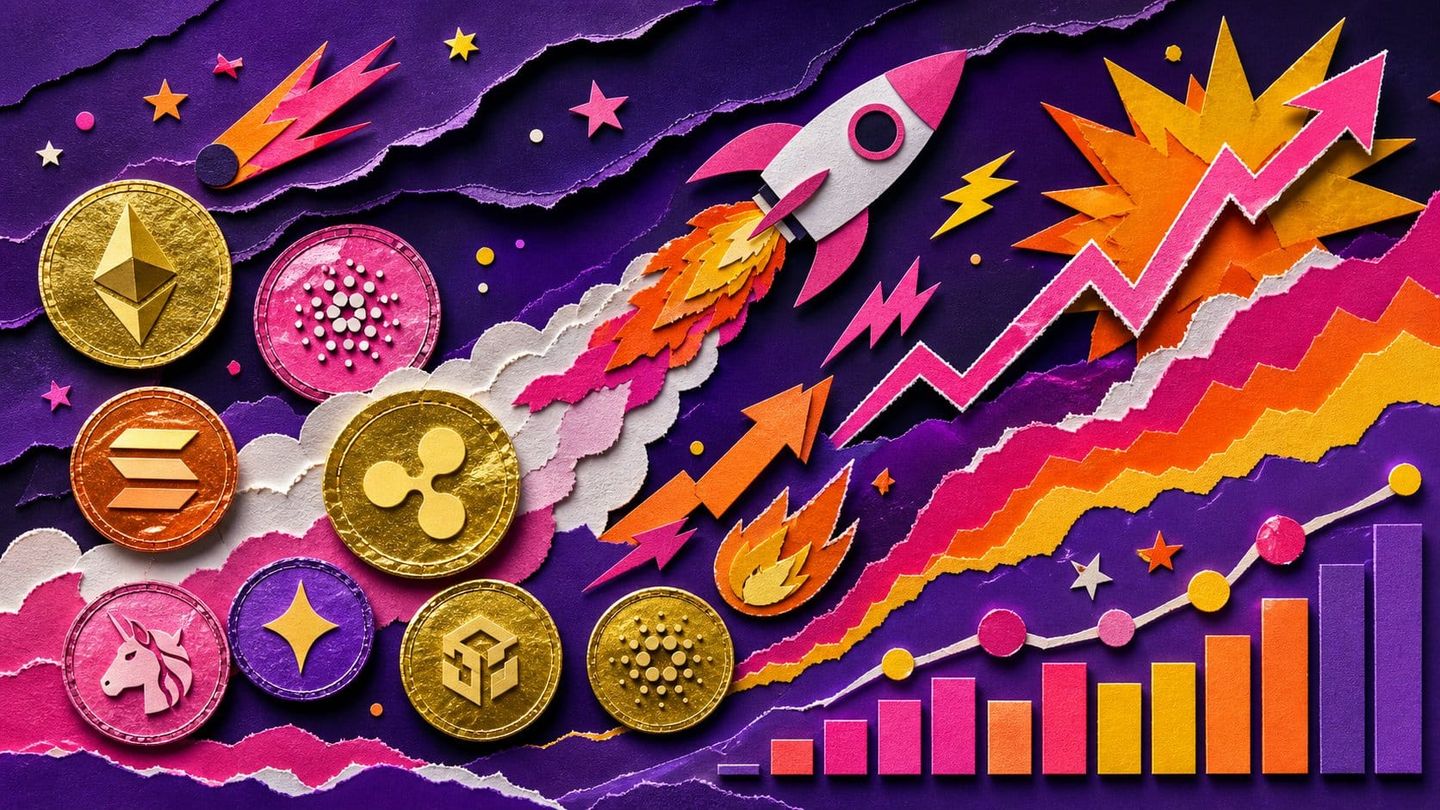
Altcoin sector rotation is the sequential shift of speculative and investment capital from Bitcoin into thematic altcoin sectors as Bitcoin dominance peaks and reverses — a pattern observable across every major cycle since 2017. As of mid-May 2026, that dominance sits between 52% and 60% depending on the aggregator and measurement date [1], while the CoinMarketCap Altcoin Season Index has ranged between 27 and 45 — firmly in "Bitcoin Season" territory [2]. What makes 2026 structurally different from prior Bitcoin-heavy regimes are two converging signals: a rare monthly death cross on the Bitcoin dominance chart — only the third such formation since 2017 — and a confirmed breakout of the OTHERS trendline (TradingView's aggregate of all non-BTC/ETH crypto) above its January 2026 resistance level. Historical precedent from the 2017 and 2020–21 cycles shows that broad altcoin rotation follows such breaks within 3–6 months [3]. Analysts currently flag May–July 2026 as the most probable breakout window, contingent on Bitcoin consolidating rather than accelerating to new highs.
Quick Answer: Bitcoin dominance (52–60%) and the Altcoin Season Index (27–45) still signal Bitcoin Season as of May 2026, but a rare BTC dominance monthly death cross — only the third since 2017 — and an OTHERS trendline breakout above January 2026 resistance historically point to a 3–6 month altcoin rotation window, with May–July 2026 as the primary probable period.
The monthly death cross on the Bitcoin dominance chart is a particularly infrequent signal. Prior occurrences in late 2017 and late 2020 each preceded broad altcoin outperformance phases lasting multiple months. The OTHERS trendline — which tracks the combined weight of the entire non-BTC/ETH market — broke above January 2026 resistance in recent weeks, a pattern that in both 2017 and the 2020–21 cycle preceded sector-level capital rotation by 3–6 months. The critical precondition professional analysts are watching most closely is Bitcoin's behavior at current levels: any sustained BTC acceleration above its prior all-time high resets the rotation clock and delays altcoin capital flow by an estimated 4–8 weeks based on prior cycle data [4].
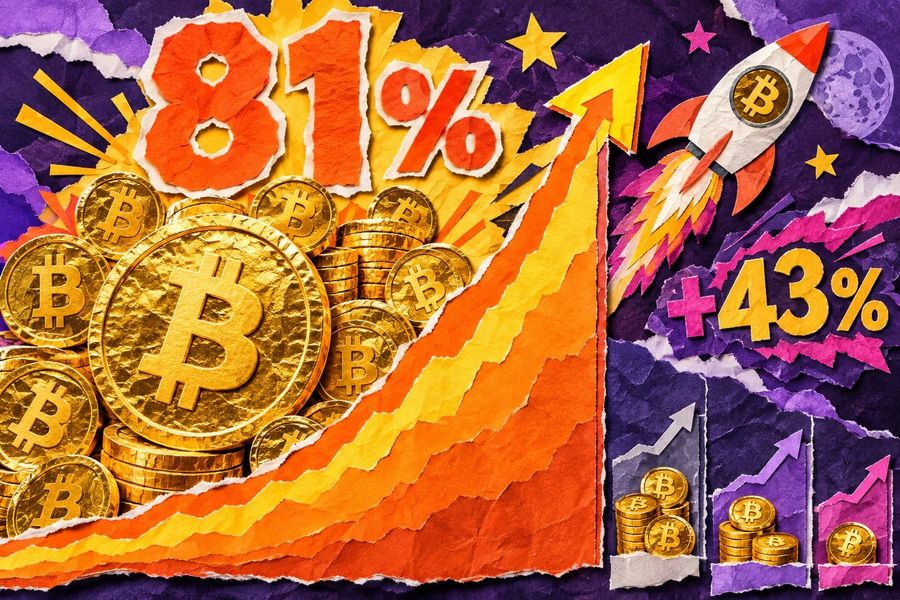
Several macro-structural conditions underpin the rotation thesis. Bitcoin ETF net inflows exceeded $87 billion as of Q1 2026, reducing BTC's 90-day realized volatility from 84% to 43% [5]. That compression creates a more stable base from which risk capital can rotate into higher-beta altcoin sectors. Combined stablecoin supply — USDT at $187 billion and USDC at $78 billion — represents substantial dry powder that can redeploy rapidly once the rotation clock confirms [5]. This structural setup is more institutionally supported than any comparable starting condition in prior cycles.
"The 2026 altcoin rotation setup is more institutionally supported than any prior cycle — ETF-normalized BTC volatility, stablecoin dry powder at record levels, and multiple on-chain revenue narratives simultaneously reaching inflection. The question is sequencing, not whether rotation occurs," — analysts at AInvest Research, Q1 2026.
| Signal | Current Reading (May 2026) | Historical Precedent | Implication |
|---|---|---|---|
| BTC Dominance | 52–60% (aggregator-dependent) [1] | Peaked ~69% in 2023 before prior rotation cycles | Elevated; compression required for broad altseason confirmation |
| Altcoin Season Index (CMC) | 27–45 range [2] | Above 75 = confirmed altseason threshold | Bitcoin Season — rotation not yet confirmed market-wide |
| BTC Dominance Monthly Death Cross | Confirmed — 3rd signal since 2017 [3] | 2017, 2020 — both preceded 3–6 month altcoin rotation | Strong leading indicator; 3–6 month follow-through expected |
| OTHERS Trendline | Broke above January 2026 resistance [3] | 2017, 2020–21 equivalent breaks preceded broad rotation | Early structural confirmation; precondition: BTC must not accelerate |
| BTC ETF Net Inflows | $87B+ cumulative [5] | No comparable prior cycle data point | Institutional BTC absorption may compress altseason duration to 4–12 weeks |
| Stablecoin Supply | USDT $187B + USDC $78B [5] | Highest on record at cycle inflection | Significant capital available for rapid redeployment into alts |
What Makes a Narrative 'Institutional-Grade': A 3-Filter Framework
Not every altcoin sector that attracts speculative attention qualifies as an institutional-grade narrative — the distinction that separates durable capital rotation from short-lived trading surges. An institutional-grade narrative is one where three independently verifiable filters align simultaneously: real on-chain revenue paid by actual users (not token inflation incentives), VC capital concentration from informed allocators with informational advantages, and balance-sheet adoption by institutions managing operational cash rather than making experimental bets. In 2026, three sectors clear all three filters simultaneously: Real-World Asset tokenization, AI tokens and DePIN infrastructure, and decentralized perpetual exchanges. This framework is not arbitrary — it reflects the structural conditions that have differentiated durable multi-month rotation phases from narrative-driven price spikes that reverse within weeks. Applying the three filters before capital is deployed is the analytical difference between entering a narrative in Stage 2 (Breakout) and arriving in Stage 4 (Saturation), when early-entry participants are actively distributing into retail inflow.
Filter 1 — On-Chain Revenue: The foundational question for any 2026 altcoin narrative is whether the protocol generates fees from real, paying users or whether its headline revenue metrics are inflated by token inflation incentives and circular liquidity mining. Protocols that cannot pass this filter — where "revenue" disappears when incentive programs end — have historically underperformed during the risk-off phases of rotation cycles. In 2026, this filter effectively segments AI tokens and DePIN networks from speculative consumer tokens. AI-related tokens declined only 14% in Q1 2026 versus a 30% decline for speculative consumer tokens in the same period, and outperformed traditional DeFi by 45% year-to-date [6]. Revenue backing creates cycle resilience — and resilience is what institutional allocators require before committing capital at scale.
Filter 2 — VC Dollar Concentration: Venture capital allocation is a leading narrative signal because VC firms conduct diligence months before retail attention arrives. In 2025, 40 cents of every crypto venture dollar went to firms also building AI products, up from 18 cents the prior year [7]. Total crypto VC deployment in 2025 reached $7.9 billion — a 44% year-over-year increase — with median seed valuations up 70% and more than 140 VC-backed companies acquired across four quarters [7]. VC clustering at this concentration is a leading signal, not a coincidence — it reflects informed sector conviction that precedes public market price discovery by 6–12 months.
Filter 3 — Balance-Sheet Adoption: The highest-conviction signal is when institutional treasurers use a tokenized instrument for operational cash management rather than as an experimental allocation. This is the structural distinction that makes 2026's RWA narrative fundamentally different from the tokenization discussions of 2021–22. When BlackRock's BUIDL fund exceeds $500 million and Franklin Templeton's tokenized money market fund surpasses $400 million [8], these institutions are not experimenting — they are deploying operational capital. That shift crosses the threshold from narrative to structural demand, which sustains price floors through cyclical drawdowns in ways that incentive-driven narratives cannot.
"VC clustering tells you where institutional conviction was six months ago. On-chain revenue tells you whether that conviction was justified. Balance-sheet adoption tells you the narrative is structural, not cyclical," — framework analysis, SVB 2026 Crypto Outlook.
RWA Tokenization: Where Institutional Capital Is Actually Deployed
Real-World Asset (RWA) tokenization is the process of representing ownership rights to off-chain financial instruments — government bonds, equities, commodities, money market funds — as programmable tokens on public or permissioned blockchains. It is the 2026 cycle's most institutionally grounded narrative, and the data confirms it at scale. On-chain RWA market capitalization reached $19.3 billion in Q1 2026 — a 256.7% increase from $5.42 billion at the start of 2025 [1] — and expands to approximately $36 billion when permissioned chains including JPMorgan's Onyx network and the Canton Network are included [2]. This growth is not driven by token price appreciation — it reflects the genuine institutional deployment of real capital into on-chain instruments that offer yield, programmability, and settlement efficiency unavailable in traditional financial infrastructure. BCG and institutional analysts project $16–30 trillion in tokenized assets by 2030, suggesting that the current $19.3 billion figure represents less than 0.2% of the projected terminal market [1].
Tokenized U.S. Treasuries dominate the RWA landscape, commanding 67.2% sector share at more than $13 billion in on-chain value as of Q1 2026. BlackRock's BUIDL fund exceeded $500 million in assets under management, while Franklin Templeton's tokenized money market fund passed $400 million [1]. These are not crypto-native protocols — they are regulated asset managers deploying institutional Treasury inventory on-chain. The yield advantage of on-chain T-bills over traditional settlement infrastructure, combined with the programmability of smart-contract-enabled collateral management, explains institutional adoption more clearly than any crypto-specific thesis.
"Tokenized Treasuries have crossed the threshold from proof-of-concept to operational infrastructure for institutional cash management. The $13 billion figure understates total exposure when you include permissioned-chain deployments," — CoinGecko Research, RWA Report Q1 2026.
Beyond Treasuries, tokenized equities and tokenized commodities are the two fastest-scaling sub-sectors. Tokenized stocks scaled from $2.09 million in mid-2025 to $486.69 million by March 2026 [1], generating $15.1 billion in Q1 spot trading volume. Tokenized gold — primarily XAUT (Tether Gold) and PAXG (PAX Gold) — recorded $90.7 billion in Q1 2026 spot trading volume, surpassing its entire 2025 full-year volume of $84.6 billion in a single quarter [1]. The gold tokenization surge reflects macro uncertainty and demand for hard-asset exposure accessible within crypto-native trading infrastructure. The OCC's conditional bank charters granted to five digital-asset trust banks in December 2025 provided the regulatory scaffolding that institutional capital was waiting for before committing at production scale [2].
| RWA Sub-Sector | Q1 2026 On-Chain Value / Volume | Key Products | Growth Context |
|---|---|---|---|
| Tokenized U.S. Treasuries | $13B+ on-chain market cap [1] | BlackRock BUIDL ($500M+), Franklin Templeton ($400M+) | 67.2% of total public-chain RWA sector |
| Tokenized Equities | $486.69M cap; $15.1B Q1 trading volume [1] | Multiple regulated issuers on Ethereum, Stellar | Scaled from $2.09M in mid-2025 — 23,200%+ growth |
| Tokenized Gold | $90.7B Q1 2026 spot volume [1] | XAUT (Tether Gold), PAXG (PAX Gold) | Exceeded full-year 2025 total ($84.6B) in one quarter |
| Private Credit / Real Estate | Included in $36B permissioned-chain aggregate [2] | JPMorgan Onyx, Canton Network | Primarily permissioned infrastructure; growing |
| Total RWA (Public Chains) | $19.3B Q1 2026 [1] | — | +256.7% from $5.42B (start of 2025) |
The structural distinction from prior tokenization narratives is what makes the 2026 RWA thesis credible to institutional allocators. In 2021–22, RWA tokenization discussions were largely theoretical — small pilots with no production scale and no operational cash management use cases. In 2026, the cash management use case is confirmed: institutional treasurers are using tokenized instruments for routine operational deployment, not experimental allocation. This distinction sustains capital flows through cyclical drawdowns in ways that prior tokenization narrative cycles could not.
AI Tokens and DePIN: Infrastructure Revenue Over Roadmap Promises
AI crypto tokens and Decentralized Physical Infrastructure Networks (DePIN) represent two adjacent but structurally distinct sub-sectors that both clear the institutional-grade revenue filter in 2026. The AI crypto sector comprises 919 active projects with a combined market capitalization of approximately $22.6 billion [1]. The key differentiation from prior AI token cycles is that leading protocols are generating measurable on-chain fees from deployed AI agent economies — not from roadmap promises or whitepaper projections. Bittensor (TAO) operates at approximately $3.45 billion in market capitalization and runs a decentralized AI model training and inference marketplace where validators and miners are compensated for verified computational outputs [1]. Render Network (~$887 million market cap) monetizes idle GPU compute for AI rendering workloads, and Fetch.ai coordinates autonomous AI agents executing on-chain economic tasks. By Q1 2026, AI agent wallets accounted for an estimated 8–12% of total DeFi transaction volume — a verifiable on-chain metric, not a projection [2].
The revenue resilience case for AI tokens is quantified in Q1 2026 comparative performance. AI-related tokens declined only 14% in a quarter when speculative consumer tokens fell 30% and outperformed traditional DeFi tokens by 45% year-to-date [2]. This relative resilience is a direct consequence of on-chain fee revenue that continues generating regardless of token price — the underlying AI compute demand does not stop because crypto sentiment turns negative. VC capital confirms the same thesis: 40 cents of every crypto venture dollar in 2025 went to firms also building AI products, up from 18 cents the prior year [3].
"AI tokens that generate protocol revenue from deployed agent economies are behaving more like infrastructure software than speculative assets — their drawdowns are shallower and their recovery profiles are faster than the broader altcoin market," — AInvest Research, Q1 2026 altcoin analysis.
DePIN (Decentralized Physical Infrastructure Networks) is the adjacent sector that surpassed the oracle sector in total market capitalization in 2026. With 650+ live networks and a combined market cap of $9–10 billion across 264 tracked tokens [4], DePIN is distinguished from prior infrastructure narratives by one factor that is verifiable on-chain: it generated approximately $150 million in revenue in January 2026 alone, paid by real customers — not protocol-internal token incentives — for storage, compute, wireless data credits, and mapping services [4]. The sub-vertical breakdown maps four distinct addressable markets: Filecoin (storage and AI data pipelines), Render and Aethir (GPU compute for AI inference), and Hivemapper (geospatial and mapping data). Each sub-vertical is addressable by a different capital rotation wave, which means DePIN can sustain narrative momentum across multiple rotation stages rather than peaking with a single catalyst. Analysts project a $3.5 trillion total addressable value for the DePIN sector by 2028, contingent on continued AI compute demand growth [4].
Perpetual DEX: Reading the Derivatives Rotation Signal
Decentralized perpetual exchanges represent the third institutional-grade breakout narrative in 2026, and Hyperliquid's structural dominance of the sector makes it the primary lens through which to read the derivatives rotation signal. Hyperliquid commands more than 70% of the on-chain perpetuals market share [1], with $40 billion in weekly volume and $9.5 billion in peak open interest. The platform recorded $1.59 trillion in cumulative trading volume in the six months between August 2025 and January 2026, and generated $492.7 billion in Q1 2026 perpetuals volume [1]. What elevates decentralized derivatives to institutional-grade status is a combination of structural properties that centralized exchanges cannot fully replicate: self-custody throughout the trade lifecycle, transparent on-chain liquidations, verifiable fee revenue, and execution depth now comparable to mid-tier centralized exchange order books. These properties matter to institutional allocators in a post-FTX regulatory environment where counterparty risk is an active concern rather than a theoretical footnote.
Hyperliquid's HIP-3 framework represents a particularly significant infrastructure moat. It enables permissionless perpetual markets for real-world assets — including crude oil futures accessible during weekend hours when traditional exchanges are closed — directly on-chain. The broader RWA perps market reached $524.8 billion in Q1 2026, with open interest in tokenized commodity and macro futures jumping from $140 million to $6.68 billion over 15 months [2]. That open interest growth trajectory is the structural market share capture signal that distinguishes a durable narrative from a cyclical volume surge driven by short-term protocol incentives.
"Hyperliquid's combination of self-custody, transparent liquidations, and CEX-comparable execution depth has shifted the conversation from 'DEX as retail fallback' to 'DEX as institutional-grade infrastructure' — the volume and open interest numbers confirm this is a structural, not cyclical, shift," — Atomic Wallet Academy, Perpetual DEX 2026 Report.
The key metric to monitor through H2 2026 is the ratio of on-chain perpetuals volume to total crypto derivatives volume market-wide. A rising ratio sustained across multiple months indicates that retail and institutional traders are genuinely migrating from centralized to decentralized derivatives infrastructure — structural market share capture rather than a temporary trading surge. Hyperliquid's 70%+ share concentration also creates a secondary tracking opportunity: any significant challenger protocol gaining meaningful market share in H2 2026 would represent a secondary rotation within the sector, as capital rotates from the dominant protocol into earlier-stage competitors at lower valuations. That intra-sector rotation pattern is a reliable late-stage signal in prior DEX narratives, worth monitoring as a lagging indicator of sector maturity and a leading indicator of the next concentration shift.
The Narrative Lifecycle: Mapping Rotation Stages Before Crowds Arrive
Every institutional-grade crypto narrative follows a four-stage lifecycle from inception to saturation, and the most actionable insight from rotation analysis is identifying which stage a narrative occupies before the majority of market participants have recognized it. The four stages — Seed, Breakout, Momentum, and Saturation — each have distinct on-chain and off-chain signals detectable in advance of token price moves. This lifecycle framework is what separates position sizing based on analytical conviction from position sizing based on price momentum — the latter requires being right and being early, while the former requires only being right. The three 2026 narratives covered in this article currently occupy different positions within this lifecycle, which directly determines how much of the expected rotation opportunity remains ahead versus behind.
Stage 1 — Seed (price-invisible): At the Seed stage, narrative signals are detectable before any token price movement. GitHub commit velocity in relevant protocol repositories accelerates. VC term sheets circulate and become visible 3–6 months later in public funding announcements. Developer talent migration shows up on crypto job boards before it appears in protocol activity metrics. Whitepaper citations increase in academic and institutional research. For the three 2026 narratives, the Seed stage passed in 2024–early 2025. VC concentration data and developer activity were the leading signals available to systematic monitors of on-chain and off-chain data [1].
Stage 2 — Breakout: At the Breakout stage, TradingView sector aggregates break multi-month resistance — the structural equivalent of the OTHERS trendline breakout observed in early 2026. CoinGecko category gainers tables begin showing sector tokens rotating into the top weekly performers. Specialized crypto media coverage accelerates before mainstream financial press picks up the narrative. This is where position building is most analytically efficient — narrative momentum is confirmed but broad retail inflow has not yet arrived. RWA tokenization crossed the Breakout threshold in Q1 2026 [2]; AI tokens and DePIN are entering it as of mid-2026.
Stage 3 — Momentum: The Momentum stage is characterized by centralized exchange listing announcements for sector tokens, social volume spikes across major crypto platforms, and surging on-chain new wallet addresses for the sector's leading protocols. Critically, laggard tokens within the sector begin outperforming the leaders — capital rotates from proven names to earlier-stage projects as conviction spreads more broadly. This is where retail participation arrives at scale and where position sizing discipline becomes the primary risk management variable. Valuation compression toward Stage 4 can begin rapidly once social volume peaks, so Momentum stage entries require pre-defined exit criteria based on on-chain distribution signals.
Stage 4 — Saturation: At the Saturation stage, revenue-to-valuation multiples compress toward comparable software SaaS multiples, eliminating the valuation premium that justified early entry. Founder and VC token unlock schedules begin activating — visible in advance on on-chain vesting trackers — and early-entry wallet distribution accelerates. The signal-to-noise ratio inverts: social volume is highest, informational edge is lowest, and retail inflow is peaking. Tracking on-chain wallet distribution from early-entry addresses — specifically, whether addresses that accumulated in Stage 1–2 are net sellers — is the most actionable leading indicator that a narrative is transitioning from Momentum to Saturation.
Risk Calibration: What Derails Each Sector Narrative
Every rotation thesis carries embedded risks capable of invalidating the setup entirely, and the 2026 altcoin rotation is no exception. The most critical risk to monitor is not sector-specific — it is macro-structural. Bitcoin dominance reaccelerating above 65% historically resets altcoin rotation timelines across all sectors simultaneously [1]. A monthly close above 65% BTC dominance signals that ETF-driven institutional Bitcoin demand is absorbing all available risk capital, delaying altcoin rotation by 4–8 weeks or more. This single indicator — the weekly BTC dominance chart and its monthly close — is non-negotiable as a macro position monitor for any trader positioned in thematic altcoin sectors. The 'selective altseason' thesis compounds this risk: ETF-driven institutional Bitcoin demand may structurally prevent the broad-based 75%-of-top-100-outperforming signal from triggering in 2026, meaning sector-specific bets replace theme-agnostic altcoin exposure and rotation windows run 4–12 weeks rather than multi-quarter cycles [1].
RWA-specific regulatory risk is the second most actionable risk vector. The SEC retains jurisdiction over tokenized securities in the United States, and a reclassification of tokenized Treasury funds or equity instruments as unregistered securities would suppress institutional on-chain flows without advance price warning. The EU's MiCA framework creates a parallel risk: enforcement actions targeting tokenized financial instruments could restrict European institutional participation in the RWA sector at precisely the moment when adoption is scaling [2]. Neither risk is highly probable in the near term given the OCC's December 2025 bank charter grants and MiCA's phased implementation timeline, but both are binary and low-latency — they would materialize without price-action warning.
"Revenue multiples for leading AI token protocols remain elevated relative to comparable traditional software SaaS companies — the premium is justified only if on-chain fee growth sustains. One quarter of stalling fee growth would likely trigger sector-wide repricing well before any protocol-level deterioration is visible," — AInvest Research, 2026 altcoin risk analysis.
The AI token risk is more predictable in structure, if not in timing: revenue multiples remain elevated relative to traditional software SaaS comparables. This premium is sustainable only if on-chain fee growth continues at current rates for Bittensor, Render, and Fetch.ai. A single quarter of fee growth stalling — even without a simultaneous token price decline — would likely trigger multiple compression as institutional allocators mark down forward revenue assumptions [3]. Monitor on-chain fee dashboards for the top three AI protocols weekly as the primary leading indicator of AI token valuation risk. The broader macro wildcard — Federal Reserve rate repricing failure or sustained USD strength — compresses risk appetite broadly across emerging asset classes. All three 2026 altcoin narratives remain positively correlated to global liquidity conditions despite individual structural differentiation. Treating macro correlation as fully neutralized by structural adoption would be an analytical error.
2026 Rotation Outlook: Probable Windows, Catalysts, and Weekly Watchlist
Based on converging signals from on-chain data, VC deployment patterns, and historical cycle analogs, the May–July 2026 window is the primary breakout period flagged by multiple analyst sources for altcoin sector rotation [1]. This window is a conditional probability, not a fixed prediction. The critical precondition remains Bitcoin's near-term behavior: any sustained BTC breakout above its prior all-time high resets the rotation clock as institutional capital chases Bitcoin momentum rather than rotating into altcoin sectors. Based on prior cycle data, such a delay would extend the altcoin rotation window by 4–8 weeks [2]. If Bitcoin consolidates within its current range through June, the probability of a meaningful altcoin rotation in the summer window increases materially. Continued Federal Reserve rate repricing — markets pricing in cuts that the Fed delivers — also supports the global liquidity conditions required for the rotation to sustain beyond the initial breakout impulse [3].
Sector sequencing from prior cycles provides actionable guidance on capital flow order. In the 2017 and 2020–21 cycles, infrastructure and institutional-grade narratives rotated first, followed by mid-cap DeFi and application-layer protocols, with speculative narrative tokens outperforming last — typically at the tail end of rotation when leverage is highest and duration is shortest [4]. The 2026 equivalent maps as: RWA tokenization and AI/DePIN infrastructure first (already in motion), mid-cap DeFi second, speculative narrative tokens last. One important caveat: ETF-driven institutional Bitcoin demand in 2026 may compress the duration of each rotation wave versus prior cycles. Analysts tracking the 'selective altseason' thesis suggest 4–12 week rotation windows — rather than multi-quarter cycles — as the realistic calibration for current market structure [2].
The on-chain confirmation checklist for validating that rotation is underway consists of four independently trackable metrics. First, the CMC Altcoin Season Index sustained above 50 for two or more consecutive weeks — currently ranging 27–45, meaning rotation has not yet confirmed market-wide. Second, the OTHERS trendline holding above January 2026 resistance rather than retesting and failing it. Third, the ETH/BTC ratio recovering from its cyclical floor, which historically precedes broad altcoin outperformance phases. Fourth, Hyperliquid open interest sustaining above $9 billion, indicating risk appetite in on-chain derivatives markets [5]. None of these four metrics alone confirms rotation — all four sustaining simultaneously for multiple consecutive weeks constitutes the high-conviction confirmation setup.
The weekly data dashboard for active traders tracking this rotation should include: the BTC dominance chart with monthly close as the primary timeframe, Hyperliquid open interest trends and the volume-to-open-interest ratio, tokenized Treasury on-chain flow dashboards (RWA.xyz), DePIN sector revenue trackers (Filecoin, Render, and Hivemapper protocol dashboards update frequently), and the CoinGecko category-level gainers tables for RWA and AI sectors. These data points collectively form a real-time rotation signal dashboard capable of identifying breakout confirmation before price momentum becomes broad consensus — which is the only time signal that retains analytical value.
Frequently Asked Questions
What is altcoin sector rotation and why does it matter in 2026?
Altcoin sector rotation is the sequential movement of capital from Bitcoin into thematic altcoin sectors in distinct phases — institutional-grade and large-cap narratives first, then mid-cap application-layer protocols, then speculative assets last. It matters in 2026 because two rare structural signals have aligned simultaneously: a monthly death cross on the Bitcoin dominance chart (only the third such signal since 2017) [1] and the OTHERS trendline (TradingView's non-BTC/ETH aggregate) breaking above January 2026 resistance. Historical analogs from 2017 and 2020–21 show broad altcoin rotation follows such breaks within 3–6 months, placing the May–July 2026 window as the highest-probability breakout period. Three institutionally validated narratives are in position: RWA tokenization at $19.3 billion in on-chain market cap, AI/DePIN generating $150 million in monthly on-chain revenue, and perpetual DEX with $492.7 billion in Q1 2026 volume.
How do I know when altcoin season is actually starting?
There are four specific signals to monitor simultaneously. First, the CoinMarketCap Altcoin Season Index sustaining above 50 for two or more consecutive weeks — currently ranging 27–45 as of May 2026, meaning rotation has not yet confirmed [2]. Second, the monthly Bitcoin dominance chart confirming a sustained downtrend — the death cross is formed but dominance must continue compressing below 52% on monthly closes. Third, the OTHERS trendline holding above January 2026 resistance rather than retesting and failing it. Fourth, the ETH/BTC ratio recovering from its cyclical floor, which historically precedes broad altcoin outperformance. All four signals sustaining for two or more consecutive weeks constitutes the high-conviction confirmation setup before broad sector positioning.
Which altcoin sectors are showing the strongest 2026 breakout signals?
Three sectors clear the institutional-grade narrative filter in 2026. RWA tokenization leads with $19.3 billion in on-chain market capitalization as of Q1 2026 — a 256.7% increase from $5.42 billion at the start of 2025 — with BlackRock BUIDL exceeding $500 million and Franklin Templeton's tokenized money market fund surpassing $400 million [3]. AI tokens and DePIN generate verifiable on-chain fee revenue: AI agent wallets accounted for 8–12% of DeFi transaction volume in Q1 2026, and DePIN generated approximately $150 million in on-chain revenue in January 2026 alone from real customers paying for storage, compute, and wireless services [4]. Perpetual DEX, led by Hyperliquid's 70%+ on-chain market share and $492.7 billion in Q1 2026 volume, constitutes the third narrative [5].
What is the difference between RWA and DePIN as crypto sectors?
RWA tokenization and DePIN are fundamentally different capital flow mechanisms despite appearing in the same narrative cluster. RWA tokenizes existing off-chain financial assets — U.S. Treasuries, equities, gold, money market instruments — onto public or permissioned blockchains, driven by institutional balance-sheet demand for programmable yield and settlement efficiency. The capital source is institutional: asset managers, treasurers, and regulated funds managing operational cash. DePIN, by contrast, coordinates real-world physical infrastructure — storage capacity, GPU compute, wireless bandwidth, geospatial mapping — through token incentive networks, where revenue comes from operational customers paying for actual services delivered. DePIN generated approximately $150 million in on-chain revenue in January 2026 from verifiable service buyers [4]. In a rotation framework, these are distinct capital flows — institutional treasury reallocation (RWA) and operational infrastructure monetization (DePIN) rotate independently and can sustain simultaneously without cannibalizing each other's liquidity.
What could stop the 2026 altcoin rotation from materializing?
Five specific risk factors could prevent or significantly delay the 2026 altcoin rotation. The highest-probability risk is Bitcoin dominance reaccelerating above 65%, which historically resets altcoin rotation timelines across all sectors simultaneously [6]. A Bitcoin breakout above its prior all-time high would delay altcoin capital flow by an estimated 4–8 weeks based on prior cycle data. Regulatory shock — specifically an SEC reclassification of tokenized securities or MiCA enforcement actions targeting tokenized financial instruments — could suppress RWA on-chain flows without advance price warning. Federal Reserve rate repricing failure or sustained USD strength compresses risk appetite broadly across all crypto sectors, including the three institutionally differentiated narratives covered here. AI token revenue growth stalling for even one quarter could trigger multiple compression across the sector as institutional allocators revise forward estimates. Finally, the 'selective altseason' thesis suggests that ETF-driven institutional Bitcoin demand in 2026 may structurally prevent the broad-based 75%-of-top-100-outperforming signal from triggering, compressing altseason windows to 4–12 weeks rather than the multi-quarter cycles of 2017 and 2020–21 [6].
What the 2026 Rotation Framework Means for Active Traders
The 2026 altcoin rotation thesis rests on three structural legs that converge in a way that has no exact historical parallel: a rare macro timing signal (monthly BTC dominance death cross plus OTHERS trendline breakout), three institutionally validated narratives with verifiable on-chain revenue ($19.3 billion RWA market cap growing at 256.7% year-on-year, $150 million monthly DePIN revenue, $492.7 billion in Q1 perpetual DEX volume), and a clear risk calibration framework identifying the specific conditions — BTC dominance above 65%, regulatory shock, macro liquidity tightening — that would invalidate the thesis. The May–July 2026 window is the highest-probability breakout period based on converging signals, but probability is not certainty. Position sizing should reflect the conditional nature of the setup: the on-chain confirmation metrics are not yet fully cleared, and the rotation clock resets if Bitcoin breaks decisively higher before altcoin sectors confirm their breakouts.
The practical application of this framework is a weekly data discipline rather than a single positioning decision made in May and reviewed in July. Monitor the BTC dominance monthly chart for trend direction and the CMC Altcoin Season Index for the above-50 confirmation signal. Track tokenized Treasury on-chain flow via RWA.xyz dashboards for institutional capital direction in the RWA sector. Monitor DePIN sector revenue weekly across the Filecoin, Render, and Hivemapper protocol dashboards — these update frequently and provide real-time revenue validation. Watch Hyperliquid's open interest as a derivatives market health and risk appetite signal. When all four on-chain confirmation metrics sustain for two or more consecutive weeks simultaneously, the rotation is underway. Until that confirmation, sector analysis provides the map — on-chain data provides the compass.
The three narratives described in this article — RWA tokenization, AI/DePIN infrastructure, and decentralized perpetual exchanges — are not interchangeable exposures. Each occupies a different lifecycle stage, carries a different regulatory risk profile, and responds to different rotation catalysts in a different sequence. Understanding these distinctions analytically before capital is deployed is the difference between participating in a structural market shift and arriving after the thesis has already become consensus. Rotation analysis is most valuable at the point of maximum uncertainty — which is precisely where these three narratives stand in May 2026.
Last updated: 2026-05-16. This article is reviewed and updated when on-chain data, VC deployment reports, or regulatory developments materially affect the three primary narratives covered. All market data is sourced from public on-chain dashboards, research reports, and cited analytics providers as referenced throughout.
Related Articles
- Altcoin Sector Rotation 2026: DePIN, AI, RWA & Gaming Breakout Signals
- Crypto Market May 2026: TON Surge, BTC ETF Flows Explained
- Altcoin Sector Breakout Narratives 2026: RWA, AI, and Perp DEXs
- DASH Surges 20% in 24 Hours as Crypto Bears Lose $300M in Liquidations
- Top 5 Altcoins to Watch in May 2026: BIO, ETH, SOL, HYPE & XRP