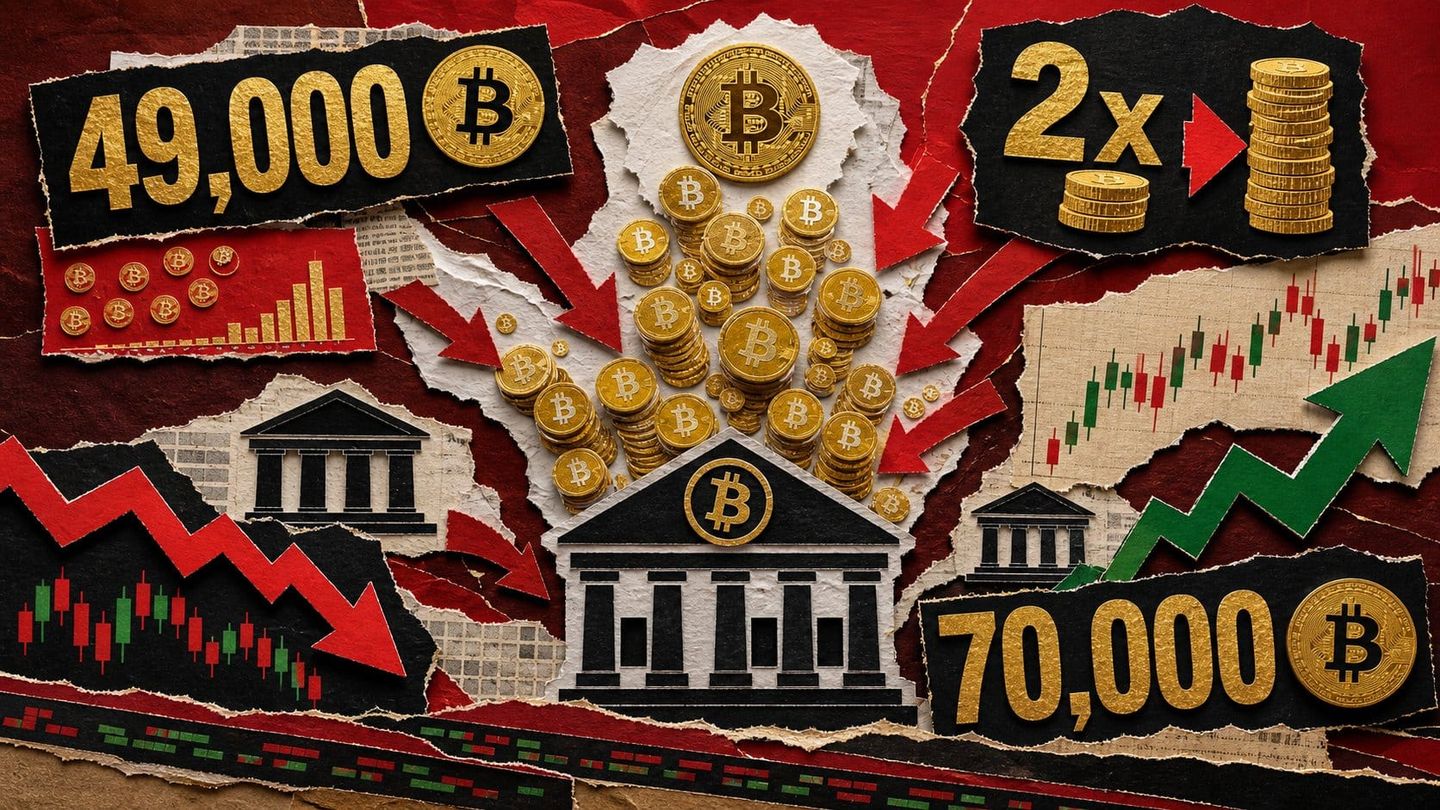
Bitcoin's on-chain data flashed a signal traders rarely see: on a single day in late June, roughly 49,000 BTC flooded onto exchanges — and the profile of who sent them looked distinctly institutional.
What Happened: 49,000 BTC Moved to Exchanges in a Single Day
On June 30, 2026, Bitcoin exchange inflows spiked to roughly 49,000 BTC in a single day — a level CryptoQuant labeled a "rare extreme" that has occurred only a handful of times in 2026 . Coins moving onto exchanges typically signal intent to trade or sell, so a surge of this size draws immediate attention.
Quick Answer: On June 30, 2026, roughly 49,000 BTC moved onto exchanges in one day — a level CryptoQuant calls a "rare extreme," breached only about four other times in 2026. The average deposit size doubled from ~1 BTC to ~2 BTC, pointing to whales and institutions rather than retail sellers.
The clearest tell was deposit size. The average deposit doubled from roughly 1 BTC to 2 BTC — a shift inconsistent with retail panic-selling in small increments and pointing squarely at whales and institutions repositioning coins onto trading venues . The 49,000 BTC print stopped just short of the ~50,000 BTC threshold breached only about four other times in 2026 .
The move did not happen in isolation. Concurrent signals across the market included:
- Ethereum inflows exceeding 1.25 million ETH in late June
- Altcoin deposit transactions reaching nearly 45,000 daily — the highest in roughly two months
"Larger holders appear to be behind the move, and the setup closely mirrors the pattern that preceded the prior leg down," — Julio Moreno, Head of Research at CryptoQuant (source: FinanceFeeds).
Why It Matters: Warning Flag, Not a Confirmed Sell Signal
The 49,000 BTC deposit spike matters because it echoes a recent playbook, not because it guarantees a drop. CryptoQuant flagged that the June 30 surge mirrored conditions seen before Bitcoin slid from roughly $82,000 in early May to below $58,000 by late June 2026 . Inflows show coins moving to tradable venues; they do not confirm that sellers will act on them.
"A rare extreme," — Julio Moreno, Head of Research at CryptoQuant, describing the deposit surge and noting the setup closely mirrors the pattern that preceded the prior leg down (source: FinanceFeeds).
The rebound that followed carried its own warning signs. Prices recovered into the low-$60,000s, yet the market structure looked hollow rather than durable. CryptoQuant's Axel Adler pointed to a telling divergence between price action and positioning after the June 30 sell-off .
- Falling open interest: Open interest dropped by roughly 23,000 BTC — from about 368,000 BTC at the start of July 1 to the 342,000–346,000 BTC range by the morning of July 2. Rising prices paired with shrinking open interest points to a short squeeze, not fresh conviction .
- Thin stablecoin liquidity: Binance's USDT Z-Score sat at -1.81, signaling weak buying-side firepower. If the deposited whale supply is used to offload coins, a fragile rebound is vulnerable to reversal .
There is a genuine offset worth weighing. US spot Bitcoin ETFs recorded $221.7 million of net inflows that Thursday, ending a 10-day outflow streak — a partly bullish counterweight to the on-chain caution . But institutional demand through ETFs does not cancel the exchange-inflow signal; it sits alongside it. The balanced read as of early July 2026: elevated near-term volatility, a rebound built on shaky footing, and seller intent that remains unconfirmed.
What to Watch Next: Key Levels and Signals
The next few sessions hinge on a narrow price band. Bitcoin was trading in the low-$60,000s in the days after the spike — around $61,528 in one reading and roughly $62,180 in another — after a weekly low beneath $58,000 . Analysts frame the levels bracketing that range as the decision points for direction.
- $65,000 resistance: the ceiling analysts are watching; a clean break would weaken the bearish case .
- $60,000 support: immediate floor; losing it opens downside room .
- ~$53,000 realized price: the downside target flagged if support breaks .
Beyond price, two derivatives signals separate a real bid from a squeeze. Net taker volume turned sharply higher after the June 30 sell-off, reaching about $68 million by July 2 . Yet open interest fell by roughly 23,000 BTC over July 1–2, from about 368,000 BTC toward the 342,000–346,000 BTC range . Rising prices on falling open interest read as a short squeeze, not durable momentum. A recovery in open interest would signal a genuine bid.
Macro cross-checks round out the picture. The US Dollar Index was consolidating above its 100.543 breakout level, and the US 10-year Treasury yield faced resistance at 4.51%, the highs reached June 22–23, 2026 — both worth watching for pressure on risk assets . Seasonality adds nuance: the S&P 500 has closed green every July since 2014, averaging +2.8%, while weakness historically clusters in August–October (video: Crypto Banter).
The concrete takeaway: watch whether Bitcoin holds $60,000 and whether open interest rebounds alongside price. Those two tells will confirm whether early July's bounce is a durable bid or a fragile squeeze waiting to unwind.
Watch / Sources
Frequently asked questions
Why does a spike in Bitcoin exchange inflows signal volatility?
Coins moved onto exchanges are positioned for trading or selling, so a sudden large inflow shrinks the supply sitting in cold storage and signals that holders are prepared to act. On June 30, 2026, inflows hit roughly 49,000 BTC — a level CryptoQuant flagged as a "rare extreme" that has preceded sharp directional moves in either direction .
Does the doubled average deposit size (1 BTC → 2 BTC) really confirm whale activity?
It strongly suggests it, though it does not confirm intent to sell. The average deposit size doubled from roughly 1 BTC to 2 BTC during the June 30 surge . Retail sellers typically move small amounts, so a jump toward 2 BTC is statistically inconsistent with retail panic and instead points to fewer, larger actors — whales or institutional desks — repositioning deliberately.
What does falling open interest during a price rebound actually mean?
When Bitcoin's price rises while open interest falls, it usually means short positions are being closed rather than fresh longs being opened. Open interest dropped roughly 23,000 BTC — from about 368,000 BTC to the 342,000–346,000 BTC range — between July 1 and July 2, 2026, even as price recovered . That divergence signals a short squeeze — position-clearing, not durable conviction buying.
Are US Bitcoin ETF inflows a bullish counterweight to the exchange inflow warning?
They are constructive, but they do not cancel the on-chain warning. US spot Bitcoin ETFs recorded $221.7 million of net inflows that week, ending a 10-day outflow streak . However, ETF demand and exchange positioning are separate signals, and thin stablecoin liquidity — Binance's USDT Z-Score at -1.81 — still capped near-term upside .