2026 Altcoin Market: A Structurally Different Cycle
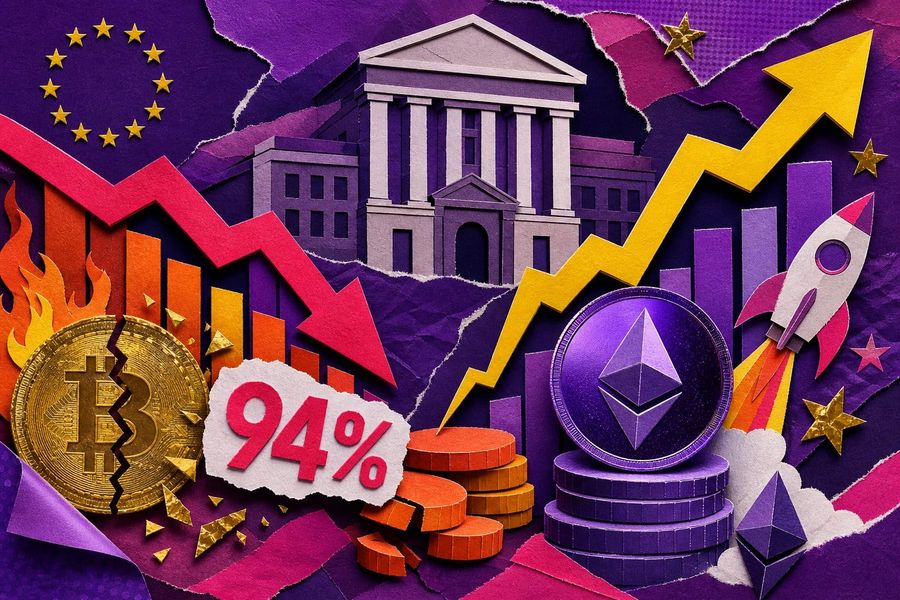
The 2026 altcoin market represents a structurally distinct phase in digital asset history — one where institutional capital mandates, regulatory legislation, and auditable on-chain revenue have displaced speculative narratives as the primary drivers of capital flows and price discovery. Unlike the 2021 cycle, which was characterized by retail-driven momentum and social media sentiment, the current environment is being shaped by documented fund allocation decisions, exchange-traded fund filing activity, and verifiable protocol revenue data. According to Grayscale's 2026 Digital Asset Outlook, this period formally marks the "institutional era" of digital assets — a designation that reflects the changing composition of new market participants and the rigorous due-diligence frameworks they now apply. Coinbase Institutional data confirms that allocation mandates previously suspended pending regulatory clarity have been formally unlocked across the United States and European Union, enabling structured institutional capital to enter altcoin markets in auditable, measurable quantities for the first time at scale.
Quick Answer: The 2026 altcoin cycle is structurally distinct from 2021 — driven by institutional capital, regulatory clarity (US CLARITY Act, EU frameworks), and verifiable on-chain metrics rather than retail speculation. DeXe (DEXE) leads large-cap performance at +363.67% YTD, and Hyperliquid (HYPE) has attracted spot ETF filings from Grayscale, Bitwise, and 21Shares, signaling deep institutional demand.
Open interest has emerged as one of the most reliable early signals in this cycle. When a token's open interest recovers from near-zero levels to material thresholds — as DeXe demonstrated, climbing from effectively zero in January 2026 to over $20 million by mid-April — it frequently signals institutional positioning rather than speculative retail accumulation. This pattern has been observed across multiple top YTD performers in 2026 and distinguishes genuine capital entry from social-media-driven price action that dominated earlier cycles without corresponding capital depth.
ETF filing activity now functions as an additional institutional conviction signal. Following the successful launches of Bitcoin and Ethereum spot ETFs, asset managers including Grayscale, Bitwise, and 21Shares submitted Q1 2026 filings for additional altcoin-based products, targeting tokens with established market structures and regulatory footing. According to Coinbase Institutional's 2026 Crypto Market Outlook, these filings reflect a qualitative shift: institutional participants are now building differentiated exposures to specific protocol categories — decentralized derivatives, real-world asset tokenization, payment infrastructure — rather than treating the entire asset class as a single undifferentiated allocation block.
"Regulatory clarity has moved from a tail risk to a structural tailwind. The pipeline of institutional allocation mandates unlocked by recent legislative progress is still in its early stages — the capital formation we are observing now is the leading edge of a much larger wave." — Zach Pandl, Head of Research at Grayscale Research (source: Grayscale 2026 Digital Asset Outlook)
For active traders, this environment has direct practical implications: the metrics most reliably correlated with outperformance in 2026 are on-chain — open interest trends, protocol revenue growth, stablecoin inflows, developer commit velocity — rather than social signals such as trending topics or influencer sentiment volume. Filtering for tokens that demonstrate durable utility alongside genuine capital depth has become the defining analytical skill of the current market cycle.
YTD Performance Scoreboard: Large-Cap Altcoins Ranked
Year-to-date performance among large-cap altcoins in 2026 has been led by tokens with defined protocol utility and measurable institutional activity — a clear departure from cycles where meme-driven assets dominated leaderboards on social momentum alone. Based on data compiled by CryptoTicker as of late April 2026, DeXe (DEXE) leads all large-cap tokens with a +363.67% year-to-date gain, trading at $15.03. DEXE's open interest recovered from near zero in January 2026 to over $20 million by mid-April — a trajectory consistent with institutional DAO fund deployment rather than retail momentum chasing. Second-ranked MemeCore (M) returned +118.53% to $3.44, a gain catalyzed by a late-March 2026 hard fork that meaningfully expanded its decentralized application ecosystem despite the token's unconventional branding. These performances reflect a broader 2026 pattern: tokens with clear on-chain utility and institutional-grade liquidity depth are consistently outpacing narrative-driven peers regardless of surface-level branding signals.
Hyperliquid (HYPE) completes the top three at +68.62% YTD, trading in the $40–43 range with a market capitalization near $10.4 billion and ranked #13 globally on CoinGecko. Its combination of dominant market share in decentralized perpetual futures, a systematic protocol revenue buyback mechanism, and three active spot ETF filings from major asset managers makes it one of the most thoroughly analyzed altcoins in the current cycle. TRON (TRX) delivered a more measured +17.14% gain, anchored by its commanding position in USDT stablecoin infrastructure and low-cost payment utility — attributes that generate durable transactional demand in developing-market corridors. Tether Gold (XAUt) returned +10.45% to $4,775.53, capturing demand from investors seeking blockchain-native gold exposure amid ongoing macroeconomic and geopolitical uncertainty.
| Token | Symbol | YTD Gain | Price (Late April 2026) | Market Cap / Rank | Primary Catalyst |
|---|---|---|---|---|---|
| DeXe | DEXE | +363.67% | $15.03 | — | Institutional DAO interest; open interest recovered from ~$0 to $20M+ |
| MemeCore | M | +118.53% | $3.44 | — | March 2026 hard fork; DApp ecosystem expansion on functioning Layer-1 |
| Hyperliquid | HYPE | +68.62% | ~$41 | #13 globally (~$10.4B) | ~70% decentralized perp futures share; spot ETF filings (Grayscale, Bitwise, 21Shares) |
| TRON | TRX | +17.14% | $0.3329 | — | USDT stablecoin infrastructure dominance; developing-market payment utility |
| Tether Gold | XAUt | +10.45% | $4,775.53 | — | Geopolitical demand; blockchain-native gold exposure |
The performance dispersion within the large-cap tier reinforces the 2026 thesis around execution over narrative. DeXe's open interest trajectory — from near zero to $20 million in approximately 15 weeks — illustrates the type of measurable capital formation that precedes sustained institutional positioning. MemeCore's case is equally instructive: despite branding that superficially resembles pure speculation, its March 2026 hard fork delivered a tangible protocol upgrade with measurable ecosystem expansion, demonstrating that market participants in 2026 are increasingly capable of separating branding from underlying utility. Tokens without demonstrable protocol revenue or institutional catalysts have consistently underperformed relative to the large-cap benchmark, validating on-chain data as a more reliable performance signal than social sentiment in the current cycle.
Hyperliquid (HYPE): The Structural Story Behind the Surge
Hyperliquid is a decentralized perpetual futures exchange that has emerged as the most structurally compelling altcoin narrative of 2026. Trading in the $40–43 range as of late April with a market capitalization near $10.4 billion and ranked #13 globally, HYPE has returned +68.62% year-to-date — but the return figure alone undersells the protocol's fundamental investment thesis. According to MEXC Research, Hyperliquid commands approximately 70% market share in decentralized perpetual futures, a category that barely existed at institutional scale two years prior. This dominance is not a function of marketing spend; it reflects genuine product-market fit in on-chain derivatives, where traders value execution quality, fee transparency, and self-custody over the operational conveniences of centralized venues. Hyperliquid's rapid market share capture from a standing start places it among the fastest-growing financial infrastructure protocols in the digital asset class by any objective throughput or volume measure.
The more structurally durable feature is Hyperliquid's economic model. According to on-chain data covered by CryptoDaily's 2026 altcoin analysis, 97% of all protocol revenue is systematically deployed to buy back HYPE tokens from the open market. This creates persistent, protocol-funded purchase pressure that is entirely independent of retail sentiment cycles or external capital flows. Unlike governance tokens where revenue allocation is subject to community votes — and therefore structurally uncertain — Hyperliquid's buyback commitment is a fixed protocol parameter, giving institutional analysts a deterministic variable to model when assessing token valuation relative to protocol revenue trajectory.
"Hyperliquid's revenue-to-buyback structure gives it a capital formation dynamic that most DeFi protocols cannot match. When 97% of protocol revenue is systematically returned via open-market purchases, you have an autonomous demand mechanism that compounds over time — and that is precisely the kind of structural clarity institutional due diligence requires." — Markets Research Team at MEXC Research (source: Top Altcoins to Watch in 2026)
Institutional validation has arrived in a tangible, quantifiable form. Grayscale, Bitwise, and 21Shares each submitted spot ETF filings for HYPE-based products in Q1 2026 — a convergence of filings from three separate major asset managers that signals coordinated institutional demand well beyond the crypto-native participant base. The simultaneous nature of these filings is particularly significant: it suggests independent institutional due diligence processes reaching the same conclusion about HYPE's readiness for structured product packaging. ETF approval timelines and the trajectory of open interest are now the two primary metrics to monitor for HYPE's next price discovery range. The $40–43 price band as of late April reflects a meaningful premium to its 2025 trading range; sustaining that premium will depend on platform volume growth and ETF review outcomes expected in H2 2026.
Smart Contract Platform Comparison: SOL, SUI, AVAX, APT
Smart contract platforms represent the infrastructure layer of the 2026 altcoin market — the protocols on which decentralized applications, tokenized real-world assets, stablecoins, and on-chain financial products are deployed at scale. Evaluating them requires distinguishing carefully between theoretical throughput claims and actual, sustained performance under real production load with adversarial transaction patterns. Solana (SOL), with a market capitalization near $50 billion and documented network revenue of $2.85 billion in the twelve months ending September 2025, leads this cohort on the metrics that matter most for institutional assessment: actual throughput (4,000+ transactions per second under live conditions), developer ecosystem depth, and real-world consumer adoption across payments, gaming, and decentralized applications. According to CryptoDaily's 2026 trending altcoin analysis, Solana remains the leading platform for consumer-facing dApp deployment and the primary credible challenger to Ethereum's institutional settlement layer dominance.
Sui (SUI) is trading at approximately $0.96 in May 2026 with a market cap of $3.85 billion, placing it at #30 on CoinMarketCap — significantly below its all-time high of $5.35 reached on January 6, 2025. Sui's Move-language architecture enables parallel transaction processing with a theoretical ceiling of 120,000 TPS, a design well-suited to NFT, gaming, and DeFi applications requiring fine-grained asset ownership semantics. Avalanche (AVAX) maintains institutional relevance with 4,500+ TPS and its subnet customization model, which remains the preferred architecture for enterprise and regulated blockchain deployments requiring compliance at the network layer. Aptos (APT), also Move-based, claims up to 160,000 theoretical TPS and is focused specifically on financial application use cases — lending, payments, and on-chain settlement — where deterministic high-throughput processing is a hard infrastructure requirement.
| Platform | Actual TPS | Theoretical TPS | Market Cap (May 2026) | Primary Use Case | 2026 Differentiator |
|---|---|---|---|---|---|
| Solana (SOL) | 4,000+ | — | ~$50B | Consumer dApps, payments, gaming | $2.85B network revenue (12 months to Sept. 2025); deepest consumer dApp ecosystem |
| Sui (SUI) | — | 120,000 | $3.85B | NFTs, gaming, fine-grained DeFi | Move-language parallel processing; recovery from $5.35 ATH; asset ownership primitives |
| Avalanche (AVAX) | 4,500+ | — | — | Enterprise & institutional deployments | Subnet model enables compliance-ready, customizable network architecture |
| Aptos (APT) | — | 160,000 | — | Financial applications, on-chain settlement | Move-language; highest theoretical TPS ceiling; fintech-first positioning |
The most important analytical distinction for traders evaluating this cohort is the gap between theoretical TPS — a benchmark typically achieved under controlled, single-node test conditions — and actual sustained throughput under adversarial production load with diverse transaction types. Solana's 4,000+ TPS is live and independently verified; Aptos' 160,000 TPS represents a theoretical ceiling that has not been stress-tested at full consumer deployment scale. This gap between architectural claims and demonstrated performance remains one of the most consequential filters in platform selection. From a position-sizing perspective, Solana's $50 billion market capitalization already reflects substantial institutional adoption premium; Sui and Aptos represent higher-uncertainty, higher-upside positions contingent on ecosystem growth closing the gap between their architectural advantages and Solana's real-world adoption metrics.
Blue-Chip Altcoins: Ethereum and XRP in 2026
Ethereum and XRP have transitioned from speculative digital assets into institutional-grade holdings with defined regulatory standing — a structural shift with meaningful implications for how they are sized and managed within professional portfolios. Ethereum (ETH), with a market capitalization near $355 billion, remains the foundational smart-contract settlement layer for tokenized real-world assets, decentralized finance, and stablecoin infrastructure at scale. Its Layer-2 ecosystem — Arbitrum, Base, and Optimism — continues to absorb rising transaction demand while preserving Ethereum mainnet security, a scaling approach that has demonstrated more durability than many analysts initially anticipated. According to Motley Fool's January 2026 altcoin analysis, Ethereum's positioning as the primary settlement layer for tokenized real-world assets gives it structural institutional demand well beyond DeFi's native user base, particularly as major financial institutions deploy sovereign bond, equity, and commodity tokenization products on its infrastructure.
XRP's trajectory from November 2024 through 2026 represents one of the most consequential regulatory resolution events in digital asset history. XRP surged approximately 580% from $0.50 to $3.40 between November 2024 and January 2025 following resolution of Ripple's multi-year enforcement dispute with the SEC. Since that resolution, Ripple has deployed $2.5 billion in new blockchain infrastructure acquisitions and secured $500 million in institutional financing at a company valuation of $40 billion — capital deployments that signal a regulated enterprise buildout strategy, not a speculative positioning exercise. Ripple's active work on cross-border payment corridors and regulated financial infrastructure provides XRP with a defined institutional use case anchored in compliance frameworks that most altcoins cannot satisfy.
"XRP's legal resolution wasn't just a win for Ripple — it was a signal event for institutional confidence in the entire digital asset class. When a major protocol transitions from contested regulatory status to defined legal standing, it unlocks a category of institutional capital that had been structurally unable to participate." — Senior Market Analyst at The Motley Fool (source: 3 Altcoins to Watch in 2026)
Both assets share a defining characteristic in 2026 that distinguishes them from the wider altcoin universe: they now sit within institutional compliance frameworks that were simply unavailable to them as recently as 2024. Ethereum's spot ETF structure and Layer-2 scaling roadmap provide institutional allocators with a structured pathway to DeFi and RWA exposure. XRP's regulatory clarity and Ripple's enterprise pipeline provide auditable counterparty due diligence that satisfies the requirements of regulated fund mandates. Deep liquidity across spot, futures, and ETF markets completes the institutional suitability case — making both assets primary destinations for the first tranche of new allocation mandates entering the market in 2026.
What's Actually Driving the 2026 Altcoin Cycle
Four structural forces are reshaping altcoin performance in 2026, and correctly identifying them — separate from the narrative-driven catalysts of prior cycles — is essential for disciplined position management and accurate market analysis. The first and most consequential driver is regulatory clarity: the U.S. CLARITY Act and the GENIUS Act governing stablecoin infrastructure have removed the principal legal uncertainties that prevented institutional participants from building formal altcoin allocation mandates over the prior two years. According to Bitcoin Foundation research on 2026 altcoin market cycles, the passage of these acts functionally unlocked a category of institutional demand that had been effectively frozen through most of 2024 — representing a discrete structural change whose capital flow implications are still propagating through the market, not a gradual evolutionary trend.
The second structural driver is real-world asset (RWA) tokenization. Tokenized assets currently represent approximately 0.01% of global equity and bond market capitalization — a fraction so small it implies substantial runway for growth. Grayscale's 2026 Digital Asset Outlook projects potential 1,000x expansion in tokenized asset volume by 2030 as financial infrastructure matures and regulatory frameworks standardize. For smart contract platforms, RWA tokenization creates protocol revenue with an auditable, institution-traceable origin — qualitatively different from speculative transaction volume and therefore valued differently by institutional analysts building long-duration position theses.
The third and fourth drivers reinforce each other. On-chain metric maturation has shifted price discovery away from social sentiment: open interest trends, protocol revenue trajectories, active address growth, and stablecoin inflow data now move measurably before price in many institutional-grade altcoins — a reversal of the social-first discovery pattern that defined 2021. TRON's USDT transaction dominance in developing-market corridors confirms that stablecoin payment infrastructure is the single most durable altcoin use case outside of DeFi, generating consistent and auditable on-chain revenue regardless of broader sentiment cycles. The fourth driver — AI and crypto convergence — is earlier-stage but growing in measurable velocity: AI-native oracle networks and data connectivity protocols are attracting accelerating developer interest, with Chainlink's role in RWA and AI-in-Web3 data infrastructure positioning it as a candidate for recovery from its current approximately 77% discount to its 2021 high.
Key Risks Traders Should Monitor in 2026
The 2026 altcoin cycle's institutional character reduces certain historical risk vectors while simultaneously introducing new ones that require active monitoring. Regulatory reversal remains the single highest-impact downside risk across the entire asset class: despite the CLARITY Act and GENIUS Act providing significant legal clarity for US institutional participants, enforcement priorities can shift with changes in administration, agency leadership, or geopolitical context in ways that are difficult to anticipate from on-chain data alone. A targeted enforcement action against a major protocol — particularly one involving stablecoin infrastructure or DeFi settlement mechanisms — could trigger sector-wide repricing on a timeline that outpaces most active traders' ability to manage exits. Monitoring regulatory filing activity, agency comment periods, congressional oversight hearings, and international enforcement coordination across the EU, UK, and Asia-Pacific is therefore a core risk management discipline in the current environment, not an optional supplement to fundamental or technical analysis.
Liquidity concentration presents a distinct, frequently underestimated risk among 2026's top performers. Several of the highest YTD gainers — including DeXe (DEXE), which returned +363.67% — operate with relatively thin order books compared to large-cap benchmark assets like ETH or SOL. In thin markets, drawdowns can accelerate significantly faster than in liquid environments, particularly during broad risk-off events, because even moderate sell orders can disproportionately move price. Traders sizing into high-performing lower-liquidity tokens should calibrate position sizes to achievable exit volume under stressed market conditions, not average daily volume under normal operating conditions — a distinction that matters most precisely when it is most difficult to apply.
Macro correlation remains a persistent feature of the altcoin market despite its increasing institutional composition in 2026. Rate environment shifts, geopolitical escalation events, and credit market dislocations continue to trigger crypto risk-off rotations — a pattern observed across every significant macro shock of the past three years. The institutional character of the current market has not severed this correlation; in some cases it has deepened it, as institutional portfolio managers apply systematic risk management frameworks that trigger crypto allocation reduction alongside other risk assets during volatility spikes. The most nuanced ongoing risk for active traders is distinguishing genuine on-chain utility from narrative-driven momentum at the individual token level: open interest data and verified protocol revenue are demonstrably more reliable signals than price action or social sentiment alone, but both require careful interpretation against the backdrop of market structure and position concentration in any given token.
Frequently Asked Questions
What is the best performing large-cap altcoin of 2026 so far?
DeXe (DEXE) leads all large-cap altcoins with a +363.67% year-to-date gain as of late April 2026, trading at $15.03. Its performance is driven by institutional interest in decentralized autonomous organization (DAO) infrastructure, with open interest recovering from near zero at the start of January 2026 to over $20 million by mid-April 2026. This open interest trajectory signals genuine institutional capital deployment rather than retail speculation, distinguishing DEXE's move from social-media-driven price action common in earlier market cycles. Second-ranked MemeCore (M) returned +118.53% to $3.44, with a March 2026 hard fork as the primary catalyst. Performance data source: CryptoTicker large-cap YTD rankings.
Why is Hyperliquid (HYPE) one of the most-watched altcoins in 2026?
Hyperliquid (HYPE) holds approximately 70% market share in decentralized perpetual futures trading — a category that has expanded rapidly in the past two years. Its economic model is structurally distinctive: 97% of all protocol revenue is deployed to buy back HYPE tokens from the open market, creating systematic, protocol-funded purchase pressure that is independent of retail sentiment. This buyback is a hardcoded protocol parameter, not a governance vote, giving institutional analysts a deterministic variable to model. In Q1 2026, Grayscale, Bitwise, and 21Shares each separately filed for HYPE-based spot ETFs, adding institutional-grade validation beyond crypto-native participants. As of late April 2026, HYPE trades in the $40–43 range with a market capitalization of approximately $10.4 billion, ranked #13 globally.
How does the 2026 altcoin cycle differ from 2021?
The 2026 altcoin cycle is structurally distinct from 2021 in three primary dimensions. First, institutional capital — not retail speculation — is the dominant driver, following the passage of the US CLARITY Act and related EU regulatory frameworks that formally unlocked institutional allocation mandates. Second, performance is increasingly correlated with auditable on-chain metrics — protocol revenue, open interest growth, stablecoin transaction volumes, and developer activity — rather than social media momentum or influencer-driven narratives that characterized 2021 price discovery. Third, regulatory standing has become a prerequisite for serious institutional allocation; tokens without defined legal status are effectively excluded from the mandates now entering the market. The 2021 cycle rewarded narrative speed and social amplification; the 2026 cycle rewards verifiable utility and regulatory clarity.
Which smart contract platform leads in real-world usage in 2026?
Solana (SOL) leads in actual real-world throughput and revenue generation among Layer-1 platforms. Solana sustained 4,000+ transactions per second under live production conditions and generated $2.85 billion in network revenue in the twelve months ending September 2025 — figures that reflect genuine consumer and developer adoption across payments, gaming, and decentralized applications. Ethereum anchors institutional real-world asset tokenization and DeFi settlement use cases, benefiting from its established infrastructure status and deep Layer-2 ecosystem (Arbitrum, Base, Optimism). Aptos and Sui lead in theoretical TPS — 160,000 and 120,000 respectively — but have meaningfully smaller active ecosystems as of May 2026. Avalanche's subnet customization model leads specifically for compliance-focused enterprise and institutional deployments.
What on-chain metrics best identify trending altcoins early?
The most reliable early indicators for altcoins with developing institutional momentum in 2026 are: (1) Open interest growth — recovery from near-zero to material levels frequently precedes sustained institutional positioning, as DeXe demonstrated in Q1 2026; (2) Protocol revenue trends — sustained revenue growth indicates genuine product-market fit, not speculative transaction inflation; (3) ETF filing activity — multiple asset manager filings for a given token signal coordinated institutional demand, as seen with HYPE in Q1 2026; (4) Developer commit velocity — sustained GitHub activity correlates with ecosystem maturity and long-term platform resilience; (5) Stablecoin inflow and outflow — net stablecoin inflows to a protocol or chain indicate capital staging for deployment rather than withdrawal. Price action is a lagging indicator in institutional-led markets; these five data points tend to move measurably earlier and with greater informational signal-to-noise ratio.
Navigating the Institutional Era: What Active Traders Should Do Next
The 2026 altcoin cycle has established a new analytical baseline for performance evaluation — one centered on protocol revenue, regulatory standing, institutional capital flow data, and on-chain utility metrics rather than the speculative momentum indicators that shaped prior cycles. The top performers across large-cap (DEXE, HYPE) and blue-chip (ETH, XRP, SOL) categories share a defining characteristic: each has a verifiable, auditable basis for its current valuation that institutional due diligence can independently confirm and model. This convergence is not coincidental. It is the direct consequence of a market structure that now includes regulatory clarity, spot ETF products, and formal allocation mandates — all of which require a higher evidentiary standard than social sentiment or narrative velocity can satisfy.
Looking forward through the remainder of 2026, the primary catalysts worth tracking are: ETF approval outcomes for HYPE- and SOL-based products (review windows anticipated in H2 2026); the pace of real-world asset tokenization on Ethereum and Solana; and whether the regulatory frameworks established in 2025–2026 extend to additional jurisdictions, particularly Asia-Pacific markets where clarity currently lags. Macro variables — specifically the rate environment and credit market conditions — will continue to influence crypto risk appetite on a shorter-term basis, and traders should account for this residual macro correlation when sizing positions, regardless of individual token fundamentals.
The most durable takeaway from the 2026 cycle to date is that on-chain utility and institutional-grade capital structure are now being priced at a measurable premium over narrative and branding. Tokens that can demonstrate protocol revenue, measurable adoption, and regulatory standing — Hyperliquid, Solana, XRP, Ethereum, and, to an increasing degree, DeXe — have shown the most consistent risk-adjusted performance through the first four months of the year. Active traders who align their analytical frameworks with on-chain data and institutional signal indicators — rather than social momentum — will find the 2026 market structurally more legible, and more consistently navigable, than its predecessors.
Last updated: 2026-05-06. Performance data is sourced from publicly available market data as of late April 2026. This article is reviewed periodically to reflect material changes in price, regulatory status, and on-chain performance metrics.
Related Articles
- Top 4 Altcoins to Watch in May 2026: ETH, BIO, PENDLE & HYPE
- Crypto Market Briefing May 4: AKT +12%, BTC ETF Pulls $429M in One Day, FOMC Ahead
- BIO Surges 40%, Bitcoin ETFs Absorb $630M in One Day: May 3 Crypto Briefing
- Crypto Market Briefing May 2, 2026: Fear & Greed at 26 as TOKAMAK and PENDLE Surge 10%+
- BIO Rockets 26% as BLEND Crashes 17%: Altcoin Extremes in a Fear Market