Fear & Greed Index Hits 10: 46 Days of Extreme Fear — Week 4 March Crypto Briefing
Fear & Greed at 10 for 46 straight days. BTC $68,951, whales buying 53K BTC weekly, exchange reserves at 7-year lows.

The crypto market enters the fourth week of March 2026 under a pall of persistent fear not seen since the darkest days of the 2022 bear market. With Bitcoin pinned at $68,951 and the Crypto Fear & Greed Index frozen at 10, investors face a landscape shaped by geopolitical turmoil, negative funding rates, and relentless selling pressure. Here is what the data reveals—and what history suggests comes next.
March 23 Market Snapshot: BTC at $68,951 — What Does a Fear & Greed Score of 10 Really Mean?
Quick Answer: Bitcoin trades at $68,951 with the Crypto Fear & Greed Index at 10/100—matching the level recorded during the FTX collapse. The index has remained in extreme-fear territory for 46 consecutive days, the longest streak since late 2022, while total market capitalization holds at $2.43 trillion and BTC dominance stands at 56.2%.
The Crypto Fear & Greed Index is a composite sentiment gauge that aggregates volatility, trading volume, social media momentum, market dominance, and Google Trends data into a single 0–100 score. A reading of 10 places the market in the deepest tier of “Extreme Fear”—a zone historically reserved for systemic crises. According to TheCCPress, the index hit a record low of 5 on February 6, 2026, plunging below levels recorded during the Terra/Luna collapse (6), the COVID crash (8), and the FTX implosion (10). As of March 23, the score has recovered only marginally to 10, falling an additional 2 points from the prior session. Total crypto market capitalization stands at approximately $2.43 trillion, with 24-hour trading volume at $78.34 billion and BTC dominance at 56.2%. Bitcoin itself trades at $68,951—roughly 46% below its all-time high of $126,296 set in October 2025, per LatestLY.
| Indicator | Value | 24h Change |
|---|---|---|
| BTC / USD | $68,951 | -2.82% |
| ETH / USD | $2,153 | -4.10% |
| Total Market Cap | $2.43T | — |
| BTC Dominance | 56.2% | — |
| 24h Trading Volume | $78.34B | -18% vs 30d avg |
| Fear & Greed Index | 10 / 100 | -2 |
| BTC Funding Rate (Binance) | -0.0068% | — |
| ETH Funding Rate (Binance) | -0.0074% | — |
| Asia Regional Premium (BTC) | +0.26% | — |
| Event | Date | F&G Low | BTC Price | Return (6 Months) |
|---|---|---|---|---|
| COVID-19 Crash | Mar 2020 | 8 | ~$4,800 | +125% |
| Terra/Luna Collapse | Jun 2022 | 6 | ~$17,700 | -7% |
| FTX Implosion | Nov 2022 | 10 | ~$15,500 | +75% |
| 2026 Record Low | Feb 6, 2026 | 5 | ~$64,000 | TBD |
| Current Reading | Mar 23, 2026 | 10 | $68,951 | — |
46 Days of Extreme Fear: The Longest Streak Since the 2022 Bear Market
The current 46-day run of sub-25 readings represents the longest unbroken stretch of extreme fear since the post-FTX capitulation in late 2022. What distinguishes this episode is its catalyst: unlike prior fear spikes triggered by single catastrophic events—a stablecoin depegging or an exchange collapse—the present downturn stems from a convergence of macroeconomic forces. The Strait of Hormuz crisis, which erupted in late February, has pushed Brent crude above $120 per barrel and disrupted roughly 20% of global oil and LNG supply. The resulting inflation scare has tightened financial conditions worldwide, dragging risk assets lower in lockstep.
Derivatives data underscores the bearish consensus. Binance perpetual funding rates sit at -0.0068% for BTC, -0.0074% for ETH, and a deeper -0.0129% for SOL—all negative, indicating shorts are dominant and paying a premium to hold positions. On March 19 alone, $444.78 million in positions were liquidated, with 77% ($341.96 million) from longs—127,198 traders forcibly closed out in a single 24-hour window, according to TheCCPress.
Yet beneath the fear, accumulation signals are intensifying. Bitcoin exchange reserves have dropped to 2.21 million BTC—just 5.88% of circulating supply and the lowest since December 2017, per CryptoTimes. Whale wallets holding 100+ BTC surpassed 20,000 for the first time in history, with 1,000+ BTC addresses rising to 2,140. Over the past 90 days, large holders have absorbed roughly 91,000 BTC, including a single-week purchase of 53,000 BTC ($3.6 billion)—the largest weekly whale buy since November 2025, as detailed in our analysis of Bitcoin exchange reserves and whale accumulation. Currently, 43% of all Bitcoin supply sits underwater—held at a loss—per CoinDesk, a proportion that has historically preceded major trend reversals once macro headwinds clear.
Exchange Volume Leaders and Weekend Price Action: Why Every Major Asset Is in the Red
Global crypto exchange volumes contracted sharply over the weekend of March 22–23, with every major asset in Binance’s top-volume rankings posting losses. This wall-to-wall red is a hallmark of macro-driven risk-off selling, where individual token fundamentals are overwhelmed by broader market fear. BTC led volume at $1.16 billion but fell 2.82%, while ETH declined 4.10% on $726 million in turnover, according to Binance 24-hour data. Stablecoin pairs—USDC in particular—climbed into the top five by volume, a classic indicator that traders are rotating capital into safe-haven digital dollars rather than deploying it into volatile assets. The aggregate 24-hour market volume of $78.34 billion sits approximately 18% below the trailing 30-day average, signaling a broader liquidity withdrawal. This pattern mirrors dynamics in traditional finance, where weekend sell-offs tend to intensify during periods of elevated geopolitical stress and cross-asset risk repricing.
| Asset | Price (USD) | 24h Change | 24h High / Low | Funding Rate |
|---|---|---|---|---|
| BTC | $68,294 | -2.82% | $70,280 / $67,361 | -0.0068% |
| ETH | $2,061 | -4.10% | $2,149 / $2,026 | -0.0074% |
| SOL | $87.00 | -3.54% | — | -0.0129% |
| XRP | — | — | — | -0.0043% |
| DOGE | — | — | — | -0.0044% |
| USDC | $1.00 | -0.02% | — | N/A |
Macro Contagion: The Hormuz Crisis and BTC-Nasdaq Correlation at 85.4%
The single largest driver of the synchronized decline is the ongoing Strait of Hormuz crisis. Since late February, military escalation between the United States, Israel, and Iran has disrupted the world’s most critical oil chokepoint, sending Brent crude above $120 per barrel and rattling every corner of global markets. According to AInvest, the Bitcoin-Nasdaq 100 correlation coefficient has surged to 85.4%, meaning BTC is trading nearly in lockstep with U.S. technology stocks. This dynamic effectively transforms Bitcoin from a theoretical macro hedge into a high-beta tech proxy—amplifying losses whenever equities sell off.
Kevin Crowther, Founder of KC Private Wealth, summed up the dilemma: “Bitcoin’s high correlation to software stocks weakens its case as a hedge asset in times of uncertainty, and so as Trump continues to elevate economic uncertainty, continued BTC weakness should be expected,” he told BeInCrypto.
Negative funding rates across every major Binance perpetual contract reinforce the bearish consensus. SOL’s -0.0129% rate is the deepest among top assets, suggesting particularly aggressive short positioning in the altcoin space. When combined with the stablecoin volume surge—USDC ranking among the top five by turnover—the market is firmly in capital-preservation mode. For a closer look at how Ethereum’s exchange reserves have hit record lows despite the selling pressure, see our latest ETH price analysis and rebound outlook. Until the geopolitical situation de-escalates or a clear macro catalyst materializes, traders are treating every bounce as an opportunity to reduce exposure rather than add risk—a feedback loop that keeps the Fear & Greed needle pinned firmly in the red.
24-Hour Liquidation Data: 127,000 Traders Wiped Out as Longs Account for 77% of Losses
A single 24-hour window on March 19 erased $444.78 million in leveraged crypto positions, forcibly liquidating 127,198 traders across major derivatives exchanges. Liquidation — the forced closing of a leveraged position when collateral falls below the maintenance margin — is one of the most reliable stress indicators in crypto derivatives markets. According to data from TheCCPress, long positions accounted for a staggering $341.96 million (77%) of total liquidations, while short liquidations totaled just $102.82 million (23%). This lopsided ratio exposes a market overwhelmingly betting on recovery despite a Fear & Greed Index pinned at 10 and macro headwinds intensifying — from the Strait of Hormuz crisis driving Brent crude above $120 to Bitcoin's 85.4% correlation with Nasdaq 100 tech stocks. As BTC slid from its 24-hour high of $70,279 to $67,360 on Binance, cascading margin calls turned crowded long bets into forced selling.
Liquidation Breakdown: The Full Picture
| Metric | Value |
|---|---|
| Total 24h Liquidations | $444.78M |
| Long Liquidations | $341.96M (77%) |
| Short Liquidations | $102.82M (23%) |
| Traders Liquidated | 127,198 |
| BTC 24h Range (Binance) | $67,360 – $70,279 |
| BTC Funding Rate | -0.0068% |
| ETH Funding Rate | -0.0074% |
The 77% long-side dominance in liquidations is not merely a data point — it represents a structural flush of overcrowded leveraged positioning. When three of every four dollars liquidated belong to buyers, the market reveals that speculative optimism had reached unsustainable levels. Binance perpetual futures funding rates confirm the imbalance was already correcting: BTC funding stood at -0.0068%, ETH at -0.0074%, and SOL at a particularly aggressive -0.0129%, according to Coinglass data. Negative funding means short sellers were being paid to hold positions — a bearish structural shift that both preceded and accelerated the liquidation cascade across derivatives markets.
Leverage Purge: Cleansing Event or Continued Downside Risk?
Paradoxically, extreme liquidation events can function as cleansing mechanisms for overleveraged markets. By forcibly removing the weakest hands, the cascade reduces the overhang of speculative positions that amplify downside volatility, often allowing price to discover more organic support levels. However, not all analysts view the current purge as a bullish reset. Kevin Crowther, Founder of KC Private Wealth, cautioned: "Bitcoin's high correlation to software stocks weakens its case as a hedge asset in times of uncertainty, and so as Trump continues to elevate economic uncertainty, continued BTC weakness should be expected," according to BeInCrypto.
With 43% of all Bitcoin supply currently sitting underwater per CoinDesk, the risk of further capitulation remains elevated — particularly if BTC fails to reclaim the $70,000 level that served as the trigger zone for March 19's liquidation wave. For a deeper look at how derivatives positioning is shaping the near-term outlook, explore our Bitcoin on-chain and derivatives analysis.
What Are Whales Doing Amid Extreme Fear? Exchange Reserves Hit 7-Year Lows
While retail traders were being liquidated in record numbers, Bitcoin's largest holders were doing the exact opposite — accumulating at a pace not seen since November 2025. Bitcoin exchange reserves have plunged to 2.21 million BTC, representing just 5.88% of total circulating supply and the lowest level since December 2017, according to CryptoTimes. This marks a decline of nearly one million BTC from the 3.20 million held on exchanges in 2023 — a 31% reduction in available liquid supply over roughly two years. The divergence between plummeting exchange balances and extreme market fear creates a classic supply-demand tension: available BTC for sale is shrinking precisely when sentiment suggests maximum capitulation. For investors tracking macro-level accumulation patterns, this disconnect is arguably the most consequential on-chain signal of Q1 2026.
Exchange Reserves vs. Whale Accumulation: A Divergence in Real Time
| Metric | Current (Mar 2026) | Comparison | Change |
|---|---|---|---|
| BTC Exchange Reserves | 2.21M BTC | 3.20M (2023) | -31.0% |
| ETH Exchange Reserves | 16.0M ETH | 23.0M (2023) | -30.4% |
| Whale Wallets (100+ BTC) | 20,000+ | Record High | New ATH |
| Whale Wallets (1,000+ BTC) | 2,140 | 2,082 (Dec 2025) | +58 |
| Weekly Whale Purchases | 53,000 BTC ($3.6B) | — | Largest since Nov 2025 |
The whale accumulation data is equally striking. Wallets holding 100 or more BTC have surpassed 20,000 for the first time in Bitcoin's history, while wallets with 1,000+ BTC have grown to 2,140 — up 58 from December 2025, as reported by BeInCrypto. Over the past 90 days, these large holders have accumulated approximately 91,000 BTC. The single largest weekly purchase totaled 53,000 BTC ($3.6 billion) — the biggest weekly whale buy since November 2025, according to Spoted Crypto's on-chain tracker.
Sovereign-Level Accumulation: The 12,500 BTC Block Trade
One particularly notable accumulator has drawn industry speculation about potential sovereign wealth fund involvement. A single entity executed an over-the-counter block trade for 12,500 BTC in March, bringing its cumulative position to over 38,000 BTC since January 2026, per CoinReporter. OTC purchases of this magnitude deliberately bypass exchange order books to minimize market impact and avoid price slippage — a strategy consistent with institutional or government-affiliated buyers who prioritize stealth accumulation over execution speed. This pattern mirrors behavior historically observed 60 to 90 days before previous major market reversals, when sophisticated capital aggressively buys into peak retail fear.
Ethereum's Supply Squeeze Mirrors Bitcoin
The supply drain extends well beyond Bitcoin. Ethereum exchange reserves have dropped to a record low of 16 million ETH — a 30.4% decline from 23 million ETH in 2023, as documented in Spoted Crypto's Ethereum analysis. Perhaps more telling is the validator entry queue: 3,472,679 ETH is currently waiting to be staked versus just 96 ETH in the withdrawal queue — an extraordinary 36,000-to-1 ratio that demonstrates overwhelming long-term conviction among ETH holders, even as the spot price sits at $2,061, down 4.1% in 24 hours on Binance.
Nima Beni, Founder of Bitlease, framed the broader institutional picture succinctly: "ETF outflows are retail panic, creating institutional opportunity. BlackRock's $2.13B IBIT outflow matters less than the fact that 94% of ETF Bitcoin holdings remained despite maximum fear. That's institutional conviction, not abandonment," he told BeInCrypto. The data supports his thesis: cumulative BTC spot ETF net inflows stand at $56.14 billion with total net assets of $91.83 billion as of March 13, per The Market Periodical.
The historical pattern is unmistakable: extreme fear combined with declining exchange supply and aggressive whale accumulation has preceded every major Bitcoin rally of the past decade — from the 2018 bottom to the 2022 post-FTX recovery. Whether the current divergence resolves in a supply-driven breakout or deeper capitulation depends largely on macro catalysts, particularly the Strait of Hormuz crisis resolution and the Federal Reserve's response to oil-driven inflation. For now, the whales have placed their bet — and it is decisively long.
Miners Losing $19,000 Per BTC: Has Miner Capitulation Begun?
Bitcoin miners are now hemorrhaging an estimated $19,000 on every coin they produce, with average production costs sitting at approximately $88,000 against a market price of $69,200 — a structural loss margin of nearly 22% that is forcing a wave of capitulation across the global mining industry. According to CoinDesk, this cost-price compression has already triggered the most significant mining difficulty adjustment of 2026: a 7.76% decline to 133.79 trillion hashes, marking the second-largest single drop this year. With 43% of the entire Bitcoin supply now sitting underwater — meaning holders are at a loss relative to their acquisition price — the current environment bears uncomfortable resemblance to the deepest capitulation phases in crypto history. For investors tracking Bitcoin's on-chain dynamics on Spoted Crypto, this miner stress indicator has historically preceded major market inflection points.
The Hormuz Energy Shock: A Structural Cost Crisis
Unlike previous mining capitulation events, the current squeeze is driven by a geopolitical energy crisis rather than network-specific dynamics. The Strait of Hormuz crisis, which erupted on February 28 following U.S.-Israeli strikes on Iran and subsequent retaliatory blockades, has pushed Brent crude past $120 per barrel and disrupted approximately 20% of global oil and LNG supply. For Bitcoin miners — whose electricity costs typically represent 60–80% of total production expenses — this translates into a sudden, structural increase in operational costs that cannot be optimized away through hardware upgrades or efficiency gains.
The parallel to 2022's mining capitulation is instructive but imperfect. When China banned cryptocurrency mining in mid-2021, Bitcoin's network difficulty plunged by 28% as roughly half of global hashrate went offline overnight. However, that event was a forced geographic redistribution: miners relocated to Texas, Kazakhstan, and other jurisdictions, and hashrate recovered within six months. Today's crisis is fundamentally different — it is not about where miners operate but how much it costs to run machines anywhere. Energy-intensive operations in regions dependent on Middle Eastern oil or LNG imports, including parts of Europe, Southeast Asia, and even certain U.S. states with grid exposure, are facing margin destruction regardless of their hardware efficiency.
Historical Pattern: Difficulty Drops as Contrarian Signals
For all the alarm surrounding miner capitulation, historical data suggests that large difficulty drops have consistently preceded recoveries rather than further collapses. The 28% difficulty decline following China's ban was followed by Bitcoin rallying from approximately $30,000 to a then-all-time high of $69,000 within six months. Similarly, the difficulty-adjusted capitulation during the 2018–2019 bear market bottomed roughly in line with Bitcoin's $3,200 price floor before the subsequent recovery cycle.
The mechanism is straightforward: when unprofitable miners shut down, network difficulty adjusts downward, reducing the computational resources — and therefore electricity — required to mine each block. Surviving miners see their per-unit costs decline, margins stabilize, and sell pressure from forced BTC liquidations to cover operational expenses eases. According to data cited by CoinDesk, the current 7.76% difficulty drop is already providing measurable relief to miners who remain operational.
Yet the energy variable introduces a wild card. If the Hormuz crisis persists or escalates, the traditional recovery pattern — where difficulty drops restore profitability and stabilize the network — could be delayed or muted. Miners cannot benefit from lower difficulty if their electricity bills continue to surge. The market is pricing in this uncertainty: Coinglass data shows BTC funding rates at -0.0068% on Binance, indicating persistent bearish positioning in the derivatives market. For those monitoring broader crypto market stress indicators, miner capitulation remains a key metric to watch — but this time, the resolution depends as much on geopolitics as on blockchain mechanics.
SEC Classifies 17 Tokens as Digital Commodities, CLARITY Act Advances — A Regulatory Turning Point
Quick Answer: On March 17, the SEC and CFTC jointly classified 17 cryptocurrencies including BTC, ETH, and SOL as "digital commodities" rather than securities — the most significant U.S. regulatory clarity milestone since Bitcoin ETF approvals. BTC ETFs attracted $767.3M in weekly net inflows, pushing cumulative inflows to $56.14 billion.
The U.S. Securities and Exchange Commission and Commodity Futures Trading Commission issued a landmark joint interpretive statement on March 17, formally classifying 17 cryptocurrencies — including Bitcoin, Ethereum, and Solana — as "digital commodities" rather than securities. According to the official announcement on SEC.gov, this determination removes these assets from the securities regulatory framework that had created years of legal ambiguity, enforcement actions, and industry uncertainty. The designation arrives alongside meaningful progress on the CLARITY Act, the comprehensive digital asset market structure legislation that CoinDesk reports has reached near-final consensus on stablecoin yield provisions, with a Senate Banking Committee hearing scheduled for the second half of April.
From Enforcement to Framework: What the 17-Token Classification Means
The joint SEC-CFTC determination represents a fundamental shift in the U.S. regulatory approach to digital assets — moving from regulation-by-enforcement to a codified commodity-securities boundary. By designating 17 tokens as digital commodities, the agencies have effectively placed primary regulatory authority for these assets under the CFTC's jurisdiction rather than the SEC's more restrictive securities regime. This distinction matters enormously: commodity classification eliminates the registration requirements, disclosure obligations, and trading restrictions that securities designation would impose on exchanges, market makers, and issuers.
Senator Angela Alsobrooks (D), a key voice on the Senate Banking Committee, framed the legislative progress in pragmatic terms: "We've come a long way. And I think what it will do is to allow us to protect innovation, but also gives us the opportunity to prevent widespread deposit flight," as reported by CoinDesk. Her comment highlights the dual concern driving bipartisan support: maintaining U.S. competitiveness in digital asset innovation while preventing destabilizing capital flows from traditional banking into unregulated crypto yield products.
ETF Flows Reflect Institutional Confidence Despite Volatility
| Metric | Value | Source |
|---|---|---|
| Weekly Net Inflows (Mar 9–13) | $767.3M | TheMarketPeriodical |
| BlackRock IBIT Weekly Inflow | $600.1M | TheMarketPeriodical |
| Cumulative Net Inflows (All BTC ETFs) | $56.14B | TheMarketPeriodical |
| Total Net Assets (All BTC ETFs) | $91.83B | TheMarketPeriodical |
| Mar 18 Single-Day Outflow | -$129.6M | TheMarketPeriodical |
The ETF flow data tells a nuanced story. The $767.3 million in weekly net inflows during March 9–13, with BlackRock's IBIT accounting for $600.1 million alone, extended the positive inflow streak to three consecutive weeks according to TheMarketPeriodical. However, a $129.6 million outflow on March 18 snapped the 7-day run, underscoring the tension between institutional accumulation and short-term macro fear.
The broader regulatory trajectory extends well beyond the United States. The EU's Markets in Crypto-Assets (MiCA) framework is now fully operational, establishing comprehensive licensing and compliance requirements across all 27 member states. In Asia, Hong Kong and Singapore continue to expand their regulated digital asset ecosystems, while Japan's revised Payment Services Act has provided one of the clearest commodity-style classifications for major cryptocurrencies globally. The convergence of U.S. regulatory clarity with established frameworks in Europe and Asia creates, for the first time, a coherent global regulatory landscape that institutional allocators can navigate with confidence. For investors tracking these developments, Spoted Crypto's regulatory coverage provides ongoing analysis of how policy shifts translate into market positioning opportunities.
Key Events and Investor Checkpoints for the Week Ahead
The fourth week of March 2026 arrives loaded with catalysts that could determine whether Bitcoin's unprecedented 46-day extreme fear streak finally breaks — or deepens into uncharted territory. The CLARITY Act, a landmark digital asset market structure bill that classified 17 cryptocurrencies as digital commodities, is approaching a critical Senate inflection point after bipartisan senators reached near-consensus on stablecoin yield provisions, according to CoinDesk. Simultaneously, the Strait of Hormuz crisis continues pressuring global risk assets, with Brent crude surging above $120 and an estimated 20% of worldwide oil and LNG supply facing disruption. For crypto investors navigating a Fear & Greed Index pinned at 10/100, this week's legislative developments, geopolitical escalation trajectory, and institutional fund flow data will prove decisive. The convergence of potential regulatory clarity and intensifying macro stress creates a binary setup demanding careful position management, disciplined risk protocols, and rigorous calendar awareness from all market participants.
Weekly Event Calendar: March 24–28, 2026
| Date | Event | Impact | Why It Matters |
|---|---|---|---|
| Mar 24 (Mon) | Senate Banking Committee — CLARITY Act markup session | 🔴 High | Stablecoin yield consensus could fast-track the bill; regulatory clarity for 17 digital commodities including BTC, ETH, SOL |
| Mar 25 (Tue) | U.S. Consumer Confidence (Conference Board) | 🟡 Medium | Weak sentiment reinforces risk-off positioning across equities and crypto amid Hormuz-driven stagflation fears |
| Mar 26 (Wed) | UN Security Council — Strait of Hormuz diplomatic session | 🔴 High | De-escalation would relieve oil pressure and boost risk appetite; failure deepens macro headwinds |
| Mar 27 (Thu) | U.S. Q4 GDP Final Revision + Weekly Jobless Claims | 🟡 Medium | GDP revision signals recession trajectory; claims data tests labor market resilience narrative |
| Mar 28 (Fri) | Core PCE Price Index (Feb) + BTC/ETH Monthly Options Expiry | 🔴 High | Fed's preferred inflation gauge resets rate expectations; large notional options expiry amplifies end-of-week volatility |
ETF Flow Reversal: The $767 Million Question
Bitcoin spot ETFs logged $767.3 million in net inflows during the week of March 9–13, with BlackRock's IBIT alone contributing $600.1 million, per The Market Periodical. That three-week streak ended abruptly on March 18 with a $129.6 million single-day outflow. The critical question: was this a temporary risk-off adjustment or the start of sustained institutional retreat?
Analyst Kılıç argues the former: "The ETF outflows are more consistent with deleveraging than institutional abandonment. For flows to reverse meaningfully, markets need clearer macro direction and lower volatility," as cited by BeInCrypto. With cumulative net inflows still at $56.14 billion and total net assets at $91.83 billion, the structural institutional bid remains intact. Watch for two consecutive days of net inflows above $200 million this week — that would signal renewed conviction and potentially mark the fear cycle's inflection point.
Three On-Chain Signals That Extreme Fear Equals Opportunity
Historical data from Glassnode reveals a compelling pattern: investors who purchased Bitcoin when the Fear & Greed Index dropped below 15 achieved a median 90-day return of +38.4%. With the index at 10 — lower than the FTX collapse reading and rivaling the COVID crash trough — current levels represent one of the strongest contrarian entry zones in crypto history. Three on-chain metrics reinforce this thesis for readers tracking crypto fear and greed analysis on Spoted Crypto:
1. Exchange Reserves at Seven-Year Lows. Bitcoin held on exchanges has fallen to 2.21 million BTC — just 5.88% of circulating supply and the lowest level since December 2017, per CryptoTimes. Coins migrating to cold storage signal long-term conviction and drastically reduce available sell-side liquidity.
2. Whale Accumulation at Record Pace. Wallets holding 100+ BTC surpassed 20,000 for the first time, while 1,000+ BTC addresses reached 2,140 — up 58 since December, per BeInCrypto. Last week alone, whales absorbed 53,000 BTC ($3.6 billion), the largest weekly intake since November 2025. A single entity — suspected to be a sovereign wealth fund — executed a 12,500 BTC OTC block trade, pushing its 2026 total above 38,000 BTC according to Spoted Crypto.
3. Supply Compression Accelerating. Declining exchange reserves, aggressive whale buying, and 43% of total Bitcoin supply sitting underwater create a textbook supply squeeze. Ethereum mirrors this dynamic — exchange-held ETH dropped to 16 million (down 30.4% from 23 million in 2023), with a staking queue ratio of 36,000:1. When fear recedes and demand returns, the compressed float will amplify price discovery in both directions.
This week is not about predicting direction — it is about preparation. Investors who build watchlists around ETF flow reversals, Friday's PCE print, and geopolitical de-escalation signals from the weekly crypto market briefing on Spoted Crypto will be positioned to act decisively when the 46-day fear cycle finally breaks.
Frequently Asked Questions
Should You Buy Bitcoin When the Fear & Greed Index Hits 10?
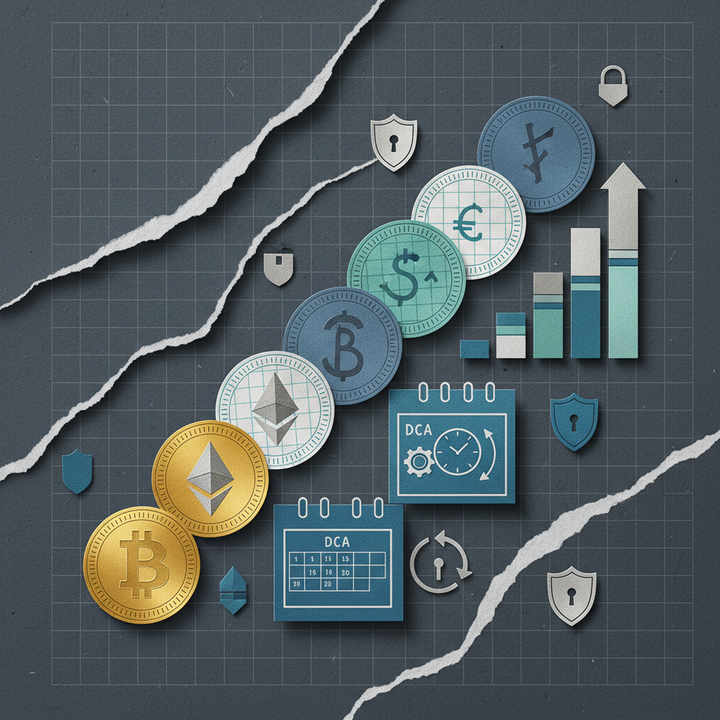
A Fear & Greed Index reading of 10 signals extreme market panic — the kind of sentiment that historically precedes significant recoveries. According to Glassnode on-chain data, investors who purchased Bitcoin when the index fell below 15 realized a median 90-day return of +38.4%, making extreme fear zones statistically favorable entry points. However, history also demands caution: during the FTX collapse in November 2022, the index hit 10 — yet Bitcoin plunged an additional 40% before finally forming a durable bottom near $15,500. The current reading of 10/100, sustained across a record 46 consecutive days in extreme fear territory — the longest streak since late 2022 — suggests deep structural distress rather than a fleeting dip. A dollar-cost averaging (DCA) strategy with strict position sizing (e.g., deploying 10–15% of intended capital per tranche over 4–6 weeks) is far more prudent than a single lump-sum entry, as it mitigates the risk of catching a falling knife while still capturing historically discounted prices. For a deeper breakdown of sentiment indicators, see our Bitcoin Fear & Greed Index analysis.
How Does Declining Bitcoin Exchange Reserves Affect Price?
Bitcoin held on centralized exchanges has plummeted to just 2.21 million BTC — roughly 5.88% of total circulating supply and the lowest level since December 2017, according to CryptoTimes. This seven-year low directly reduces available sell-side liquidity: coins leaving exchanges typically move into spot ETF custody (BlackRock's IBIT alone absorbed $600.1 million in a single week), self-custody cold wallets, or corporate treasury allocations — all destinations with low velocity of resale. Meanwhile, whale wallets holding 100+ BTC have surpassed 20,000 for the first time in history, with these large holders accumulating approximately 91,000 BTC over the past 90 days per BeInCrypto. The mechanics are straightforward: when supply compresses and demand recovers — whether through ETF inflows, halving-cycle narratives, or macro catalysts — the resulting price impact is amplified because fewer coins are available at market. Track real-time reserve trends in our Bitcoin exchange reserves and whale accumulation tracker.
How Does the Strait of Hormuz Crisis Impact the Crypto Market?
Geopolitical escalation around the Strait of Hormuz — through which roughly 20% of global oil transits — creates a multi-layered shock to digital asset markets. The immediate transmission channel is energy prices: a sustained disruption spikes crude oil, which elevates Bitcoin mining electricity costs at a time when miners are already losing approximately $19,000 per BTC produced against an average production cost of $88,000 versus a market price near $69,200, as reported by CoinDesk. The broader macro effect compounds the damage: energy-driven inflation expectations trigger risk-off positioning across equities and crypto alike, with Bitcoin's 30-day correlation to the Nasdaq currently running at approximately 85.4% — meaning tech-sector selloffs drag BTC in lockstep. However, a contrarian thesis is gaining traction among institutional allocators: prolonged inflationary pressure from energy shocks can ultimately reinforce Bitcoin's narrative as a non-sovereign inflation hedge, similar to how gold rallied during the 1970s oil embargoes. For investors, the short-term playbook remains defensive — reduced leverage and tighter stops — while the medium-term case for BTC as portfolio insurance strengthens with every headline about supply-chain disruption. Read more on macro catalysts in our Bitcoin macro and geopolitical analysis.
Are Bitcoin Miners Operating at a Loss — and Is the Network Still Secure?
Yes, the average Bitcoin miner is currently underwater, producing each BTC at roughly $88,000 while selling into a $69,200 market — a loss of approximately $19,000 per coin according to CoinDesk. This stress has already triggered the network's built-in defense mechanism: mining difficulty dropped 7.76% to 133.79 T, the second-largest decline of 2026 per U.Today. The difficulty adjustment algorithm — recalibrating every 2,016 blocks (~two weeks) — automatically makes mining easier when hashrate exits, restoring profitability for surviving operators and maintaining consistent ~10-minute block times. Historical precedent is reassuring: during the 2022 bear market, difficulty fell by as much as 28%, yet the network recovered full hashrate within six months without a single confirmed double-spend or security incident. A temporary decline in hashrate does reduce the theoretical cost of a 51% attack, but the absolute hashrate remains astronomically high compared to any viable attacker's resources, and economic incentives strongly favor honest mining. For ongoing miner economics, see our Bitcoin mining difficulty and hashrate dashboard.
Data Sources
- TheCCPress — Crypto Fear & Greed Index (10/100, 46-day extreme fear streak)
- Glassnode — On-chain analytics, historical Fear & Greed return data
- CryptoTimes — Bitcoin exchange reserves (2.21M BTC, 7-year low)
- BeInCrypto — Whale wallet data (20,000+ addresses holding 100+ BTC)
- CoinDesk — Miner production cost vs. market price analysis
- U.Today — Mining difficulty adjustment (-7.76% to 133.79T)
- The Market Periodical — Bitcoin ETF flow data ($767.3M weekly inflows)
- SpotedCrypto — Whale weekly accumulation (53,000 BTC / $3.6B)
- CoinGlass — Derivatives data, liquidation metrics, funding rates
This article is for informational purposes only and does not constitute investment advice. All investment decisions should be made based on your own judgment and responsibility.
Related Articles
- Bitcoin Hits $70K Max Pain as Fear Index Drops to 23 — $542M Liquidated
- Bitcoin Drops to $70,900 After FOMC Hold — Fear Index Hits 26
- SEC Declares Most Crypto 'Not Securities' as FOMC Looms — March 18 Market Briefing
- ETH Surges 8% as Fear & Greed Hits 23: $1.06B Institutional Inflows – March 17 Market Briefing
- Fear & Greed Index Hits 15 as Whales Accumulate 270,000 BTC During 38-Day Extreme Fear Streak