When the Crypto Fear & Greed Index plunges to 12 — deep in "Extreme Fear" territory — most investors instinctively flee. But history tells a very different story for those who buy when blood fills the streets. This data-driven analysis identifies seven cryptocurrencies backed by institutional flows, on-chain supply compression, and imminent technical catalysts that make them standout candidates for accumulation in March 2026.
What Happens When You Buy at Fear & Greed Index 12? — Historical Returns Data
Quick Answer: Historically, buying Bitcoin when the Fear & Greed Index drops below 15 has delivered a median 90-day return of +38.4%. Three out of four major Extreme Fear episodes since 2020 produced six-month gains exceeding +96%, though the Terra/Luna collapse serves as a critical reminder that not every capitulation leads to recovery.
The Crypto Fear & Greed Index measures market sentiment on a scale of 0 to 100, where readings below 25 signal "Extreme Fear" — historically one of the most reliable contrarian buy signals in digital asset markets. As of March 28, 2026, the index sits at just 12, marking 46 consecutive days in Extreme Fear territory — the longest such streak since the FTX collapse in late 2022. During this period, $444.78 million in positions were liquidated in just 24 hours, with long liquidations accounting for a staggering 77% ($341.96 million) of the total, according to CoinGlass data. Bitcoin options markets reflect the same defensive posture, with the put/call open interest ratio reaching 0.84 — the highest since June 2021. Yet history consistently shows that periods of maximum pessimism have delivered outsized returns for investors willing to act against the crowd.
Historical Extreme Fear Episodes: Buy Signals vs. Value Traps
The track record of buying during Extreme Fear is compelling — but not flawless. The COVID crash of March 2020 drove the index to a low of 8, triggering what became one of the most profitable buying opportunities in crypto history: investors who entered at that level saw Bitcoin rally +133% within six months. The FTX collapse in November 2022 painted an equally dire picture, with the index hitting 10 amid widespread contagion fears, yet six-month returns reached +96% for those who held their nerve.
However, the Terra/Luna implosion of June 2022 stands as a crucial counterexample. Despite the index plummeting to just 6 — even lower than today's reading — Bitcoin delivered a disappointing -4.5% return over the following six months. The critical difference? Terra/Luna exposed genuine structural contagion that cascaded through lending protocols and centralized counterparties, triggering the collapse of Three Arrows Capital and Celsius, which prolonged the bear market for months. The lesson is clear: Extreme Fear is a strong contrarian signal, but investors must assess whether the fear stems from macro repricing or protocol-level contagion.
| Extreme Fear Episode | Index Low | Trigger Type | 6-Month BTC Return |
|---|---|---|---|
| COVID Crash (Mar 2020) | 8 | Macro / Liquidity | +133% |
| Terra/Luna Collapse (Jun 2022) | 6 | Structural Contagion | -4.5% |
| FTX Collapse (Nov 2022) | 10 | Counterparty Failure | +96% |
| Median Return (Index <15, all instances) | — | — | +38.4% (90-day) |
| Current Streak (Mar 2026) | 12 | Macro De-risking | — |
Source: Spoted Crypto analysis of Alternative.me Fear & Greed Index historical data
What Makes This Cycle Different — and What to Watch
Today's Extreme Fear streak shares more structural DNA with the FTX aftermath than the Terra/Luna contagion. Critically, the current drawdown has not been triggered by a protocol-level failure or major counterparty collapse. Instead, it reflects a broader macro-driven de-risking cycle, with negative funding rates across every major perpetual contract on Binance — BTC at -0.0076%, ETH at -0.0081%, and SOL at a deeply bearish -0.0213% — signaling aggressive short positioning rather than structural breakdown.
Matt Hougan, CIO of Bitwise, frames the current environment as a slow grind rather than an imminent reversal: "2026 is a U-shaped bottoming year rather than a sharp V-shaped recovery… crypto has never staged a V-shaped recovery after a crypto winter; instead, it's usually a tortured process of bottoming slowly," he noted in a recent Sherwood Media interview. This perspective is critical: while history strongly favors buying Extreme Fear, the timeline for realized gains may stretch to six-to-twelve months rather than weeks.
How We Selected 7 Coins — Quantitative Screening Methodology
Selecting cryptocurrencies during a market-wide capitulation requires rigorous quantitative discipline, not gut instinct. Our screening methodology evaluates every asset in the top 100 by market capitalization against four institutional-grade criteria: verifiable institutional capital inflows such as ETF flows or treasury allocations, on-chain supply compression including exchange balances and staking ratios, scheduled technical upgrades with defined timelines, and demonstrable revenue models or real-world usage metrics. Projects were excluded if their market capitalization fell below $1 billion, if total value locked had declined more than 40% quarter-over-quarter, or if they faced material regulatory uncertainty — such as pending enforcement actions or unresolved securities classifications. The resulting seven-coin watchlist is segmented into three risk tiers: Conservative for Bitcoin and Ethereum, Balanced for XRP, Solana, and Chainlink, and Aggressive for Hyperliquid and Bittensor, allowing investors to calibrate exposure according to their individual risk tolerance.
The Four Pillars of Our Selection Framework
Pillar 1 — Institutional Capital Inflows: We prioritize assets with documented institutional demand. Bitcoin spot ETFs recorded $18.7 billion in Q1 2026 net inflows with an 83% capital retention rate, while XRP ETFs have surpassed $1 billion in cumulative AUM without a single day of net outflows since launch, according to DL News. Assets lacking any ETF, treasury, or verifiable fund allocation pathway were deprioritized.
Pillar 2 — On-Chain Supply Compression: Shrinking exchange supply is one of the strongest leading indicators of future price appreciation. Bitcoin exchange balances have fallen to 2.21 million BTC — a seven-year low per Glassnode data — while Ethereum's staking ratio has reached 30.6% with 37 million ETH locked, and roughly 75% of Bittensor's total supply is currently staked. Wallets holding 1,000+ BTC have hit an all-time high of 2,140.
Pillar 3 — Technical Upgrade Catalysts: Scheduled protocol improvements serve as concrete, time-bound catalysts that de-risk the investment thesis. Ethereum's Glamsterdam hard fork targets a 78.6% gas fee reduction in H1 2026, Solana's Alpenglow upgrade aims to compress finality from 12.8 seconds to under 150 milliseconds, and Chainlink's CCIP v1.5 expands cross-chain interoperability with self-service token integration and zkRollup support.
Pillar 4 — Revenue and Real-World Usage: In a fear-driven market, fundamental revenue generation acts as a floor under valuations. Chainlink's CCIP processed $18 billion in March transaction volume, up 62% month-over-month. Bittensor generated $43 million in Q1 AI customer revenue. Hyperliquid continues to dominate on-chain perpetual trading with consistent protocol fee generation even amid market-wide contraction.
Seven-Coin Watchlist: Key Metrics at a Glance
| Asset | Ticker | Price (Mar 28) | Market Cap | Primary Catalyst | Risk Tier |
|---|---|---|---|---|---|
| Bitcoin | BTC | $66,221 | ~$1.33T | ETF inflows $18.7B Q1; exchange supply 7-year low | Conservative |
| Ethereum | ETH | $1,997 | ~$242B | Glamsterdam fork: -78.6% gas fees, 10K TPS | Conservative |
| XRP | XRP | — | ~$120B | 7 spot ETFs live; $1B+ AUM, zero outflow days | Balanced |
| Solana | SOL | $83 | $47.6B | Alpenglow: 100ms finality; 27.1M active addresses | Balanced |
| Chainlink | LINK | $8.55 | ~$6B | CCIP $18B monthly vol; SWIFT integration (11K banks) | Balanced |
| Hyperliquid | HYPE | $39 | $9.4B | YTD +50%; on-chain perp DEX leader | Aggressive |
| Bittensor | TAO | $314 | ~$3B | $43M Q1 AI revenue; 75% supply staked | Aggressive |
Sources: Binance, CoinMarketCap, Spoted Crypto research as of March 28, 2026
A key observation across the watchlist: the Conservative and Balanced tiers feature assets with strong institutional backing, defined regulatory clarity, and proven on-chain utility — making them suitable for capital preservation during prolonged uncertainty. The Aggressive tier — Hyperliquid and Bittensor — offers significantly higher upside potential, as evidenced by their positive YTD performance even amid 46 days of Extreme Fear, but carries commensurately greater volatility risk. As Coin Bureau CEO Nic Puckrin has noted, 2026 is shaping up as a "tale of two crypto markets" — institutional conviction on one side and diminished retail participation on the other — reinforcing why a tiered approach anchored in large-caps and revenue-generating protocols offers the most favorable risk-adjusted positioning.
Bitcoin (BTC) — ETF Diamond Hands and a Historic Supply Squeeze
Bitcoin is showcasing an extraordinary divergence between retail sentiment and institutional conviction in March 2026. While the Fear & Greed Index has remained pinned at 12 — deep in Extreme Fear territory for 46 consecutive days, the longest streak since the FTX collapse — spot Bitcoin ETFs have quietly absorbed $18.7 billion in net inflows during Q1 alone, pushing cumulative inflows past $65 billion according to Spoted Crypto research. Exchange balances have dropped to 2.21 million BTC, a seven-year low last seen in early 2019, while wallets holding over 1,000 BTC have surged to an all-time record of 2,140. This structural supply compression, accelerated by ETF vaults and corporate treasuries locking up coins, creates the kind of supply-demand imbalance that has historically preceded major price rallies. At $66,221 with a Binance perpetual funding rate of −0.0076%, the market structure reveals a stark contrast between fearful retail traders and steadily accumulating institutions.
ETF Capital Retention Defies the Bear Market
BlackRock's iShares Bitcoin Trust (IBIT) has emerged as the dominant force in the ETF landscape. Since February 24, IBIT has net purchased 21,814 BTC — approximately $1.55 billion — bringing its assets under management to $63.21 billion according to TradingNews. During the week of March 9–13 alone, IBIT attracted $600.1 million in inflows, representing 78% of the total $767 million that flowed into all Bitcoin spot ETFs that week, as reported by CoinGenius. The broader ETF complex has maintained a capital retention rate of 83% — meaning less than $10 billion has exited against roughly $60 billion in cumulative inflows.
“Despite a punishing bear market, professional investors have proven to be ‘diamond hands.’ ETFs saw under $10 billion in outflows versus roughly $60 billion in cumulative inflows — 83% retention.” — Matt Hougan, CIO, Bitwise
Supply Compression: On-Chain Data Points to Scarcity
| Metric | Current Value | Historical Context |
|---|---|---|
| Exchange BTC Balance | 2.21M BTC | 7-year low (since 2019) |
| Wallets ≥ 1,000 BTC | 2,140 | All-time high |
| Wallets ≥ 100 BTC | 20,031 | All-time high |
| Strategy Holdings | 762,099 BTC ($53.9B) | 3.6% of total supply |
| ETF Cumulative Inflows | $65B+ | 83% capital retention |
| Binance Funding Rate | −0.0076% | Bearish retail positioning |
Strategy, formerly MicroStrategy, now holds 762,099 BTC valued at approximately $53.9 billion — equivalent to 3.6% of Bitcoin's total circulating supply. This single corporate entity's position rivals the holdings of small sovereign wealth funds. Combined with ETF vaults holding tens of billions of dollars in Bitcoin and the surging number of whale wallets reaching all-time highs, the liquid supply available on exchanges continues to shrink at an accelerating pace. For investors tracking on-chain accumulation trends, this level of supply compression has historically coincided with late-stage accumulation before price discovery phases begin.
Key Risk: Options Market Signals Elevated Hedging Demand
Despite the bullish supply dynamics, the options market warrants careful attention. The put/call open interest ratio has climbed to 0.84, its highest reading since June 2021, indicating that institutional players are paying a significant premium for downside protection. Over the past 24 hours, $444.78 million in positions were liquidated across crypto derivatives markets, with 77% — or $341.96 million — hitting long traders. Nic Puckrin, CEO of Coin Bureau, has cautioned that Bitcoin could remain range-bound between $60,000 and $71,000 for an extended period. While the structural supply squeeze supports a medium-term bullish thesis, traders should prepare for continued volatility and the possibility of further drawdowns before the compression translates into sustained upward price momentum.
Ethereum (ETH) & XRP — Upgrade Catalysts and ETF Momentum
Ethereum and XRP represent two distinct but equally compelling cases for accumulation during the current extreme fear environment. Ethereum, trading at $1,997 with a Binance funding rate of −0.0081%, is approaching its most significant network upgrade since the Merge — the Glamsterdam hard fork, targeted for H1 2026, aims to slash gas fees by 78.6% and push throughput toward 10,000 transactions per second. Meanwhile, XRP has achieved a regulatory milestone that eluded it for years: the joint SEC-CFTC digital commodity classification on March 17 effectively removed the existential legal overhang that suppressed its price for half a decade. Seven XRP spot ETFs are now trading in the United States with combined assets exceeding $1 billion, and remarkably, not a single trading day has recorded a net outflow since launch according to DL News. Together, these assets combine technological advancement with institutional momentum to stand out as prime picks in a fear-driven market.
Ethereum: Glamsterdam Hard Fork Sets the Stage for a DeFi Renaissance
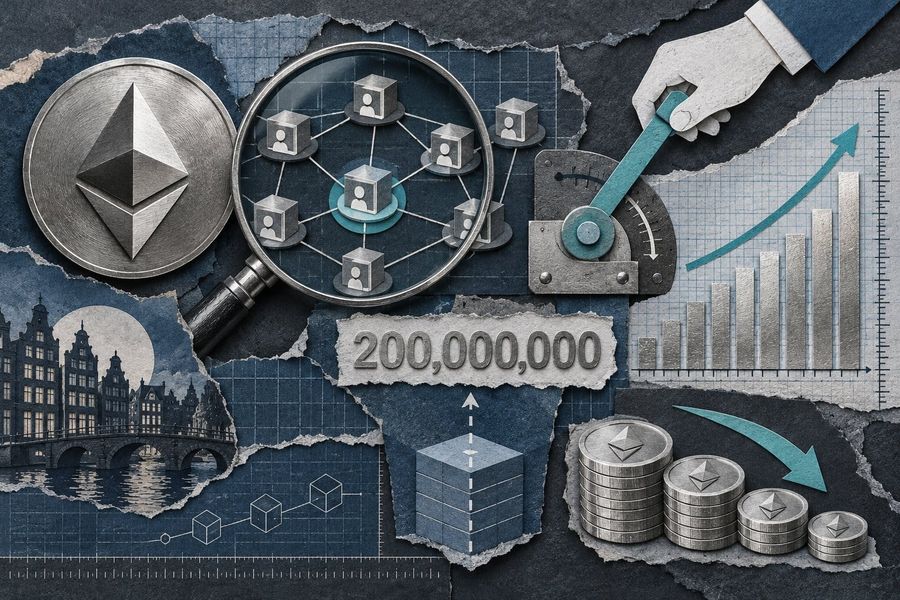
The upcoming Glamsterdam hard fork represents Ethereum's most ambitious scalability push since the transition to proof-of-stake. By increasing the gas limit from 60 million to 200 million, the upgrade targets a 78.6% reduction in transaction fees and a throughput goal of 10,000 TPS according to Spoted Crypto analysis. For context, Ethereum's base layer currently processes roughly 15–30 TPS, meaning Glamsterdam would deliver a performance leap exceeding 300x. This arrives at a time when Ethereum's DeFi ecosystem already commands a total value locked of $55.86 billion on the base layer, with an additional $38.2 billion across Layer 2 networks including Arbitrum, Optimism, and Base as reported by DefiLlama. Furthermore, 30.6% of all ETH — approximately 37 million tokens — is now staked, further constraining liquid supply and providing a baseline yield for long-term holders. The convergence of lower fees, higher throughput, and locked supply creates a compelling fundamental setup for Ethereum heading into the second half of 2026.
| Metric | Ethereum (ETH) | XRP |
|---|---|---|
| Key Catalyst | Glamsterdam Hard Fork (H1 2026) | SEC-CFTC Digital Commodity Status (Mar 17) |
| ETF Status | Spot ETFs trading (US) | 7 Spot ETFs, AUM $1B–$1.44B, zero net-outflow days |
| Ecosystem TVL | $55.86B (L1) + $38.2B (L2) | — |
| Supply Lock-up | 30.6% staked (37M ETH) | 769.8M XRP held by ETFs |
| Binance Funding Rate | −0.0081% | −0.0037% |
| Primary Risk | Staking yield compression | Limited ETF liquidity vs. BTC |
XRP: Regulatory Clarity Unlocks Institutional Capital
The joint SEC-CFTC classification of XRP as a digital commodity on March 17 marked a watershed moment not just for XRP, but for the broader altcoin market. This regulatory clarity — achieved through a cooperative framework between the two primary US financial regulators — establishes a precedent that could eventually benefit dozens of tokens awaiting similar classification. Seven spot XRP ETFs are now actively trading in the US with combined assets under management between $1 billion and $1.44 billion, holding approximately 769.8 million XRP according to XRP Insights. Perhaps most remarkably, not a single trading day since launch has recorded a net outflow — a testament to the pent-up institutional demand that years of regulatory uncertainty had bottled up. With the legal cloud now lifted, XRP can compete on its technical and adoption merits for the first time in years.
“2026 will play out as a ‘tale of two crypto markets’ — institutional conviction on one side, and near-total retail apathy on the other. Large-caps are a better bet than small-caps.” — Nic Puckrin, CEO, Coin Bureau
Risk Assessment: Yield Compression and Liquidity Constraints
Both assets carry distinct risk profiles that investors must weigh carefully. For Ethereum, the primary concern is that continued price weakness could compress staking yields below competitive alternatives, potentially triggering a cycle where declining rewards drive validator exits, unstaking pressure, and additional sell-side volume. The current extreme fear environment already reflects bearish derivatives positioning, with ETH's Binance funding rate at −0.0081% — among the most negative of any major Layer 1 token. For XRP, while the ETF inflow streak is impressive, total AUM of $1 billion to $1.44 billion remains a fraction of Bitcoin ETF holdings that now exceed $65 billion. Liquidity in XRP spot products is correspondingly limited compared to BTC vehicles, meaning any sudden institutional rebalancing could create outsized price swings. Nevertheless, the combination of a now-clear regulatory framework, consistent ETF demand, and transformative network upgrades positions both ETH and XRP as structurally attractive for risk-adjusted entries during this period of historically extreme market fear.
Solana (SOL) & Chainlink (LINK) — Infrastructure Upgrades Fueling Rebound Potential
Solana and Chainlink represent two of crypto's most critical infrastructure layers — high-performance execution and cross-chain interoperability — both undergoing transformative upgrades in 2026. SOL currently trades at $83 with a market capitalization of $47.6 billion and 27.1 million active addresses, according to CoinMarketCap and Crypto.com market data. LINK sits at $8.55 with a $6 billion market cap, yet its Cross-Chain Interoperability Protocol (CCIP) processed $18 billion in March transaction volume alone — a 62% month-over-month surge, per Spoted Crypto research. While the broader market remains trapped at a Fear & Greed Index of 12, these two assets are constructing the foundational rails that institutional capital demands before re-entering risk assets. Both tokens carry deeply negative funding rates on Binance — SOL at -0.0213% — signaling overwhelming short-seller dominance, a condition that historically precedes sharp mean-reversion rallies when fundamental catalysts materialize.
Solana's Alpenglow: From 12.8 Seconds to Sub-Second Finality
The Alpenglow upgrade represents Solana's most ambitious technical leap since mainnet launch, targeting a reduction in transaction finality from the current 12.8 seconds to just 100–150 milliseconds — approximately a 100x improvement. This is not incremental optimization; it is a paradigm shift that would make Solana's settlement speed competitive with traditional payment networks like Visa. For institutional DeFi applications — particularly on-chain derivatives and high-frequency market making — sub-second finality eliminates the arbitrage windows and MEV extraction that currently plague slower chains. With 27.1 million active addresses already on-network, Alpenglow arrives at a pivotal moment: the speculative froth of 2025's meme coin mania has largely dissipated, clearing the path for fundamentals-driven capital to reassess Solana's value proposition on its technical merits. The current $83 price point represents a steep discount from cycle highs, offering asymmetric upside if the upgrade delivers on its latency promises and attracts the next generation of high-throughput decentralized applications.
Chainlink CCIP v1.5: Bridging TradFi and On-Chain Finance
Chainlink's CCIP v1.5 upgrade introduces two capabilities positioning LINK as essential plumbing for the real-world asset (RWA) tokenization wave: native zkRollup support and self-service token integration. The SWIFT partnership alone grants access to 11,000 banks globally, creating a direct settlement pipeline between traditional finance and on-chain asset transfer. March's $18 billion in CCIP transaction volume — up 62% from February — demonstrates accelerating institutional adoption, per Coin Edition. Self-service token integration dramatically lowers the barrier for enterprises to launch cross-chain assets without Chainlink's direct involvement, potentially creating the kind of permissionless network effect that fueled Ethereum's ERC-20 explosion. With RWA tokenization projected to become a multi-trillion dollar market over the next decade, Chainlink's oracle infrastructure and cross-chain messaging layer occupy a strategic chokepoint that few competitors can replicate at institutional-grade reliability and regulatory compliance standards.
| Metric | Solana (SOL) | Chainlink (LINK) |
|---|---|---|
| Price (Mar 28, 2026) | $83 | $8.55 |
| Market Capitalization | $47.6B | $6B |
| Key Upgrade | Alpenglow (100–150ms finality) | CCIP v1.5 (zkRollup + self-service tokens) |
| Adoption Metric | 27.1M active addresses | $18B CCIP monthly volume (+62% MoM) |
| Institutional Catalyst | Sub-second finality for DeFi/HFT | SWIFT integration (11,000 banks) |
| Binance Funding Rate | -0.0213% (most negative among majors) | Negative (bearish positioning dominant) |
| Primary Risk | Meme coin cycle contagion overhang | Persistent price-utility decoupling |
Key Risks to Monitor
Solana still carries residual contagion risk from the 2025 meme coin cycle. While speculative activity has cooled significantly, on-chain data reveals lingering token concentrations from meme coin launches that could trigger sudden sell pressure during relief rallies. SOL's -0.0213% Binance funding rate — the most negative among major tokens — reflects persistent bearish sentiment that may take quarters to fully unwind. For Chainlink, the price-utility decoupling remains the elephant in the room: despite surging CCIP adoption and protocol revenue growth, LINK's token price has consistently underperformed its fundamental metrics since 2021. This disconnect between network usage and token value will only resolve if the staking mechanism and CCIP fee burns create sufficient demand sinks to offset circulating supply pressure. Investors should treat both positions as infrastructure bets with 6–12 month time horizons rather than short-term momentum trades.
Hyperliquid (HYPE) & Bittensor (TAO) — Aggressive Bets on YTD Growth Leaders Defying the Bear Market
While most cryptocurrencies have bled red throughout Q1 2026, Hyperliquid and Bittensor have defied gravity with year-to-date returns of +50% and +40% respectively — a rare feat in a market where the Fear & Greed Index has spent 46 consecutive days in extreme fear territory, the longest streak since the FTX collapse. HYPE trades at $39 with a $9.4 billion market capitalization, establishing itself as the dominant decentralized perpetuals exchange, according to The Motley Fool. TAO commands roughly a $3 billion valuation near $314–326, powered by $43 million in Q1 AI customer revenue and approximately 75% of total supply locked in staking. These are not speculative meme tokens riding hype cycles; they are functioning, revenue-generating protocols in two of crypto's hottest verticals: decentralized derivatives and AI infrastructure. However, both sit below the $10 billion market cap threshold, meaning volatility typically runs 2–3x higher than large-cap peers, making disciplined position sizing absolutely non-negotiable.
Hyperliquid: Decentralized Derivatives Dominance
Hyperliquid's 50% year-to-date surge in a market defined by capitulation is not an accident — it reflects genuine product-market fit in the decentralized perpetuals space. The protocol has effectively captured trading volume that previously flowed exclusively to centralized exchanges like Binance and OKX, offering comparable execution speed with full on-chain transparency and self-custody. At $9.4 billion market cap, HYPE sits at the upper boundary of the mid-cap range, but its revenue trajectory and user growth metrics suggest it could cross the $10 billion threshold in the coming months. That milestone matters: crossing it would potentially trigger inclusion in institutional-grade crypto indices and unlock a new wave of managed fund allocations that are currently restricted to large-cap tokens only. In a market where $444.78 million was liquidated in just 24 hours — with 77% hitting long positions — HYPE's ability to attract volume during extreme stress underscores the structural shift toward decentralized trading infrastructure.
Bittensor: Real Revenue in the AI Infrastructure Race
TAO stands apart in the crowded AI token landscape by generating actual customer revenue rather than relying on speculative narratives about future utility. The protocol's $43 million in Q1 2026 AI customer revenue, combined with 75% of total supply staked, creates a fundamentally different investment thesis than most sub-$10 billion tokens. Analyst Dominic Basulto of The Motley Fool named TAO his top cryptocurrency pick for 2026, citing its unique position as decentralized AI compute infrastructure with measurable commercial traction — a distinction that separates it from the dozens of AI-branded tokens with no revenue model.
"2026 will play out as a 'tale of two crypto markets' — institutional conviction on one side, and near-total retail apathy on the other. Large-caps are a better bet than small-caps." — Nic Puckrin, CEO, Coin Bureau, via Cointelegraph
Puckrin's warning about small-cap risk makes HYPE and TAO's outperformance all the more remarkable — and the risk calculus proportionally steeper. These are the rare exceptions proving the rule, not a blanket endorsement of mid-cap speculation.
Position Sizing: The Non-Negotiable Risk Framework
Both HYPE and TAO carry amplified risk profiles that demand strict portfolio discipline. With market capitalizations below $10 billion, these tokens can experience 2–3x the daily volatility of Bitcoin and Ethereum, and liquidity can evaporate rapidly during market-wide de-risking events. For aggressive allocations to mid-cap growth tokens in a bear market environment, professional traders typically limit exposure to 3–5% of total portfolio value and employ dollar-cost averaging across multiple price levels rather than single lump-sum entries. The asymmetric payoff potential is real — a protocol generating $43 million in quarterly AI revenue at a $3 billion valuation implies significant upside if the AI infrastructure thesis plays out — but so is the downside in a market where extreme fear can persist for months at a time.
Portfolio Allocation Strategy — Risk-Based Distribution Guide for Extreme Fear Markets
Building a diversified crypto portfolio during extreme fear requires disciplined allocation frameworks tailored to individual risk tolerance. With the Fear & Greed Index at 12/100 — marking 46 consecutive days in Extreme Fear territory according to Spoted Crypto — historical data shows that systematic buyers during sub-15 readings have captured a median 90-day return of +38.4%. However, the asymmetric upside comes with significant drawdown risk: 24-hour liquidations recently hit $444.78M, with 77% ($341.96M) wiping out leveraged longs, per Coinglass. The seven assets analyzed in this article — BTC, ETH, XRP, SOL, LINK, HYPE, and TAO — span different risk-reward spectrums, from Bitcoin's institutional-grade stability backed by $65B+ in cumulative ETF inflows to TAO's AI-sector volatility. A structured allocation model, combined with dollar-cost averaging triggers, transforms fear-driven markets into systematic accumulation opportunities rather than emotional gambles.
Three Portfolio Models by Risk Appetite
The table below maps three distinct allocation strategies against projected bull, base, and bear return scenarios over a 12-month horizon. Conservative portfolios concentrate on the two largest market-cap assets plus XRP's ETF-backed institutional demand. Balanced portfolios introduce SOL and LINK for sector diversification across DeFi infrastructure and oracle networks. Aggressive portfolios sacrifice BTC weighting to capture higher-beta opportunities in HYPE's perpetual DEX dominance and TAO's AI-compute revenue.
| Asset (Current Price) | Conservative (Low Risk) | Balanced (Mid Risk) | Aggressive (High Risk) |
|---|---|---|---|
| BTC ($66,221) | 50% | 35% | 25% |
| ETH ($1,997) | 30% | 20% | 10% |
| XRP | 20% | 15% | — |
| SOL ($83) | — | 15% | 20% |
| LINK ($8.55) | — | 15% | 15% |
| HYPE ($39) | — | — | 15% |
| TAO ($314) | — | — | 15% |
| Projected 12-Month Return Scenarios | |||
| Bull Case | +45% to +65% | +70% to +100% | +100% to +160% |
| Base Case | +15% to +25% | +20% to +40% | +25% to +55% |
| Bear Case | −15% to −25% | −25% to −40% | −35% to −55% |
Entry Strategy — DCA with Fear Index Triggers
Rather than deploying capital in a single lump sum, a dollar-cost averaging (DCA) approach reduces timing risk during volatile bottoming phases. Split your total allocation into 8–12 equal tranches deployed over 6–10 weeks. Add a tactical overlay: when the Fear & Greed Index drops below 15, deploy an additional tranche beyond your regular schedule. With the index currently at 12, this trigger is already active — but reserve at least 30% of dry powder for potential deeper capitulation events. Combined with negative Binance funding rates across all major pairs (BTC: −0.0076%, ETH: −0.0081%, SOL: −0.0213%), the current environment structurally favors patient accumulators over momentum traders. Rebalance quarterly: if any single asset drifts more than 5 percentage points from its target weight, trim the outperformer and reallocate into the laggard to maintain your intended risk profile.
Second-Half 2026 Outlook — U-Shaped Recovery and Key Investor Watchpoints
The crypto market's trajectory through the remainder of 2026 points toward a gradual U-shaped recovery rather than the explosive V-shaped rebound that hopeful traders anticipate. Institutional capital remains committed, with Bitcoin ETF retention at 83% of $60B+ in cumulative inflows, while retail sentiment languishes at multi-year lows. The Fear & Greed Index reading of 12 and BTC options put/call open interest ratio of 0.84 — the highest since June 2021 according to Coinglass — paint a picture of a market still searching for its floor. As Nic Puckrin, CEO of Coin Bureau, told Cointelegraph, the divergence between institutional conviction and retail apathy means large-caps are poised to outperform small-caps throughout the bottoming process. For investors positioned through the allocation strategies outlined above, the second half of 2026 presents concrete catalysts that could accelerate recovery and reward disciplined accumulators.
"2026 is a U-shaped bottoming year rather than a sharp V-shaped recovery… crypto has never staged a V-shaped recovery after a crypto winter; instead, it's usually a tortured process of bottoming slowly."— Matt Hougan, CIO, Bitwise (Sherwood News)
Key Catalysts That Could Accelerate the Bottom
Several protocol-level upgrades and institutional milestones are scheduled for H2 2026 that could materially shift market dynamics. Ethereum's Glamsterdam hard fork, targeting a 78.6% gas fee reduction and 10,000 TPS capacity, represents the most significant network upgrade since the Merge — success here could reignite DeFi activity across its $55.86B TVL ecosystem and re-attract sidelined capital. Solana's Alpenglow upgrade aims to compress finality from 12.8 seconds to 100–150 milliseconds, a roughly 100x improvement that would position it as the fastest major Layer 1 for institutional-grade applications. Meanwhile, XRP ETF AUM has already surpassed $1B with zero net-outflow days since launch, per DL News, and continued accumulation could trigger a supply squeeze on the 769.8M XRP held by fund managers.
Warning Signals — When to Reassess Your Positions
Disciplined investors must define clear exit triggers alongside entry strategies. Two critical thresholds warrant a full portfolio reassessment. First, a sustained BTC breakdown below $60,000 — approximately 9.4% below the current $66,221 price — would invalidate the higher-low structure that underpins the accumulation thesis and likely drag altcoins into deeper drawdowns. Second, if the BTC options put/call ratio exceeds 1.0 (currently 0.84), it signals that hedging demand has overwhelmed bullish positioning, warranting increased defensive measures such as trimming altcoin exposure or raising stablecoin reserves to 40%+. As Puckrin emphasized, "Realistically, we could be stuck in the range between $60,000 and around $71,000 for some time." This range-bound reality favors active risk management over passive holding. The core message remains clear: buy extreme fear — the data overwhelmingly supports it — but size positions wisely, execute through DCA discipline, and let pre-defined warning signals protect your capital against the uncertainty that even the smartest institutional money cannot predict.
Frequently Asked Questions
Does buying Bitcoin during Extreme Fear always guarantee profits?
Not always — but history tilts the odds decisively in your favor. Out of the four major Extreme Fear episodes since 2020, three produced positive returns within six months, with a median 90-day gain of +38.4% when the index dipped below 15, according to Spoted Crypto research. The lone exception was the Terra/Luna collapse in mid-2022, which still showed a −4.5% drawdown after half a year — painful, but far shallower than the −65% peak-to-trough that preceded it. The current streak of 46 consecutive days in Extreme Fear territory is the longest since the FTX implosion, as tracked by Spoted Crypto's Fear & Greed Index analysis. The statistical edge is real, but it is not a certainty — pairing entries with dollar-cost averaging (DCA) and strict position sizing remains essential to survive the outlier scenarios.
Is it too late to buy Bitcoin in March 2026?
The structural demand picture has rarely looked stronger, even as short-term volatility keeps traders on edge. Bitcoin ETF capital retention sits at 83%, meaning roughly $60B of the cumulative $65B+ in inflows remains invested — a conviction signal institutional allocators almost never reverse, per Spoted Crypto data. Exchange balances have fallen to 2.21 million BTC, a seven-year low, while wallets holding 1,000+ BTC reached an all-time high of 2,140 — evidence of aggressive accumulation by whales and institutions including Strategy (formerly MicroStrategy), which now controls 762,099 BTC worth $53.9B. However, the options market flashes caution: the put/call open-interest ratio stands at 0.84, the highest since June 2021, suggesting hedging activity is elevated. A phased buy strategy — splitting entries across multiple weeks — lets you capture the macro tailwind while cushioning against any near-term drawdown driven by $444.78M in daily liquidations skewing 77% long.
Should I invest in altcoins or Bitcoin during a downturn?
In risk-off environments, large-cap dominance tends to widen — and March 2026 is no exception. Coin Bureau CEO Nic Puckrin summarized the prevailing institutional view: "Large-caps are a better bet than small-caps when fear dominates the tape." The data supports this thesis: institutional capital is funneling into BTC, ETH, and XRP ETF products, with Bitcoin ETFs alone absorbing $18.7B in Q1 2026 net inflows and seven XRP ETFs collectively managing over $1B in assets. Meanwhile, ETH's DeFi total value locked holds above $55B and its staking ratio has climbed to 30.6% (37M ETH locked), reinforcing blue-chip network utility. The prudent framework is to allocate 60% or more of your crypto portfolio to large-caps (BTC, ETH, XRP) for downside resilience, then distribute the remainder across high-conviction altcoins with proven on-chain revenue.
What are Bittensor (TAO) and Hyperliquid (HYPE)?
These two tokens represent the frontier of decentralized AI infrastructure and on-chain derivatives trading, respectively — and both have delivered standout performance in 2026. Bittensor (TAO) operates a decentralized network where AI models compete for rewards, generating $43 million in AI-related revenue in Q1 alone, proving that real economic activity underpins the token beyond speculation. Hyperliquid (HYPE) powers a fully on-chain perpetual futures exchange that has posted a year-to-date gain of +50%, fueled by traders migrating from centralized venues amid regulatory uncertainty. Both projects carry sub-$10B market capitalizations, placing them firmly in the high-risk, high-reward category. For investors interested in these narratives, a small allocation — typically 5–10% of the altcoin sleeve — allows participation in the upside while limiting portfolio-level damage if either project underperforms. Detailed breakdowns of both tokens are available in our top cryptos to buy during extreme fear guide.
Data Sources
- Spoted Crypto — Fear & Greed Index: Extreme Fear Analysis (March 2026)
- Spoted Crypto — Top Cryptos to Buy During Extreme Fear (March 2026)
- TradingNews — BlackRock IBIT ETF AUM & Inflows
- CoinGenius — Bitcoin Spot ETF Weekly Inflow Data
- XRP Insights — XRP ETF Holdings & AUM Tracker
This article is for informational purposes only and does not constitute investment advice. All investment decisions should be made based on your own judgment and responsibility.
Related Articles
- Fear & Greed Index at 13: Top 5 Coins to Buy During Extreme Fear (March 2026)
- Top 6 Cryptos to Buy During Extreme Fear: March 2026 Picks
- Top 5 Coins to Buy in Extreme Fear: BTC, ETH, SOL, XRP, LINK Data Analysis
- Fear & Greed Index at 11: Top 7 Coins to Buy During Extreme Fear — March 2026
- Top 5 Coins to Buy in Extreme Fear — Institutions Are Accumulating Now (March 2026)