Is Robinhood Chain Actually Used for Stock Trading or Memecoins?
Robinhood built a Layer-2 to settle tokenized equities. Two months after mainnet, the busiest thing on it was a $1 token factory.
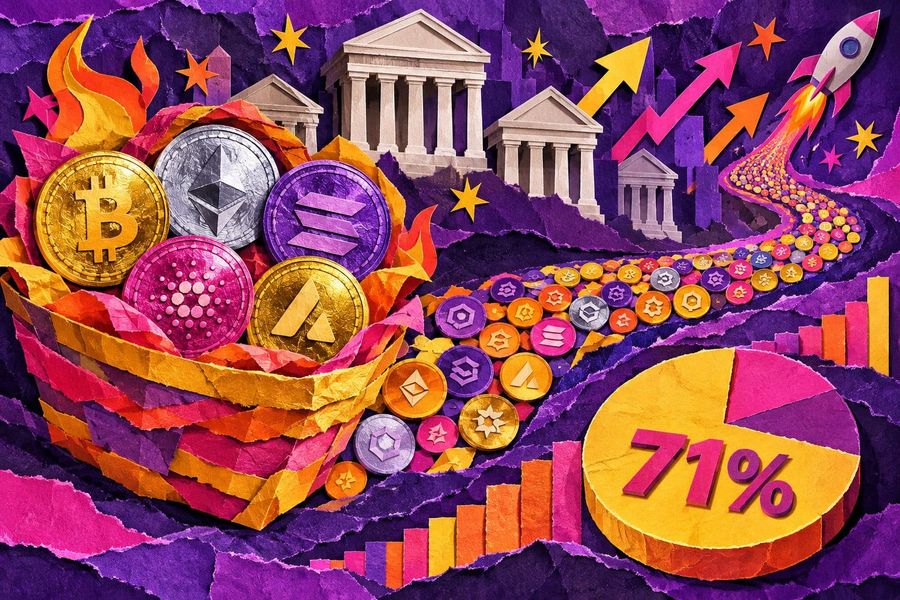
Robinhood Chain is used for both, but memecoin launchpad activity currently drives the majority of its transaction volume. The chain launched publicly on July 1, 2026 to settle tokenized stocks such as NVDA, AAPL and GOOG . By early September 2026, CoinDesk reported that a memecoin-making app on the chain had become one of crypto's top fee generators, pulling roughly $5.95 million in fees in 24 hours .
Two products account for that speculative flow. Uniswap Labs runs pools.trade, a launchpad built specifically for chain ID 4663, and Pons, a separate no-code token factory that lets anyone mint a fixed-supply token for about $1 , absorbed most of the activity within days of mainnet, per Decrypt .
The sequencing matters for how you read that. The public testnet went live February 10, 2026, five months before mainnet . That gap let RPC, oracle and bridge infrastructure mature before retail launchpad volume arrived — so the memecoin surge landed on rails already built for regulated settlement, not the other way around.
What Robinhood Chain Actually Is: Architecture Snapshot
Robinhood Chain is a public, Ethereum-compatible Layer-2 network operated by Robinhood Markets and built on Arbitrum Nitro using Offchain Labs' dedicated-chain framework . Mainnet runs on chain ID 4663 and testnet on 46630 , and ETH is the native gas token exactly as on Ethereum . Batch and blob data settle to Ethereum L1, so the chain inherits Ethereum's data availability while executing off it — the standard rollup trade-off, with two non-standard twists in sequencing and validation described below.
For builders the environment is deliberately boring, which is the point. The chain is EVM-equivalent: Solidity and Vyper contracts deploy unmodified, ERC-4337 account abstraction is first-class, and Hardhat, Foundry, ethers.js, viem and Wagmi work without patches . The public RPC is https://rpc.mainnet.chain.robinhood.com with a Blockscout explorer at robinhoodchain.blockscout.com; Robinhood recommends Alchemy and lists QuickNode, Blockdaemon, dRPC and Validation Cloud as alternatives, with sequencer and sequencer-feed endpoints exposed for latency-sensitive users . Bridging runs through the canonical Arbitrum bridge plus partner routes, with LayerZero as the cross-chain partner .
Settlement timing is the number traders should internalize before sizing a position. The finality ladder has three rungs:
- Sub-second soft confirmation from the sequencer — enough for UI feedback, not a settlement guarantee .
- Minutes for the sequencer to post transaction batches to Ethereum .
- ~13 minutes after posting to reach full Ethereum finality .
Arbitrum's own materials describe the dedicated-chain framework as targeting roughly 100 ms latency through configurable block times and preconfirmations . Fees are two-part: L2 execution plus the L1 data cost, so gas rises with Ethereum blob demand rather than with local congestion alone .
The design choice that separates this chain from most L2s is strict first-come, first-served sequencing. Transaction ordering is determined solely by arrival time at the sequencer, so paying a higher priority fee cannot push your transaction ahead of one that landed a millisecond earlier — an explicit anti-MEV, retail-fairness stance rather than the fee-auction ordering common elsewhere . Steven Goldfeder, Offchain Labs co-founder, walked through the dedicated-chain rationale in a launch-week interview (video: Paul Barron Network), framing the configuration as tuned for consumer-facing order flow.
Two qualifications belong next to that fairness claim. First, the sequencer performs compliance screening and can exclude transactions from sanctioned addresses — ordering is neutral, but inclusion is not unconditional . Second, fraud-proof monitoring currently depends on a permissioned validator set operated by Offchain Labs and Alchemy, not an open one . That is a stage-of-decentralization statement, not a defect — but it means the chain's safety guarantee currently rests on two named companies rather than on anyone being able to challenge an invalid state root. Full sources: Robinhood Chain docs, differences from Ethereum, and Decrypt's network overview.
Stock Tokens vs. Memecoin Launchpad Tokens: Side-by-Side
Stock Tokens and memecoin launchpad tokens are two entirely different legal and technical products that happen to settle on the same chain. Stock Tokens are ERC-20 tokenized debt securities issued by Robinhood Assets (Jersey) Limited, giving economic exposure to a U.S. share or ETF without any legal or beneficial claim on the underlying issuer and without voting rights . Launchpad tokens minted through pools.trade or Pons are fixed-supply memecoins that Uniswap itself says may go to zero and lack securities-law protections . Same sequencer, same gas token, opposite risk regimes.
On the Stock Token side, the engineering is deliberately conservative. Each token uses 18 decimals, carries a per-asset Chainlink price feed, and implements an ERC-8056 multiplier so corporate actions — dividends, splits — adjust holdings without reissuing the contract . Chainlink's oracle stack (CCIP, Data Streams, Data Feeds) went live at mainnet and prices assets including NVDA, GOOG and AAPL . Robinhood states every token in circulation is backed 1:1 by the corresponding equity held with a U.S.-based custody partner, with BitGo integrated for custody at launch . Backing is an issuer claim, not an on-chain proof — the trust assumption sits with Robinhood Assets (Jersey) Limited and its custodian, not with the chain.
The launchpad side inverts almost every one of those properties. Every pools.trade launch has a fixed 1 billion supply, ends in a Uniswap v4 pool with permanently locked liquidity, and comes in two formats: Instant Launch, or a four-hour Crowd Launch that graduates only at $10,000 fully diluted valuation — below that threshold, bids are refunded . There is no added launchpad fee beyond the standard 0.25% LP fee, of which a creator may optionally take 0.05%. Pons, the separate no-code launchpad, mints a fixed-supply token for roughly $1 and saw nearly 25,000 tokens launched on September 2, 2026 alone .
| Attribute | Stock Tokens | Launchpad tokens (pools.trade / Pons) |
|---|---|---|
| Legal form | ERC-20 tokenized debt security, issuer Robinhood Assets (Jersey) Ltd. | None — memecoin, no issuer obligation |
| Claim on underlying | Economic exposure only; no voting or beneficial rights | No underlying |
| Supply | Issued/redeemed against custodied equity, 18 decimals | Fixed 1,000,000,000 per token |
| Pricing source | Chainlink per-asset price feed | Uniswap v4 pool, market-determined |
| Corporate actions | ERC-8056 multiplier handles dividends and splits | Not applicable |
| Backing | Stated 1:1 with equity at U.S. custody partner | None; liquidity permanently locked in pool |
| Fees | No Robinhood commission or added spread on EU tokenized equities | 0.25% LP fee, optional 0.05% creator cut, no launchpad fee |
| Jurisdiction gate | Blocked for U.S., Canada, U.K., Switzerland residents; 120+ countries otherwise | None at the protocol level |
| Stated downside | Regulatory framework for tokenized RWAs described as uncertain and fragmented | Uniswap discloses tokens "may go to zero" |
The asymmetry that matters most for a trading decision is access. Stock Tokens are not registered under U.S. securities laws and are unavailable to residents of the United States, Canada, the United Kingdom and Switzerland, while being offered in 120+ countries subject to local rules . The launchpad has no equivalent gate: any wallet that can pay gas can mint or buy, and the only chain-level filter is the sequencer's sanctions screening. That means the compliance-heavy product is the one most retail traders in major markets cannot touch, and the unregulated one is open to everyone — which is a large part of why volume skews the way it does (video: Crypto League).
One further distinction: Uniswap's memecoin labelling is a disclosure, not a liability shield for the buyer. It tells you the asset carries no securities-law protections, meaning no prospectus, no issuer accountability, and no recourse if a pool empties out. Stock Tokens carry a prospectus — Liechtenstein's FMA approved the Robinhood Assets Jersey Base Prospectus under the EU Prospectus Regulation on June 25, 2026 — but a prospectus documents risk, it does not remove it.
Decision Criteria: Should You Trade Stock Tokens on Robinhood Chain?
Trading Stock Tokens on Robinhood Chain is a reasonable choice only if you clear four specific gates: jurisdiction, legal-structure comfort, issuer-dispute tolerance, and a genuine need for round-the-clock equity exposure. Robinhood says the global Stock Tokens are available in 120+ countries subject to jurisdiction, while residents of the United States, Canada, the United Kingdom and Switzerland are explicitly excluded . If you live in an excluded market, the remaining criteria are academic — check eligibility before anything else.
The second gate is understanding what you actually hold. A Stock Token is an ERC-20 tokenized debt security issued by Robinhood Assets (Jersey) Limited that gives economic exposure to an underlying U.S. share or ETF, with no legal or beneficial rights against the underlying company and no voting rights . Each token uses 18 decimals, carries a Chainlink per-asset price feed, and applies an ERC-8056 multiplier to process dividends and splits . Robinhood states each circulating token is backed 1:1 by the corresponding equity held with a U.S.-based custody partner . Your exposure therefore depends on the issuer's solvency and its custodian's performance, not on a share register.
Robinhood does not hide this. Its June 30, 2026 Form 10-Q describes the July 2026 global Stock Tokens as tokenized debt securities issued by RHJ, notes that Liechtenstein's FMA approved the Base Prospectus under the EU Prospectus Regulation, states that Jersey consents do not constitute prudential supervision or endorsement, and warns that the legal framework for tokenized real-world assets remains uncertain and fragmented . Read that as the issuer's own base case, not a worst case.
The third gate is issuer pushback, which has already happened twice. OpenAI publicly stated in July 2025 that Robinhood's "OpenAI tokens" were not OpenAI equity and were not endorsed by the company . In September 2026, AMC's chief executive reportedly criticised Robinhood's tokenized AMC exposure as unaffiliated and lacking shareholder rights, with Robinhood standing behind the product . Neither dispute unwound a token, but both show that a referenced company can publicly reject the product tracking its name — a headline risk that direct share ownership does not carry.
Weigh those against what you gain. Speaking on the chain's design intent, Steven Goldfeder, co-founder and CEO of Offchain Labs, framed the appeal as bringing traditional assets onto neutral, programmable rails where they can trade continuously rather than on exchange hours (video: Paul Barron Network). That is the real product: 24/7 price exposure, self-custody, and composability with on-chain venues. Robinhood reported 190+ Stock Tokens live and a $219.49 million RWA market cap on the chain as of early September 2026 — real, but small relative to the equities being tracked, which means thin secondary liquidity for anything outside the largest names.
- Good fit: non-US/CA/UK/CH traders who want continuous U.S. equity price exposure, accept counterparty and legal-structure risk, and value self-custody or on-chain composability.
- Poor fit: anyone who needs voting rights, shareholder standing, or the protections of a domestic brokerage account.
- Check before sizing: on-chain depth for the specific ticker, redemption mechanics, and whether the referenced issuer has publicly objected.
Decision Criteria: Should You Use the Memecoin Launchpad (PONS / pools.trade)?
The Robinhood Chain launchpads fit short-horizon speculative traders who accept total-loss risk, and almost nobody else. Two venues dominate: pools.trade, operated by Uniswap Labs, and Pons, a no-code launchpad that lets anyone mint a fixed-supply token for roughly $1 and which absorbed most of the chain's activity within days of the July 1, 2026 mainnet. Pons generated about $5.95 million in fees in the 24 hours to September 2–3, 2026 — fourth on DefiLlama behind Tether, Uniswap and Circle, and ahead of Pump at $4.64 million. That is real liquidity, not a rounding error — but liquidity is not durability.
Fee structure is the first criterion, and it is unusually plain. On pools.trade there is no separate platform fee: the trading cost is the standard 0.25% Uniswap LP fee, out of which a creator may optionally carve 0.05%. Compared with launchpads that stack a platform cut on top of pool fees, that structure is a straightforward reason volume concentrated here. On the Pons side, roughly 80% of revenue funds buyback-and-burn, and about 288 million of the 1 billion PONS supply has already been burned. Treat that as a mechanical demand sink tied to volume, not a valuation floor.
The second criterion is launch format, and it maps cleanly to trading style:
- Instant Launch — token goes live immediately into a Uniswap v4 pool. Fits traders who want immediate liquidity and are willing to do their own filtering on a token with no track record.
- Crowd Launch — a four-hour bidding window that graduates only if the token reaches $10,000 fully diluted valuation; below that threshold, bids are refunded. Fits traders who want a built-in failure filter and are willing to trade immediacy for a minimum-interest test.
- Fixed 1 billion supply on every pools.trade launch removes one variable — stealth minting — from the diligence checklist, though it says nothing about distribution.
Third, understand exactly what locked liquidity does and does not protect. Every pools.trade token ends in a Uniswap v4 pool with permanently locked liquidity, which removes the classic rug-pull mechanic of a creator withdrawing the pool. It does not remove price risk: Uniswap's own disclosure labels these assets memecoins whose prices may go to zero and which may lack securities-law protections. Locked liquidity means you can always exit — at whatever price the book offers, which can be near zero.
The timing criterion is the one most easily overlooked. Robinhood's 90-day gas subsidy covering swaps, crypto and stock token transactions expires around September 29, 2026, and none of the eleven largest chain-native tokens by market value existed before July. Nearly 25,000 tokens launched on September 2 alone against $544 million in daily volume — a ratio that implies most launches attract almost nothing. October data will be the first read on how much of this survives paid gas.
Best fit: short-horizon speculative traders who size positions at total-loss tolerance, understand the 0.25% round-trip cost, and prefer Crowd Launch's threshold filter over Instant Launch when they lack a specific edge. Poor fit: anyone seeking equity-like exposure, yield, or a holding period measured in months. Check before sizing: the token's launch format, holder concentration at graduation, and whether volume persists after September 29.
Governance and Regulatory Risk You're Trusting Either Way
Both sides of Robinhood Chain — the regulated stock-token rail and the permissionless launchpad — settle on infrastructure controlled by a fixed group of named institutions, not a token-holder community. An eight-seat Security Council holds protocol governance: Robinhood occupies two seats, with BitGo, Chainlink Labs, Fireblocks Trust Company, Offchain Labs, Paxos and Talos holding one each . Routine protocol actions require 6-of-8 approval plus a seven-day on-chain timelock; emergency actions require 7-of-8 and skip the timelock entirely . That means a seven-signature coalition can change the chain you are trading on with no advance notice window.
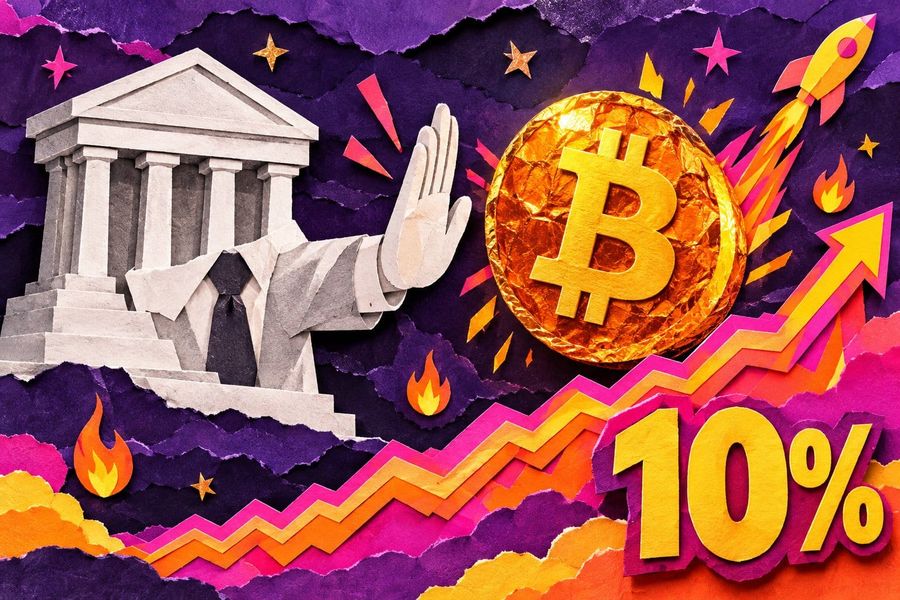
There is no native token and no announced airdrop . For traders, that removes one common speculative motive for early usage — you are not farming a governance allocation — and it also removes any mechanism through which users could contest a Council decision. Economics flow outward instead: under the Arbitrum Expansion Program, the chain returns 10% of protocol net revenue to the Arbitrum ecosystem, split 8% to the ArbitrumDAO treasury and 2% to the Arbitrum Developer Guild . Robinhood additionally committed $1 million to the 2026 Arbitrum Open House program, with buildathons in New York, Dubai, London and Singapore .
The sequencer carries a second trust assumption that cuts against the chain's headline fairness design. Strict first-come, first-served ordering blocks priority-fee jumping, but the same sequencer performs compliance screening and can exclude transactions originating from sanctioned addresses . Fraud-proof monitoring, meanwhile, currently depends on a permissioned validator set run by Offchain Labs and Alchemy . Practical read: inclusion is fair among permitted addresses, not universal.
Layer regulatory ambiguity on top. Robinhood's June 30, 2026 SEC 10-Q describes the global Stock Tokens as tokenized debt securities issued by Robinhood Assets (Jersey) Limited, notes Liechtenstein's FMA approved the Base Prospectus under the EU Prospectus Regulation, states that Jersey consents do not constitute prudential supervision or endorsement, and warns that the legal framework for tokenized real-world assets remains uncertain and fragmented . Issuer pushback is already on record: OpenAI publicly stated in July 2025 that Robinhood's "OpenAI tokens" were neither equity nor endorsed by the company . Interview coverage around the mainnet launch framed the Council structure as a deliberate institutional-assurance choice rather than a transitional step (video: Paul Barron Network).
What to monitor, regardless of which asset class you trade:
- Emergency-action usage: any 7-of-8 action executed without the seven-day timelock signals how the Council treats the escape hatch.
- Validator decentralization: whether fraud-proof monitoring expands beyond Offchain Labs and Alchemy.
- Screening scope: whether sequencer-level exclusion stays narrow (sanctions lists) or widens to asset categories such as launchpad tokens.
- Issuer disputes: further objections following the OpenAI and AMC cases, which test the debt-security framing in public rather than in court.
Who Should Use Robinhood Chain — and For What
Robinhood Chain is worth using for one of three specific jobs, and the right answer depends entirely on your time horizon and jurisdiction. Long-horizon equity-exposure seekers outside the U.S., Canada, UK and Switzerland can use Stock Tokens for 24/7 access to 190+ tokenized equities . Short-horizon speculators get a functioning launchpad. DeFi users get Uniswap, Morpho and Lighter on one rail. Everyone else is better served elsewhere.
| Trader type | What to use on Robinhood Chain | Main caveat |
|---|---|---|
| Long-horizon equity exposure | Stock Tokens (ERC-20, Chainlink price feeds, ERC-8056 corporate-action multiplier) | Tokenized debt securities issued by Robinhood Assets (Jersey) Limited — no voting rights, no claim on the underlying issuer; unavailable in the U.S., Canada, UK and Switzerland |
| Short-horizon speculator | pools.trade Instant/Crowd Launch, PONS-minted tokens | Uniswap labels these memecoins whose prices may go to zero and which may lack securities-law protections |
| DeFi user / LP | Uniswap v2, v3, v4 and UniswapX (live July 1, 2026), Morpho lending, Lighter perps, routing via Rialto, Arcus and 1inch | Fraud-proof monitoring runs on a permissioned validator set (Offchain Labs, Alchemy); sequencer performs compliance screening |
| Institutional allocator | Watch only | Legal framework for tokenized RWAs remains, in Robinhood's own 10-Q language, uncertain and fragmented |
The volume data is the deciding signal, and it points away from the marketing. Cumulative DEX volume reached $34.6 billion against $1.27 billion protocol TVL, while RWA market cap sat at $219.49m as of September 4, 2026 . Pons alone generated roughly $5.95 million in fees in 24 hours to September 2–3 — fourth on DefiLlama behind Tether, Uniswap and Circle — on nearly 25,000 tokens launched in a single day . Treat "the tokenized stock chain" as aspirational positioning, not a description of current usage.
Two dates should govern your sizing. The 90-day gas subsidy covering swaps, crypto and stock token transactions expires around September 29, 2026, and none of the eleven largest chain-native tokens by market value existed before July . October is the first month of unsubsidised data. Anyone allocating meaningful capital to launchpad tokens before then is pricing demand that has never paid its own gas bill.
Practical next step: before you accept either narrative, pull the current volume split yourself. Open the chain's Blockscout explorer and Robinhood's own mainnet documentation for chain ID 4663 , then compare pools.trade and PONS pair activity against stock-token pairs such as NVDA, GOOG and AAPL . Interviewed at launch, Offchain Labs co-founder Steven Goldfeder framed the chain as infrastructure for bringing traditional assets onchain (video: Paul Barron Network) — a goal the 28 million–customer distribution base makes plausible . The concrete takeaway: use Stock Tokens if you want the equity exposure and can live without shareholder rights, use the launchpad only with capital you can write off entirely, and re-check the volume split in October rather than trusting either the marketing or the memecoin headline.
Frequently asked questions
Is Robinhood Chain the same as Arbitrum?
No. Robinhood Chain is a separate Layer-2 network built with Offchain Labs' Arbitrum Nitro dedicated-chain framework, not a rollup running on Arbitrum One. It has its own mainnet chain ID of 4663 (testnet 46630), its own public RPC at rpc.mainnet.chain.robinhood.com, and its own eight-seat Security Council . The link to Arbitrum is commercial and technical rather than shared-state: under the Arbitrum Expansion Program the chain returns 10% of protocol net revenue to the Arbitrum ecosystem — 8% to the ArbitrumDAO treasury and 2% to the Arbitrum Developer Guild . Robinhood's earlier tokenized stock products launched on Arbitrum One in June 2025 before migrating to the dedicated chain at mainnet on July 1, 2026 .
Are Robinhood Stock Tokens the same as owning shares?
No. Stock Tokens on Robinhood Chain are ERC-20 tokenized debt securities issued by Robinhood Assets (Jersey) Limited. They give economic exposure to an underlying U.S. share or ETF but carry no voting rights and no legal or beneficial claim against the company whose ticker they track . Each token uses 18 decimals, a Chainlink per-asset price feed, and an ERC-8056 multiplier to process corporate actions such as dividends and splits, and Robinhood states each circulating token is backed 1:1 by the corresponding equity held with a U.S.-based custody partner . Your counterparty is the Jersey issuer, not the listed company — which is why OpenAI publicly disclaimed Robinhood's "OpenAI tokens" in July 2025, and why AMC's CEO criticized the tokenized AMC exposure in September 2026 .
What is PONS and why does it matter on Robinhood Chain?
PONS is the native token of Pons, a no-code launchpad on Robinhood Chain that lets anyone mint a fixed-supply token for roughly $1 . It went live within days of the July 1, 2026 mainnet and quickly became the chain's largest native asset by market capitalization . It matters because it is the clearest evidence that speculation, not tokenized equities, drives current usage: in the 24 hours to roughly September 2–3, 2026, Pons generated about $5.95 million in fees — fourth on DefiLlama behind Tether, Uniswap and Circle, and ahead of Pump at $4.64 million — with close to 25,000 tokens launched on September 2 and $544 million in daily volume . Roughly 80% of Pons revenue funds buyback-and-burn, and about 288 million of the 1 billion PONS supply has been burned .
Can US residents trade Robinhood Chain's Stock Tokens?
No. Stock Tokens are not registered under U.S. securities laws and are unavailable to residents of the United States, Canada, the United Kingdom and Switzerland. Robinhood states the product is available in 120+ other countries, subject to local rules . The chain itself is a permissionless EVM network anyone can connect a wallet to, so the restriction applies to the regulated token product rather than to the network. U.S. customers instead get the standard Robinhood app and Legend listings, which include DOGE, SHIB, BONK, WIF, FLOKI, PEPE, POPCAT and PENGU, plus announced agentic crypto trading for eligible accounts . Note also that the older "Classic Stock Tokens" in the Robinhood Europe app are a separate MiFID II derivative product that cannot currently be moved to an external wallet (video: Crypto Volt).
Is Robinhood Chain decentralized?
Only partially. Transaction ordering is genuinely neutral: the sequencer uses strict first-come, first-served sequencing, so a higher priority fee cannot push a transaction ahead of one that arrived earlier — an explicit anti-MEV design . Everything above that layer is permissioned. The sequencer performs compliance screening and can exclude transactions from sanctioned addresses , fraud-proof monitoring relies on a permissioned validator set run by Offchain Labs and Alchemy, and an eight-seat Security Council controls protocol governance, with Robinhood holding two seats and BitGo, Chainlink Labs, Fireblocks Trust Company, Offchain Labs, Paxos and Talos holding one each . Routine changes require 6-of-8 approval plus a seven-day on-chain timelock; emergency actions need 7-of-8 and skip the timelock entirely .
Does Robinhood Chain have a native token or airdrop?
No. Robinhood Chain has no native token and no announced airdrop; ETH is the gas token, the same as on Ethereum . Tokens marketed as "the Robinhood Chain token" are third-party assets launched on the chain, not official issuance. One timing detail matters for anyone reading current activity numbers: Robinhood is running a 90-day gas subsidy covering swaps, crypto and stock token transactions, and inbound bridge transfers in the Robinhood wallet, expiring around September 29, 2026 . No usage data exists yet for the chain without that subsidy, so October figures are the first clean read on organic demand.
Watch / Sources
- Paul Barron Network — Robinhood Chain Launch on Ethereum Skyrockets!!🚀Steven Goldfelder INTERVIEW🔥Arbitrum
- Crypto League — New Crypto Coins 2026: Could Robinhood Chain Be the Next Big Opportunity?
- Crypto Volt — The Next Big Layer 2 Blockchain? Robinhood Chain Huge News!
Primary written sources for this section: Robinhood Chain developer docs, Robinhood Chain governance documentation, Robinhood newsroom, 2026-07, CoinDesk, 2026-09, Decrypt on Pons, 2026-08 and the ArbitrumDAO mainnet factsheet.
Last updated: 2026-09-06. Figures reflect data published through September 4, 2026; the chain's gas subsidy expires around September 29, 2026, so activity metrics should be re-checked in October.
Enjoyed this article? Subscribe to get new stories by email whenever they're published.