How Far Pump.fun Has Actually Fallen: The Numbers
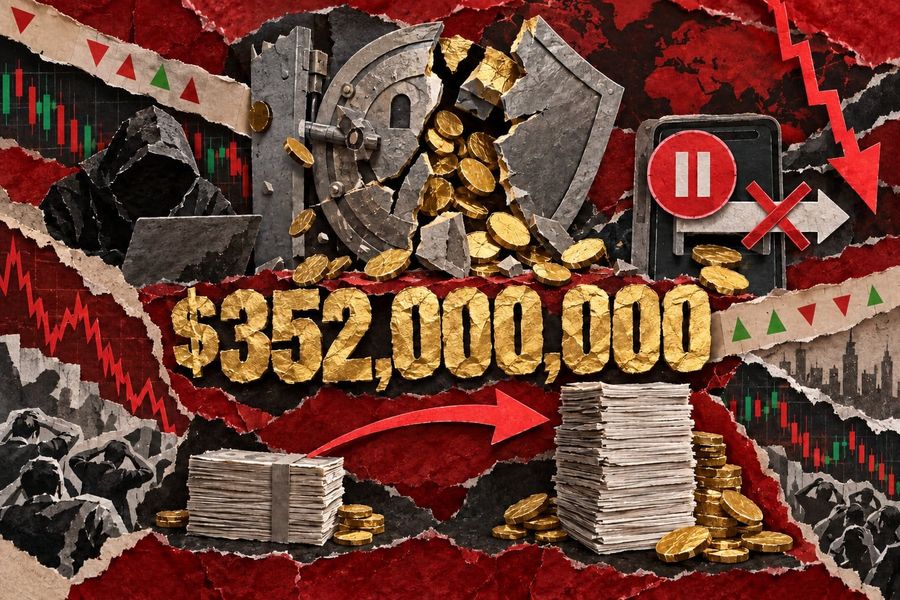
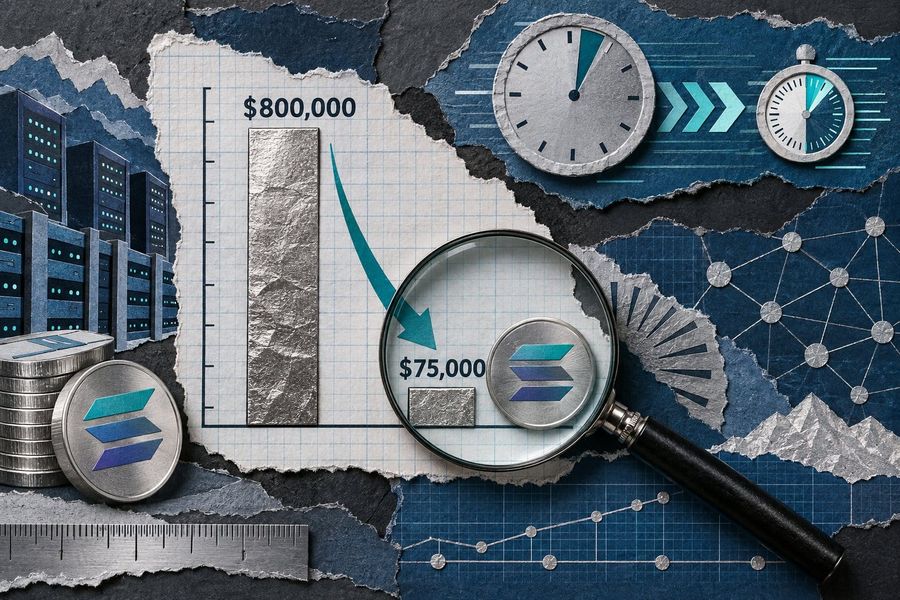
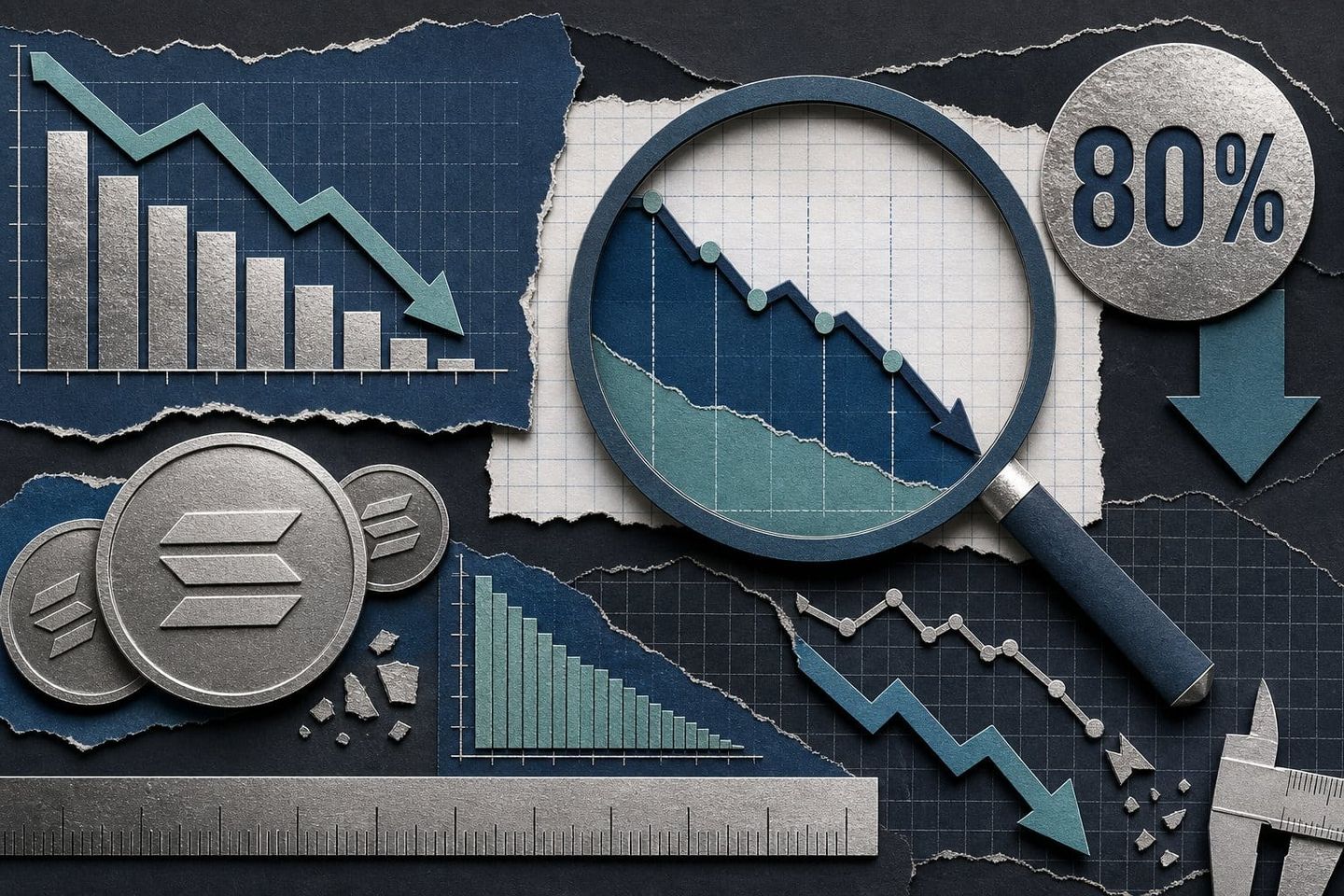
Pump.fun's daily protocol fees have fallen roughly 83%, from about $4.8 million per day in January 2026 to near $800,000–$875,000 per day by June 2026 . The collapse is anchored in graduations: the seven-day average share of tokens completing the bonding curve and migrating to a full liquidity pool dropped to about 0.26%, an roughly 80% quarter-over-quarter decline . That figure is one specific lens — a graduation-rate metric — so the headline "80%" should be read as window- and baseline-dependent rather than a single canonical statistic .
The contrast with the start of the year is the point. In Q1 2026, Pump.fun generated $124.7 million in fees — about 36% of Solana's $342.2 million in total app revenue and the network's single largest revenue source, up roughly 17% quarter-over-quarter . Some outlets pegged the share nearer 30% depending on the revenue definition used . Q1 captured the tail of the strong period; June's run rate marks the deterioration that followed.
Solana's own fee economy moved in parallel. Network fees fell to roughly 5,300 SOL per day in June, down from about 33,000 SOL per day in January — an roughly 84% SOL-denominated drop . Live DefiLlama data as of June 17, 2026 corroborates the depressed pace: $57.77 million in 24-hour volume, $875,325 in 24-hour fees, $670,278 in 24-hour protocol revenue, and about $1.3 billion in 30-day volume .
| Metric | January 2026 (peak) | June 2026 | Change |
|---|---|---|---|
| Pump.fun daily protocol fees | ~$4.8M/day | ~$800K–$875K/day | ~−83% |
| 7-day graduation rate | — | ~0.26% | ~−80% QoQ |
| Solana network fees | ~33,000 SOL/day | ~5,300 SOL/day | ~−84% |
| Pump.fun 30-day volume | Q1 high-water run rate | ~$1.3B | Sharply lower |
The takeaway is straightforward: a protocol that produced more than a third of Solana's app revenue three months earlier is now running at a fraction of that pace. The sections that follow examine why Solana feels the slowdown more than its modest notional volume share suggests, and what a recovery — or a permanent rotation away — would mean.
Why Solana Feels This More Than Its Notional Share Implies
Pump.fun's slowdown hits Solana harder than its trading volume suggests because the launchpad was always transaction-intensive rather than notional-heavy. As of June 17, 2026, its $57.77 million in 24-hour volume is only about 3.6% of Solana's $1.599 billion 24-hour DEX volume . Yet its fee footprint is far larger: roughly 13% of Solana's app fees and about 20% of app revenue, on $875,325 in daily fees against $6.59 million in app fees and $3.41 million in app revenue .
The gap traces back to how Pump.fun used the chain. A 2025 academic study of Q4 2024 found the launchpad accounted for up to 71.1% of Solana token mints and between 40% and 67.4% of all DEX transactions, even though fewer than 2% of its tokens ever graduated to a major DEX . That transaction density — not dollar size — is what drove priority-fee bidding, bot competition, and MEV demand. When launch activity falls, that entire layer of congestion-driven income collapses with it.
The pass-through to validators is indirect, which is why the link is easy to overstate. Solana's base fee is 5,000 lamports per signature, split 50% burned and 50% to the validator, while priority fees go entirely to the validator . Pump.fun's percentage trading fee never touches validator income; the chain only benefits through the volume of transactions and the fee-competitive bidding those transactions create . So when Pump.fun cools, Solana loses congestion and bot rivalry rather than a direct revenue stream — a quieter but still material drag. Network fees fell to roughly 5,300 SOL per day in June from about 33,000 SOL in January, an ~84% SOL-denominated drop .
The March 2026 episode showed the extreme. Solana's weekly network revenue fell from a January peak near $55.2 million to roughly $1.8 million in a March week — about a 97% collapse and the lowest since September 2024 — while ecosystem trading volume dropped from over $97 billion to about $5 billion .
"There was a full 24-hour period in which no new token graduated," noted analyst Matthew Haddad, documenting the depth of the freeze (source: CryptoSlate).
Bull Case: What a Recovery Would Actually Require
A Pump.fun recovery does not require a return to 2024-era transaction volumes — it requires higher-quality token throughput and a wider capital base, and two recent structural changes make that plausible. The most concrete is USDC-paired token launches, which went live on May 21, 2026 . By letting traders fund launches with a dollar stablecoin rather than only SOL, the platform opens to non-SOL capital pools and broadens participation beyond existing SOL holders — a diversification that, if adopted, would reduce Pump.fun's dependence on a single volatile collateral asset.
The second is PumpSwap's market-cap-tiered fee model. Total fees scale from 1.25% on low-cap SOL pools down to 0.300% on very high-cap pools, with a 0.300% rate on non-canonical pools and free coin creation plus a 0.015 SOL graduation fee to PumpSwap . Because revenue is not a fixed basis-point calculation, a smaller cohort of higher-quality graduating tokens that reach meaningful market caps and sustained trading could carry the fee base without the bot-driven mint flood of the prior cycle. Quality of graduations, not raw count, becomes the swing variable.
Historical precedent offers measured — not unlimited — optimism. DefiLlama data showed protocol fees fall roughly 83% from a ~$7.07 million January 2025 peak to about $1.2 million by March 28, 2025, with daily volume down about 75% from ~$390 million to ~$97 million, before the platform recovered . Two cycles of deep drawdown followed by recovery suggest the business is cyclical rather than structurally broken. Tokenomics have also been reset: in late April 2026, Pump.fun abandoned its burn-everything policy after roughly $370 million in buyback-and-burn wiped about 36% of PUMP supply without supporting the price, locking around 50% of revenue into ongoing buybacks instead .
Underpinning all of this is Solana's infrastructure. The chain's base fee remains 5,000 lamports per signature, with priority fees layered on top — throughput and cost characteristics that made Pump.fun's high-frequency model viable in the first place . That advantage has not eroded. If speculative sentiment rotates back toward memecoins, Pump.fun's distribution, brand recognition, and PumpSwap liquidity rails are already in place to capture it. The bull case, then, is not a bet on new technology but on the return of an audience — and on USDC pairs and tiered fees converting that return into more durable revenue than the last peak produced.
Bear Case: Why the Rotation to Perps May Be Structural
The bear case argues that the audience may not return — or that if it does, it will find better tools elsewhere. Speculative capital has rotated out of Solana memecoin farming and into perpetual-futures venues such as Hyperliquid . Perps offer leverage, hedging, and deep liquidity — they serve the same appetite for high-variance bets that memecoins did, but with more flexible tooling. If the demand Pump.fun captured was fundamentally about leverage-like exposure rather than memecoins specifically, that demand may have found a structurally superior home.
The token side reinforces the pessimism. Pump.fun's reflexive demand loop depended on revenue feeding PUMP buybacks and burns, which in turn were meant to support the price. That loop broke: roughly $370 million in buyback-and-burn wiped about 36% of PUMP supply yet failed to support the token, forcing Pump.fun to abandon its burn-everything policy in late April 2026 and shift to locking about 50% of revenue into ongoing buybacks . When a ~36% supply reduction does not move price, the mechanism that was supposed to convert protocol activity into token value looks impaired.
There is also a slower, structural drag: scam-token fatigue and a base rate that never improves. Fewer than 2% of tokens ever graduate to a full liquidity pool [?], and as fraud incidents accumulate, the launchpad's lottery becomes less attractive when the odds stay near zero . A market that learns the base rate tends to participate less.
Finally, the moat is fragmenting. Launchpad competition is splitting Solana's fee share rather than consolidating it: in Q1 2026 the launchpad category produced roughly $144 million, with Bags growing about 1,347% quarter-over-quarter to around $11.5 million as a distant second . Pump.fun's position as the default launchpad is no longer assured. If the next memecoin cycle is distributed across several venues, Pump.fun could recover activity while still earning a smaller share of it — a recovery in users that does not translate into a recovery in revenue. The bear thesis does not require the meme trade to die; it only requires that better-tooled venues, a broken token loop, and credible competitors keep Pump.fun's run-rate structurally below its 2025 peak.
Base Case and Portfolio Implications for SOL and PUMP Holders
The base case is stabilization, not collapse: Pump.fun most likely settles into a protocol-fee run rate of roughly $800,000 to $1.5 million per day — materially below its early-2026 peak but well above zero. Live data already brackets the low end, with daily protocol revenue near $670,278 and daily fees of $875,325 on June 17, 2026 , against roughly $4.8 million per day six months earlier . In this scenario Solana's fee mix keeps shifting toward trading apps — Axiom alone generated about $42.4 million in Q1 2026 and trading apps collectively rose ~40% quarter-over-quarter to roughly $79 million .
For SOL holders, fee-income compression is a genuine headwind but not an existential one. Pump.fun was Solana's single largest revenue generator in Q1 2026 at $124.7 million, about 36% of the network's $342.2 million in app revenue , so its decline removes a real demand source for blockspace. But the SOL thesis should weight DeFi diversification and staking yield over memecoin-driven fee spikes as a primary driver. As analyst Matthew Haddad noted during the sharpest of the slowdown, there was a full 24-hour stretch in which no new token graduated — a reminder that a fee base concentrated in one launchpad is inherently fragile.
For PUMP holders, the demand picture changed in late April 2026, when the protocol abandoned its burn-everything policy — after roughly $370 million in buybacks wiped ~36% of supply without supporting the price — and moved to locking ~50% of revenue into ongoing buybacks . That creates a demand floor calibrated to current revenue, but at $800,000 per day in fees the buffer is far smaller than the burn era implied. Meaningful upside requires a volume recovery, not policy alone.
| Indicator | Current reading | Confirming signal to watch |
|---|---|---|
| Token graduation rate (7d avg) | ~0.26% | A sustained move above 1.0% |
| 30-day protocol fees (DefiLlama) | $24.6M | Trend reversing higher month-over-month |
| Pump.fun share of Solana app revenue | ~20% (24h) | Diversification ratio across trading apps |
The decision framework follows directly. The graduation rate climbing back above 1% — from about 0.26% today — would be the first signal worth acting on, with the 30-day DefiLlama fee trend and Solana's app-revenue diversification ratio as confirming indicators. The concrete takeaway: treat Pump.fun's recovery as a watch-list trigger, not a thesis you front-run — own SOL for its broadening DeFi base and own PUMP only with eyes open to a buyback floor that scales with the very volume that has yet to return.
Frequently asked questions
Is Pump.fun still Solana's largest single fee source in 2026?
It depends on the window you measure. In Q1 2026 (January–March), Pump.fun was unambiguously Solana's top fee generator, producing $124.7 million in fees, roughly 36% of the network's $342.2 million in app revenue. By June 2026 that title is contested: protocol revenue collapsed to roughly $800,000 per day, down from about $4.8 million per day six months earlier, while trading apps such as Axiom — which generated about $42.4 million in Q1 — now rival or exceed its run rate. Largest historically, but no longer clearly first on a current-run-rate basis.
Does a Pump.fun slowdown directly reduce SOL validator rewards?
No — the effect is indirect. Solana validators earn the base fee, set at 5,000 lamports per signature, with 50% burned and 50% paid to the validator, plus prioritization fees that go 100% to the validator. Pump.fun's percentage trading fee is protocol revenue and never flows to validators. What lower Pump.fun activity does reduce is transaction volume, priority-fee competition, and MEV demand — and that pass-through helped pull Solana's daily network fees to roughly 5,300 SOL in June, down from about 33,000 SOL per day in January. So validator income falls, but through compressed fee markets rather than a direct cut.
What would trigger a Pump.fun volume recovery?
A recovery would most likely require a renewed memecoin speculative cycle, the new USDC-paired launches pulling in non-SOL capital, token graduation rates climbing back above roughly 1% (the seven-day share fell to about 0.26%), or a broad macro risk-on environment. USDC pairs went live May 21, 2026, giving one structural lever. There is precedent: in early 2025, DefiLlama data showed protocol fees fall about 83% from a $7.07 million January peak to $1.2 million by March 28, 2025 before activity returned. The open question is whether 2026's rotation into perpetual-futures venues is cyclical or a durable shift in how retail traders deploy speculative capital.