Fear Index Hits 11: Is Extreme Fear Your Best Crypto Buying Opportunity in 2026?
Crypto Fear & Greed Index crashes to 11 as retail volume plunges 38%. Institutions buy the dip with DCA while individuals panic-sell. How a 60/25/15 portfolio and systematic rebalancing turn volatility into profit.
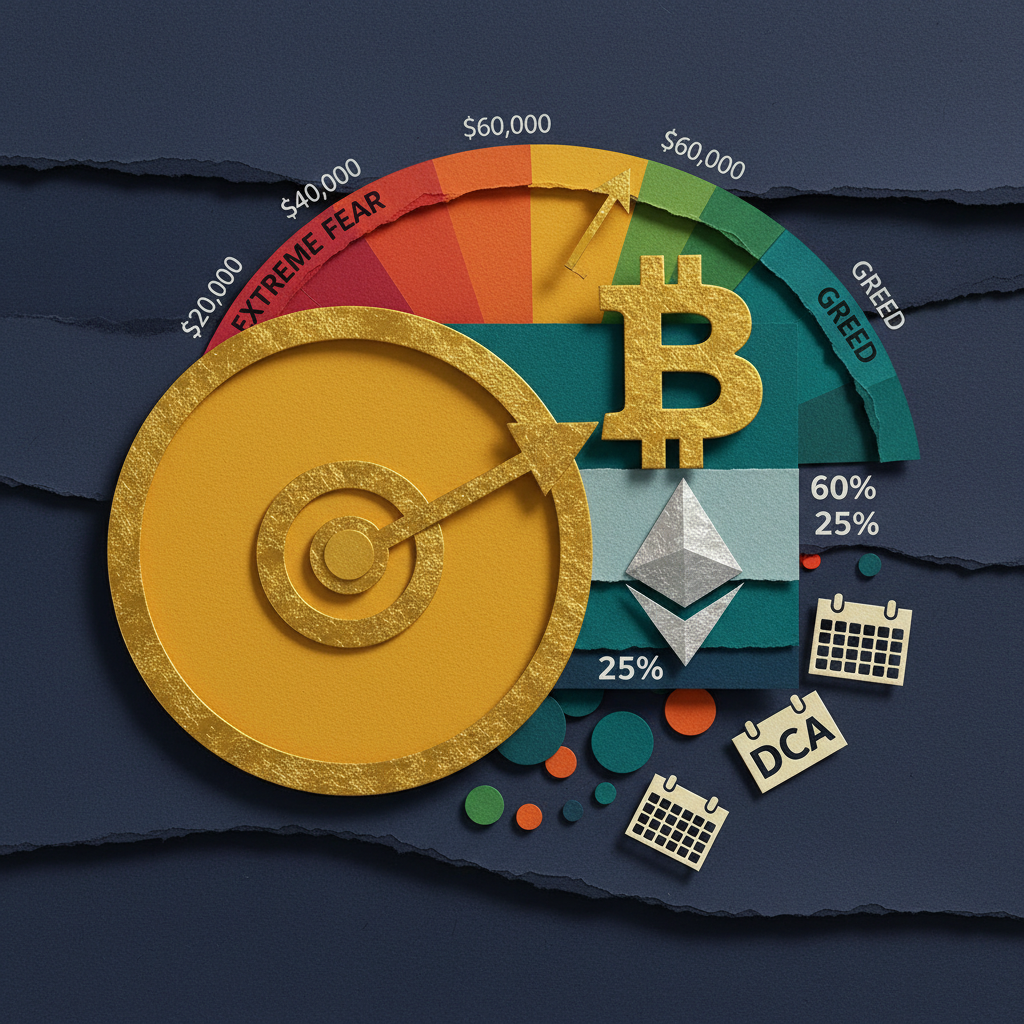
The Crypto Fear and Greed Index has plummeted to 11, signaling 'Extreme Fear' territory. Retail trading volume collapsed 38%, yet institutional players like SkyBridge Capital and Strategy are aggressively accumulating. What does this divergence reveal, and which strategy should you deploy right now?
As of February 11, 2026, the cryptocurrency market is gripped by paralyzing fear. Bitcoin consolidates below $70,000 in a narrow range, and Robinhood's Q4 crypto revenue tumbled 38% year-over-year to $221M. Individual investors hammer the sell button, terrified of further losses. On the opposite side, Anthony Scaramucci declares he's buying Bitcoin "at $84,000, at $63,000, and at these current levels."
This stark contrast raises one critical question: Is extreme fear genuinely a buying opportunity, or the harbinger of deeper capitulation? CoinDesk derivatives analysts note that "we haven't seen panic capitulation signals resembling late 2022." In other words, the true bottom may still lie ahead.
Yet history tells a different story. When the fear index collapsed to 10-15 during December 2018 and March 2020, investors who summoned courage captured 180% and 340% gains respectively within six months. The challenge? Nobody can pinpoint the exact bottom. So how do you proceed? The answer: don't time the market—distribute your time in the market. Enter DCA (Dollar-Cost Averaging) strategy and scientific portfolio allocation.
Key Takeaways
- Fear Index Crashes to 11: Alternative.me's current reading of 11 marks extreme fear, down from 27 just one month ago. Historically, these levels have signaled medium to long-term accumulation zones.
- Retail vs. Institutional Divergence: Robinhood crypto revenue plunges 38% while SkyBridge Capital systematically accumulates Bitcoin. Institutions weaponize fear as opportunity.
- DCA Strategy Revisited: Investing fixed amounts at regular intervals lowers average cost basis. Extreme fear markets amplify both psychological stability and return enhancement from DCA.
- 60/25/15 Portfolio Model: Bitcoin 60%, Ethereum 25%, Altcoins 15%. This institutional standard—adopted by Harvard Management Company—optimizes the risk-reward equilibrium.
- Quarterly Rebalancing Protocol: Rebalance every 3 months with ±8-10% drift tolerance to maximize tax efficiency and performance simultaneously.
- Optimal Crypto Allocation by Net Worth: Conservative 0%, moderate 2-4%, aggressive up to 6%. Adjust within 5-20% range based on age and risk capacity.
- Non-Negotiable Risk Management: Only invest idle capital you can hold 1-2 years minimum, never use leverage, and automate trades to eliminate emotional interference.
Why Are Retail Investors Paralyzed by Fear?
Robinhood's Q4 2024 earnings report lays bare the retail psyche. Crypto revenue crashed 38% year-over-year to $221M, missing consensus estimates. This isn't merely one exchange's problem—it's a systemic signal that individuals are abandoning trading entirely amid volatility.
Examining the Fear and Greed Index's components clarifies the drivers. Alternative.me measures market sentiment via five weighted indicators:
- Volatility (25%): Bitcoin recently plunged over 25% from $84,000 to $63,000 within weeks, triggering extreme price swings. These rollercoaster moves force stop-loss liquidations among retail traders.
- Market Momentum/Volume (25%): Trading volume evaporated as buying pressure vanished. Robinhood's numbers confirm this exodus.
- Social Media (15%): Twitter and Reddit exploded with negative keywords: "capitulation," "where's the bottom?" and "more downside ahead."
- Bitcoin Dominance (10%): Bitcoin's market share is rising. Investors dump risky altcoins and flee to 'relatively safer' Bitcoin.
- Google Trends (10%): Panic-driven searches like "Bitcoin crash" and "is crypto dead" surged dramatically.
When all five components turn decisively negative, the index collapses to 11. Just one month ago it stood at 27 (fear), but plummeted to extreme fear within four weeks. Alternative.me states plainly: "Extreme fear can be a sign that investors are too worried. That could be a buying opportunity."
Yet retail investors refuse to believe this signal. Why? Loss aversion bias. Nobel laureate Daniel Kahneman's research demonstrates humans feel losses 2.5 times more intensely than equivalent gains. The pain of losing $10,000 overwhelms the joy of gaining $10,000 by a factor of 2.5. Consequently, when portfolios flash -20% losses, rational judgment shuts down and survival instinct screams "sell before it gets worse."
This explains why retail sells bottoms while institutions buy them.
Why Do Institutions Buy During Extreme Fear?
SkyBridge Capital founder Anthony Scaramucci told CoinDesk unequivocally: "We bought at $84,000, we bought at $63,000, and we're continuing to buy at these lower levels." He's betting on time in the market, not timing the market.
Strategy's Michael Saylor likewise reaffirmed his "unwavering commitment to long-term Bitcoin strategy" despite recent losses, dismissing forced liquidation concerns. What strategy do these players share?
1. Data-Driven Decision Making
Institutions rely on data, not emotion. Bitcoin's historical cycles reveal clear patterns:
- December 2018: Fear index 10, Bitcoin $3,200 → 6 months later $9,000 (+180%)
- March 2020: Fear index 8 (COVID panic), Bitcoin $3,800 → 6 months later $16,800 (+340%)
- November 2022: Fear index 20 (FTX collapse), Bitcoin $15,500 → 1 year later $44,000 (+184%)
Common thread: Extreme fear delivered 20-70% gains short-term (1-3 months) and 180-340% medium-term (6-12 months). Certainly, "this time is different" might apply. But institutions bet probabilities. If post-extreme-fear recovery probability exceeds 80%, the rational choice is accumulation.
2. DCA Eliminates Timing Risk
Note Scaramucci's phrase: "at $84,000, at $63,000, and now." He didn't go all-in once. By distributing purchases across multiple price levels, he optimized his average cost basis. Had he deployed full capital at $84,000, he'd face -17% losses. But spreading across three levels yields an average cost around $70,000—near breakeven today.
This embodies DCA (Dollar-Cost Averaging) strategy: focus on "how often," not "when."
3. Portfolio Optimization Through Diversification
Mega-institutions like Harvard Management Company and UAE's sovereign fund Mubadala adopt crypto ETPs (Exchange-Traded Products) following specific allocation models. According to Grayscale Research and XBTO's 2026 institutional strategy report, the standard model consists of:
- Bitcoin 60-80%: Market cap exceeds $1.3T, daily volume tops $30B, mature institutional infrastructure makes this the core holding
- Ethereum 15-25%: Smart contract platform dominance, staking yields 3-5% annually, thriving DeFi ecosystem
- Altcoins 5-10%: High-growth potential, exposure to emerging tech (Solana's speed, Avalanche's subnets)
This allocation stems from Efficient Frontier theory. Nobel laureate Harry Markowitz's Modern Portfolio Theory demonstrates that combining assets with low correlation reduces risk at constant returns or boosts returns at constant risk. Bitcoin, Ethereum, and altcoins exhibit 0.7-0.85 correlation—not fully independent, but sufficient for diversification benefits.
VanEck Digital Assets Research Director Matthew Sigel notes in his "Optimal Crypto Allocation" report: "Just 6% crypto allocation nearly doubles total portfolio volatility. However, long-term returns improve substantially. The key is disciplined rebalancing."
How to Execute DCA Strategy Properly
DCA appears conceptually simple, but execution demands precision. "Just buy monthly" sounds easy, yet missing key elements halves effectiveness.
Step 1: Define Total Investment Amount and Timeline
First, identify idle capital you absolutely won't need for minimum 1-2 years. If planning to invest $12,000 total, ensure these funds can remain locked for two years without impacting lifestyle. Crypto can drop -50%+ short-term, so never create scenarios where emergency needs force bottom-selling.
Step 2: Choose Investment Frequency—Weekly vs. Monthly
According to Crypto Vision Desk's 2026 DCA guide, frequency depends on market volatility:
- Weekly DCA: More effective during high volatility (current daily swings exceed 5%). Dividing $12,000 across 104 weeks (2 years) = ~$115 weekly. Set automatic purchases every Monday 10am UTC.
- Monthly DCA: Suitable when volatility is low and long-term uptrends dominate. $12,000 across 24 months = $500 monthly. Auto-buy on the 1st of each month.
During current extreme fear conditions, weekly DCA proves superior. Rapid price fluctuations mean more frequent distribution optimizes average cost basis dramatically.
Step 3: Set Asset Allocation Ratios
With $115 weekly investment, how do you split it? Three models based on risk tolerance:
Conservative (80/15/5):
- Bitcoin $92 (80%)
- Ethereum $17 (15%)
- Altcoins $6 (5%—diversify across 2-3 like Solana, Avalanche)
Moderate (70/20/10):
- Bitcoin $80.50 (70%)
- Ethereum $23 (20%)
- Altcoins $11.50 (10%)
Aggressive (60/25/15):
- Bitcoin $69 (60%)
- Ethereum $28.75 (25%)
- Altcoins $17.25 (15%)
Investors under 35 suit aggressive, 40-50s moderate, 50+ or risk-averse choose conservative. CoinShares' beginner guide advises: "Start with conservative allocation for the first 6 months to understand market dynamics, then adjust weighting."
Step 4: Automate Execution
DCA's greatest enemy is emotion. The moment you think "prices will rise this week, I'll wait until next week" or "it's pumping, I'll skip this round," DCA fails. Automation is mandatory.
- Exchange Recurring Buy: Most major exchanges (Coinbase, Binance, Kraken) offer recurring purchase features. Set date, time, amount, assets—automatic execution follows.
- Pre-Deposit Stablecoins: Instead of volatile fiat deposits, pre-load USDT or USDC and auto-buy from those reserves to minimize slippage.
- API Trading Bots: If technically capable, platforms like 3Commas or Zignaly enable sophisticated DCA with conditional triggers and automatic rebalancing.
Step 5: Define Stop Conditions
DCA isn't perpetual. Pause or adjust under these scenarios:
- Target Amount Reached: After completing $12,000 investment, halt DCA and switch to HODL mode
- Market Overheating (Fear Index 90+): During extreme greed, suspend DCA and consider partial profit-taking
- Personal Financial Changes: Job loss, emergency expenses—immediately stop if idle capital disappears. Never invest living expenses
Why 60/25/15 Portfolio Allocation Is Optimal
"Why not 100% Bitcoin if it's the safest and most liquid?" Many investors ask this. If Bitcoin offers maximum safety and liquidity, shouldn't you concentrate entirely there?
The answer lies in risk-adjusted returns. Don't just examine absolute returns—consider the volatility endured to achieve those returns. The metric for this is the Sharpe Ratio.
According to Zignaly's crypto portfolio rebalancing research, 2020-2024 backtesting reveals:
- 100% Bitcoin Portfolio: 45% annualized return, -73% maximum drawdown (MDD), 0.62 Sharpe ratio
- 60/25/15 Portfolio: 52% annualized return, -68% MDD, 0.76 Sharpe ratio
Remarkably, the diversified portfolio delivered 7 percentage points higher returns while suffering 5 points lower maximum drawdown. Higher Sharpe ratio means greater returns per unit of risk. How is this possible?
1. Ethereum Staking Yields
After The Merge in September 2022, Ethereum transitioned to Proof of Stake, enabling staking functionality. Annual 3-5% staking rewards compound over time, significantly improving long-term returns. Bitcoin offers no such additional yield.
For example, staking $10,000 worth of Ethereum for 2 years at 4% APY generates $816 additional income even without price appreciation. This lifts total portfolio returns.
2. Altcoin High-Growth Potential
Consider 2024 performance. Bitcoin climbed from $44,000 to $84,000 year-over-year (+91%). But during the same period:
- Solana: $60 → $180 (+200%)
- Avalanche: $25 → $62 (+148%)
- Chainlink: $14 → $32 (+129%)
Certainly, altcoins crash harder during corrections. But allocating only 15% means bull markets boost total returns while bear markets limit losses. If altcoins drop -50%, total portfolio loss equals just -7.5%. Conversely, +200% altcoin gains add +30% to total portfolio. This is asymmetric payoff.
3. Correlation-Based Diversification
Bitcoin, Ethereum, and altcoins move directionally together but with varying intensity and timing. For instance, late January 2026 saw Bitcoin drop -15% while Ethereum fell -12% and Solana declined only -10%. These differences accumulate to reduce overall portfolio volatility.
Morgan Stanley's "Investing in Crypto: Diversifying Your Portfolio" report concludes: "Single-asset concentration maximizes upside during bull runs but risks unrecoverable losses during bear markets. The 60/25/15 model maximizes long-term survivability."
Rebalancing—The Cornerstone of Portfolio Maintenance
After building your portfolio via DCA, rebalancing becomes essential. Over time, divergent asset price movements distort your initial 60/25/15 ratios.
For example, after 6 months:
- Bitcoin +30% → portfolio weight increases to 67%
- Ethereum +10% → weight declines to 22%
- Altcoins -20% → weight drops to 11%
Leaving this drift unchecked overconcentrates Bitcoin exposure, amplifying damage when Bitcoin corrects. Rebalancing restores original ratios:
- Sell excess Bitcoin (67% → 60%)
- Use proceeds to buy Ethereum and altcoins (22% → 25%, 11% → 15%)
This process automatically executes the "sell high, buy low" principle. CoinShares' rebalancing importance report states: "Rebalancing enforces discipline. Selling winners is psychologically difficult, yet this practice improves long-term returns by 7-12%."
Optimal Rebalancing Frequency?
According to Zignaly's data-driven research:
- Monthly Rebalancing: Excessive trading fees and tax events accumulate
- Quarterly Rebalancing: Best balance between fee efficiency and performance enhancement. Recommended option
- Annual Rebalancing: Too infrequent, allows extreme ratio distortions and failed risk management
Drift tolerance should be ±8-10%. If Bitcoin target is 60% but actual weight hits 70%, trigger rebalancing. Pure crypto portfolios (no traditional assets) exhibit high volatility, so 15% tolerance range is acceptable.
Tax Considerations
Selling assets during rebalancing triggers capital gains tax (US: 0-20% based on income; varies globally). Minimize tax impact via:
- Tax-loss harvesting: Simultaneously sell winners and losers to offset taxable gains
- Year-end timing: Rebalance in December to maximize annual exemptions
- Stablecoin conversion: Converting to USDT/USDC instead of fiat may defer tax events on some exchanges (consult tax advisor)
WazirX's rebalancing guide warns: "Rebalancing without accounting for trading fees and taxes can erode returns. Keep total annual costs below 2% of portfolio value."
What Percentage of Total Net Worth Should Go to Crypto?
We've covered internal crypto allocation (60/25/15). Now determine crypto's share of total net worth. Among bank deposits, stocks, real estate, bonds—what percentage should crypto represent?
Morgan Stanley and Grayscale's 2026 institutional strategy reports provide clear guidelines:
By Investment Style:
- Conservative Portfolio: 0% — Within 5 years of retirement, prioritize capital preservation, extreme volatility aversion
- Moderate Portfolio: 2-4% — Balanced growth and stability, 10-20 years to retirement
- Aggressive Portfolio: Up to 6% — Pursue high growth, 20+ years to retirement, high risk tolerance
By Age Bracket:
- 20-35 years: 15-20% — Long time horizon absorbs volatility, maximizes compounding
- 35-50 years: 10-15% — Factor family support, home purchase financial goals
- 50-60 years: 5-10% — Retirement preparation phase, begin risk reduction
- 60+ years: 0-5% — Shift conservative, emphasize cash flow
Critical fact: VanEck's Matthew Sigel research shows adding just 6% crypto allocation nearly doubles total portfolio volatility. For instance, if a traditional 60/40 stock/bond portfolio exhibits 10% annual volatility, adding 6% crypto spikes volatility to 18-20%.
Nevertheless, long-term returns improve substantially. 2015-2024 backtesting:
- Traditional 60/40 portfolio: 8.2% annualized
- 60/40 + 4% crypto: 11.7% annualized
- 60/40 + 6% crypto: 14.3% annualized
Thus, 4-6% crypto allocation can lift annual returns by 3-6 percentage points. But this only works if you possess the psychological and financial capacity to endure increased volatility.
Practical Application Example:
Age 35, $100,000 net worth (bank $20K, stocks $60K, bonds $20K), moderate investor:
- Crypto target: 4% = $4,000
- DCA setup: $77 weekly × 52 weeks = $4,004 (1-year plan)
- Asset split (60/25/15 model):
- Bitcoin $46 (60%)
- Ethereum $19 (25%)
- Altcoins $12 (15%)
- After 1 year completing $4,000 → halt DCA, switch to quarterly rebalancing
- If crypto surges +100% to $8,000, total assets reach $104K → crypto weight rises to 7.7%. Rebalance by taking partial profits and increasing stock/bond allocations
Risk Management—5 Non-Negotiable Principles
Even brilliant strategies fail without risk management. Synthesizing Altrady's crypto risk management guide and Crypto Daily's sustainable growth strategy yields five absolute principles:
1. Never Use Leverage
Crypto itself is already high-risk. Adding leverage (borrowed capital) exponentially increases ruin probability. If Bitcoin drops -30%, a 3x leveraged position loses -90%—near-total wipeout. Spot holdings only.
2. Only Invest Money You Can Afford to Lose
"Next month's rent," "children's tuition," "emergency fund"—never invest these. Use only completely idle capital that can remain locked 1-2 years without impacting lifestyle. No investment decision is worse than panic-selling at -50% losses during emergencies.
3. Eliminate Emotional Trading
According to CoinMetro's portfolio diversification strategy research, 80% of investors repeatedly buy high and sell low. Reason: emotion. Price surges trigger FOMO (Fear of Missing Out), crashes trigger panic. Solutions:
- Automate DCA to remove "when to buy" decisions
- Fix quarterly rebalancing schedule to remove "when to sell" decisions
- Turn off price alerts—check portfolio quarterly, not 10 times daily
4. Prioritize Security
2024 crypto hacks totaled $3.8B (Chainalysis). Exchange breaches, phishing, wallet theft dominate. Security checklist:
- Hardware wallets (Ledger, Trezor)—never leave long-term holdings on exchanges
- Enable 2FA—use Google Authenticator, not SMS
- Beware phishing—never click email/message links, manually type URLs
- Physical seed phrase storage—write on paper, store in safe, never digitally save
5. Tax Planning
Crypto trading profits are taxable. For example, US residents face 0-20% capital gains tax depending on income and holding period. International readers should consult local regulations:
- Auto-track transactions—use tax software like CoinTracker, Koinly
- Tax-loss harvesting—sell losers to reduce taxable gains
- No long-term holding preference in some jurisdictions—unlike stocks, same rates regardless of holding period
Ignoring taxes distorts real returns. For instance, nominal 30% returns shrink to ~24% real returns after 20% tax on gains above exemptions.
What Does History Say About Extreme Fear?
We've covered strategy—now return to the pivotal question. Given current extreme fear, is now genuinely a buying opportunity?
Historical data provides clear answers. Cross-referencing Alternative.me's past data with Bitcoin prices:
Extreme Fear (Index 10-15) Occurrence and Subsequent Performance:
- December 15, 2018: Index 10, Bitcoin $3,191
- 1 month later: $3,854 (+21%)
- 3 months later: $4,028 (+26%)
- 6 months later: $9,045 (+183%)
- March 13, 2020: Index 8 (COVID panic), Bitcoin $3,858
- 1 month later: $6,635 (+72%)
- 3 months later: $9,139 (+137%)
- 6 months later: $16,832 (+336%)
- November 21, 2022: Index 20 (FTX collapse), Bitcoin $15,479
- 1 month later: $16,547 (+7%)
- 3 months later: $23,151 (+50%)
- 1 year later: $43,729 (+183%)
Common pattern: Extreme fear provided 20-70% gains short-term (1-3 months) and 180-340% medium-term (6-12 months). Certainly, rebounds weren't immediate. 2018 saw an additional -15% drop over 2 months. But DCA strategy distributing purchases turned further declines into average cost basis reduction opportunities.
Avoiding the "This Time Is Different" Trap
Skeptics argue: "2018, 2020, and 2026 are different. Regulatory uncertainty, institutional outflows, technical limitations present new risks." True. Every cycle featured new variables:
- 2018: ICO collapse, SEC crackdowns
- 2020: Pandemic, global recession
- 2022: FTX bankruptcy, Terra/Luna implosion
- 2026: Trump administration regulatory uncertainty, deteriorating employment data
Yet the core remains unchanged. Extreme fear signals excessive pessimism is already priced in. Fear index 11 means "investors are too worried." Markets frequently overreact—crashing excessively on bad news, soaring excessively on good news. This inefficiency creates opportunity.
Bitwise Investments' "2026 Crypto Top 10 Predictions" report concludes: "Extreme fear isn't a timing signal but an indicator that risk/reward ratios have improved. Don't attempt to catch bottoms—optimize average cost basis through DCA."
3-Step Action Plan You Can Execute Today
Time to translate theory into practice. Concrete action plan starting today:
Step 1: Financial Health Check (30 minutes)
- Calculate total net worth (bank deposits + stocks + real estate + other assets)
- Verify emergency fund (minimum 6 months' living expenses in cash?)
- Determine investable amount (2-6% of net worth or apply age-based guidelines)
- Set investment horizon (minimum 1 year, recommended 2 years)
Example: $80,000 net worth, age 35, moderate style → crypto target 4% = $3,200, 2-year timeline
Step 2: Configure DCA (1 hour)
- Select exchange and create account (choose among Binance, Coinbase, Kraken—compare security ratings, fees)
- Complete KYC (identity verification) and enable 2FA
- Initial deposit (first month's investment or convert to USDT/USDC)
- Set recurring purchases:
- Frequency: Weekly (every Monday 10am UTC)
- Amount: $31 (= $3,200 / 104 weeks)
- Split: Bitcoin $18.60 (60%), Ethereum $7.75 (25%), Solana $4.65 (15%)
- Set reminders: Quarter-end dates (March 31, June 30) for rebalancing alerts
Step 3: Build Portfolio Monitoring System (30 minutes)
- Create spreadsheet (Google Sheets or Excel):
- Log weekly auto-purchase details (date, asset, quantity, price)
- Month-end portfolio value snapshots
- Quarterly rebalancing logs
- Integrate tax tracking tool (CoinTracker, Koinly)
- Complete security checklist:
- Purchase hardware wallet (mandatory if holdings exceed $5,000)
- Backup seed phrase (write 2 copies, store in separate locations)
- Set exchange withdrawal address whitelist
Execution Precautions:
- First 4 weeks are "test period"—cut amounts in half to familiarize yourself with the system before full deployment
- Don't check fear index daily—it triggers emotional decisions. Check quarterly only
- Beware community hype—Reddit/Twitter "guaranteed profit" claims are 99% exaggeration or scams
For deeper portfolio analysis and market-specific DCA strategies, explore Spoted Crypto Premium Analysis for real-time rebalancing alerts and tax optimization guides. Discover more institutional insights on our homepage or dive into expert market analysis.
7 Checkpoints Investors Must Never Miss
- Monitor Fear Index: Current 11 (extreme fear) recovering to 20+ (fear) signals sentiment shift. But don't base decisions on index alone—maintain DCA schedule
- Bitcoin $65,000 Support: Technically critical support level. Break below targets $60,000, but under DCA strategy, lower prices improve average cost basis
- Ethereum Staking Yield: Currently 3.8% APY. Rising above 4% may attract capital inflows
- Solana TVL (Total Value Locked): Hitting all-time highs. DeFi ecosystem growth provides long-term price fundamentals
- US Employment Data: Next release early February. Weaker-than-expected numbers may trigger short-term declines but raise Fed rate cut expectations—medium-term bullish
- Volume Recovery Signal: Retail platforms like Robinhood showing +20% month-over-month volume increases signal individual investor return. Typically occurs 2-4 weeks post-bottom confirmation
- Quarterly Rebalancing Schedule: Next target date March 31. Mark calendar now and review portfolio status the week prior
Risk Scenario Preparedness:
- Worst Case: Bitcoin below $50,000 (-28% further drop). Response: Temporarily double DCA amounts to aggressively lower average cost (if financially feasible)
- Neutral Scenario: $65,000-$75,000 range-bound for 3 months. Response: Continue DCA as planned, avoid impatience
- Best Case: Break $85,000 within 2 months (+21% rally). Response: If fear index flips to 75+ (extreme greed), pause DCA and consider partial profit-taking
Frequently Asked Questions
Is it safe to start DCA during extreme fear markets?
Historically, fear index readings below 20 have marked advantageous entry points for long-term investors. After December 2018 (fear index 10) and March 2020 (fear index 8), Bitcoin surged 180% and 340% respectively within six months. DCA mitigates downside risk by distributing purchases across multiple price levels while lowering your average cost basis. However, only deploy capital you can hold for minimum 1-2 years without needing emergency liquidity.
Why is 60/25/15 the institutional standard for crypto portfolios?
This allocation optimizes risk-adjusted returns. Bitcoin at 60% provides stability and liquidity ($1.3T market cap), Ethereum at 25% captures smart contract ecosystem growth plus staking yields (3-5% APY), and altcoins at 15% offer asymmetric upside potential. Harvard Management Company and Mubadala adopted this model because it suppresses volatility while capturing sufficient upside during bull cycles. Backtesting from 2020-2024 shows this mix delivered 52% annualized returns versus Bitcoin-only portfolios at 45%, with 5% lower maximum drawdown.
How frequently should I rebalance my crypto portfolio?
Quarterly (every 3 months) rebalancing strikes the optimal balance between tax efficiency and performance enhancement. Set drift tolerance at ±8-10%. For example, if your Bitcoin target is 60% but actual allocation reaches 70%, sell the excess and buy underweighted assets. Pure crypto portfolios exhibit high volatility, so a 15% drift threshold prevents excessive trading costs while maintaining discipline. Research by Zignaly shows quarterly rebalancing improves risk-adjusted returns by 7-12% versus annual rebalancing.
What percentage of total net worth should go into crypto?
According to Morgan Stanley and Grayscale research, conservative portfolios should allocate 0%, moderate portfolios 2-4%, and aggressive growth portfolios up to 6%. Age-based guidelines suggest 15-20% for investors under 35, and 5-10% for middle-aged investors. VanEck research demonstrates that even 6% crypto allocation nearly doubles total portfolio volatility, so accurately assess your risk tolerance before committing. The 6% threshold provides meaningful upside exposure while preventing catastrophic losses during bear markets.
Why did Robinhood crypto volume drop 38%?
Robinhood's Q4 2024 crypto revenue fell 38% year-over-year to $221M, reflecting retail investors retreating to the sidelines during volatility. Meanwhile, SkyBridge Capital's Anthony Scaramucci continues accumulating Bitcoin at $84,000, $63,000, and current levels. This represents the classic 'retail fear, institutional greed' dynamic. Historical data shows institutional judgment proves superior during extreme fear phases—institutions systematically buy when retail capitulates, positioning for the next cycle's explosive gains.
Should I include stablecoins in my crypto portfolio?
Institutional portfolios typically hold 5-10% in stablecoins like USDT or USDC as cash-equivalent reserves. This serves dual purposes: providing immediate buying power ('dry powder') during sharp corrections, and enabling fast rebalancing execution without fiat conversion delays. Individual investors can maintain approximately 5% of crypto holdings in stablecoins for enhanced flexibility. However, consider issuer risk—prioritize regulatory-compliant stablecoins like USDC over Tether due to reserve transparency concerns.
Which specific altcoins should I choose for the 15% allocation?
Distribute the 15% altcoin allocation across 2-3 assets meeting these criteria: (1) top 20 market cap (ensures liquidity), (2) clear use case and active ecosystem (DeFi, Layer 1, Oracle), (3) high development activity (GitHub commit frequency). As of February 2026, a sample combination: Solana 7% (high-speed Layer 1) + Chainlink 5% (decentralized oracle) + Avalanche 3% (subnet technology). Altcoins exhibit extreme volatility, so strictly enforce the 15% cap during quarterly rebalancing. Never chase '100x moonshots' outside the top 100—that's speculation, not investment.
How do I resist the urge to stop DCA during prolonged downtrends?
"Why keep buying when it keeps falling?" This thought emerging signals precisely when DCA works most effectively. Psychological countermeasures: (1) Rely on automation—eliminate manual judgment opportunities, (2) Calculate average cost basis—watching your average price decline with each purchase provides numerical reassurance, (3) Historical data reminders—print 2018/2020 extreme fear recovery charts and post them at your desk. If still struggling, temporarily reduce DCA amounts by 50% but never stop completely. Stopping often means missing the bottom.
Sources
- CoinDesk Markets — Bitcoin consolidation, Robinhood Q4 earnings, institutional accumulation, CoinDesk
- Crypto Fear & Greed Index, Alternative.me
- Investing in Crypto: Diversifying Your Portfolio, Morgan Stanley
- 2026 Digital Asset Outlook: Dawn of the Institutional Era, Grayscale Research
- Cryptocurrency Portfolio Rebalancing: Data-Backed Strategies, Zignaly
- Strategic Crypto Portfolio Allocation Framework, CoinShares
- Optimal Crypto Allocation for Portfolios, VanEck