2026 L2 Market Overview: TVL Rankings and Market Share
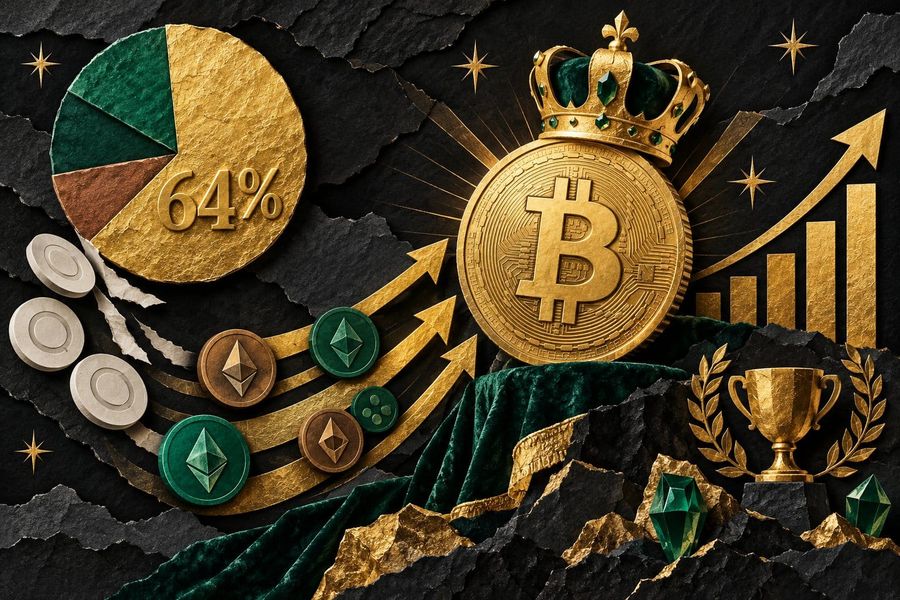
The Ethereum Layer 2 ecosystem has matured into a multi-billion dollar infrastructure layer supporting global DeFi activity. As of May 2026, 73 active rollups collectively secure more than $48 billion in total value locked (TVL), with the market consolidating around two dominant optimistic rollups: Arbitrum One and Base, according to data from CoinBureau and L2BEAT. Arbitrum One leads all networks with approximately $15.9–16.9 billion in TVL — representing roughly 40–44% of the entire L2 market. Base, operated by Coinbase and built on the OP Stack framework, holds second position at $10.7–12.8 billion TVL. Together, Arbitrum and Base account for approximately 77% of all Layer 2 DeFi liquidity — a concentration that reflects both networks' superior execution environments and distribution advantages. The remaining market is divided among OP Mainnet (~$1.7–1.9B), Starknet (~$617M), Linea (~$421M), and zkSync Era (~$404M), each occupying technically or strategically distinct positions in the broader rollup landscape.
Quick Answer: As of May 2026, 73 active Ethereum L2 rollups collectively hold over $48B in TVL. Arbitrum One leads at ~$16B (~40–44% market share), Base follows at ~$11–12B, and together they control ~77% of all L2 DeFi liquidity. OP Mainnet, Starknet, Linea, and zkSync Era occupy smaller but technically distinct niches.
The scale of this consolidation is notable. Arbitrum's dominance is underpinned by $4.2 billion in stablecoin reserves and a deeply integrated DeFi protocol stack built over multiple years of development. Protocols including GMX, Camelot, and Radiant Capital have accumulated substantial on-chain liquidity that compounds Arbitrum's network effect — making it the default settlement layer for large-cap DeFi positions. The network's Stylus upgrade, which enables WebAssembly smart contracts written in Rust, C, and C++, adds a technical dimension to its competitive position that raw TVL figures do not fully capture.
Base's rise is equally striking. Coinbase's retail distribution network drove a near-5× TVL increase: from $2.1 billion in October 2024 to over $10.7 billion by April 2026. The network's integration with Coinbase's exchange and wallet infrastructure creates a user-acquisition pipeline that other rollups cannot replicate organically. Consumer applications, NFT platforms, and social apps have clustered on Base, capitalizing on its low fees and frictionless on-ramp experience for the tens of millions of users already holding assets through Coinbase.
| Network | TVL (May 2026) | L2 Market Share | Architecture | L2BEAT Stage |
|---|---|---|---|---|
| Arbitrum One | ~$16B | ~40–44% | Optimistic Rollup | Stage 1 |
| Base | ~$11–12B | ~28–30% | Optimistic (OP Stack) | Stage 1 |
| OP Mainnet | ~$1.7–1.9B | ~4% | Optimistic (OP Stack) | Stage 1 |
| Starknet | ~$617M | ~1.3% | ZK Rollup (STARK) | Stage 1 |
| Linea | ~$421M | ~0.9% | ZK Rollup (SNARK) | Stage 0 |
| zkSync Era | ~$404M | ~0.8% | ZK Rollup (SNARK) | Stage 0 |
The ZK-rollup tier — Starknet, Linea, and zkSync Era — collectively accounts for roughly 3% of total L2 TVL, a figure that understates their architectural significance. Each network offers cryptographic finality and faster capital exits to Ethereum mainnet, advantages expected to drive broader adoption as ZK proof generation becomes faster and cheaper. For now, EVM equivalence, developer ecosystem depth, and established protocol liquidity keep optimistic rollups dominant across every volume and activity metric that retail traders encounter day-to-day.
Optimistic vs. ZK Rollups: Architecture and Security Trade-offs
The Ethereum Layer 2 landscape divides between two rollup architectures that take fundamentally different approaches to transaction validity. Optimistic rollups — Arbitrum One, Base, and OP Mainnet — assume all transactions are valid by default and post compressed transaction data to Ethereum mainnet without immediate cryptographic verification. Any network participant may challenge a fraudulent transaction within a 7-day window; only if a challenge is formally submitted does on-chain computation occur to arbitrate the dispute. This design prioritizes EVM compatibility and developer familiarity, which explains why optimistic rollups dominate by TVL and user activity in 2026. ZK rollups — including zkSync Era, Starknet, Linea, and Scroll — take the opposite approach: each transaction batch is accompanied by a cryptographic validity proof (either a STARK or SNARK) that mathematically confirms correct execution. Ethereum mainnet verifies the proof and finalizes the batch in under one hour, with no challenge window required. The result is faster capital mobility and stronger cryptographic security guarantees, at the cost of greater computational complexity in proof generation.
"ZK rollups generate cryptographic validity proofs that make it computationally infeasible to include an invalid transaction in a finalized batch. Unlike optimistic systems — which assume validity and rely on the presence of at least one honest challenger during the dispute window — ZK proofs provide mathematical certainty about the correctness of every state transition." — Research Team at Chainalysis Blockchain Intelligence
The 7-day withdrawal window on optimistic rollups is a meaningful friction point for large capital positions. Traders who require rapid access to Ethereum mainnet liquidity face a practical choice: wait the full challenge period or use a third-party liquidity bridge. Bridges such as Across Protocol and Stargate can complete optimistic rollup withdrawals in under 5 minutes by fronting liquidity themselves, charging a fee of 0.05–0.20% of the transfer amount, according to analysis from CoinBureau. On a $10,000 withdrawal, the bridge fee ranges from $5 to $20 — a practical trade-off that most active traders find acceptable. The 7-day native withdrawal window becomes primarily relevant for very large institutional transfers where bridge liquidity limits are a binding constraint.
ZK rollups' capital mobility advantage becomes most pronounced for large DeFi positions where a full 7-day wait represents meaningful opportunity cost. According to Coinbase's rollup architecture overview, improving ZK proof generation speeds and declining proof verification costs are steadily closing the performance gap between ZK and EVM-optimized execution environments. Developer toolchains for ZK networks still lag behind Arbitrum's and Base's more mature ecosystems in 2026, but the long-term trajectory favors ZK for protocols requiring cryptographic finality and fast L1 access.
One structural consideration that sophisticated users should evaluate: ZK rollups require substantial computational resources to generate proofs, creating a potential centralization vector at the prover level. Both Starknet and zkSync Era currently rely on centralized provers — a trust assumption that their respective roadmaps aim to address through permissionless prover network designs. This distinction from the fraud-proof model's more permissionless challenger design influences how protocol-level risk should be assessed for each architecture, as outlined in Gemini's Layer 2 Cryptopedia resource.
Transaction Fees in 2026: What EIP-4844 Actually Changed
Transaction fees on Ethereum Layer 2 networks underwent a structural reset following the Dencun upgrade in March 2024, which introduced EIP-4844 blob-carrying transactions as a dedicated data availability layer for rollups. Before Dencun, L2 networks posted transaction data directly to Ethereum calldata — an expensive storage format priced alongside all other on-chain computation. Blobs provide a separate, lower-cost storage lane with automatic expiration after approximately 18 days, reducing the per-byte cost of L2 data availability by 80–90%. The downstream effect on end-user fees has been substantial: according to data from BlockEden's February 2026 L2 comparison and Symbiosis Finance's 2026 ecosystem review, fees across major L2 networks fell 90–99% relative to 2024 peak levels. OP Mainnet now charges approximately $0.0007 for a simple ETH transfer — a figure that renders cost a near-irrelevant factor for most transactional decisions. Ethereum mainnet, by contrast, averaged 0.50 gwei in January 2026, keeping L2 networks consistently 90–99% cheaper for equivalent operations.
| Network | Architecture | ETH Transfer | Token Swap | USDC Transfer (median) |
|---|---|---|---|---|
| OP Mainnet | Optimistic | ~$0.0007 | ~$0.18 | — |
| Starknet | ZK (STARK) | — | — | ~$0.0102 |
| Base | Optimistic (OP Stack) | — | — | ~$0.02 |
| zkSync Era | ZK (SNARK) | — | — | ~$0.02 |
| Arbitrum One | Optimistic | ~$0.0044 | ~$0.27 | — |
| Ethereum Mainnet | L1 (reference baseline) | $0.50+ equivalent | $5.00+ equivalent | $0.80+ equivalent |
The practical significance of post-Dencun fees extends beyond individual transaction savings. When ETH transfers cost less than half a cent, fee optimization ceases to be the primary factor in L2 network selection — users can instead prioritize security maturity, liquidity depth, and specific protocol availability. This marks a structural shift from 2022–2024, when gas optimization was a dominant concern for retail traders evaluating which network to use for DeFi activity.
Blob space is not unlimited, however. Each Ethereum block currently targets 3 blobs with a maximum of 6, and blob base fees fluctuate with demand. During periods of elevated L2 activity — major DeFi events, high-volume NFT launches, or network congestion — blob fees can spike temporarily, compressing but not eliminating the fee advantage over mainnet. The forthcoming Glamsterdam upgrade's expanded block gas limits are expected to increase blob throughput capacity, further reducing the likelihood of sustained blob fee spikes during high-activity periods.
Different transaction types carry meaningfully different fee profiles within the same network. Token swaps, which involve multiple storage reads and writes across pool contracts, cost significantly more than simple ETH transfers. On Arbitrum One, a token swap ($0.27) costs approximately 61× more than an ETH transfer ($0.0044) — a ratio that matters for high-frequency traders executing many small swaps. Network selection for active DeFi strategies should account for the specific transaction types involved, not just the headline transfer fee.
Speed and User Activity: Transaction Throughput Compared
Transaction throughput and daily active user counts provide the most direct measures of a Layer 2 network's real-world adoption, and the 2026 data reveals a clear hierarchy. Base leads all Ethereum L2s by a substantial margin: 12.89 million daily transactions and 382,500 daily active users as of February 2026, according to data compiled by CoinBureau. Arbitrum One processes 4.30 million daily transactions with approximately 129,000 daily active users. OP Mainnet records 2.35 million daily transactions and 19,300 daily users — a respectable volume given its more focused positioning as a protocol infrastructure layer rather than a consumer-facing network. Taken together, Ethereum L2 networks now collectively process more transactions per day than Ethereum mainnet itself, a milestone that reflects both the ecosystem's maturity and the straightforward economic rationality of transacting at a fraction of mainnet cost. For retail traders, throughput data functions as a useful proxy for network health: high transaction counts signal robust protocol activity and sufficient liquidity for routine order execution.
Base's throughput leadership is directly linked to Coinbase's distribution advantage. The exchange's verified user base represents a direct acquisition pipeline for L2 adoption, and Coinbase's wallet application natively routes transactions through Base, generating consistent baseline activity regardless of broader market conditions. Social applications, prediction markets, creator monetization platforms, and Farcaster-connected apps contribute a significant share of daily transaction volume alongside DeFi. This diversification makes Base's activity metrics more resilient to the market-cycle volatility that tends to compress DeFi-heavy networks' volumes during risk-off periods.
Arbitrum's 4.30 million daily transaction figure is concentrated in DeFi-intensive activity: derivatives trading on GMX and Hyperliquid, yield strategies across lending protocols, and arbitrage across the deep liquidity pools that cluster on the network. The transaction quality — measured by protocol interaction complexity and median value transferred — skews significantly higher on Arbitrum than on Base, which handles a larger proportion of lower-value consumer interactions. For traders deploying substantial capital, the composition of on-chain activity matters as much as the raw transaction count when assessing whether a network's liquidity profile suits their strategy.
OP Mainnet's 19,300 daily user count reflects its role as a protocol-infrastructure layer rather than a mass-consumer destination. Its Superchain strategy — sharing infrastructure with Base, Worldcoin, and application-specific rollups — means that a substantial portion of its ecosystem's user activity flows through derivative chains rather than OP Mainnet directly. Aggregate Superchain user numbers across all OP Stack chains considerably exceed OP Mainnet's standalone metrics, making single-chain comparisons within the OP Stack ecosystem somewhat reductive when evaluating the total reach of Optimism's network.
Security Maturity: L2BEAT Stage Ratings and What They Mean
L2BEAT's decentralization staging framework provides the most systematic approach to evaluating Layer 2 protocol security, and its ratings have become the de-facto institutional benchmark for assessing trust minimization in the rollup ecosystem. Stage 1 is the current threshold that matters most for sophisticated users: it requires that users can always withdraw funds to Ethereum mainnet without any operator action, and that smart contract upgrades are subject to a minimum 7-day notice window — giving users, researchers, and auditors time to evaluate changes and exit before they take effect. Stage 0 networks remain under meaningful operator control, requiring a degree of trust in the protocol team that more closely resembles a managed relationship than a trustless protocol. As of May 2026, Stage 1 networks include Arbitrum One, Base, OP Mainnet, Starknet, Scroll, and Ink, according to L2BEAT's live staging dashboard. Stage 0 networks include zkSync Era, Linea, and Mantle. For any DeFi position where protocol-level security is a primary concern, Stage 1 should function as the entry criterion rather than a preference.
"Stage 1 represents the minimum viable decentralization for a rollup: users must be able to exit to Ethereum L1 without operator assistance, and protocol upgrades must give the community sufficient time to verify, evaluate, and respond before changes take effect." — Research Team at L2BEAT
The practical implications of Stage 0 versus Stage 1 are concrete, not abstract. A Stage 0 network's smart contracts can be upgraded by the protocol team with minimal delay — meaning a compromised upgrade key could theoretically result in funds being redirected or frozen before users have a meaningful opportunity to withdraw. The 7-day delay enforced by Stage 1 provides a critical reaction window: on-chain security researchers, audit firms, and the broader community can review upgrade calldata and raise alerts if proposed changes appear malicious or structurally unexpected. Six major networks have now met this threshold as of 2026.
For institutional capital, Stage 1 is increasingly treated as a hard prerequisite rather than a preference. Treasury operations at protocol DAOs and custodial institutions are beginning to formalize L2BEAT Stage ratings in their risk frameworks, treating Stage 0 allocation as a higher-risk category requiring additional scrutiny and tighter position sizing constraints. The directional pressure on Stage 0 networks to accelerate their decentralization roadmaps is growing as this institutional standard solidifies.
The distinction between Stage 1 security and application-layer risk deserves explicit acknowledgment. Stage 1 certification confirms that the protocol's exit mechanism is trustworthy — it does not evaluate the security of individual DeFi protocols built on top of that network. Smart contract vulnerabilities at the application layer, oracle manipulation exposure, and liquidity crises within specific pools are separate risk categories that Stage ratings do not address. Security-conscious traders should assess both layers independently when sizing positions across any L2 network, a point emphasized in PatentPC's Layer 2 scaling analysis.
Key 2025–2026 Upgrades: Stylus, Superchain, and Glamsterdam
The 2025–2026 period has delivered infrastructure upgrades that are reshaping how Ethereum Layer 2 networks compete on capability rather than purely on cost. Three developments stand out for their potential to alter the competitive landscape: Arbitrum Stylus's introduction of WebAssembly smart contracts, the OP Stack Superchain's expansion into a unified multi-rollup infrastructure framework, and Ethereum's forthcoming Glamsterdam upgrade targeting parallel execution and expanded block capacity. Each represents a distinct strategic vector — Stylus expands the developer talent pool for computation-intensive DeFi applications; the Superchain unifies liquidity and infrastructure across OP Stack chains; Glamsterdam addresses the data availability layer that L2 networks depend on for cost efficiency. Together, according to Symbiosis Finance's 2026 Ethereum ecosystem analysis, these upgrades are closing the performance gap between Ethereum L2s and alternative Layer 1 chains, reinforcing Ethereum's position as the preferred settlement layer for both institutional and retail DeFi.
Arbitrum Stylus, launched in late 2024, enables smart contracts written in Rust, C, and C++ — languages that compile to WebAssembly (Wasm) and execute alongside Solidity contracts on the same network. The performance advantages are concrete: Wasm execution is significantly more efficient than the EVM for computation-intensive workloads, with reported memory efficiency improvements of 7–10× for specific use cases. The Stylus Sprint program, which selected 17 projects from 147 applications according to BlockEden's L2 analysis, signals strong developer interest spanning on-chain gaming engines and high-performance derivatives protocols that would be prohibitively expensive to run in pure Solidity.
Base's growth trajectory under the OP Stack Superchain framework is significant on its own terms. Coinbase's retail distribution engine drove a TVL increase from $2.1 billion in October 2024 to over $10.7 billion by April 2026 — roughly 5× in 18 months. The Superchain framework now encompasses Worldcoin's World Chain, multiple application-specific rollups for gaming and social applications, and shared infrastructure through Superchain interoperability protocols. This positions Base not as a standalone rollup competing with Arbitrum chain-by-chain, but as the consumer-facing entry point into a much larger multi-rollup network with shared liquidity ambitions.
Ethereum's Glamsterdam upgrade, expected in H1 2026, targets four structural improvements: parallel transaction execution, a block gas limit increase to 100M+ gas per block, native account abstraction at the protocol level, and Proposer/Builder Separation (PBS). For L2 economics, the primary effect runs through expanded blob capacity — more blob space per block reduces blob base fees during high-activity periods, lowering the cost floor for L2 data availability. Native account abstraction has particular relevance for consumer-facing L2 applications, where eliminating the requirement for users to hold ETH for gas fees significantly reduces onboarding friction and opens the network to users who have never previously interacted with on-chain infrastructure.
Which Ethereum L2 Should You Use? A Practical Decision Guide
Choosing an Ethereum Layer 2 network is not a binary question with a single correct answer — it depends on your position size, transaction frequency, specific protocol requirements, and risk tolerance. The 2026 market has developed well-defined use-case niches for each major network, aligning with distinct trader profiles. Arbitrum One is the deepest liquidity venue, with approximately $16 billion in TVL and a mature DeFi protocol stack, making it the strongest option for large-cap positions in established protocols. Base dominates on user activity and accessibility, with 12.89 million daily transactions and native integration with Coinbase's exchange and wallet infrastructure. OP Mainnet offers robust Stage 1 security, a public-goods funding model, and builder-friendly infrastructure suited to protocol developers and long-term holders. zkSync Era and Starknet provide ZK architecture advantages — faster capital exits and cryptographic finality — at the cost of smaller ecosystems and Stage 0 ratings that require additional trust assumptions. The right network is the one whose trade-offs align with your operational requirements, as detailed in our comprehensive L2 comparison guide.
For large DeFi positions — broadly, any position where protocol liquidity depth matters more than individual transaction cost — Arbitrum One is the default choice in 2026. The network's $4.2 billion in stablecoin reserves, combined with established protocols including GMX, Radiant Capital, and Camelot, provides sufficient market depth for large trades without meaningful slippage. Arbitrum's Stylus upgrade also makes it the most capable execution environment for developers building computation-intensive contracts beyond Solidity's constraints. The network's Stage 1 security rating adds the protocol-level trust minimization that serious capital allocation requires.
Active retail traders operating at higher frequency and lower individual position sizes are well-served by Base. The network's native Coinbase on-ramp eliminates the bridging friction that typically deters new users from engaging with L2 networks, and its Stage 1 security rating provides institutional-grade trust minimization. At a median USDC transfer cost of approximately $0.02, frequent rebalancing and position adjustment are economically rational at almost any position size. The 12.89 million daily transactions reflect a liquid, active ecosystem with consistent price discovery across a broad range of assets, as documented in Eco's 2026 L2 comparative review.
OP Mainnet suits protocol builders and long-term holders who value strategic alignment with Ethereum's public-goods funding model and the broader Superchain ecosystem. Applications built on OP Mainnet inherit eventual liquidity access across the Superchain network as cross-chain interoperability matures. For traders with longer time horizons, OP Mainnet's Stage 1 security, deep infrastructure partnerships, and established developer ecosystem make it a durable foundation for protocols that benefit from the Superchain's shared infrastructure.
zkSync Era and Starknet are appropriate for experimental positions, high-frequency applications that benefit specifically from ZK's faster capital mobility to L1, or projects requiring native capabilities unique to each network — Cairo's expressive type system on Starknet, or Validium and Volition data availability modes on zkSync Era. Their Stage 0 ratings mean additional operator trust assumptions apply, and position sizing should reflect that additional layer of protocol-level risk relative to Stage 1 alternatives.
Frequently Asked Questions
What is the difference between optimistic rollups and ZK rollups?
Optimistic rollups (Arbitrum One, Base, OP Mainnet) assume all transactions are valid by default and post compressed data to Ethereum mainnet without immediate cryptographic verification. Any participant can challenge a fraudulent transaction within a 7-day fraud-proof window before L1 finality is achieved. ZK rollups (zkSync Era, Starknet, Linea, Scroll) generate a cryptographic validity proof for every transaction batch, enabling Ethereum mainnet to verify correctness mathematically and finalize withdrawals in under one hour — with no challenge window required. ZK architecture offers faster capital mobility to L1 and stronger mathematical security guarantees. Optimistic rollups currently lead by TVL, daily active users, and protocol ecosystem depth due to superior EVM compatibility and a longer head start in attracting developer and user adoption.
Which Ethereum Layer 2 has the lowest transaction fees in 2026?
Following the Dencun upgrade (EIP-4844), fees are competitive across all major networks. OP Mainnet is the cheapest for simple ETH transfers at approximately $0.0007. For USDC transfers, Starknet (~$0.0102), Base (~$0.02), and zkSync Era (~$0.02) offer the lowest median costs. Arbitrum One charges approximately $0.0044 for ETH transfers and ~$0.27 for token swaps. All major L2 networks are 90–99% cheaper than Ethereum mainnet for equivalent operations. In absolute terms, fee differences between L2 networks are small enough that network selection should prioritize liquidity depth, protocol availability, and security maturity over marginal per-transaction fee differences.
What does the 7-day withdrawal delay mean for DeFi users?
On optimistic rollups (Arbitrum, Base, OP Mainnet), withdrawing funds natively to Ethereum mainnet requires waiting 7 days for the fraud-proof challenge window to close before L1 finality is achieved. For most retail DeFi users, this delay is avoidable in practice: third-party liquidity bridges such as Across Protocol and Stargate complete optimistic rollup withdrawals in under 5 minutes by fronting liquidity themselves, charging a fee of 0.05–0.20% of the transfer amount. On a $10,000 withdrawal, that fee ranges from $5 to $20 — a trade-off most active traders find acceptable. The full 7-day native wait is primarily relevant for very large institutional withdrawals where bridge liquidity limits are a binding constraint, or for users who prefer to avoid any third-party trust assumption in the withdrawal process.
Is Arbitrum or Base better for DeFi trading in 2026?
The answer depends directly on position size and trading style. Arbitrum One leads on DeFi liquidity depth (~$16B TVL, $4.2B in stablecoin reserves), making it stronger for large positions in established protocols where slippage management is a primary concern. Base leads on user activity (12.89M daily transactions versus Arbitrum's 4.30M) and benefits from Coinbase's direct on-ramp, making it more accessible for high-frequency retail trading and consumer DeFi applications. Both networks hold Stage 1 security ratings from L2BEAT. For large-cap DeFi strategy where depth matters, Arbitrum's liquidity concentration is the decisive factor. For active, frequent trading at smaller position sizes, Base's combination of liquidity, accessibility, and low fees is the more practical operating environment in 2026.
What is an L2BEAT Stage 1 rating and why does it matter?
An L2BEAT Stage 1 rating certifies that a rollup network meets two minimum trust-minimization requirements: users can always withdraw funds directly to Ethereum mainnet without any operator involvement or permission, and any protocol upgrade must be preceded by a minimum 7-day notice window. This delay gives users, security researchers, and auditors time to review proposed changes and exit the network before they take effect if changes are deemed undesirable. Stage 1 is the current industry benchmark for institutional-grade protocol security on L2 networks. As of May 2026, Stage 1 networks include Arbitrum One, Base, OP Mainnet, Starknet, Scroll, and Ink. zkSync Era and Linea remain at Stage 0, meaning they retain greater operator control over protocol upgrades — a material trust assumption that sophisticated allocators should factor into risk management frameworks when sizing positions on those networks.
Reading the 2026 L2 Landscape: Key Takeaways for Retail Traders
The Ethereum Layer 2 ecosystem in 2026 is no longer an experimental layer for early adopters — it is the primary execution environment for Ethereum-based DeFi, consumer applications, and increasingly institutional liquidity. The $48 billion in TVL across 73 active rollups, the sub-cent transaction fees enabled by EIP-4844, and the attainment of Stage 1 security by six major networks collectively represent a maturation point that fundamentally reshapes how retail traders should approach chain selection. The infrastructure question has largely been answered; the strategic question is which network's trade-offs align with your specific goals.
The key insight from the 2026 data is that the relevant differentiators have shifted. Fee minimization — once the dominant concern in L2 selection — is now a secondary factor, since all major networks offer fees that are economically negligible for most positions. The meaningful variables are liquidity depth (Arbitrum One's structural advantage for large-cap DeFi), activity and accessibility (Base's dominance for retail and consumer use cases), security maturity (Stage 1 as the practical entry criterion for serious capital allocation), and architectural trade-offs between optimistic and ZK finality models. Understanding these dimensions, rather than reacting to TVL rankings in isolation, leads to more durable and well-reasoned network decisions.
The ZK rollup roadmap warrants close attention over the coming 12–24 months. As proof generation becomes faster and less expensive, and as permissionless prover networks reduce centralization at the proving layer, ZK rollups' architectural advantages will become more accessible to the broader DeFi ecosystem. Traders who understand the current Stage 0 limitations of zkSync Era and Linea — and the specific conditions under which those networks are expected to progress toward Stage 1 — will be better positioned to evaluate when and how to expand ZK exposure in their portfolio strategies. The 2026 market rewards informed, data-driven decision-making; the frameworks in this guide provide a starting point for exactly that analysis. Additional context is available in our SpotedCrypto L2 comparison guide.
Last updated: 2026-05-12. TVL and fee data sourced from L2BEAT, CoinBureau, and BlockEden. TVL figures reflect approximate values as of May 2026 and are subject to market fluctuation. Live fee estimates are available through each network's block explorer. This article is reviewed on a rolling basis as network metrics and L2BEAT stage ratings are updated.
Related Articles
- Arbitrum vs Base vs zkSync vs Optimism: Best L2 for DeFi 2026
- DeFi Layer 2 Comparison 2026: Arbitrum, Base, Optimism & zkSync
- DeFi Layer 2 Guide 2026: Arbitrum, Base, zkSync & Starknet Compared
- DeFi Layer 2 TVL Analysis: Base, Arbitrum & Optimism Compared
- DeFi Layer 2 Market Share: Base, Arbitrum, Optimism Breakdown