Ethereum is trading near $1,788 on June 16, up roughly 4% in a day — but the catalyst is a ceasefire framework that no one has signed yet. Here's what actually moved.
What Changed: ETH at $1,788, $555M in Shorts Liquidated
Ethereum rebounded to about $1,788 on June 16, up roughly 4% over 24 hours and around 7.1% over seven days, according to CoinGecko. The bounce trades inside a 24-hour range of about $1,733 to $1,847, on volume near $18.9 billion and a market cap around $215.9 billion .
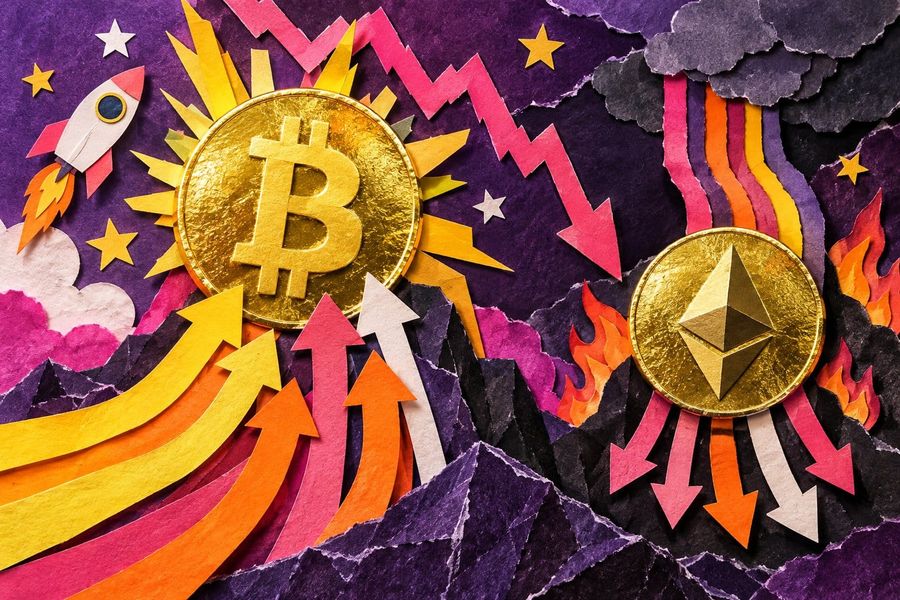
ETH outpaced bitcoin on the session. BTC sat near $66,527, up about 1.35% over 24 hours, per CoinMarketCap. Higher-beta majors led: Solana climbed 5.81% to $75.04 .
The mechanics point to a short squeeze, not fresh conviction. Roughly $555 million in positions were liquidated over 24 hours, predominantly shorts, on Coinglass-derived data reported by Investor's Business Daily — consistent with bears getting flushed by the ceasefire headline. Treat that figure as directional; it was not independently revalidated.
| Asset | Price (June 16) | 24h change | 24h volume | Market cap |
|---|---|---|---|---|
| BTC | ~$66,527 | +1.35% | — | ~$1.33T |
| ETH | ~$1,788 | +4.0% | ~$18.9B | ~$215.9B |
| SOL | $75.04 | +5.81% | — | — |
The takeaway for traders: the green candles are real, but the move is being carried by short covering against a diplomatic story still waiting on a signature.
Why a Diplomatic Framework Repriced Risk Assets
The bid is macro, not Ethereum-specific. A preliminary U.S.–Iran ceasefire framework — confirmed by President Trump on Truth Social around June 14–15 — targets reopening the Strait of Hormuz, the dominant energy tail risk that had weighed on 2026 risk appetite. When the single largest supply-shock premium starts to deflate, every risk asset reprices at once, and crypto rode that wave rather than leading it.
The transmission channel is energy. Brent crude fell roughly 4% to about $83 on June 15, with WTI near $80.52 by the June 16 update . The Hormuz disruption had reportedly pulled around 20 million barrels per day off the market , so even a credible reopening collapses a chunk of that premium.
From there the logic is mechanical:
- Cheaper oil eases near-term inflation expectations.
- Lower inflation risk re-rates risk assets broadly.
- BTC and ETH catch a bid as non-equity risk proxies.
- Crypto-linked equities — Coinbase, Robinhood and Strategy — lifted alongside the bitcoin move .
The diplomacy is still unfinished. Pakistan PM Shehbaz Sharif reportedly mediated the framework, with a formal signing scheduled for June 19 in Switzerland and a 60-day window to negotiate the harder issues — Iran's nuclear program and sanctions relief . That sequencing matters: the price has already moved on a deal that exists on paper, not in ink. The repricing is rational, but it is borrowing against an outcome that has not yet been locked in.
Sentiment Still Reads Fear — Positioning Tells the Honest Story
Despite the bounce, sentiment has not confirmed the price action. The Crypto Fear & Greed Index reads 25 out of 100 — still fear territory . That detail matters: the market has moved from extreme pessimism, not to optimism. A relief rally that leaves the crowd nervous is mechanically different from one driven by fresh conviction, and the gap between rising prices and fearful positioning is the honest tell here.
The recent liquidation history explains the caution. Early June flushed crowded longs in two violent legs:
- Around June 3, total crypto liquidations topped roughly $1.1 billion in 24 hours — about $945 million of it long positions — as BTC slid toward $63,000 and ETH dropped below $1,800 .
- A second cascade of over $1 billion followed within hours when Israel-Iran exchanges escalated on June 8, with BTC near $62,900 and ETH down roughly 7% on that leg .
With those longs already wiped, the ceasefire headline caught a short-heavy book. The roughly $555 million in 24-hour liquidations during the rebound was mostly shorts — a short squeeze provides a mechanical bid, not a genuine demand shift . Investor's Business Daily framed the move bluntly as a possible "dead cat bounce" rather than a confirmed floor.
Leverage compounds the fragility. Perpetual open interest sits near $412.72 billion, and Volmex implied volatility runs at 57.42 for ethereum versus 39.56 for bitcoin
Three Things to Watch Before Calling This a Reversal
Three unresolved variables decide whether Monday's bounce becomes a trend. The rebound rests on an unsigned framework, a pending rate decision, and a resistance level ETH has yet to reclaim — each can reverse the move quickly. Treat this as a relief rally on probation, not a confirmed floor.
- The June 19 Switzerland signing. The U.S.–Iran ceasefire is still a framework, not a signed deal; a formal signing is reportedly scheduled for June 19 in Switzerland . An earlier 2026 truce reportedly collapsed, so durability is the central tail risk — and the single event that could unwind the rally.
- The June 16–17 FOMC meeting. A rate decision landing inside this relief window can override the geopolitical tailwind. A hawkish surprise would compress risk-on duration fast, regardless of how the ceasefire headlines read.
- The $1,847 ETH high. ETH must clear and hold its June 16 intraday peak near $1,847 on spot and ETF volume to confirm demand beyond short covering. At roughly 63.9% below its August 2025 all-time high , the structural trend remains down until proven otherwise.
The bottom line: the rebound is real in price and volume terms, but it sits on an unsigned diplomatic framework, fear-level sentiment, and heavy open interest. Until ETH holds above $1,800 and the Switzerland signing clears, the honest read is bounce, not reversal.
Frequently asked questions
Why did ETH outperform BTC during Monday's rally?
Ethereum carries higher macro beta than bitcoin, so it tends to move more in both directions during risk-on swings. On Monday ETH gained roughly 4% to near $1,788 while BTC added about 1.35% near $66,527 . A larger short base built up after early-June long liquidations gave the squeeze more fuel. Higher-beta Solana ran further still, up 5.81% to $75.04 for the same reason .
What is the Strait of Hormuz and why does it move crypto prices?
The Strait of Hormuz is a narrow shipping chokepoint that handles a large share of the world's seaborne oil, so disruption there raises energy costs, feeds inflation risk, and suppresses appetite for risk assets including crypto. The reported ceasefire framework around reopening Hormuz helped pull Brent crude down about 4% to roughly $83 on June 15 . Removing that risk premium is what let the relief bid extend from equities into bitcoin and ether .
Is the $555M short liquidation number reliable?
Treat it as directionally accurate, not precise to the dollar. The roughly $555 million in 24-hour liquidations — mostly shorts, consistent with a post-ceasefire squeeze — was reported by Investor's Business Daily citing Coinglass as of Monday morning . Live Coinglass and CoinMarketCap liquidation dashboards did not expose reproducible totals for independent verification, so the figure is best read as a reported, Coinglass-derived number rather than a confirmed one.
Is this a trend reversal or a relief bounce?
Both primary research briefs classify it as a relief bounce, not a confirmed reversal. The Fear & Greed Index still reads 25/100 — fear territory — while perpetual open interest sits near $412.72 billion, a heavy leverage base that can amplify moves either way . Add an unsigned ceasefire and the case for caution holds. ETH closing above its ~$1,847 session high on heavy spot volume would be the first structural signal worth upgrading.
What happens to crypto if the June 19 signing collapses?
A breakdown of the framework — set for formal signing on June 19 in Switzerland — would likely reverse the Brent crude drop and unwind the risk-on repricing that drove this bounce . With perpetual open interest still elevated near $412 billion, the leverage base would amplify any downside move . A prior 2026 truce reportedly failed, so the market is already pricing this durability risk.