Crypto Passive Income Guide: DCA vs Staking Returns Compared (2026)
Bitcoin DCA returned 202% over 5 years, staking yields up to 20% APY. A data-driven passive income strategy guide for 2026.
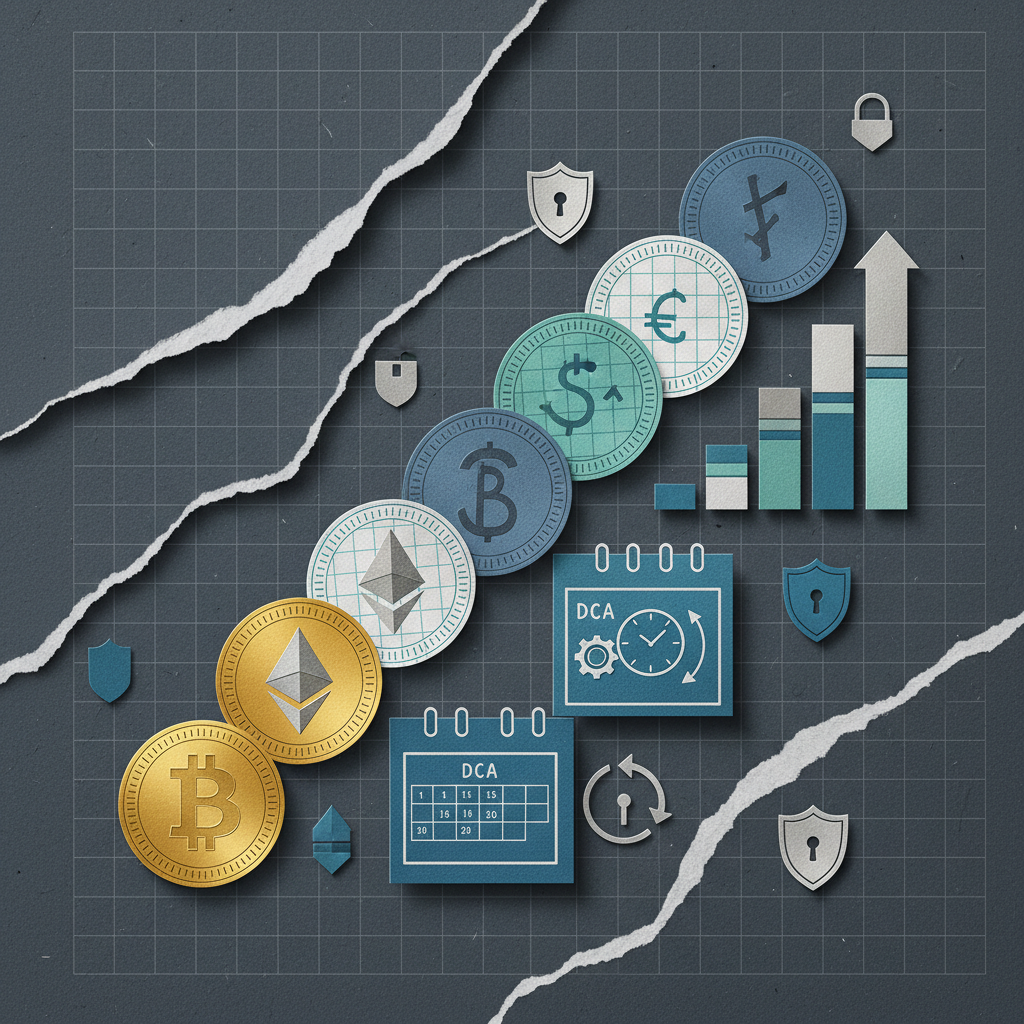
Building wealth in cryptocurrency doesn't require perfect market timing or day-trading expertise. With the Fear & Greed Index plunging to 10 — Extreme Fear territory last seen near the 2022 bear market bottom — two proven passive income strategies are drawing renewed attention from long-term investors: dollar-cost averaging (DCA) and staking.
What Is Crypto Passive Income? DCA and Staking Essentials
Quick Answer: Dollar-cost averaging (DCA) invests a fixed amount at regular intervals regardless of price, while staking locks crypto in a blockchain network to earn rewards. A $10 weekly Bitcoin DCA over five years returned 202%, crushing gold (34%) and the Dow Jones (23%), while the global staking market now exceeds $245 billion in total value locked.
Cryptocurrency passive income refers to strategies that generate returns on digital assets without requiring active trading or constant market monitoring. The two most widely adopted approaches are dollar-cost averaging (DCA) — a disciplined method of investing fixed amounts at regular intervals regardless of market conditions — and staking, which involves locking crypto holdings in a proof-of-stake network to validate transactions and earn rewards. According to Nasdaq, a simple $10 weekly Bitcoin DCA over five years delivered a 202% cumulative return, dramatically outperforming traditional asset classes including gold at 34% and the Dow Jones Industrial Average at 23%. Meanwhile, the global staking economy has surpassed $245 billion in total value locked, with liquid staking protocols alone accounting for approximately 40% of all DeFi TVL at $37.79 billion, according to DAIC Capital. Together, these twin strategies form the foundation of a sustainable, long-term crypto income portfolio.
DCA vs Traditional Assets: 5-Year Return Comparison
| Asset Class | 5-Year DCA Return | Total Invested ($10/week) | Approx. Final Value |
|---|---|---|---|
| Bitcoin (BTC) | 202.03% | $2,610 | $7,883 |
| Gold | 34.47% | $2,610 | $3,510 |
| Dow Jones Industrial Avg | 23.43% | $2,610 | $3,222 |
Source: Nasdaq, based on 5-year rolling DCA at $10/week.
The gap is staggering. An investor who committed just $10 per week to Bitcoin over five years accumulated roughly $7,883 — more than triple their $2,610 outlay and nearly 6x the return of gold over the same period. This performance differential explains why DCA has become the most widely recommended entry strategy for first-time crypto investors seeking passive income with minimal complexity and zero technical knowledge.
Staking: The $245 Billion Passive Income Engine
Staking has evolved from a niche validator activity into a massive financial ecosystem. As of early 2026, over 36 million ETH — roughly 30% of Ethereum's total circulating supply — is actively staked across more than 1.1 million validators, according to CoinLaw. Liquid staking protocols like Lido and Rocket Pool now represent approximately 40% of total DeFi TVL, enabling participants to earn staking yields while maintaining full liquidity through derivative tokens such as stETH. Ethereum co-founder Vitalik Buterin has pushed to simplify the process further, stating that "running staking infrastructure should never require a team of experts," as he demonstrated a DVT-lite staking approach for the Ethereum Foundation's 72,000 ETH allocation, per Yahoo Finance. For a detailed breakdown of staking platforms and optimal yield strategies, see our comprehensive DCA and staking guide.
Why Extreme Fear Creates the Best DCA Entry Points
The current Fear & Greed Index reads 10 out of 100 — deep Extreme Fear. Historically, these are the precise moments that define long-term portfolio outperformance. During the last comparable reading in June 2022 (index at 6), Bitcoin was trading near $20,000. Investors who maintained DCA discipline through that capitulation achieved an average cost basis around $35,000, while lump-sum investors who entered at the cycle peak paid approximately $43,000 — a 19% cost disadvantage that compounded dramatically as BTC recovered past $100,000. With Bitcoin currently at $68,661 and negative funding rates across major derivatives pairs (BTC: -0.0044%, SOL: -0.0135% on Coinglass), leveraged traders are overwhelmingly positioned bearish — historically a powerful contrarian signal that rewards systematic accumulators.
How Much Does Bitcoin DCA Actually Return? 5-Year Performance Data
The question every prospective crypto investor asks is straightforward: does dollar-cost averaging into Bitcoin actually outperform traditional investment vehicles over meaningful time horizons? The data leaves little room for debate. A $100 weekly Bitcoin DCA over five years transformed $26,100 in total contributions into $42,508 — a 62.9% gain — while the identical $100 weekly investment into the S&P 500 produced $37,470, or a 43.6% return, according to Cointelegraph. Even more compelling, investors who deployed a fear-based contrarian DCA strategy — buying exclusively when the Fear & Greed Index signaled extreme fear — achieved a staggering 1,145% return over seven years, outperforming a simple buy-and-hold approach by 99 percentage points, as documented in Spoted Crypto's DCA analysis. These are not theoretical projections — they are backtested results derived from real market data.
Scaling DCA: From $10 to $100 Weekly Investments
The elegance of dollar-cost averaging lies in its accessibility and scalability. Whether you invest $10 or $1,000 per week, the underlying mathematical principle remains identical: you buy more units when prices are low and fewer when prices are high, naturally compressing your average cost basis over time. At the $10/week level, Nasdaq data confirms a 202.03% five-year return, while at $100/week, the absolute dollar gains become substantially larger despite a compressed 62.9% percentage return. This compression reflects differing price distribution windows across investment sizes, but the critical takeaway persists: Bitcoin DCA outperformed every major traditional asset class across both investment tiers and multiple time frames.
| DCA Strategy | Period | Total Invested | Final Value | Return |
|---|---|---|---|---|
| $10/week BTC DCA | 5 years | $2,610 | $7,883 | 202.03% |
| $100/week BTC DCA | 5 years | $26,100 | $42,508 | 62.9% |
| $100/week S&P 500 DCA | 5 years | $26,100 | $37,470 | 43.6% |
| Fear-based contrarian BTC DCA | 7 years | Variable | — | 1,145% |
| Buy & hold BTC (baseline) | 7 years | Lump sum | — | 1,046% |
Sources: Nasdaq, Cointelegraph, Spoted Crypto
The Monday Effect and Contrarian Timing Strategies
Not all DCA schedules produce equal results. An analysis of Bitcoin price data from 2018 to 2025 reveals that investors who consistently purchased on Mondays accumulated 14.36% more Bitcoin than those who bought on random weekdays, according to Spoted Crypto research. This persistent "Monday dip" phenomenon likely reflects institutional rebalancing pressures and weekend sentiment shifts that create a recurring discount window for disciplined, systematic buyers.
The fear-based contrarian approach amplifies this timing advantage significantly. Rather than investing on a fixed calendar schedule, this strategy concentrates capital deployment exclusively when the Fear & Greed Index drops below 25 — the Extreme Fear threshold. Over a seven-year backtest from 2018 to 2025, this method returned 1,145%, outperforming a simple buy-and-hold strategy (1,046%) by 99 percentage points. With today's index reading of 10, the current market sits squarely within this historically optimal accumulation zone — a window that has appeared only a handful of times in Bitcoin's history.
Lump Sum vs DCA: Lessons from the 2022 Bear Market
The lump-sum versus DCA debate found its clearest resolution during the 2022 crypto winter. Investors who deployed all their capital at the November 2021 cycle peak entered at roughly $43,000 per BTC. Those who instead maintained a disciplined weekly DCA through the crash achieved an average entry price of approximately $35,000 — a 19% cost advantage that compounded dramatically as Bitcoin recovered past $69,000 and eventually surpassed $100,000.
"Purchasing Bitcoin consistently during drawdowns has historically produced stronger cumulative returns despite price volatility."— Adam Livingston, Analyst, Swan Bitcoin (via Cointelegraph)
This pattern is reinforced by Bitcoin's declining bear market severity over successive cycles. Peak-to-trough drawdowns have progressively softened: -93% in 2011, -86% in 2015, -84% in 2018, and -78% in 2022, according to Trade That Swing. Average bear market duration has held at roughly 9 months, while recoveries to new all-time highs typically require 2–3 years — with post-bear rallies averaging a remarkable 3,485% (median 1,692%). For investors weighing their options in today's Extreme Fear environment at $68,661 per BTC, the historical data overwhelmingly favors initiating or increasing a Bitcoin DCA program now rather than waiting for perceived market stability that may never arrive at lower prices.
Why DCA Outperforms in Extreme Fear: Historical Bear Market Patterns
Dollar-cost averaging (DCA) is the strategy of investing fixed amounts at regular intervals regardless of price — and it delivers its most powerful results during periods of extreme market fear. According to Trade That Swing, Bitcoin's bear market drawdowns have been progressively shrinking over each cycle: -93% in 2011, -86% in 2015, -84% in 2018, and -78% in 2022 — a pattern reflecting growing market maturity and deeper institutional participation. The average bear market lasts approximately 9 months, with full recovery to previous all-time highs requiring 2 to 3 years. Yet the payoff for those who accumulated during downturns has been extraordinary: rallies following 70%+ drawdowns have averaged 3,485%, with a median of 1,692%. Today's Fear & Greed Index sits at just 10 — extreme fear territory — signaling the current environment may once again reward disciplined DCA investors who buy when others panic.
The Shrinking Bear: How Each Cycle Gets Less Severe
| Bear Market Cycle | Peak-to-Trough Drawdown | Approximate Duration | Recovery to New ATH |
|---|---|---|---|
| 2011 | -93% | ~5 months | ~2 years |
| 2014–2015 | -86% | ~13 months | ~3 years |
| 2017–2018 | -84% | ~12 months | ~3 years |
| 2021–2022 | -78% | ~12 months | ~2 years |
Source: Trade That Swing historical BTC cycle data
The pattern is unmistakable. Each successive Bitcoin bear market has produced a shallower maximum drawdown than the last — from a catastrophic 93% decline in 2011 to a comparatively contained 78% in 2022. This 15-percentage-point compression over a decade is not coincidental. It reflects the steady maturation of crypto as an asset class: growing spot ETF adoption, expanding institutional treasury allocations, and increasingly sophisticated market infrastructure that dampens extreme volatility. For DCA investors, the implication is clear — the downside floor is gradually rising, which means each dollar deployed during bear markets carries less catastrophic risk than in prior cycles while still capturing asymmetric upside when recovery arrives.
Why Extreme Fear Signals Outsized DCA Returns
The current Fear & Greed Index reading of 10 mirrors conditions last seen in June 2022, when the index bottomed at 6 during the Terra/LUNA collapse and Three Arrows Capital contagion. Investors who executed a consistent DCA strategy during that extreme fear period achieved an average entry price of approximately $35,000 — compared to $43,000 for lump-sum investors who bought before the drawdown began. As Bitcoin subsequently recovered past $69,000 and climbed above $100,000, DCA investors captured roughly 33 percentage points of excess returns over their lump-sum counterparts.
Today's market conditions share striking similarities. BTC trades at $68,661 with negative funding rates of -0.0044% on Binance, indicating leveraged traders are predominantly positioned short — a historically reliable contrarian signal. Solana's funding rate is even more negative at -0.0135%, suggesting broad-based bearish sentiment across major altcoins. When derivatives markets are paying shorts and spot prices are declining, prior cycles show this convergence of fear has consistently preceded multi-month recovery rallies.
"Purchasing Bitcoin consistently during drawdowns has historically produced stronger cumulative returns despite price volatility."
— Adam Livingston, Analyst, Swan Bitcoin (via Cointelegraph)
Institutional behavior reinforces this thesis. BlackRock increased its crypto exposure by more than $22 billion throughout 2025, with on-chain holdings surging 41% year-over-year. When the world's largest asset manager — overseeing $11.6 trillion — is aggressively accumulating during periods of retail capitulation, it establishes a structural demand floor that previous bear markets lacked entirely. For individual investors running a weekly or monthly DCA plan, this institutional conviction provides an additional layer of confidence: disciplined accumulation during extreme fear periods remains one of the highest-probability strategies in crypto, backed by four consecutive cycles of historical evidence and now reinforced by unprecedented institutional capital flows.
2026 Crypto Staking Yield Comparison: APY, Lock-Up Periods, and Real Returns by Chain
Crypto staking is the process of locking digital assets in a proof-of-stake blockchain to validate transactions and earn yield — essentially becoming the network's infrastructure in exchange for passive income. The global staking market has surpassed $245 billion in total value locked according to DAIC Capital, with liquid staking alone capturing approximately 40% of all DeFi TVL at $37.79 billion. However, headline APY figures advertised by protocols rarely tell the full story. Ethereum, the largest staking ecosystem, now has over 36 million ETH staked — roughly 30% of total supply — with more than 1.1 million active validators securing the network, as reported by CoinLaw. The critical distinction investors must understand is between nominal and real yield: a protocol offering 7% APY with 5% token inflation delivers only 2% in genuine purchasing power gains. This breakdown reveals what each major chain actually pays after accounting for inflation, lock-up periods, and validator economics.
Chain-by-Chain Staking APY: Nominal vs Real Yield
| Chain | Nominal APY | Est. Token Inflation | Real Yield | Unbonding Period | Min. Stake |
|---|---|---|---|---|---|
| Ethereum (ETH) | 3.2–3.8% | ~0.3–0.5% | ~2.7–3.5% | 1–5 days* | 32 ETH (solo) |
| Solana (SOL) | 6.5–7.8% | ~5.0% | ~1.5–2.8% | 2–3 days | None |
| Polkadot (DOT) | 12–15% | ~7.5% | ~4.5–7.5% | 28 days | 250 DOT |
| Cosmos (ATOM) | 15–20% | ~10% | ~5–10% | 21 days | None |
| Cardano (ADA) | 3–4.5% | ~2% | ~1–2.5% | None | None |
| Avalanche (AVAX) | 8–10% | ~4.5% | ~3.5–5.5% | 14 days | 25 AVAX |
*ETH unbonding time varies with validator exit queue length. Sources: Staking Rewards, DAIC Capital (March 2026)
The table above reveals a critical insight that many investors overlook: the chain with the highest nominal APY does not necessarily deliver the best real return. Cosmos (ATOM) headlines an eye-catching 15–20% APY, but after accounting for approximately 10% annual token inflation, the real yield compresses to 5–10%. Meanwhile, Ethereum's modest 3.2–3.8% nominal rate translates to a real yield of 2.7–3.5% — one of the highest retention ratios in the industry — because ETH's post-merge emission rate hovers near zero and is frequently deflationary during high network activity. Solana presents perhaps the starkest example: a 7% nominal APY sounds attractive until you subtract roughly 5% inflation, leaving investors with a real return under 3%.
The Unbonding Trade-Off: Liquidity vs Yield
Unbonding periods represent the hidden cost of staking that headline APY figures never capture. When Polkadot requires 28 days to unlock staked DOT, or Cosmos enforces a 21-day cooldown for ATOM, investors face significant opportunity cost during volatile market conditions. A 10% drawdown during a 28-day unbonding window means stakers cannot exit, rebalance, or capitalize on lower prices — effectively turning their yield into a locked position with asymmetric downside exposure that no APY percentage can adequately compensate.
Cardano stands as a notable exception with zero unbonding period, allowing ADA holders to stake and unstake freely at any time. This flexibility partially compensates for its lower 3–4.5% APY, particularly for investors who prioritize capital mobility. For those seeking a middle ground, liquid staking protocols like Lido (stETH) and Marinade (mSOL) have emerged as the dominant solution — liquid staking now accounts for roughly 40% of total DeFi TVL, enabling stakers to earn yield while maintaining tradeable derivative tokens that can be deployed across DeFi or sold instantly during market stress.
Ethereum Staking in 2026: The Ecosystem Anchor
Ethereum's staking ecosystem has reached unprecedented scale. With 36 million ETH locked — representing approximately 30% of total circulating supply at a current value above $75 billion — and over 1.1 million active validators, the network operates the most decentralized and capital-intensive proof-of-stake infrastructure in crypto. The Ethereum Foundation itself has staked 72,000 ETH using DVT-lite (Distributed Validator Technology) to demonstrate that simplified, accessible staking infrastructure is not just possible but essential for long-term network security.
"Running staking infrastructure should never require a team of experts."
— Vitalik Buterin, Co-founder, Ethereum (via Yahoo Finance, March 2026)
This push toward one-click staking reflects a broader industry shift: making passive crypto income accessible to non-technical investors worldwide. For those building a combined DCA and staking strategy, Ethereum offers the most battle-tested foundation — lower nominal yield but superior real returns, minimal unbonding friction through liquid staking derivatives, and the backing of the largest validator set in the industry. As BTC dominance holds at 56.2% amid the current market downturn, diversifying staked positions across multiple chains provides a yield buffer and inflation hedge that pure Bitcoin accumulation alone cannot deliver.
Liquid Staking and One-Click Staking: 2026 Trend Shifts
Liquid staking has evolved from a niche DeFi primitive into the dominant force shaping on-chain yield generation in 2026. With a total value locked (TVL) of $37.79 billion, liquid staking protocols now command approximately 40% of the entire DeFi ecosystem's TVL, according to DAIC Capital. This concentration reflects a fundamental shift in how investors approach passive income — prioritizing capital efficiency over raw yield. Unlike traditional staking, which locks assets for fixed periods, liquid staking derivatives (LSDs) like stETH and rETH allow participants to earn staking rewards while simultaneously deploying capital across lending, liquidity provision, and other DeFi strategies. The global staking market has surpassed $245 billion in total staked value, with over 1.1 million active Ethereum validators securing the network. As institutional capital floods into proof-of-stake ecosystems, the convergence of liquid staking and simplified user experiences is redefining passive income strategies for both retail and institutional investors.
Liquid Staking vs. Native Staking: The Capital Efficiency Trade-Off
The core advantage of liquid staking lies in unlocked capital. Native Ethereum staking requires locking 32 ETH — roughly $66,700 at the current price of $2,084 — with no access until the unstaking period completes. Liquid staking protocols issue derivative tokens representing staked positions that remain freely tradable across DeFi. This enables layered yield strategies: stake ETH for a base 3–4% APY, then deposit the resulting stETH into lending protocols like Aave for an additional 1–3% yield, effectively doubling returns without additional capital outlay.
However, this capital efficiency carries meaningful risks. Smart contract vulnerabilities, depeg events (stETH briefly traded at a 5% discount during the 2022 liquidity crisis), and protocol concentration — Lido alone controls over 28% of all staked ETH — represent material threats to holders. For investors building a long-term DCA accumulation strategy, weighing these trade-offs against native staking's simplicity and direct network participation is essential before allocating capital.
Vitalik Buterin's One-Click Staking Vision
Ethereum co-founder Vitalik Buterin has placed staking democratization at the center of the network's 2026 roadmap. In March 2026, Buterin publicly advocated for "one-click staking" — a streamlined experience designed to eliminate the technical complexity of running validator nodes. The Ethereum Foundation demonstrated this vision in practice by staking 72,000 ETH using DVT-lite (Distributed Validator Technology) protocols, as reported by Yahoo Finance.
"Running staking infrastructure should never require a team of experts."
— Vitalik Buterin, Co-founder, Ethereum (Yahoo Finance / CCN, March 2026)
DVT-lite distributes validator duties across multiple node operators, reducing single points of failure and dramatically lowering barriers for solo stakers. If widely adopted, this technology could expand the validator set well beyond the current 1.1 million active validators, further decentralizing Ethereum while making staking accessible to everyday investors who currently depend on centralized exchanges or liquid staking protocols for yield generation.
Institutional Convergence: TradFi Meets Proof-of-Stake Yield
The institutional staking narrative accelerated sharply through 2025–2026. BlackRock expanded its crypto exposure by more than $22 billion in 2025, with on-chain holdings increasing 41%, according to ABC Money. Fidelity's research arm has identified proof-of-stake yield as a compelling fixed-income diversification component, while Fidelity VP of Research Chris Kuiper has noted the growing competitive pressure among sovereign and institutional allocators to gain crypto exposure. As BlackRock CEO Larry Fink and COO Rob Goldstein stated, "assets of all kinds could one day be bought, sold, and held through a single digital wallet," according to DL News. This vision positions staking yields not as an alternative asset class, but as a native feature of next-generation portfolio management — potentially channeling trillions in traditional fixed-income capital toward proof-of-stake networks.
DCA Plus Staking Setup Guide: Exchange Fees, Wallets, and Automation Compared
Building an effective DCA-plus-staking pipeline requires careful selection of exchanges, wallets, and automation tools that minimize friction and maximize compounding returns. Exchange trading fees vary significantly — from Binance's industry-low 0.10% maker/taker rate to Coinbase's 0.40%/0.60% spread, according to CoinLedger. While individual transaction costs appear negligible, they compound over time: an investor executing $100 weekly DCA over five years ($26,000 total) pays just $26 in cumulative fees on Binance versus $156 on Coinbase — a 6x cost differential that directly erodes staking yields. Hardware wallet selection further impacts staking capabilities: Ledger devices support over 5,500 cryptocurrencies with native staking integration, while Trezor covers approximately 1,500 assets with more limited staking features, as reported by Coin Bureau. The optimal configuration combines low-fee exchange accumulation with secure self-custody staking, creating an automated pipeline that buys on schedule and stakes upon arrival. Understanding each component's cost structure is essential before committing to any long-term crypto passive income strategy.
Exchange Fee Comparison: Binance vs. Kraken vs. Coinbase
Choosing the right exchange for recurring DCA purchases is the single highest-impact decision in your pipeline. The table below compares base-tier fees and staking features across three major global platforms:
| Exchange | Maker Fee | Taker Fee | Auto DCA | Native Staking | 5-Year Fee ($26K Invested) |
|---|---|---|---|---|---|
| Binance | 0.10% | 0.10% | ✅ Recurring Buy | ✅ ETH, SOL, ADA | $26 |
| Kraken | 0.16% | 0.26% | ✅ Recurring Buy | ✅ ETH, SOL, DOT | $42–$68 |
| Coinbase | 0.40% | 0.60% | ✅ Recurring Buy | ✅ ETH, SOL, ATOM | $104–$156 |
Source: CoinLedger. Base-tier fees shown; VIP and volume discounts reduce costs further. Recurring buy features may carry separate fee schedules.
Binance offers the lowest raw costs but faces regulatory restrictions in certain jurisdictions. Kraken provides a strong middle ground with robust staking support and competitive fees. Coinbase charges the highest fees but delivers the most streamlined U.S. regulatory compliance and insurance coverage. Your optimal choice should balance fee savings against your jurisdiction's regulatory environment and available services.
Hardware Wallet Selection: Ledger vs. Trezor for Staking
Self-custody staking through hardware wallets eliminates counterparty risk — the exchange holding your staked assets cannot freeze, rehypothecate, or lose them. Ledger's Nano X and Stax models support over 5,500 cryptocurrencies and integrate directly with staking protocols through Ledger Live, enabling one-click delegation for ETH, SOL, DOT, ATOM, and dozens of other proof-of-stake assets. Trezor's Model T and Safe 5 cover approximately 1,500 coins with staking access primarily through third-party interfaces like Exodus or native web wallets.
For a DCA-to-staking pipeline, Ledger's broader native staking integration makes it the more seamless choice. However, Trezor's fully open-source firmware appeals to security purists who prioritize code transparency over convenience. Both options are vastly superior to leaving assets on an exchange, where counterparty risk and lower staking yields — exchanges typically take a 10–25% commission on rewards — steadily erode long-term compounding returns.
Automating the DCA-to-Staking Pipeline
The most efficient passive income setup automates every step from fiat deposit to staked position. A proven three-step pipeline eliminates manual intervention and emotional decision-making:
Step 1 — Automated Exchange Purchase: Configure recurring buys on your chosen exchange. Set BTC and ETH purchases every Monday — historical data shows Monday purchases yield 14.36% more BTC accumulation versus other weekdays. Fix a dollar amount aligned with your risk tolerance and income.
Step 2 — Scheduled Withdrawal to Self-Custody: Batch withdrawals monthly to your hardware wallet to minimize network transaction fees. Most exchanges support whitelisted addresses and automated withdrawal thresholds once balances exceed a set amount.
Step 3 — Stake Upon Arrival: Use Ledger Live or native staking dashboards to delegate immediately upon receipt. For Ethereum, liquid staking through Lido or Rocket Pool preserves flexibility; for Solana or Cosmos ecosystems, direct validator delegation via wallet interfaces maximizes yields by eliminating intermediary commissions entirely.
Market Timing Signals and Regional Arbitrage Opportunities
While DCA's core principle is eliminating timing decisions, strategic refinements can enhance returns. Current market conditions — with Bitcoin's funding rate at -0.0044% and the Fear and Greed Index at 10 (Extreme Fear), according to Coinglass — mirror historical accumulation zones that preceded significant rallies. Negative funding rates across BTC, SOL (-0.0135%), and XRP (-0.0037%) indicate heavily short-biased positioning, a condition that has historically preceded sharp mean-reversion bounces.
Regional price discrepancies also present tactical opportunities. Asia-Pacific markets occasionally trade at premiums or discounts relative to Western exchanges — a phenomenon most famously observed as the "Kimchi premium" but present across all regional markets globally. Monitoring cross-exchange spreads through aggregators like Coinglass helps identify whether your local exchange offers favorable pricing. In the current environment, uniformly bearish sentiment and slight regional discounts confirm broad capitulation — precisely the conditions where disciplined DCA investors have historically built their most profitable long-term positions.
Essential Risks and Tax Implications of DCA and Staking Strategies
Every passive income strategy in crypto carries distinct risks that demand careful evaluation before any capital is deployed. With the global staking market now exceeding $245 billion according to DAIC Capital, the scale of assets exposed to staking-specific threats—slashing penalties, smart contract exploits, and liquidity lockups—has never been larger. Meanwhile, dollar-cost averaging, while statistically proven over multi-year horizons, is not immune to psychological and financial pressures during extended bear markets. The current Fear & Greed Index reading of 10 (Extreme Fear) underscores just how punishing sustained downturns feel for DCA practitioners still buying every week. Understanding these risks—alongside the tax obligations that accompany staking rewards and eventual asset disposals—is the critical difference between building a resilient portfolio and learning an expensive lesson. Below are the key threats, tax frameworks, and management principles every crypto passive income investor must internalize.
Staking Risks: Slashing, Smart Contracts, and Liquidity Traps
Staking exposes capital to four primary threats. Slashing penalties punish validators who go offline or act maliciously—with over 1.1 million active Ethereum validators per CoinLaw, even brief technical failures carry direct financial consequences. Smart contract vulnerabilities remain persistent; liquid staking protocols now command roughly 40% of total DeFi TVL ($37.79 billion), introducing additional exploit-prone code layers between you and your principal. Liquidity lockups restrict exits during periods of acute market stress—Ethereum's unstaking queue can extend for days when demand spikes. Finally, protocol-level changes can alter reward rates or consensus mechanisms without advance notice, transforming a profitable position into an underperforming one overnight.
DCA Limitations: Discipline Under Drawdown Pressure
Despite delivering 202% returns over five years with just $10 weekly per Nasdaq, DCA demands unwavering commitment through brutal conditions. Bitcoin bear markets average approximately 9 months in duration with drawdowns reaching -78%, according to Trade That Swing. Continuing to buy into a 60–70% decline tests even the most disciplined investors, and the opportunity cost of capital tied up in a declining asset compounds the psychological toll. Automating your crypto DCA strategy with predetermined rules and fixed schedules is the most effective defense against emotional capitulation.
Global Tax Frameworks for Crypto Passive Income
A consistent taxation pattern is emerging across major jurisdictions. In the United States, the European Union under MiCA regulations, the United Kingdom, and Australia, staking rewards are generally treated as ordinary income at the fair market value when tokens enter your wallet. Subsequent sales then trigger a separate capital gains event, creating a dual-taxation layer that many investors overlook entirely. Meticulous record-keeping of receipt dates, reward quantities, and corresponding market prices at each taxable event is non-negotiable. Hardware wallets like Ledger—supporting over 5,500 assets according to Coin Bureau—paired with dedicated portfolio tracking tools can significantly streamline compliance across multiple chains and reward types.
Core Risk Management Principles
Three rules protect long-term passive income portfolios from catastrophic loss. First, diversify across protocols and chains—never concentrate more than 25–30% of staked assets on a single platform. Second, only commit capital you can afford to lock for 12–24 months; if liquidity access is essential, prioritize liquid staking derivatives that offer partial flexibility. Third, define exit criteria before entering any position: profit-taking levels, rebalancing triggers, and maximum drawdown thresholds. While the declining severity of Bitcoin bear markets (from -93% in 2011 to -78% in 2022) signals a maturing asset class, a 78% drawdown remains devastating without predefined risk parameters in place.
2026 Outlook: How Crypto Passive Income Strategies Are Evolving
The convergence of artificial intelligence, institutional capital, and sovereign-level interest in Bitcoin is reshaping the future of crypto passive income in 2026. BlackRock expanded its cryptocurrency exposure by over $22 billion in 2025 alone according to ABC Money, signaling that traditional finance is no longer observing from the sidelines but actively building infrastructure for unified digital asset portfolios. Meanwhile, multiple nations are exploring Bitcoin as a strategic reserve asset, a development that could fundamentally alter long-term price trajectories and staking economics. For investors deploying DCA and staking strategies during the current Extreme Fear environment—with the index at just 10—these macro shifts carry profound implications for expected returns over the next 12 to 36 months. The question is no longer whether to build passive crypto income, but how to position for the evolutionary leap ahead.
AI-Powered Automation in Staking and DeFi
Artificial intelligence is transforming how passive income strategies are executed at every level. AI-driven yield optimizers now automatically rebalance staking positions across protocols, monitor smart contract risk scores in real time, and rotate yield farming allocations without any manual intervention. David Duong, Head of Investment Research at Coinbase, stated via DL News: “We see the sustained prominence of the AI and crypto convergence as not just a trend but as a fundamental shift towards the next stage of technological progress.” This convergence is rapidly lowering the technical barrier to entry, enabling retail investors to access institutional-grade yield optimization strategies that were previously reserved for sophisticated funds and quantitative desks.
The Single-Portfolio Future: Traditional Finance Meets Crypto
BlackRock’s leadership has articulated a vision where the boundary between traditional and digital assets disappears entirely. Larry Fink and Rob Goldstein stated via DL News: “People won’t keep stocks and bonds in one portfolio and crypto in another. Assets of all kinds could one day be bought, sold, and held through a single digital wallet.” With on-chain holdings increasing 41% year over year, this unification is materializing faster than most anticipated. For passive income investors, staking yields, dividend stocks, and bond coupons could soon coexist within unified platforms—simplifying portfolio construction and tax reporting while expanding accessible yield sources across asset classes.
Nation-State Bitcoin Reserves and Long-Term Price Implications
The prospect of sovereign Bitcoin reserves introduces a powerful structural demand catalyst. Chris Kuiper, Vice President of Research at Fidelity, cautioned via DL News: “If more countries adopt bitcoin as part of their foreign exchange reserves, then the pressure for other countries to also do it could increase, as they may feel competitive pressure.” This game-theory dynamic—where non-adoption carries its own strategic risk—could create sustained buying pressure that structurally supports higher price floors, directly benefiting long-term DCA and staking practitioners who accumulate through volatility.
Why Extreme Fear Zones Have Historically Rewarded DCA Investors
History makes a compelling case for starting DCA during peak pessimism. When the Fear & Greed Index hit 6 in June 2022, investors who maintained weekly purchases averaged entries near $35,000—outperforming lump-sum buyers by 33 percentage points. Bitcoin subsequently recovered past $100,000, delivering extraordinary returns to disciplined accumulators. Today’s reading of 10 mirrors those conditions closely. With bear market severity declining each cycle (from -93% in 2011 to -78% in 2022) and average post-bear rallies reaching 3,485% per Trade That Swing, the data strongly suggests this Extreme Fear zone represents a historically favorable entry window. The action plan is clear: automate weekly purchases, stake accumulated assets on reputable protocols, and resist the urge to time the absolute bottom.
Frequently Asked Questions About Crypto DCA and Staking
Quick Answer: Dollar-cost averaging (DCA) into Bitcoin at just $10 per week has delivered a 202.03% return over five years, massively outperforming gold (34.47%) and the Dow Jones (23.43%). Combined with staking — now a $245 billion global market — investors can compound returns while reducing timing risk across volatile crypto cycles.
What Is the Optimal Amount and Frequency for Bitcoin DCA?
The sweet spot for Bitcoin dollar-cost averaging falls between $10 and $100 per week, with weekly purchases on Mondays historically yielding approximately 14.36% greater efficiency compared to other weekdays. According to Nasdaq, a simple $10 weekly DCA over five years turned a total investment of $2,610 into a 202.03% return — crushing traditional assets like gold at 34.47% and the Dow Jones at 23.43%. Meanwhile, Cointelegraph data shows that scaling up to $100 per week over five years produced a portfolio worth $42,508 (62.9% gain), outpacing an equivalent S&P 500 DCA strategy that returned 43.6%. The cardinal rule remains: never invest more than you can afford to lose entirely. A minimum five-year horizon is strongly recommended, as shorter windows expose investors to Bitcoin's notorious drawdown cycles. For a step-by-step breakdown of building your own DCA plan, see our comprehensive crypto DCA guide for 2026.
Which Cryptocurrencies Offer the Highest Staking Yields?
Nominal annual percentage yields (APY) vary widely across proof-of-stake networks, but headline numbers can be misleading without adjusting for inflation and lock-up constraints. Cosmos (ATOM) leads with a nominal APY of 15–20%, followed by Polkadot (DOT) at 12–15%, though both carry meaningful unbonding periods — 21 days for ATOM and 28 days for DOT — during which staked assets remain illiquid. Cardano (ADA) offers a lower nominal APY but compensates with zero lock-up requirements, letting stakers maintain full liquidity at all times. The global staking market now exceeds $245 billion in total value, with Ethereum alone crossing 30% of circulating supply staked — roughly 36 million ETH secured by over 1.1 million active validators, according to CoinLaw. When evaluating staking opportunities, always subtract the network's inflation rate from the advertised APY to arrive at the real yield. For deeper comparisons of staking protocols, visit our SpotedCrypto analysis hub.
Is It Safe to Invest When the Fear and Greed Index Is Extremely Low?
Historically, extreme fear has been one of the most reliable contrarian buy signals in crypto markets. When the Crypto Fear & Greed Index drops below 10, it typically marks a capitulation phase where sellers are exhausted and long-term value begins to accumulate. A seven-year backtest covering 2018–2025 found that a fear-based DCA strategy — buying only when the index signaled extreme fear — returned 1,145%, outperforming a simple buy-and-hold approach (1,046%) by 99 percentage points, according to SpotedCrypto research. Investors who began systematic DCA purchases during the June 2022 crash, when the index plunged to 6, captured an estimated 33 percentage-point excess return over those who attempted to time a single lump-sum entry. The psychological difficulty of buying into panic is precisely what creates the opportunity — crowds sell at the worst moment, and disciplined accumulators benefit. That said, extreme fear does not guarantee an immediate rebound, so maintaining a multi-month DCA cadence through these periods is essential rather than deploying capital all at once.
How Can You Combine Staking and DCA in a Single Strategy?
The most capital-efficient approach pairs automated exchange-based DCA with periodic transfers to self-custody staking, creating a compounding flywheel that grows on two axes simultaneously. Start by setting up recurring purchases on a low-fee exchange — CoinLedger data shows Binance charges just 0.10% maker/taker fees compared to Coinbase's 0.40%/0.60%, making platform choice a meaningful long-term cost factor. Once your accumulated position crosses a threshold (commonly 0.1 ETH or 100 ADA), transfer to a hardware wallet like Ledger, which supports over 5,500 cryptocurrencies according to Coin Bureau, and delegate to native staking. For investors who need ongoing liquidity, liquid staking protocols now command approximately $37.79 billion in TVL — roughly 40% of total DeFi value locked — according to DAIC Capital. Liquid staking tokens like stETH or mSOL let you earn staking rewards while retaining the ability to trade, lend, or use them as collateral in DeFi. Even the Ethereum Foundation has embraced this direction, staking 72,000 ETH using DVT-lite technology as reported by Yahoo Finance. For a walkthrough of setting up automated DCA-to-staking pipelines, explore our DCA investment strategy guide.
Data Sources
- Nasdaq — Bitcoin DCA 5-year performance data
- Cointelegraph — Bitcoin vs S&P 500 DCA comparison
- SpotedCrypto — Fear-based DCA backtest (2018–2025)
- CoinLaw — Ethereum staking statistics (2026)
- DAIC Capital — Global staking market size and liquid staking TVL
- Yahoo Finance — Ethereum Foundation 72,000 ETH staking initiative
- CoinLedger — Exchange fee comparison data
- Coin Bureau — Hardware wallet comparison
- ABC Money — BlackRock institutional crypto allocation data
This article is for informational purposes only and does not constitute investment advice. All investment decisions should be made based on your own judgment and responsibility.
Related Articles
- Crypto Bear Market Survival Guide 2026: DCA, Staking & Security Strategies
- Crypto Fear & Greed Index Guide: How to Read It and Trade Smarter in 2026
- Crypto DCA Guide: 202% Returns Over 5 Years, Proven by Data
- The Complete Guide to Long-Term Crypto Investing in 2026: DCA, Staking & Self-Custody
- Kimchi Premium Explained: How It Works, Real Data & Investment Strategies in 2026