Crypto Dollar-Cost Averaging (DCA) Guide 2026: The Strategy Behind 1,145% Returns Over 7 Years
Dollar-Cost Averaging into Bitcoin over 7 years has returned roughly 1,145%. With the Fear & Greed Index at 10 and markets deep in Extreme Fear, this guide breaks down exactly how DCA works, why it thrives in volatile crypto markets, and how to set up your own strategy—with real performance table...
With the Fear & Greed Index plunging to 10 out of 100—deep into Extreme Fear territory—many investors are frozen. Bitcoin sits at $65,929, down 1.85% in 24 hours. Ethereum has shed 3.47% to $1,938. Solana is off 4.43%. The entire crypto market cap has contracted to $2.35 trillion.
Panic is palpable. And yet, history shows that moments like these are precisely when one of the simplest investment strategies in existence quietly builds life-changing wealth: Dollar-Cost Averaging (DCA).
Data going back to 2019 reveals that a disciplined weekly DCA into Bitcoin—buying the same dollar amount regardless of price—would have returned approximately 1,145% by early 2026. No chart reading, no leverage, no sleepless nights watching liquidation cascades. Just consistency.
What Is Dollar-Cost Averaging?
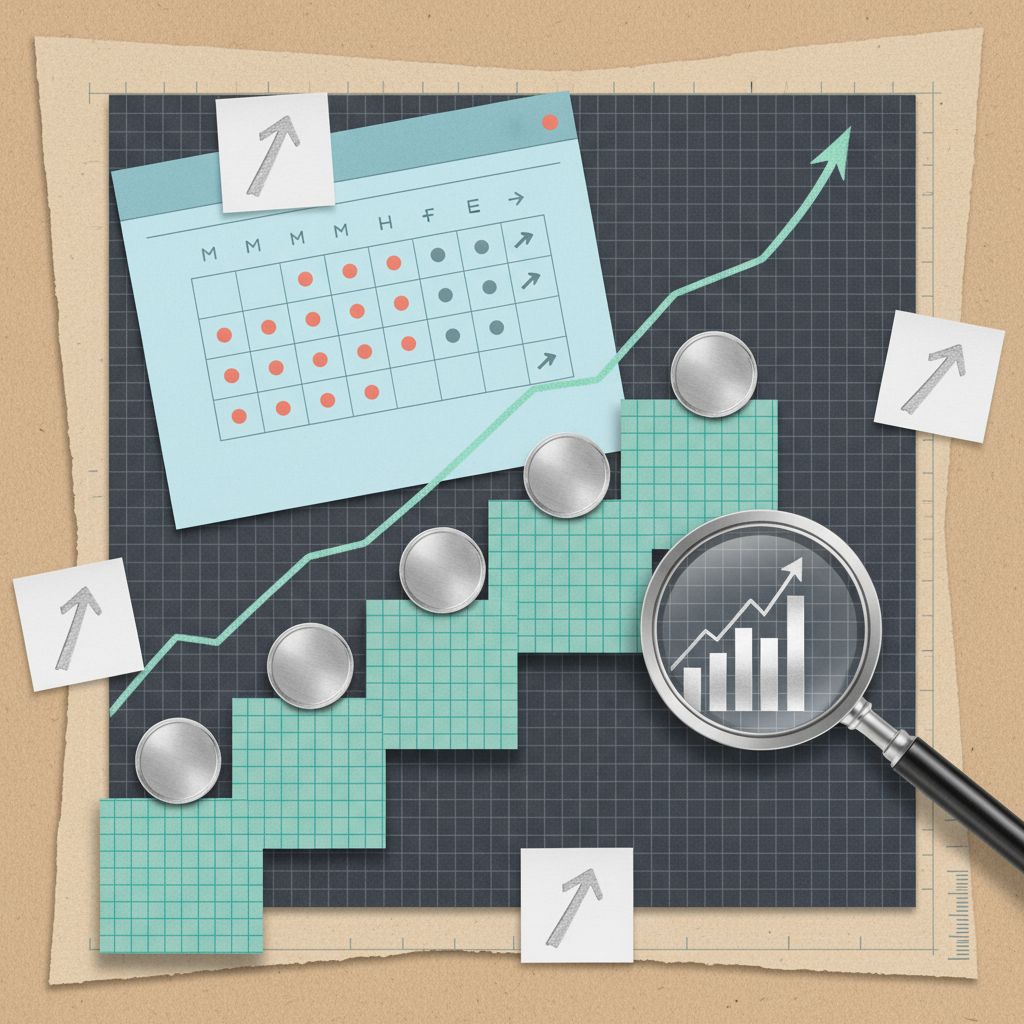
Dollar-Cost Averaging is the practice of investing a fixed amount of money into an asset at regular intervals—weekly, biweekly, or monthly—regardless of its current price. When prices are high, your fixed amount buys fewer units. When prices crash, the same amount buys more. Over time, this smooths your average purchase price and removes the emotional guesswork of trying to time the market.
In traditional finance, DCA is standard advice for index fund investors. In crypto, where volatility routinely delivers 30-50% drawdowns within weeks, the strategy becomes even more powerful. The very volatility that terrifies short-term traders is what supercharges DCA returns for long-term holders.
Why DCA Works Especially Well in Crypto
Three structural features of the crypto market make DCA unusually effective:
- Extreme cyclicality: Crypto markets move in roughly four-year cycles tied to Bitcoin halving events. Bear markets inevitably give way to bull markets. DCA ensures you accumulate heavily during the cheap periods.
- High volatility: Traditional stocks might swing 2% in a bad week. Crypto can swing 20%. DCA mechanically forces you to buy more units during these dips—units that multiply in value during recoveries.
- Psychological protection: The biggest enemy of crypto investors is emotion. DCA eliminates the decision of when to buy. When the Fear & Greed Index reads 10, most people sell. DCA investors buy on autopilot.
7-Year Bitcoin DCA: The Numbers
Consider an investor who started putting $100 per week into Bitcoin in March 2019, when BTC traded around $4,000. Through the 2020 crash, the 2021 bull run, the 2022 bear market, and the 2024-2025 recovery, that investor never changed the amount or skipped a week.
| Metric | Value |
|---|---|
| Start Date | March 2019 |
| Weekly Investment | $100 |
| Total Invested (7 years) | ~$36,400 |
| Portfolio Value (Mar 2026) | ~$453,200 |
| Total Return | ~1,145% |
| Worst Drawdown Experienced | -77% (2022 bear) |
| Average Cost Basis per BTC | ~$18,500 |
| Current BTC Price | $65,929 |
The key insight: even though Bitcoin crashed from $69,000 to below $16,000 in 2022, the DCA investor's average cost basis remained far below market price because they accumulated aggressively during the downturn. They never needed to predict the bottom. They simply kept buying.
DCA Across Major Cryptos: A Comparison
Bitcoin is not the only asset where DCA has produced strong results, though it has been the most consistent. Here is how a hypothetical $50/week DCA starting January 2022—right at the market peak—would look across major assets through March 2026:
| Asset | Price at Start (Jan 2022) | Current Price (Mar 2026) | Total Invested | Est. Portfolio Value | Est. Return |
|---|---|---|---|---|---|
| BTC | $47,000 | $65,929 | $10,900 | ~$19,600 | +80% |
| ETH | $3,700 | $1,938 | $10,900 | ~$8,200 | -25% |
| SOL | $170 | $83 | $10,900 | ~$7,800 | -28% |
| XRP | $0.83 | $1.35 | $10,900 | ~$16,500 | +51% |
This table illustrates a crucial point: DCA does not guarantee profits on every asset. Starting a DCA into Ethereum at its all-time high and holding through a prolonged underperformance period still results in a loss, even with cost averaging. Asset selection matters. Bitcoin and, surprisingly, XRP have rewarded DCA investors who started at the worst possible time, while ETH and SOL have not yet recovered enough to push those investors into profit.
How to Set Up a Crypto DCA Strategy
Implementing DCA is straightforward:
- Choose your asset(s): Bitcoin is the lowest-risk DCA choice in crypto due to its liquidity and historical recovery track record. Allocating 70-80% to BTC and 20-30% to one or two large-cap alts is a common approach.
- Set your amount: Only invest money you will not need for at least 3-5 years. Even $25 per week compounds meaningfully over a full market cycle.
- Pick your interval: Weekly tends to smooth better than monthly, but both work. The key is consistency.
- Automate: Most major exchanges—Binance, Coinbase, Kraken—offer recurring buy features. Set it and forget it.
- Do not stop during crashes: This is the hardest part. When the Fear & Greed Index hits 10, as it has today, every instinct screams to stop buying. This is precisely when DCA generates its highest future returns.
Common Mistakes to Avoid
Even a simple strategy can be sabotaged:
- Pausing during bear markets: The entire edge of DCA comes from buying when prices are low. Stopping during downturns defeats the purpose.
- DCA into speculative tokens: Dollar-cost averaging into a meme coin or a low-cap altcoin that may not survive a bear market is not investing—it is gambling on a schedule.
- Selling too early: DCA rewards patience measured in years, not months. The 1,145% return required holding through a 77% drawdown.
- Over-allocating: Investing so much per week that a prolonged bear market causes financial stress will lead you to sell at the worst time.
Is Now a Good Time to Start?
The market is flashing signals that historically correlate with strong DCA entry points. The Fear & Greed Index at 10 is among the lowest readings of the past two years. Funding rates across major assets are negative—BTC at -0.0020%, ETH at -0.0043%, SOL at -0.0086%—indicating that short sellers dominate and the market is structurally oversold. BTC dominance at 56.2% suggests capital is consolidating into Bitcoin, a typical late-bear-market pattern.
None of this guarantees a bottom. Prices could fall further. But that is exactly the point of DCA: you do not need to know where the bottom is. You just need to keep buying through it.
FAQ
How much money do I need to start DCA in crypto?
You can start with as little as $10-$25 per week on most exchanges. The amount matters less than the consistency. A $25 weekly DCA into Bitcoin starting in 2019 would still have returned over 1,100%. Start with what you can afford to set aside for 3-5 years without needing it back.
Is DCA better than lump-sum investing?
Historically, lump-sum investing outperforms DCA about 65% of the time in traditional markets because assets tend to go up over time. However, in crypto, the extreme volatility means lump-sum investors face devastating drawdowns that often cause them to panic sell. DCA's psychological advantage—removing the pressure of timing—tends to produce better realized returns for most people because they actually stick with it.
Should I DCA into Bitcoin only, or diversify?
Bitcoin has the strongest track record for DCA due to its consistent cycle recoveries and dominant market position (currently 56.2% dominance). A BTC-heavy allocation of 70% or more is the most conservative approach. Adding ETH or SOL can increase upside potential but also increases risk, as not all altcoins recover from bear markets. Avoid DCA into anything outside the top 10 by market cap.
When should I stop or take profits from a DCA strategy?
Most DCA practitioners set a time horizon of at least one full market cycle (roughly four years). Some take partial profits when the Fear & Greed Index exceeds 80-90, trimming 10-20% of their position. Others simply DCA in perpetuity and withdraw only when they need the funds. There is no single right answer, but the minimum recommended holding period is through at least one bull market peak after your accumulation phase.