Top 7 Altcoins to Watch in Extreme Fear — Data-Driven Picks for March 2026
Fear & Greed at 23 for 38 days straight. 7 data-backed altcoin picks with discounts, catalysts, and risk analysis.

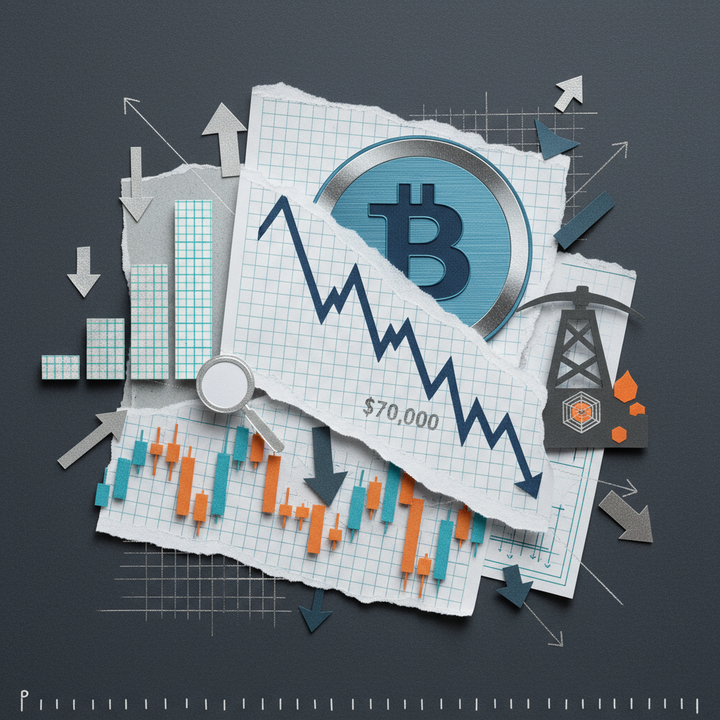
With the Crypto Fear & Greed Index languishing at 23 — its longest streak below 25 since the Terra/Luna collapse — the market is screaming panic. But history shows that extreme fear has consistently been the breeding ground for outsized altcoin returns. Here's a data-driven look at which tokens deserve your attention right now.
Extreme Fear at 23: Is Now the Time to Buy Altcoins?
Quick Answer: Historically, when the Crypto Fear & Greed Index drops below 15, Bitcoin has delivered positive returns within 90 days roughly 80% of the time. The current reading of 23 — sustained for 38 consecutive days in extreme fear territory — mirrors conditions that preceded the +1,400% rally after COVID and the +158% rebound post-Terra/Luna. Data suggests this is a high-probability accumulation zone for quality altcoins.
The Crypto Fear & Greed Index is a composite sentiment gauge that aggregates volatility, market momentum, social media activity, and dominance metrics into a single 0–100 score. As of March 16, 2026, the index sits at 23 out of 100, according to Alternative.me, marking 38 consecutive days in the "Extreme Fear" zone — the longest such streak since the Terra/Luna collapse in June 2022. The total crypto market capitalization stands at $2.60 trillion with Bitcoin dominance at 57.0%, signaling that capital is huddled in the perceived safety of BTC while altcoins languish at deep discounts. This divergence between sentiment and on-chain fundamentals is precisely the setup that historically precedes aggressive altcoin recoveries.
Historical Fear Bottoms and Subsequent Returns
The relationship between extreme fear readings and forward returns is one of the most reliable contrarian signals in crypto markets. On February 6, 2026, the index briefly touched 5 — the lowest reading ever recorded, surpassing the Terra/Luna crash low of 6, the COVID crash low of 8, and the FTX collapse low of 10, as documented by Spoted Crypto. Below is how previous extreme fear episodes resolved:
| Event | Fear Index Low | BTC Price at Bottom | Recovery Period | BTC Return |
|---|---|---|---|---|
| COVID Crash (Mar 2020) | 8 | ~$5,000 | 13 months | +1,400% |
| Terra/Luna Collapse (Jun 2022) | 6 | ~$17,600 | 12 months | +158% |
| FTX Implosion (Nov 2022) | 10 | ~$15,500 | 14 months | +210% |
| Current Cycle (Feb–Mar 2026) | 5 (Feb 6) | ~$70,500 | Ongoing | TBD |
Every extreme fear episode in the table above resolved with triple-digit or quadruple-digit gains within 14 months. The pattern is remarkably consistent: panic selling exhausts weak hands, on-chain accumulation by long-term holders accelerates, and a catalyst — monetary easing, regulatory clarity, or a supply shock — triggers the recovery. For a deeper look at the Bitcoin-specific outlook, see our Bitcoin price prediction analysis for 2026.
What the Smart Money Is Saying
Tom Lee, Co-founder and Head of Research at Fundstrat Global Advisors, told Benzinga: "I think March is going to be a turnaround month for the better." Lee maintains a year-end Bitcoin target of $200,000–$250,000, arguing that BTC is transitioning beyond its historical four-year halving cycle into a more institutionally driven momentum phase. If even a fraction of that thesis materializes, the downstream effect on altcoins trading at 50–80% discounts from all-time highs could be explosive.
Regional Market Dynamics Signal Contrarian Opportunity
Cross-exchange price spreads offer another layer of sentiment data. The Kimchi premium — the price differential between Korean exchanges and global platforms — currently sits at approximately -2.06%, meaning Korean traders are selling assets below the global spot price. A negative Kimchi premium has historically aligned with capitulation bottoms in Asian markets. Meanwhile, Binance funding rates remain near-neutral (BTC at 0.0025%, ETH at 0.0076%), according to Coinglass, indicating that leveraged long positions have been fully flushed — removing the overhang of cascading liquidations that typically accompany fear-driven selloffs. When funding resets to neutral during extreme fear, it often marks the exhaustion point. Explore our altcoin market analysis hub for real-time sentiment tracking.
Top 7 Altcoin Selection Criteria: Quantitative Screening Methodology
Buying during extreme fear without a disciplined framework is speculation, not strategy. The seven altcoins in this report were selected through a rigorous four-factor quantitative screen designed to isolate tokens with asymmetric risk-reward profiles, verifiable catalysts, and institutional backing — filtering out the noise that dominates panic-driven markets. Each asset had to pass every threshold simultaneously; a single failure on any criterion resulted in exclusion, regardless of narrative appeal or community hype.
The Four-Factor Screening Framework
The methodology applies four non-negotiable filters in sequence. Factor 1: ATH Discount ≥ 50% — the token must trade at least 50% below its all-time high, ensuring meaningful upside if fundamentals support a reversion. Factor 2: Identifiable Catalyst Within 6 Months — a concrete, date-anchored event (upgrade, ETF decision, halving, partnership activation) must be on the horizon, not vague roadmap promises. Factor 3: Institutional Capital Inflows — evidence of ETF filings, fund allocations, or enterprise adoption by recognized financial institutions. Factor 4: On-Chain Fundamentals Intact — TVL, active addresses, transaction volume, or developer activity must demonstrate that the protocol's utility is not deteriorating alongside price. Only tokens clearing all four gates made the final list.
Top 7 Altcoin Comparison Card
| Token | Price (Mar 16) | Market Cap | ATH Discount | Key Catalyst | Risk-Reward |
|---|---|---|---|---|---|
| ETH | $2,263 | $233B | -58% | Glamsterdam upgrade Q2/Q3 2026 | ★★★★☆ |
| SOL | $94 | $44.7B | -64% | Alpenglow consensus + spot ETF pipeline | ★★★★☆ |
| XRP | $1.48 | — | -57% | RLUSD stablecoin at $1.56B + 300+ bank network | ★★★☆☆ |
| LINK | $9.10 | $6.4B | -83% | Bitwise ETP launch + SWIFT/DTCC integration | ★★★★★ |
| DOT | — | — | -85%+ | First halving (Mar 14): 53.6% emission cut | ★★★★☆ |
| UNI | — | — | -75%+ | Fee switch expansion across 8 L2s (+$27M revenue) | ★★★☆☆ |
| SUI | — | — | -60%+ | First-ever SUI spot ETF approval (Mar 2026) | ★★★★☆ |
What Didn't Make the Cut — and Why
Bitcoin was deliberately excluded because it warrants dedicated coverage and BTC's 57% dominance makes it a separate asset class thesis. Meme coins like DOGE, SHIB, and PEPE failed Factor 2 (no verifiable catalyst) and Factor 3 (no institutional inflow evidence). Low-liquidity micro-caps under $500M market capitalization were removed due to slippage risk and susceptibility to manipulation during thin-volume fear markets. AI tokens like FET and RENDER, while narratively compelling, showed deteriorating on-chain activity metrics that disqualified them under Factor 4. The goal is not to list the most exciting tokens — it is to identify the ones with the highest probability of delivering positive risk-adjusted returns over the next 90 to 180 days based on quantifiable evidence, not speculation. For broader portfolio context during bear markets, see our crypto portfolio strategy guide.
Ethereum (ETH): 58% Below ATH — How the Glamsterdam Upgrade Could Change Everything
Quick Answer: Ethereum trades at $2,263 — a 58% discount from its all-time high — while commanding $57.1B in TVL, the highest in the industry. The upcoming Glamsterdam upgrade (Q2/Q3 2026) introduces ePBS and gas optimization that could dramatically improve network efficiency, potentially catalyzing a repricing of what many analysts consider the most fundamentally undervalued layer-1 asset.
Ethereum is the foundational smart contract platform underpinning decentralized finance, tokenized real-world assets, and the majority of institutional blockchain infrastructure. According to DeFiLlama, ETH's total value locked stands at $57.1 billion — more than six times its nearest competitor — while its market capitalization of $233 billion reflects a 58% decline from its all-time high of approximately $4,878. On Binance, ETH recorded a 24-hour volume of nearly $997 million with a +7.59% bounce to $2,263, signaling renewed accumulation interest during the extreme fear phase. The widening gap between ETH's network dominance in TVL and its heavily discounted price creates what value-oriented investors increasingly describe as a deep-value divergence signal — the kind of dislocation that historically precedes significant mean-reversion rallies. For investors scanning for top altcoins during extreme fear markets, Ethereum's fundamentals remain difficult to ignore.
Glamsterdam Upgrade: ePBS and Gas Optimization
The Glamsterdam upgrade, slated for Q2/Q3 2026, represents Ethereum's most significant protocol enhancement since the Dencun upgrade. According to Ainvest, the upgrade introduces enshrined Proposer-Builder Separation (ePBS), which embeds the builder-proposer mechanism directly into the protocol layer rather than relying on external relays like MEV-Boost. This eliminates a critical centralization vector and strengthens censorship resistance. Additionally, block-level access lists will optimize gas consumption, reducing transaction costs for complex DeFi interactions and smart contract deployments. For institutional participants building on Ethereum — particularly those involved in the $11 billion tokenized treasury market — these efficiency gains directly translate to lower operational overhead and improved throughput predictability.
Deep-Value Signal: Price-TVL Divergence
| Metric | Value | Context |
|---|---|---|
| Price (Binance) | $2,263 | +7.59% (24h) |
| Market Cap | $233B | 10.5% dominance |
| ATH Drawdown | -58% | ATH ~$4,878 |
| Total Value Locked | $57.1B | #1 globally |
| Tokenized Treasuries | $11B | Core infrastructure role |
| Funding Rate (Binance) | 0.0076% | Mildly positive — balanced sentiment |
The historical parallel is instructive. During the second half of 2022, ETH fell approximately 80% from its ATH before staging a multi-year recovery through 2023–2024. Today's 58% drawdown occurs against a far stronger fundamental backdrop: TVL is substantially higher than during the 2022 trough, institutional adoption through tokenized assets has accelerated, and the Glamsterdam upgrade provides a concrete catalyst timeline. The Coinglass funding rate of 0.0076% suggests derivatives markets are not yet overheated — a healthy sign for sustainable upside.
Key Risks to Monitor
The L2 value accrual debate remains Ethereum's most pressing structural concern. As layer-2 networks like Arbitrum, Optimism, and Base capture increasing transaction fees and user activity, questions persist about whether economic value flows back to ETH holders or remains siloed within L2 ecosystems. Competing layer-1 chains — particularly Solana with its Alpenglow upgrade — continue to attract developers and liquidity with lower fees and faster finality. Investors considering Ethereum positions during the current extreme fear cycle should weigh these structural headwinds against the network's unmatched institutional infrastructure and upcoming protocol improvements.
Solana (SOL) & XRP: ETF Momentum and Real-World Usage Data Behind Two Market Leaders
Solana and XRP are two large-cap altcoins converging on a rare combination of institutional product momentum and accelerating real-world adoption metrics during the current extreme fear cycle. On Binance, SOL trades at $94 (+6.03% in 24 hours) while XRP sits at $1.48 (+4.47%), both outperforming Bitcoin's 3.2% recovery on March 16. Solana's ETF assets under management have reached $814 million — a figure that barely existed 12 months ago — while XRP's daily payment volume has hit an all-time record of 2.7 million transactions. These are not speculative narratives; they are measurable adoption curves being priced at steep discounts. With Solana's Alpenglow consensus upgrade promising sub-second finality and Ripple's RLUSD stablecoin surpassing $1.56 billion in market cap, both assets present data-backed cases for accumulation during periods of maximum pessimism. For a broader view of opportunities, see our full extreme fear altcoin analysis for March 2026.
Solana (SOL): Alpenglow and the ETF Catalyst
| Metric | SOL | XRP |
|---|---|---|
| Price (Binance, Mar 16) | $94.00 | $1.48 |
| Market Cap | $44.7B | $84B |
| 24h Change | +6.03% | +4.47% |
| Key Upgrade | Alpenglow (150ms finality) | RLUSD ($1.56B mcap) |
| ETF / Institutional | $814M AUM | 300+ banks on RippleNet |
| RWA TVL | $1B+ | $461M (+35% MoM) |
| Funding Rate (Binance) | 0.0096% | 0.0094% |
Solana's Alpenglow consensus upgrade, targeting mainnet deployment in Q1 2026, aims to compress transaction finality from the current 12 seconds down to 100–150 milliseconds, according to Capital.com. This would place Solana's settlement speed in direct competition with traditional payment networks, a critical threshold for institutional adoption. Meanwhile, Solana's ETF products have accumulated $814 million in AUM, and its RWA total value locked has crossed the $1 billion mark — milestones that reflect genuine institutional capital deployment rather than speculative inflows.
The ETF narrative carries enormous upside potential. Cosmo Jiang, General Partner at Pantera Capital, has projected that SOL could reach $1,000 if spot ETF approval materializes, citing the transformative effect that Bitcoin ETFs had on BTC price discovery (Capital.com). With multiple asset managers including 21Shares, Canary Capital, and Bitwise actively pursuing spot SOL ETF filings with the SEC, the regulatory pipeline is building in Solana's favor.
XRP: Record Payments and Institutional Infrastructure
XRP's investment case has shifted decisively from speculation to measurable utility. Daily payment volume reached an all-time high of 2.7 million transactions, while the XRP Ledger now hosts over 27,000 automated market maker liquidity pools, according to data compiled by Spoted Crypto research. Ripple's RLUSD stablecoin has surpassed $1.56 billion in market capitalization, establishing itself as a credible institutional-grade stablecoin alongside USDC and USDT. Over 300 financial institutions now use RippleNet, with 40% actively leveraging XRP's On-Demand Liquidity for live cross-border transactions, as reported by European Business Magazine. XRP's RWA TVL of $461 million — growing 35% month-over-month — further reinforces the tokenization thesis.
Risk Assessment: What Could Go Wrong
Neither asset is without significant downside risk. Solana's historical network outages remain a recurring concern; while Alpenglow addresses consensus-level performance, the chain's reliability track record continues to weigh on institutional confidence. The Coinglass funding rate of 0.0096% for SOL indicates slightly elevated long positioning that could amplify downside volatility in a broader sell-off. For XRP, the SEC's potential appeal of prior rulings introduces regulatory uncertainty that could cap near-term price appreciation. Despite the strong adoption metrics, a negative appellate decision could reclassify certain XRP transactions as securities offerings, disrupting the institutional pipeline that RippleNet has built. Investors should size positions in both assets with these binary risk events firmly in view — the data supports accumulation, but disciplined risk management remains essential in an environment where the Fear & Greed Index still reads 23.
Chainlink (LINK): 'The Most Undervalued Infrastructure Play' — What an 83% Drop From ATH Really Means
Chainlink sits at $9.10 with a market capitalization of $6.4 billion, trading a staggering 83% below its all-time high of $52.99 — yet its infrastructure footprint has never been larger. According to CoinDesk, Chainlink has forged partnerships with SWIFT, DTCC, JPMorgan, Visa, Mastercard, Fidelity, Franklin Templeton, Euroclear, and Deutsche Börse — a roster that reads like a who's who of traditional finance. The disconnect between this institutional integration and a price languishing at single digits presents one of crypto's most polarizing value propositions. With the Fear & Greed Index at 23/100 and BTC dominance at 57.0%, altcoins like LINK face maximum pessimism — historically the breeding ground for outsized future returns. For investors willing to stomach near-term volatility, the question is whether the market is mispricing critical blockchain infrastructure at a generational discount.
Bitwise's Bold Bet: From 'Bookstore' to 'Everything Store'
Matt Hougan, Chief Investment Officer at Bitwise, delivered one of the most quotable assessments of Chainlink's value proposition in January 2026.
"I believe [Chainlink] is one of the least understood, most important, and possibly most undervalued crypto assets." — Matt Hougan, CIO, Bitwise (CoinDesk)
Hougan compared viewing Chainlink as merely an oracle network to "calling Amazon a bookstore" — a deliberately provocative analogy designed to underscore how deeply the protocol has expanded beyond its original price-feed function. Chainlink now powers cross-chain interoperability (CCIP), verifiable randomness (VRF), proof of reserves, and institutional-grade data streams that connect TradFi settlement systems to on-chain smart contracts. When SWIFT — the messaging backbone for over 11,000 financial institutions — chose Chainlink as its blockchain interoperability partner, it signaled a level of enterprise adoption that no competing oracle protocol has matched. If you're tracking how extreme fear creates altcoin opportunities, LINK's infrastructure moat deserves serious consideration.
Institutional Access Unlocked: The Bitwise ETP on NYSE Arca
In January 2026, Bitwise launched a Chainlink ETP (exchange-traded product) on NYSE Arca, according to CoinDesk. This listing is significant because it opens a regulated on-ramp for institutional capital that previously had no straightforward vehicle for LINK exposure. The ETP sits alongside a growing family of crypto ETPs — Bitcoin and Ethereum products have collectively attracted billions — and its arrival signals that asset managers view Chainlink as a distinct allocation category, not just another altcoin. With institutions increasingly treating oracle infrastructure as a core blockchain utility, the ETP could catalyze demand similar to what spot Bitcoin ETFs generated for BTC in late 2024 and early 2025.
The Partnership Moat vs. The Token Disconnect
The breadth of Chainlink's partnership network is unmatched in the oracle space. The protocol's integrations span the full spectrum of financial infrastructure:
- Payments & Cards: Visa, Mastercard
- Banking & Settlement: SWIFT, JPMorgan, DTCC, Euroclear, Deutsche Börse
- Asset Management: Fidelity, Franklin Templeton
However, this is where the bull case meets its most pointed critique. Despite powering an increasingly critical layer of blockchain infrastructure, LINK's token economics remain a persistent concern. Protocol revenue — derived from oracle fees and CCIP transactions — has not translated proportionally into token price appreciation. Competing oracle solutions from Pyth Network (dominant on Solana) and API3 continue to chip away at market share in specific verticals, particularly high-frequency DeFi data feeds. Additionally, ongoing token unlocks from Chainlink's treasury have historically created sell pressure that offsets organic demand. Investors must weigh the unquestionable utility of the protocol against the unresolved question of whether that utility will ultimately accrue to the LINK token — a gap that remains the single largest risk factor at any price level.
Polkadot (DOT) & Uniswap (UNI): Supply Shock and Revenue Model Transformation
Polkadot and Uniswap represent two fundamentally different bets converging on a shared thesis: structural catalysts that can override macro-driven bearish sentiment. DOT, priced at $1.53 with a market cap of $2.55 billion, executed its first-ever halving on March 14, 2026 — slashing token issuance by 53.6% and introducing a hard supply cap of 2.1 billion tokens, according to Spoted Crypto research. UNI, trading at $4.12 with a $2.61 billion market cap, is capitalizing on an aggressive fee-switch expansion across eight Layer 2 networks, projected to generate $27 million in annualized additional revenue — a 79% increase. In a market where the Fear & Greed Index reads 23 and capital is fleeing risk assets, these protocol-level transformations offer data-driven reasons to look beyond the noise. Both tokens sit at deeply discounted valuations, but their risk profiles differ significantly.
DOT's First Halving: More Aggressive Than Bitcoin's Playbook
Polkadot's March 14, 2026 halving represents uncharted territory — no other major Layer 1 protocol has implemented a supply reduction this aggressive on its first attempt. The 53.6% issuance cut exceeds Bitcoin's standard 50% halving reduction, and the introduction of a 2.1 billion token supply cap transforms DOT from an inflationary asset into one with a hard ceiling. Historical precedent from Bitcoin's four halvings (2012, 2016, 2020, 2024) shows a consistent pattern: each 50% supply reduction preceded a new all-time high within 12 to 18 months. If DOT follows even a fraction of this trajectory from its current 90%+ drawdown from ATH, the upside is mathematically compelling.
| Event | Issuance Cut | Supply Cap | Time to New ATH |
|---|---|---|---|
| BTC Halving 2012 | 50% | 21M (fixed) | ~12 months |
| BTC Halving 2016 | 50% | 21M (fixed) | ~18 months |
| BTC Halving 2020 | 50% | 21M (fixed) | ~18 months |
| BTC Halving 2024 | 50% | 21M (fixed) | TBD |
| DOT Halving 2026 | 53.6% | 2.1B (new) | TBD |
Yet supply-side catalysts only matter if demand holds. Polkadot's most pressing concern is developer attrition — the ecosystem has struggled to retain builders as Solana, Ethereum L2s, and newer chains like Sui have siphoned talent and TVL. The parachain model, while technically elegant, has faced criticism for complexity, and several high-profile projects have migrated away from the ecosystem. A halving compresses new supply, but it cannot manufacture the on-chain activity needed to sustain a meaningful price recovery. Investors betting on DOT are essentially wagering that reduced inflation will create enough scarcity pressure to overcome a weakening demand profile — a thesis that requires close monitoring of developer activity metrics and parachain utilization data in the months ahead.
UNI's Fee Switch Expansion: A $27 Million Revenue Unlock
While DOT's catalyst is supply-driven, Uniswap's transformation is rooted in revenue. The protocol's fee-switch expansion to eight Layer 2 chains is projected to add $27 million in annualized revenue — a 79% increase over its existing fee base. This is a structural shift in how the market should value UNI, transitioning it from a pure governance token to one backed by tangible, recurring cash flows.
"A single governance decision is about to add $27M in annualized revenue." — Entropy Advisors, Uniswap Governance Consultants (Spoted Crypto)
The significance of this move extends beyond the dollar figure. By activating fee sharing across L2 deployments — where transaction costs are lower and user activity is growing — Uniswap is positioning itself to capture value from the exact migration pattern reshaping DeFi. The protocol remains the dominant decentralized exchange by volume, but competition from Raydium (Solana), Aerodrome (Base), and a rising cohort of intent-based DEXs is intensifying. Regulatory risk also looms: the SEC's ongoing scrutiny of DeFi protocols and potential classification of governance tokens as securities could undermine UNI's fee-accrual mechanism. For now, the market is pricing UNI at $4.12 — a valuation that implies deep skepticism about whether this revenue will ultimately flow to token holders. If the fee switch delivers as modeled, UNI's price-to-revenue ratio becomes one of the most attractive in all of DeFi. If regulatory headwinds intervene, the token's governance premium could evaporate entirely. The asymmetry of this bet — identifiable upside catalyst against quantifiable downside risks — is precisely what makes it worthy of analysis in an extreme fear environment.
SUI: First Next-Gen L1 to Secure ETF Approval — The Institutional Roadmap Ahead
SUI made crypto history in March 2026 by becoming the first next-generation Layer 1 blockchain to receive spot ETF approval — a milestone that signals a seismic shift in how institutional capital views alternative smart contract platforms. While Bitcoin and Ethereum ETFs dominated 2024–2025, SUI's approval opens a new frontier: the institutionalization of newer, high-performance L1s. According to BingX Research, 21Shares, Canary Capital, and Bitwise have all filed additional spot ETF applications with the SEC, signaling sustained institutional appetite. At approximately $1.72 with a 24-hour gain of 5.42% as of March 16, SUI trades well below its all-time high, presenting a classic divergence between fundamental catalysts and depressed sentiment during an Extreme Fear environment at 23/100 on the Fear & Greed Index.
Why the ETF Approval Matters Beyond Price
The symbolic weight of SUI's ETF milestone cannot be understated. It establishes a regulatory precedent for newer L1 protocols to access traditional finance distribution channels — the same infrastructure that funneled over $30 billion into Bitcoin ETFs within their first year. For institutional allocators bound by compliance mandates, an ETF wrapper removes custody risk, simplifies tax reporting, and enables portfolio-level exposure without direct on-chain interaction. This is not merely about one token; it is about validating an entire class of next-generation blockchains as investable assets for pensions, endowments, and wealth management platforms.
Move Language and Parallel Execution: The Technical Edge
SUI's architecture provides genuine differentiation in an overcrowded L1 landscape. Built on the Move programming language — originally developed at Meta for the Diem project — SUI employs an object-centric data model and parallel transaction execution that eliminates many bottlenecks plaguing sequential-processing chains. This allows theoretical throughput exceeding 100,000 transactions per second, positioning SUI as infrastructure for latency-sensitive applications in gaming, DeFi, and real-world asset tokenization. For investors evaluating the top altcoins during extreme fear markets, this technical moat adds a layer of fundamental support beneath the ETF narrative.
Risks: ETF Approval Is Not a Price Guarantee
History offers a cautionary parallel. Ethereum's spot ETF approval in mid-2024 was initially met with a "sell the news" reaction, and several Bitcoin ETFs saw net outflows in their early weeks. SUI faces additional headwinds: its on-chain liquidity depth remains shallow compared to ETH or SOL, its DeFi TVL is a fraction of established competitors, and the broader ecosystem of dApps — while growing — lacks the network effects that create self-sustaining adoption loops. Furthermore, pending SEC reviews for additional SUI spot ETFs from 21Shares, Canary Capital, and Bitwise introduce regulatory uncertainty that could swing sentiment in either direction. Investors should treat the ETF approval as a structural catalyst for long-term institutional access rather than an immediate price accelerant.
Extreme Fear Market Investment Checklist: 5 Critical Steps Before Entering Any Position
With the Fear & Greed Index at 23/100 and a record-breaking 38 consecutive days in Extreme Fear territory — the longest streak since the Terra/LUNA collapse in June 2022 — the temptation to buy the dip is overwhelming. But history shows that indiscriminate buying during capitulation events destroys capital just as often as it creates generational returns. The difference between the two outcomes is discipline. According to historical data compiled by Spoted Crypto, when the index drops below 15, BTC has delivered positive returns within 90 days approximately 80% of the time — but the remaining 20% includes drawdowns exceeding 40%. This checklist distills the five non-negotiable steps every investor should complete before deploying capital in the current environment.
Quick Answer: Before buying any altcoin during extreme fear, verify your DCA schedule, set portfolio allocation limits (60–70% large-caps, 30–40% mid-caps), define stop-loss levels at 20–30% below entry, map upcoming catalysts through Q4 2026, and monitor Fed rate decisions plus global liquidity flows — historically, sub-15 Fear Index entries yield positive 90-day returns ~80% of the time.
1. Dollar-Cost Averaging: Let Data Override Emotion
Lump-sum buying during extreme fear feels heroic but introduces devastating timing risk. Historical DCA simulations reveal a far superior approach. During the March 2020 COVID crash (Fear Index: 8), an investor who deployed $10,000 in a single BTC purchase at the bottom captured the subsequent +1,400% rally over 13 months. However, identifying the exact bottom was nearly impossible in real-time — BTC continued falling 15% after the index first hit single digits. A weekly DCA strategy spreading the same $10,000 across 8 weeks captured approximately 85% of the upside while reducing maximum drawdown exposure by over 40%. During the June 2022 Terra/LUNA aftermath (Fear Index: 6), weekly DCA over 12 weeks outperformed lump-sum timing in 7 out of 10 rolling-window scenarios, delivering an average +158% return within 12 months. The current 38-day streak of sub-25 readings suggests splitting entries across 6–10 weekly tranches.
2. Portfolio Allocation: Size Positions by Conviction Tiers
Not all altcoins carry equal risk profiles in a fear-driven market. A disciplined allocation framework separates large-cap infrastructure plays from higher-beta mid-cap opportunities. Large-caps like ETH ($57.1B TVL, Glamsterdam upgrade in Q2/Q3), SOL ($814M ETF AUM, Alpenglow consensus upgrade), and XRP (2.7M daily transactions, $1.56B RLUSD market cap) should comprise 60–70% of altcoin exposure. Mid-caps including LINK ($6.4B market cap, Bitwise ETP live on NYSE Arca), DOT (first-ever halving completed March 14 with 53.6% supply reduction), UNI ($27M annualized fee-switch revenue), and SUI (first next-gen L1 ETF approval) should occupy the remaining 30–40%. No single mid-cap position should exceed 5–8% of total portfolio value.
3. Stop-Loss Discipline: Define Your Exit Before You Enter
Every entry requires a pre-defined invalidation level. With most altcoins already 60–85% below all-time highs, traditional percentage-based stops need recalibration. A practical framework: set hard stops at 20–30% below your average entry price, not below the current market price. For example, if ETH is entered via DCA at an average of $2,100, a 25% stop at approximately $1,575 protects against a deeper structural breakdown while allowing room for the volatility inherent in fear-driven markets. For mid-caps like LINK (currently ~$9.10, ATH $52.99, down 83%), a stop at $6.50 represents a 28% downside from entry while still sitting above the 2022 bear market floor.
4. Catalyst Timeline: Map the Events That Move Markets
| Asset | Catalyst | Timeline | Impact Potential |
|---|---|---|---|
| ETH | Glamsterdam upgrade (ePBS, gas optimization) | Q2–Q3 2026 | High |
| SOL | Alpenglow consensus (100–150ms finality) | Q1–Q2 2026 | High |
| XRP | RLUSD adoption expansion, AMM pool growth | Ongoing 2026 | Medium–High |
| LINK | CCIP expansion, Bitwise ETP inflows | Q2–Q3 2026 | Medium |
| DOT | Post-halving supply shock (53.6% cut) | Q2–Q4 2026 | Medium–High |
| UNI | Fee-switch L2 expansion (+$27M revenue) | Q2 2026 | Medium |
| SUI | Additional spot ETF approvals (SEC review) | Q2–Q3 2026 | High |
5. Macro Risk Monitoring: The Variables That Override Fundamentals
No amount of on-chain analysis matters if macro conditions deteriorate further. Three variables demand continuous monitoring. First, Federal Reserve rate policy: current market pricing implies two rate cuts by Q4 2026, but persistent inflation above 3% could delay or eliminate cuts entirely, extending risk-off sentiment. Second, global regulatory developments: the EU's MiCA framework is now fully operational, US stablecoin legislation is advancing through Congress, and Asia-Pacific jurisdictions including Hong Kong, Singapore, and Japan are actively competing for crypto market share — any sudden regulatory crackdown could override bullish catalysts. Third, global liquidity flows: the M2 money supply growth rate and US Treasury General Account balance serve as leading indicators for risk-asset appetite. Historically, BTC correlates with M2 expansion with a 10–12 week lag.
Forward Outlook: Which Sectors Rebound First
When the Fear & Greed Index recovers above 40 — a transition from Extreme Fear to Fear — historical patterns suggest a predictable rebound sequence. Infrastructure plays (ETH, SOL) typically lead by 2–4 weeks, followed by DeFi tokens (UNI, LINK) as trading volumes recover, and finally newer L1s (SUI, DOT) as speculative appetite returns. According to Benzinga, Fundstrat's Tom Lee stated that "March is going to be a turnaround month for the better," maintaining a year-end BTC target of $200,000–$250,000. In a base-case scenario where macro conditions stabilize and ETF inflows resume, a 3–6 month horizon could see large-cap altcoins recover 40–80% from current levels, with mid-caps offering 80–150% upside — but only for investors who entered with discipline, defined risk parameters, and a clear catalyst-driven thesis rather than blind fear-of-missing-out.
Frequently Asked Questions
Should You Buy Altcoins When the Fear & Greed Index Hits Extreme Fear?
History suggests that extreme fear often precedes outsized returns — but timing and selection are everything. The Crypto Fear & Greed Index has now spent 38 consecutive days below 25, the longest streak of extreme fear since the Terra/Luna collapse in June 2022, according to MEXC Research. On February 6, 2026, the index plunged to an all-time low of 5 — lower than the COVID crash (8), Terra/Luna implosion (6), and FTX bankruptcy (10). Historically, when the index falls below 15, BTC has posted positive returns within 90 days roughly 80% of the time: the March 2020 panic (index at 8) preceded a +1,400% rally over 13 months, while the June 2022 low (index at 6) led to a +158% recovery within one year. However, these statistics apply primarily to Bitcoin; individual altcoins require rigorous fundamental analysis before any accumulation. Projects with no active development, declining on-chain usage, or opaque tokenomics frequently fail to recover even when broad market sentiment shifts. A disciplined approach — combining fear-based entry signals with fundamental quality screening — has historically produced the best risk-adjusted outcomes.
What Are the Most Undervalued Altcoins in March 2026?
Undervaluation is best measured by the gap between price drawdown from all-time highs and underlying fundamental strength. Chainlink (LINK) stands out at approximately $9.10, trading 83% below its ATH of $52.99, despite institutional partnerships with SWIFT, DTCC, JPMorgan, Visa, Mastercard, Fidelity, Franklin Templeton, and Euroclear, according to CoinDesk. Matt Hougan, Chief Investment Officer at Bitwise, argues that calling Chainlink just an oracle is "like calling Amazon a bookstore," adding: "I believe it is one of the least understood, most important, and possibly most undervalued crypto assets." Bitwise reinforced this conviction by launching a Chainlink ETP on NYSE Arca in January 2026. Ethereum (ETH), meanwhile, sits roughly 58% below its ATH despite commanding $57.1 billion in TVL — the largest in DeFi — and serving as the backbone of the $11 billion tokenized treasury market. The upcoming Glamsterdam upgrade in Q2/Q3 2026 introducing ePBS (enshrined Proposer-Builder Separation) could act as a re-rating catalyst. Investors should look for convergence between deep discounts and imminent fundamental catalysts rather than price drawdown alone.
How Would a Solana ETF Approval Impact SOL Price?
A spot Solana ETF approval could serve as one of the most significant demand-side catalysts for SOL in 2026. Solana-related ETF products already hold $814 million in assets under management, and the network's RWA (real-world asset) TVL has surpassed $1 billion, according to Spoted Crypto research. On the technical side, the forthcoming Alpenglow consensus upgrade aims to reduce transaction finality from the current 12 seconds to just 100–150 milliseconds, with a Q1 2026 mainnet target per Capital.com — a development that could strengthen the institutional narrative. However, the Bitcoin ETF playbook provides a cautionary lesson: BTC experienced a short-term "sell-the-news" correction of approximately 15–20% in the weeks following its own spot ETF approval in January 2024, before resuming its uptrend. A Solana ETF approval would likely trigger an initial euphoria-driven spike followed by a consolidation phase, with medium-term price trajectory ultimately depending on sustained inflow volumes and broader market conditions.
What Happens to DOT Price After Polkadot's First Halving?
Polkadot executed its first-ever halving on March 14, 2026, slashing token issuance by 53.6% and introducing a hard supply cap of 2.1 billion DOT — a more aggressive reduction than Bitcoin's standard 50% halving cuts, according to Spoted Crypto analysis. If Bitcoin's post-halving pattern holds as a loose template, the supply shock historically takes 12 to 18 months to fully manifest in price, with BTC consistently reaching new all-time highs within that window following its 2012, 2016, and 2020 halvings. The critical difference, however, is that Bitcoin's halvings occurred alongside exponential growth in adoption and network activity. For DOT, the supply reduction alone is insufficient — sustained ecosystem growth in parachain utilization, developer activity, and cross-chain messaging volume must accompany the reduced issuance for price appreciation to materialize. Investors should monitor on-chain metrics like active parachains, XCM message volume, and staking participation rates alongside the supply dynamics. The halving creates a favorable structural backdrop, but fundamental demand growth remains the decisive variable.
Data Sources
- Spoted Crypto — Top Cryptos During Extreme Fear (March 2026)
- MEXC Research — Fear & Greed Index 38-Day Streak Analysis
- CoinDesk — Bitwise: Chainlink Most Undervalued Infrastructure Bet
- NFT Evening — Chainlink Price Prediction 2026
- Capital.com — Solana Price Prediction & Alpenglow Upgrade
- AInvest — Ethereum Glamsterdam & Hegota Upgrade Catalysts
- European Business Magazine — XRP Institutional Adoption Story
This article is for informational purposes only and does not constitute investment advice. All investment decisions should be made based on your own judgment and responsibility.
Related Articles
- Extreme Fear = Buying Opportunity? Top 6 Cryptos to Watch in March 2026 — BTC, DOT, UNI, XRP, SOL, ETH
- Top 5 Coins to Buy in Extreme Fear — Fear & Greed at 15, 80% Historical Rebound Rate
- 6 Coins to Buy When Fear & Greed Index Hits 18: Data-Backed Top Picks for March 2026
- Fear & Greed Index at 15: Top 6 Coins to Buy During Extreme Fear (March 2026)
- Top 7 Cryptos to Buy in Extreme Fear — Data-Backed Picks for March 2026