S&P 500 Perpetual Futures Launch on Hyperliquid as HYPE Surges 10% — The Day Wall Street Chose DeFi
S&P Dow Jones licenses S&P 500 perpetual futures on Hyperliquid — HYPE surges 10% as TradFi embraces DeFi.

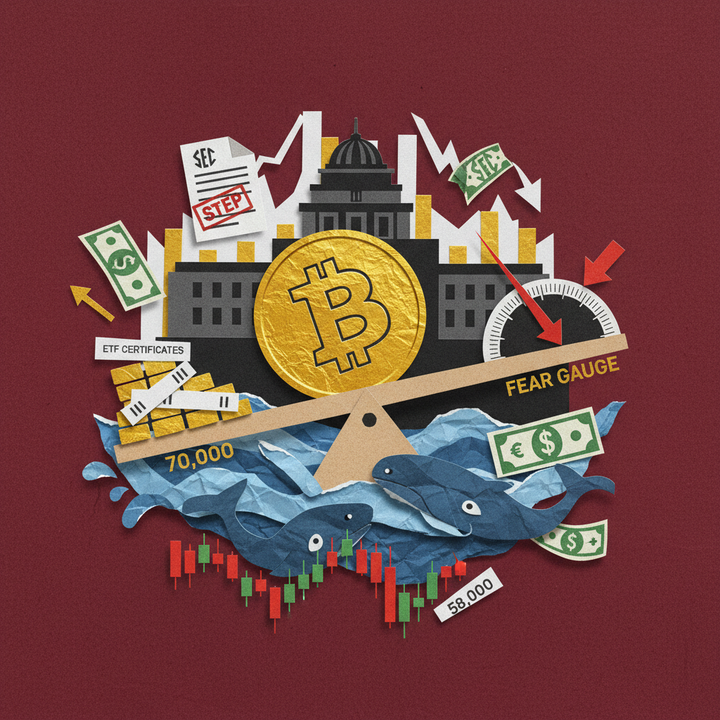
In a landmark move that blurs the boundary between Wall Street and decentralized finance, S&P Dow Jones Indices has officially licensed the S&P 500 to Trade[XYZ] for perpetual futures contracts on Hyperliquid — marking the first time the world's most-watched equity benchmark has been deployed on a decentralized blockchain. The announcement, made on March 18, 2026, sent HYPE surging over 10% within 24 hours, even as the broader crypto market languished in extreme fear territory with the Fear & Greed Index pinned at 23/100.
S&P 500 Perpetual Futures on Hyperliquid: 5 Key Facts You Need to Know
Quick Answer: S&P Dow Jones Indices licensed the S&P 500 to Trade[XYZ] for the first-ever perpetual futures contract on a decentralized blockchain. Trading launched March 18 on Hyperliquid with 24/7 access for non-U.S. investors, pushing HYPE up 10.2% to an intraday high of $43 and a market cap of approximately $9.7 billion.
The S&P 500 perpetual futures listing on Hyperliquid represents a watershed moment for decentralized finance. S&P Dow Jones Indices — the division of S&P Global that administers benchmarks tracking over $16 trillion in indexed assets — chose a fully on-chain, decentralized exchange over every centralized crypto platform on the market. According to the official S&P Global press release, the perpetual contract went live on March 18, 2026, offering round-the-clock trading to non-U.S. investors. This is not a synthetic knockoff or an unlicensed mirror — it is an officially sanctioned product carrying the full weight of the S&P brand, a distinction that no centralized crypto exchange has secured for on-chain perpetuals.
HYPE Token Surges on Institutional Validation
The market response was immediate and decisive. HYPE, the native token of the Hyperliquid blockchain, jumped 10.2% within 24 hours of the announcement, touching an intraday high of $43 before settling in the $40.79–$42.47 range, according to CoinMarketCap data. This rally occurred against a punishing macro backdrop — BTC fell 4.5% to $70,831, ETH shed 5.7%, and the total crypto market cap contracted to $2.51 trillion. The fact that HYPE defied the prevailing selloff underscores how markets are rewarding genuine institutional adoption over speculative narratives.
From a derivatives perspective, the broader market showed persistent bearishness. Binance funding rates for BTC sat at -0.0010%, ETH at -0.0004%, and SOL at a deeply negative -0.0101%, reflecting dominant short positioning across major assets. HYPE's ability to rally in this environment — with negative funding rates across the board — signals that the S&P 500 listing was perceived as a fundamental catalyst rather than a short-squeeze event.
Where HYPE Stands: Price, Market Cap, and Distance from All-Time High
Despite the 10% surge, HYPE remains roughly 30% below its all-time high of $59.30, reached during the late-2025 DeFi rally. The token's market capitalization stands at approximately $9.7 billion, placing it at rank 14 across all crypto assets — ahead of established protocols like Avalanche and Chainlink. With 24-hour trading volume between $399 million and $580 million, HYPE is demonstrating institutional-grade liquidity that matches or exceeds many top-20 assets. For investors tracking Hyperliquid's trajectory, the S&P licensing deal provides a powerful fundamental floor beneath current prices.
| Metric | Value |
|---|---|
| Current Price | $40.79 – $42.47 |
| 24h Change | +10.2% |
| Intraday High | $43.00 |
| Market Cap | ~$9.7B (Rank #14) |
| 24h Volume | $399M – $580M |
| All-Time High | $59.30 |
| Distance from ATH | –30.2% |
| All-Time Low | $3.81 |
The timing of this listing carries additional significance. The SEC approved Nasdaq's proposal to trade tokenized securities on the same day — March 18 — creating a regulatory convergence that legitimizes on-chain financial products across both centralized and decentralized venues. With the broader market gripped by a Fear & Greed Index of 23 and negative funding rates across all major perpetual contracts on Coinglass, HYPE's breakout performance suggests that institutional-grade DeFi products are becoming their own demand driver, independent of speculative crypto cycles.
Who Is Trade[XYZ], and Why Did S&P Dow Jones Choose DeFi?
Trade[XYZ] is the platform that convinced the custodian of Wall Street's most important benchmark to bypass every centralized exchange and go directly on-chain. Since launching on Hyperliquid in October 2025, Trade[XYZ] has processed over $100 billion in cumulative trading volume, with an annualized run rate exceeding $600 billion, according to the S&P Global announcement. Those figures place it in direct competition with mid-tier centralized exchanges and ahead of most decentralized perpetuals platforms by a wide margin. The $600 billion annualized figure is especially striking — it means Trade[XYZ] is processing roughly $1.6 billion in daily volume, a throughput that underscores the maturation of on-chain derivatives infrastructure.
The Strategic Logic Behind the S&P License
Why would S&P Dow Jones Indices — an institution that has spent decades curating relationships with the world's largest financial firms — hand an official license to a DeFi protocol? The answer lies in market access. Traditional S&P 500 futures on CME trade during limited hours and require brokerage accounts subject to jurisdictional restrictions. A 24/7 perpetual contract on Hyperliquid eliminates both constraints for non-U.S. investors, opening the world's most-tracked equity index to a global audience that has historically been underserved by legacy infrastructure.
Cameron Drinkwater, Chief Product & Operations Officer at S&P Dow Jones Indices, framed the move as an expansion strategy: "This collaboration expands access and utility of our flagship benchmarks within digital trading environments," he stated in the official press release. The language is measured, but the implication is radical: S&P is acknowledging that DeFi infrastructure has reached a level of reliability and throughput sufficient to carry its brand.
Collins Belton, COO and General Counsel at Trade[XYZ], was more explicit about the platform's ambitions: "The S&P 500 is a natural starting point... accessible 24/7 on Hyperliquid, bringing us one step closer to that vision," he said in the same announcement. The phrase "natural starting point" implies a roadmap that likely extends to other major indices — potentially the Dow Jones Industrial Average, S&P MidCap 400, or sector-specific benchmarks.
Trade[XYZ] Volume vs. Major Exchanges
To contextualize Trade[XYZ]'s $600 billion annualized run rate, consider how it compares with established centralized exchanges. While Binance dominates spot and derivatives markets with daily volumes well above $20 billion, and OKX routinely clears $5–8 billion daily, Trade[XYZ]'s $1.6 billion daily average places it ahead of many second-tier CEX platforms and virtually all competing decentralized exchanges. The table below contextualizes these figures.
| Exchange | Type | Cumulative Volume | Est. Daily Volume |
|---|---|---|---|
| Binance | CEX | — | $20B+ |
| OKX | CEX | — | $5B – $8B |
| Bybit | CEX | — | $3B – $5B |
| Trade[XYZ] (Hyperliquid) | DEX | $100B+ (since Oct 2025) | ~$1.6B |
| dYdX | DEX | — | $300M – $600M |
The comparison reveals a crucial insight: Trade[XYZ] isn't merely a niche DeFi experiment — it is processing volumes that rival established centralized platforms. For S&P Dow Jones Indices, this volume profile likely served as a critical due diligence checkpoint. Licensing a flagship benchmark to a platform that couldn't sustain institutional-grade throughput would carry significant reputational risk. The $100 billion cumulative figure provided the confidence that Hyperliquid's infrastructure — with its sub-second finality and fully on-chain order book — could handle the demand that an S&P 500 product would generate.
This development also arrives on the same day the SEC approved Nasdaq's tokenized securities trading proposal, suggesting a coordinated acceleration in the convergence of traditional and decentralized financial infrastructure. The message from legacy institutions is becoming unmistakable: DeFi is no longer an alternative system — it is becoming a distribution channel for the same products that power Wall Street.
SEC Approves Nasdaq Tokenized Securities Trading — Is the RWA Tokenization Era Finally Here?
The U.S. Securities and Exchange Commission has approved Nasdaq's groundbreaking proposal to trade tokenized securities on its existing order books — a regulatory milestone that could reshape how Wall Street handles ownership and settlement of financial assets. The approval covers Russell 1000 stocks and S&P 500-tracking ETFs, all trading under identical tickers, CUSIPs, and shareholder rights as their traditional counterparts, according to CoinDesk. This is not a parallel market or a crypto-native wrapper — it is the same security, tokenized on-chain, settled through the same clearing infrastructure. The move directly ties into the Depository Trust Company's (DTC) pilot program for blockchain-based settlement, signaling that the largest post-trade utility in the United States is actively building rails for tokenized finance. With the real-world asset (RWA) tokenization market currently valued between $19 billion and $36 billion, the SEC's approval could serve as the regulatory catalyst that unlocks trillions in projected growth.
Same Order Book, Same Rights: How Nasdaq's Tokenized Model Works
What makes Nasdaq's approach distinct from previous tokenization experiments is its insistence on full equivalence. Tokenized shares trade on the same order book as conventional shares, carry the same CUSIP identifiers, and confer identical voting rights, dividend entitlements, and legal protections. There is no secondary token, no wrapper contract, and no jurisdictional arbitrage — just a blockchain-native representation of an existing regulated security. The DTC pilot program underpins the settlement layer, allowing tokenized trades to clear through the same infrastructure that processes over $2.4 quadrillion in annual transactions. This integration means institutional participants — broker-dealers, custodians, and clearing firms — can adopt tokenized securities without overhauling compliance frameworks or client onboarding processes. For market structure, the implications are significant: blockchain settlement can compress T+2 cycles to near-instantaneous finality, reduce counterparty risk, and enable fractional ownership at the protocol level. Nasdaq's model essentially proves that tokenization does not require replacing existing financial infrastructure — it can enhance it.
RWA Tokenization Market: From $19 Billion to a Multi-Trillion Dollar Opportunity
The SEC's approval arrives as institutional projections for the RWA tokenization market diverge dramatically in scale but converge on direction — up. Current on-chain RWA value sits between $19 billion and $36 billion depending on methodology, according to data aggregated by The Block and DefiLlama. But forward estimates from major consultancies paint a far larger picture. For context, consider the precedent set by the SEC's approval of spot Bitcoin ETFs in January 2024. Within 12 months, those products attracted over $60 billion in net inflows, validating pent-up institutional demand once regulatory clarity was established. The Nasdaq tokenized securities approval could trigger a similar unlock — but across a far broader asset class. To understand the scale of institutional conviction behind real-world asset tokenization, consider the following projections:
| Source | Current Estimate (2026) | 2030 Projection | Key Focus Areas |
|---|---|---|---|
| McKinsey & Company | ~$19B–$36B | $2 Trillion | Real estate, bonds, funds |
| Boston Consulting Group | ~$19B–$36B | $16 Trillion | Illiquid assets, trade finance, commodities |
| CoinLaw Aggregated | ~$19B–$36B | $4T–$30T (range) | Equities, private credit, treasuries |
| BTC Spot ETF Precedent (2024) | $60B+ inflows (12 months) | — | Regulatory clarity → capital inflow |
The gap between BCG's $16 trillion high-end forecast and McKinsey's more conservative $2 trillion estimate reflects differing assumptions about regulatory adoption speed and institutional willingness to migrate legacy assets on-chain. But both figures dwarf the current market — implying a minimum 55x growth trajectory over four years even under the most conservative scenario. The Nasdaq approval, combined with parallel developments like the EU's MiCA framework enabling tokenized securities across 27 member states and Singapore's Project Guardian for institutional DeFi, suggests the regulatory scaffolding is being erected simultaneously across major financial jurisdictions. For investors tracking institutional crypto adoption trends, the tokenized securities narrative is no longer theoretical — it now has a ticker, a CUSIP, and a regulated exchange.
Stripe-Backed Tempo Launches Mainnet With Machine Payments Protocol — What Is AI Agent Commerce?
A new blockchain purpose-built for artificial intelligence transactions went live on March 18, 2026, backed by $500 million in funding and partnerships with some of the largest names in payments and AI. Tempo, co-founded by Paradigm's Matt Huang and supported by Stripe's infrastructure, launched its mainnet alongside the Machine Payments Protocol (MPP) — an open standard that enables AI agents to autonomously execute financial transactions without human intervention. Valued at $5 billion following its 2025 funding round, Tempo has assembled a partner roster that includes Anthropic, OpenAI, Visa, Mastercard, Stripe, Shopify, DoorDash, Nubank, Revolut, Standard Chartered, and Lightspark, according to CoinDesk. The launch represents the most significant convergence of AI and crypto infrastructure to date — not as a speculative narrative, but as production-grade payment rails designed for machines that spend money.
Machine Payments Protocol (MPP): How AI Agents Transact Autonomously
The Machine Payments Protocol is an open, permissionless standard that defines how AI agents discover merchants, negotiate pricing, authenticate transactions, and settle payments — all without requiring a human to click "confirm." In practical terms, MPP allows an AI assistant to book a flight, pay for cloud compute, purchase inventory, or subscribe to a SaaS tool by communicating directly with a merchant's payment endpoint through a structured protocol. Unlike traditional payment APIs that require pre-authorized credentials and human-initiated sessions, MPP operates on a machine-to-machine communication layer where agents carry cryptographic credentials, spending limits are enforced programmatically, and settlement occurs on Tempo's blockchain for finality and auditability. The protocol's design philosophy prioritizes minimalism and extensibility — a deliberate choice that Matt Huang, cofounder of Tempo and managing partner at Paradigm, explained directly:
"Agentic payments is very early, and we still are figuring out the best way to structure these. So our team just came up with what we thought was the most elegant, minimal, efficient protocol that anyone can extend without our permission."
— Matt Huang, Cofounder of Tempo & Managing Partner at Paradigm (Fortune)
This minimalist architecture mirrors the design ethos of early internet protocols like HTTP and SMTP — simple enough for universal adoption, flexible enough for infinite use cases. MPP does not dictate what AI agents buy or how merchants price their services; it simply provides the communication and settlement grammar. The fact that both Anthropic and OpenAI — the two leading foundation model providers — are launch partners suggests that MPP could become a de facto standard before competing protocols emerge.
Visa, Mastercard, and the TradFi Convergence
Perhaps the most striking aspect of Tempo's launch is the presence of Visa and Mastercard as partners — the two companies that collectively process over 80% of global card transactions. Their participation signals that legacy payment networks view AI agent commerce not as a threat but as a new transaction layer they intend to integrate with. Cuy Sheffield, Head of Crypto at Visa, framed the partnership in infrastructural terms:
"We look at MPP as another way that you can have a very clear, defined protocol around how an agent communicates with merchants."
— Cuy Sheffield, Head of Crypto, Visa (Fortune)
The merchant-side integrations are equally telling. DoorDash, Shopify, Nubank, and Revolut represent consumer commerce, e-commerce, neobanking, and gig economy verticals — a cross-section that covers the majority of digital transaction categories. Standard Chartered's involvement adds institutional banking credibility, while Lightspark (a Lightning Network infrastructure company) suggests interoperability with Bitcoin's payment layer. The $5 billion valuation — achieved during a period when the Crypto Fear & Greed Index has sat in Extreme Fear territory for 34 consecutive days — underscores that sophisticated investors are pricing Tempo on the basis of future AI transaction volume, not current crypto market sentiment. With AI agent spending projected to grow exponentially as autonomous systems handle everything from enterprise procurement to personal financial management, Tempo's mainnet launch positions the protocol at the intersection of crypto's most compelling growth narratives: AI infrastructure and on-chain payments.
FTX $2.2 Billion Creditor Payout and Kraken IPO Freeze — The Industry's Stark Contrast
The crypto industry is simultaneously witnessing its largest-ever creditor recovery and a chilling freeze on public market ambitions, painting a portrait of an ecosystem caught between redemption and retreat. The FTX Recovery Trust will distribute approximately $2.2 billion to creditors on March 31, 2026, marking the fourth — and most significant — round of repayments since the exchange's catastrophic collapse in November 2022. At the same time, Kraken has frozen its multibillion-dollar IPO, signaling that even the strongest surviving exchanges cannot escape the gravitational pull of macro uncertainty. With BTC trading at $70,831 and the Fear & Greed Index languishing at 23, these two events encapsulate the contradictory forces shaping crypto markets entering Q2 2026.
FTX Fourth Distribution: A Landmark Recovery Milestone
The $2.2 billion payout represents a watershed moment in bankruptcy recovery history. Class 5B claimants — primarily U.S.-based retail customers — along with Class 6A and 6B creditors will achieve 100% recovery on allowed claims, while Class 7 creditors have now reached a cumulative 120% recovery rate, effectively earning a return on funds once considered permanently lost. Distributions will be processed through BitGo, Kraken, and Payoneer, with all repayments denominated in U.S. dollars rather than crypto assets.
This USD-denominated structure carries significant implications for market dynamics. Unlike the Mt. Gox repayment saga of 2024, where approximately $9 billion in Bitcoin and Bitcoin Cash were distributed directly — triggering immediate sell pressure before prices recovered within weeks — FTX creditors receiving fiat must make a conscious decision to re-enter crypto markets. Industry analysts estimate that between 30% and 50% of recovered funds could flow back into digital assets, potentially injecting $660 million to $1.1 billion in fresh buying pressure during April 2026. With Binance BTC perpetual funding rates at -0.0010% and market-wide negative funding across all major pairs, this capital injection could ignite a short squeeze if timed alongside improving sentiment.
Kraken's $20 Billion IPO on Ice — A Broader Market Chill
Kraken's decision to freeze its IPO stands in stark relief against the FTX recovery narrative. The exchange — operating as Payward Inc. — had filed confidentially with the SEC in November 2025 and subsequently raised $800 million in private funding at a $20 billion valuation, including a notable $200 million commitment from Citadel Securities. The freeze reflects a brutal recalibration of crypto equity valuations in public markets.
BitGo, the only major crypto company to successfully list in 2026 thus far, has seen its stock price slump 44% since its debut — a cautionary tale that has rippled across boardrooms industry-wide. The 2025 IPO class, which included Circle, Bullish, and Gemini collectively raising $14.6 billion, now looks like the final wave before an extended winter in crypto public offerings. For investors tracking institutional crypto adoption trends, the contrast between private market confidence (Kraken's $20B valuation) and public market reality (BitGo's 44% decline) reveals a valuation gap that must close before the IPO window reopens.
Crypto IPO and Major Listing Performance (2021–2026)
| Company | Event | Date | Valuation / Raise | Performance |
|---|---|---|---|---|
| Coinbase (COIN) | Direct Listing | Apr 2021 | $85B (peak) | -52% from listing price (as of Mar 2026) |
| Circle (CRCL) | IPO | 2025 | ~$6B | -18% since listing |
| Bullish | IPO | 2025 | ~$5B | -27% since listing |
| Gemini | IPO | 2025 | ~$3.6B | -31% since listing |
| BitGo | IPO | 2026 | Undisclosed | -44% since listing |
| Kraken (Payward) | IPO (Frozen) | Filed Nov 2025 | $20B private valuation | Shelved — market conditions |
The takeaway is unmistakable: FTX's $2.2 billion distribution proves the crypto industry can deliver on its obligations and even exceed creditor expectations, yet Kraken's IPO freeze and BitGo's post-listing collapse demonstrate that public markets remain deeply skeptical. The resolution of this tension — likely through either a sustained price recovery or a new catalyst like the SEC's Nasdaq tokenized securities approval — will define whether 2026 becomes a year of institutional re-entry or prolonged caution.
34 Consecutive Days of Extreme Fear — How Past Episodes Triggered Major Rallies
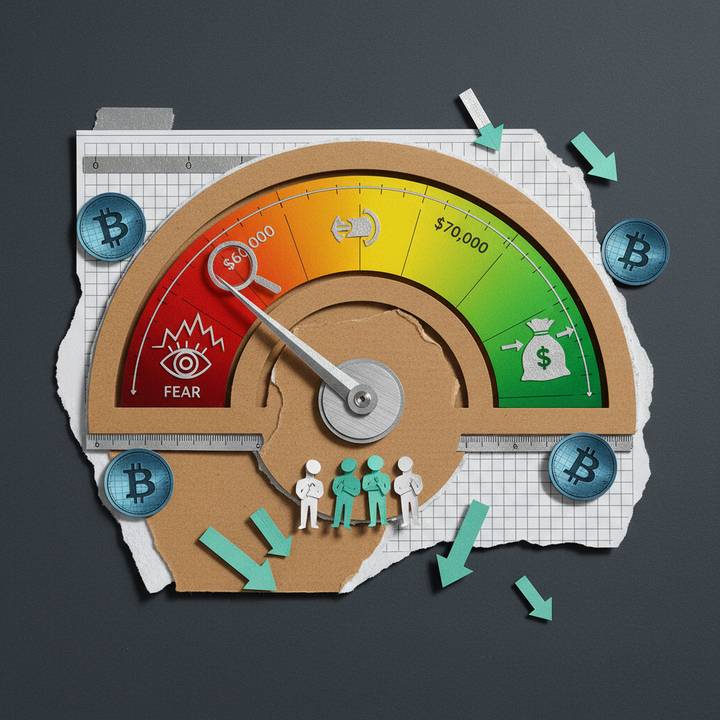
The Crypto Fear & Greed Index has been trapped in "Extreme Fear" territory for 34 consecutive days, currently reading 23 out of 100 — a historically anomalous streak that has only been matched during the most severe market dislocations in crypto history. According to Yahoo Finance, the index plunged to an all-time low of 5 on February 6, 2026, surpassing every prior crisis including the Terra/Luna implosion (6), the COVID-19 crash (8), and the FTX collapse (10). With Bitcoin at $70,831 and every major asset on Binance showing negative perpetual funding rates, the market is pricing in maximum pessimism — a setup that has historically preceded the most violent reversals in crypto market history.
Historical Extreme Fear Episodes and What Followed
Every prolonged extreme fear episode in crypto history has ultimately resolved with a powerful rally, though timing and magnitude have varied considerably. The March 2020 COVID crash drove the index to 8, and Bitcoin subsequently surged approximately +1,400% over the following 13 months — from roughly $5,000 to $64,000. The Terra/Luna ecosystem collapse in June 2022 pushed the index to 6, and while the recovery was less explosive, BTC still delivered approximately +158% within 12 months as the market bottomed and rebuilt. Even the FTX debacle, which registered a 10 on the index, ultimately catalyzed the institutional pivot toward regulated platforms that fueled the 2024–2025 bull cycle.
| Episode | Date | Index Low | Fear Duration | BTC Price at Low | 12-Month Return |
|---|---|---|---|---|---|
| COVID-19 Crash | Mar 2020 | 8 | ~21 days | ~$5,000 | +1,400% |
| Terra/Luna Collapse | Jun 2022 | 6 | ~45 days | ~$17,600 | +158% |
| FTX Collapse | Nov 2022 | 10 | ~38 days | ~$15,500 | +190% |
| Current (2026) | Feb–Mar 2026 | 5 (ATL) | 34+ days (ongoing) | $70,831 | TBD |
Contrarian Signals Across Derivatives and Regional Markets
Beyond the headline sentiment reading, structural market data is flashing contrarian signals across multiple dimensions. Binance perpetual funding rates are negative across every major asset — BTC at -0.0010%, ETH at -0.0004%, SOL at a deeply negative -0.0101%, and XRP at -0.0063% — according to Coinglass data. Negative funding means short sellers are paying longs to maintain positions, indicating overwhelming bearish positioning that creates mechanical fuel for a squeeze if sentiment shifts.
Regional market dynamics reinforce the contrarian thesis. Asian exchange premiums have turned negative, with BTC trading at a -0.64% discount and ETH at -0.60% below global spot prices — a reversal of the typical "Kimchi premium" that historically signals peak capitulation in Asian retail markets. When this discount last appeared at similar magnitudes during the 2022 bear market bottom, it preceded a multi-month recovery phase. Combined with total crypto market capitalization at $2.51 trillion and BTC dominance at 56.3%, the market structure suggests capital is consolidating into Bitcoin as a defensive position rather than fleeing crypto entirely.
The critical caveat: while the pattern recognition is compelling, the current episode differs from predecessors in one important respect — BTC's starting price of $70,831 is dramatically higher than prior fear bottoms ($5,000–$17,600). Past percentage returns were amplified by low base prices, meaning a repeat of +1,400% from current levels would imply a $1 million Bitcoin — an outcome few models support in a 12-month timeframe. A more measured expectation, extrapolating from the structural parallels rather than the exact percentages, would target the $90,000–$120,000 range within 6–12 months if the historical pattern holds.
TradFi-DeFi Convergence: 3 Key Investment Takeaways and Market Outlook for 2026
The convergence of traditional finance and decentralized infrastructure represents a structural shift that demands a revised investment framework. The Fear & Greed Index has lingered in extreme fear territory for over 34 consecutive days, according to CoinMarketCap, while simultaneously, S&P Dow Jones Indices has licensed its flagship benchmark to a DeFi protocol and the SEC has approved tokenized securities trading on Nasdaq. This paradox—institutional adoption accelerating amid peak retail pessimism—mirrors historical inflection points that preceded major market recoveries. After the COVID crash drove the index to 8 in March 2020, Bitcoin surged over 1,400% within 13 months. Following the Terra/Luna collapse that pushed sentiment to 6 in June 2022, BTC gained 158% over the subsequent year. For investors willing to look beyond near-term volatility, three critical themes emerging from this week's developments could define portfolio performance through 2026 and beyond.
1. RWA and Index-Linked Tokens: S&P License and SEC Approval Beneficiaries
Hyperliquid's HYPE token rallied over 10% to approximately $42.47 following the S&P 500 perpetual futures launch, per CoinMarketCap data—but the broader opportunity lies in the real-world asset tokenization wave. The SEC's approval of Nasdaq's tokenized securities framework, covering Russell 1000 stocks and S&P 500-tracking ETFs, signals that regulatory barriers for on-chain traditional assets are dissolving. The tokenized RWA market is projected to reach between $2 trillion (McKinsey) and $16 trillion (BCG) by 2030. Investors should monitor protocols positioned at this TradFi-DeFi intersection, particularly those with proven DeFi infrastructure capable of handling institutional-grade products.
2. FTX $2.2 Billion Distribution: Liquidity Catalyst or Sell-Pressure Amplifier?
The FTX Recovery Trust will distribute approximately $2.2 billion to creditors on March 31, 2026, according to PR Newswire, with Class 7 creditors reaching a cumulative 120% recovery. Unlike the Mt. Gox repayments of July 2024—which distributed roughly $9 billion in BTC and BCH, triggering temporary sell pressure before prices recovered within weeks—FTX distributions are denominated in USD via BitGo, Kraken, and Payoneer. Recipients choosing to re-enter crypto could inject meaningful buying pressure into an oversold market. Conversely, with the Fear & Greed Index at 23, some creditors may opt to remain in cash. The net direction of this $2.2 billion will serve as a critical sentiment barometer heading into Q2.
3. AI Agent Payment Infrastructure: The Tempo MPP Ecosystem
Stripe-backed Tempo's mainnet launch and Machine Payments Protocol introduce an entirely new demand driver for blockchain throughput. With partners including Anthropic, OpenAI, Visa, Mastercard, and Shopify, as reported by CoinDesk, MPP positions crypto rails as essential plumbing for autonomous AI commerce. Tempo raised $500 million at a $5 billion valuation in 2025, per Fortune. As AI agents increasingly require permissionless, programmable payment channels, projects building AI-crypto payment infrastructure stand to capture outsized adoption growth in the coming quarters.
Second-Half 2026 Outlook: The Institutional Acceleration Thesis
History suggests that prolonged extreme fear—especially when accompanied by structural adoption milestones—precedes significant recoveries. Every instance of the Fear & Greed Index sustaining below 25 for 30 or more consecutive days has been followed by a major rally within 6 to 12 months. The second half of 2026 will be shaped by two converging forces: accelerating TradFi integration into DeFi infrastructure, evidenced by S&P's licensing strategy and Nasdaq's tokenized securities, and regulatory clarity emerging from the SEC's recent approvals alongside the EU's MiCA framework reaching full enforcement. Whether these tailwinds overcome the macro headwinds keeping BTC at $70,831 and total market capitalization at $2.51 trillion will hinge on the pace of institutional capital deployment into on-chain products.
Disclaimer: This article is for informational purposes only and does not constitute investment advice. Cryptocurrency and derivatives markets carry substantial risk, including the potential loss of principal. Always conduct independent research and consult a qualified financial advisor before making investment decisions.
Frequently Asked Questions
How Do You Trade S&P 500 Futures on Hyperliquid?
S&P Dow Jones Indices officially licensed the S&P 500 to Trade[XYZ] for the first-ever perpetual futures contract on the Hyperliquid blockchain, with trading going live on March 18, 2026. Non-U.S. investors can access S&P 500 perpetual futures 24/7 by connecting a compatible wallet to the Hyperliquid decentralized exchange and navigating to the Trade[XYZ] market. The platform has already exceeded $100 billion in total volume since October 2025, with an annualized run rate surpassing $600 billion, according to S&P Global. Before trading, users must verify KYC requirements and regional eligibility restrictions, as U.S.-based participants are currently excluded. For a deeper look at how decentralized exchanges are reshaping derivatives access, see our Spoted Crypto market analysis hub.
What Is the HYPE Token Outlook and What Are the Key Investment Risks?
HYPE surged to an intraday high of $43 on March 18, 2026, and is currently trading in the $40.79–$42.47 range with a market capitalization of approximately $9.7 billion, placing it at rank #14 by market cap according to CoinMarketCap. The token remains roughly 30% below its all-time high of $59.3, presenting both a discount opportunity and a reflection of broader market weakness — the Crypto Fear & Greed Index hit an all-time low of 5 on February 6, 2026, per Yahoo Finance. Bullish catalysts include the landmark S&P 500 license and surging platform volume, but investors should weigh risks such as extreme fear sentiment that has persisted for 34+ consecutive days, competition from rival DEX platforms, and the inherent volatility of governance tokens tied to protocol adoption. For ongoing HYPE price tracking and technical analysis, check our Spoted Crypto coin analysis section.
What Is Real-World Asset (RWA) Tokenization and Why Does It Matter?
Real-world asset tokenization is the process of representing traditional financial instruments — stocks, bonds, real estate, and commodities — as blockchain-based tokens that can be traded, fractionalized, and settled on-chain around the clock. The SEC's approval of Nasdaq's proposal to trade tokenized securities, covering Russell 1000 stocks and S&P 500-tracking ETFs with identical tickers and CUSIPs, marks a watershed moment for institutional adoption, as reported by CoinDesk. RWA tokenization unlocks 24/7 global market access, fractional ownership for retail investors, and near-instant settlement — capabilities that analysts project could expand the tokenized asset market to as much as $16 trillion by 2030. Combined with developments like the Tempo blockchain's Machine Payments Protocol — backed by Stripe at a $5 billion valuation and partnering with Visa, Mastercard, and Revolut per Fortune — the infrastructure for seamless on-chain finance is rapidly maturing. Explore our Spoted Crypto sector deep dives for more on how RWA tokenization is reshaping portfolio construction.
How Will the $2.2 Billion FTX Creditor Distribution Affect the Crypto Market?
The FTX Recovery Trust will distribute approximately $2.2 billion to creditors on March 31, 2026, in its fourth payout round, with Class 5B U.S. customers and Class 6 creditors reaching 100% recovery and Class 7 achieving 120% cumulative recovery, according to a PR Newswire filing. Because the distribution is denominated in U.S. dollars rather than crypto assets, it does not create direct selling pressure on Bitcoin or altcoin markets. However, historical precedent suggests some capital recycling — the Mt. Gox creditor distribution triggered a brief sell-off followed by a recovery pattern as creditors reinvested proceeds. With extreme fear persisting for over 34 consecutive days and the Fear & Greed Index recently printing a record low of 5, any re-entry of FTX creditor capital could serve as a modest demand catalyst during a period of suppressed sentiment. Stay updated on how creditor distributions impact price action through Spoted Crypto's trending coverage.
Data Sources
- S&P Global Press Release — S&P 500 license to Trade[XYZ] on Hyperliquid (March 18, 2026)
- CoinMarketCap — HYPE price, volume, and market cap data
- CoinDesk — SEC approval of Nasdaq tokenized securities trading
- Fortune — Tempo blockchain mainnet launch and Machine Payments Protocol
- PR Newswire — FTX Recovery Trust $2.2B fourth distribution announcement
- Yahoo Finance — Crypto Fear & Greed Index all-time low data
This article is for informational purposes only and does not constitute investment advice. All investment decisions should be made based on your own judgment and responsibility.
Related Articles
- Mastercard Acquires Stablecoin Firm BVNK for $1.8B: The Card Payment War Moves to Crypto
- AI Tokens Surge 20% After Nvidia GTC, $1.8T Asset Manager Files Meme Coin ETF, Bithumb Faces $27M Fine – March 17 Trending
- Nestree Ecosystem Breakdown: EGG Token, Vote.Token & Bridge — Real Data Analysis (March 2026)
- PEPE Surges 20% in 24 Hours as Trading Volume Tops $600M — 3 Catalysts Behind the Memecoin Rally
- DKA Surges 28% as TRUMP Tops Upbit Volume — Anomalous Spikes in Extreme Fear Market