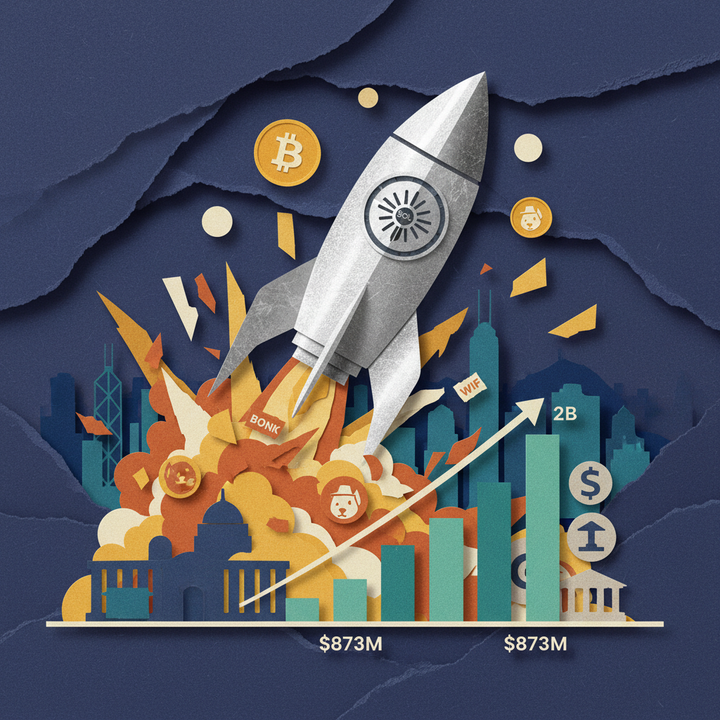
Solana Ends Memecoin Era — Targets $16T RWA Market as Binance Shifts $1B SAFU to Bitcoin
Solana abandons memecoin strategy to pursue tokenization, payments, and AI infrastructure, targeting a $16 trillion RWA market. Hong Kong conference reveals institutional investment roadmap as Binance converts $1B SAFU fund to Bitcoin, signaling crypto's institutionalization era.
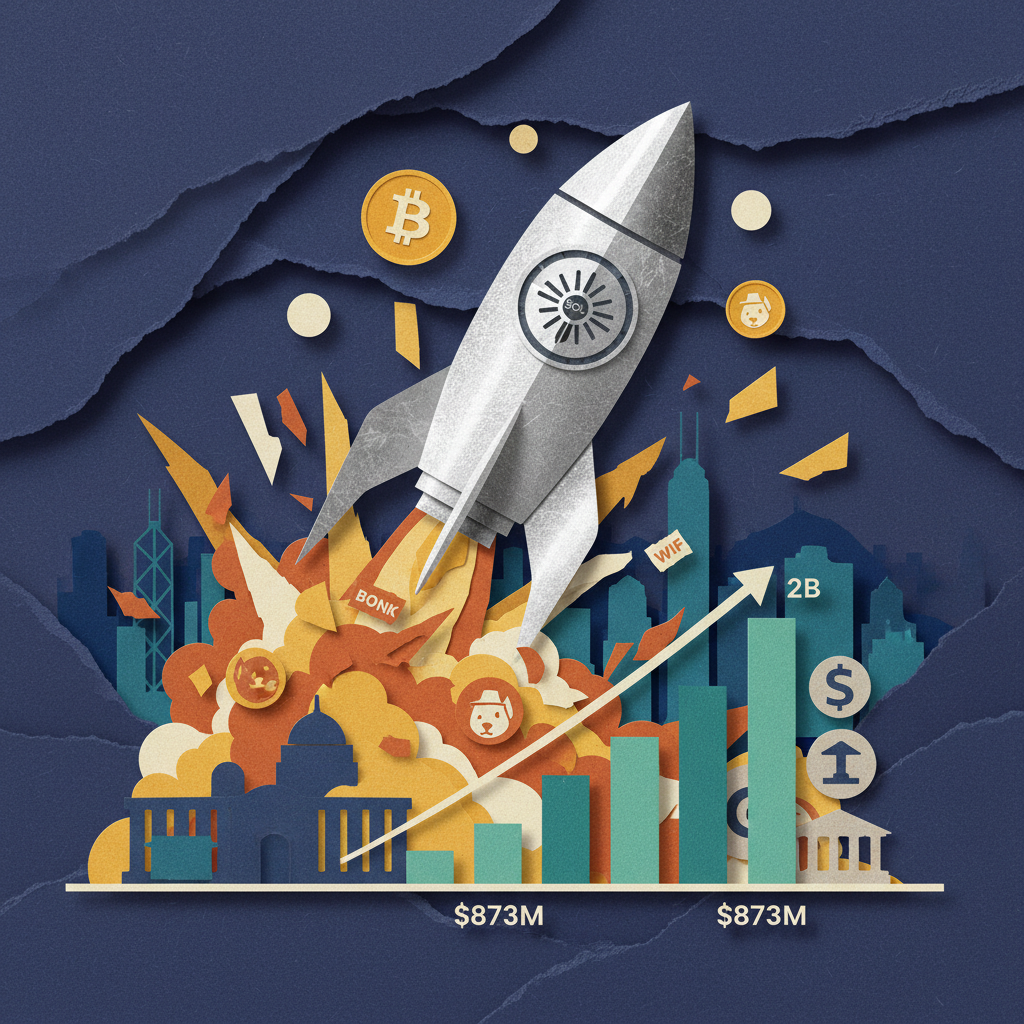
Solana has officially abandoned its memecoin-driven growth strategy, pivoting toward institutional investors with a focus on tokenization, payments, and AI infrastructure as it targets the $16 trillion real-world asset (RWA) market. Simultaneously, Binance completed a $1 billion conversion of its SAFU protection fund from stablecoins to Bitcoin, signaling that 2026's defining crypto narrative is institutionalization—not speculation.
The February 11-12, 2026 'Accelerate APAC' conference in Hong Kong sent shockwaves through the crypto industry. Solana, which dominated Ethereum in memecoin trading volume for the past two years, unveiled a new rallying cry: "Less memecoin mania, more internet capital markets." The conference attracted traditional finance heavyweights including Mirae Asset, ChinaAMC, CME Group, Fireblocks, and Cumberland—all discussing SOL ETFs, tokenized securities, stablecoin payment rails, and regulatory-compliant products.
On the same day, Binance announced completion of its SAFU (Secure Asset Fund for Users) conversion, moving all $1 billion from stablecoins to Bitcoin. The exchange purchased 15,000 BTC over 30 days at an average price of $70,403, marking the fund's largest strategic shift since its 2018 launch. This move reflects Binance's recognition of stablecoin issuer risks and positions Bitcoin as its core reserve asset.
While the strategies differ, both events share a common thread: the transition from short-term speculation to long-term institutional investment. Solana is shifting from memecoin trading to institutional RWA tokenization, while Binance is moving from volatility-hedging stablecoins to Bitcoin as a long-term store of value. This analysis examines Solana's strategic transformation, Binance's SAFU fund conversion, and what 2026's institutionalization era means for investors.
Key Takeaways
- Solana's Strategic Pivot: Hong Kong conference declaration "End memecoin frenzy, build internet capital markets" launches institutional investment strategy focused on SOL ETFs, RWA tokenization, and stablecoin payments
- RWA Market Offensive: Solana's RWA market at $873M (≈$1.2B) growing 10% monthly, challenging Ethereum's 55% share in projected $16T global RWA market by 2030
- Technical Upgrade: 2026 Alpenglow consensus algorithm launch reduces finality time from 12 seconds to 150ms (80x improvement), evolving into institutional trading infrastructure
- Binance SAFU Conversion: $1 billion (15,000 BTC) fully converted from stablecoins to Bitcoin at average price $70,403 over 30 days
- Institutionalization Acceleration: Standard Chartered rates Solana "memecoin→micropayments" transformation, setting $2,000 target for 2030
- Competition Dynamics: Ethereum RWA $11B vs Solana $873M, but Solana's 200% six-month growth rate drives catch-up momentum in emerging multichain era
- Investment Implications: At memecoin speculation→institutional infrastructure inflection point, L1 blockchains with speed and cost efficiency plus BTC long-term holding strategies gain prominence
Why Did Solana Abandon Memecoins? — Institutional Investment Era Strategy
From 2023 to 2025, Solana was the memecoin trading epicenter. Tokens like BONK, WIF, and POPCAT generated explosive trading volumes, with Solana DEX volumes occasionally surpassing Ethereum. However, the memecoin boom proved double-edged. While trading volumes soared, institutional investors avoided Solana due to its "casino" image, and regulators raised concerns. When memecoin volumes plummeted in late 2025 and capital migrated to SOL-stablecoin pairs, the Solana Foundation made its strategic pivot.
Solana Foundation President Lily Liu stated at Consensus Hong Kong 2026: "Blockchain has always been technology for finance, and it always will be. Financialization and open capital markets are this industry's core value proposition." She outlined a vision for "tokenizing all global assets on-chain, creating a unified global capital market seamlessly connecting everyday payments to high-frequency trading."
Concrete strategies announced at the conference include:
- SOL ETF Expansion: U.S.-approved Bitwise BSOL (staking ETF) and 21Shares TSOL have attracted over $750M in assets, with staking ETFs projected as the primary institutional capital channel in 2026. Already, 12.5M SOL has been staked by treasury firms.
- RWA Tokenization: Ondo Global Markets expanded to Solana, enabling on-chain trading of 200+ U.S. stocks and ETFs, while R3's Corda Protocol launched Solana-native, targeting real-world asset-backed yield vaults in H1 2026.
- Stablecoin Payments: Visa adopted Solana as a stablecoin settlement rail, and BlackRock's BUIDL fund expanded to Solana. Solana co-founder Anatoly Yakovenko predicts $1 trillion stablecoin market cap by 2026 (JPMorgan estimates $500-600B), with Solana network stablecoin supply already exceeding $17B.
- AI Infrastructure: Alibaba Cloud and crypto-native builders discussed blockchain settlement layer and AI application convergence, with Solana's speed and scalability rated optimal for AI-era financial infrastructure.
Standard Chartered's report evaluates Solana as evolving "from memecoins to micropayments," setting a $250 year-end 2026 target and $2,000 2030 target. These projections reflect valuation as institutional payment and tokenization infrastructure—not memecoin speculation.
Solana vs Ethereum — The RWA Tokenization Market Battle
The RWA (Real World Asset) tokenization market reached $17.88 billion in March 2025 (surging from $10B in 2024), with 76% of professional investors planning tokenized asset investments by 2026. Ethereum dominates this market overwhelmingly. As of November 2025, Ethereum hosts 400+ tokenized assets worth over $11 billion, commanding 55% market share. Stablecoin market cap jumped from $115B to $171B.
Solana's RWA market stood at $873.3M in December 2025—just 8% of Ethereum's size. However, growth rates differ dramatically. Solana's tokenized equity assets grew 200% over six months versus Ethereum's 6.7%. Maintaining 10% monthly growth, Galaxy Research projects Solana's internet capital markets will expand from $750M to $2B in 2026.
The differentiation between chains is clear:
| Metric | Ethereum | Solana |
|---|---|---|
| Market Share | 55% ($11B) | 5% ($873M) |
| 6-Month Growth | 6.7% | 200% |
| Strengths | Institutional trust, regulatory recognition, security/decentralization, 400+ assets | Speed, scalability, cost efficiency, HFT optimization |
| TPS | ~15 (L2s: thousands) | 600,000 (Firedancer client) |
| Finality | ~13 minutes (PoS) | 12 seconds → 150ms (Alpenglow 2026) |
| Fees | $1-50 (congestion) | <$0.01 (maintained during liquidations) |
| Target Market | Institutional bonds/equity tokenization, long-term hold assets | High-frequency trading, payments, micropayments |
During October 2025 liquidation events, Solana processed 100,000 TPS while maintaining sub-400ms block times and sub-$0.01 fees. This demonstrated reliability as institutional trading infrastructure. The 2026-launching Alpenglow consensus algorithm reduces finality from 12 seconds to 150ms (80x improvement), targeting high-frequency trading (HFT) market entry.
Venture capital firm Dragonfly predicts "Ethereum and Solana will share the growing tokenized asset market" in a multichain era, not winner-take-all. Professional investors plan 5-8% portfolio allocation to tokenized assets by 2026, with Ethereum optimized for long-term institutional holdings and Solana for high-frequency trading and payments.
Why Did Binance Convert SAFU to Bitcoin? — Stablecoin Risk and BTC Reserve Asset Strategy
Binance's February 12 completion of SAFU fund Bitcoin conversion represents more than simple asset reallocation. It symbolizes the crypto industry recognizing "stablecoin issuer risk" and accepting Bitcoin as the ultimate reserve asset.
The SAFU fund, launched in 2018, allocates 10% of Binance trading fees to compensate users for hacking or losses. Historically held mostly in stablecoins like USDC and BUSD to minimize price volatility, Binance experienced 2022-2023 BUSD regulatory issues, Circle's (USDC issuer) SVB crisis exposure, and ongoing Tether transparency controversies. This prompted recognition that "if stablecoin issuers collapse or face regulatory freezes, SAFU funds become worthless."
Binance's official announcement cited three reasons:
- Reduce Stablecoin Issuer Risk: Transition to decentralized asset independent of third-party issuers
- Secure Long-term Reserve Asset: Bitcoin rated as the most established and secure digital asset for protecting users during extreme market events
- Enhance Transparency: Simplify reserve management and improve transparency through Bitcoin on-chain traceability
Binance purchased 15,000 BTC over 30 days following the January 30 conversion announcement. Average purchase price was $70,403, with the final 4,545 BTC bought during Bitcoin's drop to $67,000—praised as "buying the dip" timing. Total value at completion was approximately $1.005 billion.
Binance also announced a safeguard: "If fund value falls below $800M, we will replenish it." This demonstrates commitment to maintaining fund functionality even if Bitcoin drops 20%+ from average purchase price (approximately $56,000 level).
This conversion sends two industry signals. First, even major exchanges seriously recognize stablecoin issuer risk. Second, Bitcoin is transitioning from "volatile asset" to "long-term reserve asset." Aligning with institutions like MicroStrategy, Tesla, and BlackRock holding Bitcoin as treasury assets, Binance's conversion means "crypto-native institutions" now recognize Bitcoin as the ultimate safe asset.
For deeper insights into crypto institutional trends and real-time market analysis, explore our comprehensive coverage at Spoted Crypto.
2026 Crypto Institutionalization Era — From Speculation to Infrastructure
Solana's memecoin→institutionalization pivot and Binance's SAFU BTC conversion encapsulate 2026's core crypto market trend: the great transition from speculation to infrastructure.
2020-2023 marked the era of DeFi summer, NFT boom, and memecoin frenzy. Trading volumes and users exploded, but institutional investors stayed on the sidelines due to regulatory uncertainty, volatility, and "casino" perceptions. 2024-2026 differs fundamentally. Bitcoin spot ETF approval (January 2024), Ethereum ETF (July 2024), Solana ETF (2025), and stablecoin regulatory clarity (Hong Kong licensing, EU MiCA, U.S. clarity bills) opened institutional capital inflow channels.
Institutional investment expansion indicators:
- Solana Institutional Participation: Expected to double year-over-year by 2026, 100%+ annual growth rate
- RWA Market: $17.88B (2025) → $16T projected by 2030 (BCG), 76% of professional investors planning 2026 investments
- Stablecoins: Solana co-founder predicts $1T market cap in 2026, Ethereum stablecoins surpassed $171B
- ETF Assets: Solana ETFs alone hold $750M+ AUM, 12.5M SOL staked by treasury firms
Institutionalization demands simultaneous speed, cost efficiency, and reliability. Ethereum leads in security and trust but faces speed and cost limitations (L2 solutions compensate). Solana achieved competitive advantage in high-frequency trading and payments with 600,000 TPS, sub-$0.01 fees, and 2026's 150ms finality. This explains Western Union's selection of Solana for stablecoin remittance platform serving 150 million customers (H1 2026 launch).
Simultaneously, Bitcoin evolves from "digital gold" to "institutional reserve asset." MicroStrategy accumulated Bitcoin as treasury asset since 2020, while BlackRock's IBIT ETF recorded $30B+ AUM within one year of launch. Binance's SAFU fund BTC conversion signifies even "crypto-native institutions" recognize Bitcoin as the ultimate safe asset.
Understanding these institutional adoption patterns is crucial for navigating the evolving crypto landscape in 2026 and beyond.
Outlook and Scenario Analysis — SOL $250 vs $150, Institutionalization Success Determines Outcome
Whether Solana's institutionalization strategy succeeds will be determined in H2 2026 to early 2027. Two scenarios emerge.
Bullish Scenario: SOL $250-300 (End 2026)
Triggers:
- Successful Alpenglow consensus algorithm launch achieving 150ms finality, entering HFT market
- Western Union remittance platform launch proving real-world use case, surging stablecoin volumes
- R3 Corda Protocol RWA vault launch expanding institutional yield products
- SOL staking ETF assets breaking $1B, accelerating institutional capital inflows
- RWA market surpassing $2B, achieving 10% Ethereum market share
Price Path: Current $150 level → Q2 $180 (Alpenglow launch) → Q3 $220 (Western Union launch) → Q4 $250-300 (institutional capital influx)
Bearish Scenario: SOL $100-120 (End 2026)
Risks:
- Alpenglow launch delays or technical failures, network outage recurrence
- Institutional investors continue preferring Ethereum, failure to shed Solana "casino" image
- Regulatory tightening constraining DEX/memecoin trading, reducing Solana network activity
- Competing L1s (Sui, Aptos, Avalanche) launching institutional products, fragmenting market
- Macro deterioration (rate hike resumption, recession) weakening risk assets broadly
Price Path: Current $150 → Q2 $130 (expectation disappointment) → Q3 $110 (network issues) → Q4 $100-120 (institutional capital delay)
Standard Chartered's $250 year-end 2026 target aligns with the bullish scenario, while the 2030 $2,000 target assumes 50%+ annualized growth over five years post-institutionalization success. Critical variables are Alpenglow launch success and market response to real-world use cases like Western Union and R3.
Investor Focus Points — Memecoin Speculation Ends, Infrastructure Investment Begins
- Solana Alpenglow Launch Date: Expected Q2-Q3 2026, anticipate increased price volatility around launch. Success enables $200+ breakthrough; failure risks $120 support test.
- RWA TVL Monitoring: Current $873M breaking $2B signals institutional investment acceleration. Track Solana RWA TVL essential on DefiLlama.
- SOL Staking ETF Asset Trends: Current $750M breaking $1B accelerates institutional capital inflows. Weekly Bitwise BSOL AUM checks recommended.
- Western Union Platform Launch: Scheduled H1 2026, real-world use case for 150M users could catalyze price.
- Binance SAFU BTC Holdings: Current 15,000 BTC, additional purchases signal Bitcoin long-term bullishness. On-chain tracking necessary.
- Ethereum vs Solana RWA Share: Current 55% vs 5%, Solana reaching 10% enables $300+ target potential. Track monthly share changes.
- Risk Factors: Solana's network outage history (multiple 2022-2023 incidents), Alpenglow post-launch stability verification period needed. Initial three months warrant reduced exposure.
Risk Warning: Cryptocurrency investment is a high-risk asset class. Solana has a history of network outages, and institutionalization strategy failure could reduce memecoin trading volumes, shrinking network activity. Bitcoin exhibits high volatility, and Binance's SAFU fund BTC conversion does not guarantee short-term price appreciation. Investment decisions should be made carefully based on your risk tolerance and portfolio strategy. This article is for informational purposes only, not investment advice.
To track Solana's institutionalization strategy and RWA market trends in real-time, with expert analysis and on-chain data-driven trading signals, explore Spoted Crypto Premium Analysis for deeper insights into the evolving crypto institutional landscape.
Frequently Asked Questions
Why did Solana abandon its memecoin strategy?
While memecoin trading volumes boosted short-term network activity, institutional investors avoided Solana due to its "casino" image and regulatory risks ran high. When memecoin volumes plummeted in late 2025 and capital shifted to SOL-stablecoin pairs, the Solana Foundation pivoted toward institutional investor attraction through RWA tokenization, payments, and ETF-focused strategy. President Lily Liu declared blockchain as "finance technology" and outlined a vision for building internet capital markets.
Can Solana defeat Ethereum in the RWA market?
Short-term, unlikely. Ethereum holds 55% RWA market share ($11B) with 400+ tokenized assets and overwhelming institutional trust. However, Solana recorded 200% six-month growth (versus Ethereum's 6.7%) in rapid catch-up mode. If 2026 Alpenglow launch achieves 150ms finality, differentiation becomes possible in high-frequency trading and payments. Industry experts predict a "multichain era, not winner-take-all." Solana achieving 10% RWA market share could enable $250+ targets, analysts suggest.
Why did Binance convert SAFU from stablecoins to Bitcoin?
Binance cited three reasons: (1) reducing stablecoin issuer bankruptcy/regulatory freeze risks, (2) rating Bitcoin as a long-term reserve asset, (3) enhancing transparency through on-chain traceability. After experiencing 2022-2023 BUSD regulatory issues and Circle's SVB crisis exposure, Binance recognized "third-party issuer dependency" risk and determined Bitcoin as the safest digital asset. The exchange purchased 15,000 BTC ($1B+) at average $70,403 over 30 days.
When will Solana's Alpenglow upgrade launch?
Scheduled for Q2-Q3 2026. Alpenglow reduces block finality time from current 12 seconds to 150ms (80x improvement), targeting high-frequency trading (HFT) market entry. Success positions Solana to deliver traditional finance-level speeds as institutional trading infrastructure. However, given Solana's network outage history (multiple 2022-2023 incidents), a conservative approach is recommended during the initial three-month stability verification period post-launch.
What is the 2026 Solana price outlook?
Standard Chartered set a $250 year-end 2026 target and $2,000 2030 target. In the bullish scenario, successful Alpenglow launch, Western Union remittance platform launch, and RWA TVL breaking $2B could reach $250-300. In the bearish scenario, technical issues, institutional investment delays, and competing L1 emergence could drop to $100-120. Critical variables are Alpenglow stability, Western Union real-world performance, and SOL ETF asset inflow velocity. Investors must continuously monitor RWA TVL, staking ETF AUM, and network stability.
How do institutional investors rate Solana?
Solana institutional participation is expected to double year-over-year by 2026. Traditional finance institutions like Mirae Asset, ChinaAMC, and CME Group attended the Hong Kong conference discussing SOL ETFs and RWA tokenization, while Western Union selected Solana for its 150 million customer platform. Standard Chartered positively evaluated the "memecoin→micropayments" transformation, with Galaxy Research projecting internet capital markets reaching $2B in 2026. However, network outage history and "casino" image remain cited risk factors.
Sources
- Solana leans into tokenization and payments at Hong Kong's Accelerate APAC event, CoinDesk
- Solana president Lily Liu's bold vision for Solana, CoinDesk
- Binance completes $1 billion shift of stablecoin reserves into bitcoin (BTC), CoinDesk
- Standard Chartered cuts Solana 2026 target to $250, sees shift from 'memecoins to micropayments', The Block
- Solana's Emerging Dominance in Institutional-Grade RWA Tokenization: A 2026 Growth Catalyst, AIInvest
- Binance wraps up $1B SAFU Bitcoin transition in 30 days, Crypto.news