The U.S. Treasury just turned a broad legal prohibition into named targets — freezing the platforms that move the bulk of Iran's crypto. For traders and exchanges, the practical question is no longer whether Iranian exchanges are sanctioned, but what touching them now costs.
What OFAC Actually Did on June 2
On June 2, 2026, OFAC designated four of Iran's largest crypto exchanges — Nobitex, Wallex, Bitpin, and Ramzinex — adding them to the SDN list under counterterrorism authority E.O. 13224 and/or the Iran financial-sector authority E.O. 13902 . The move converts a jurisdiction-wide ban into specific, globally screenable entries that any compliance system can flag.
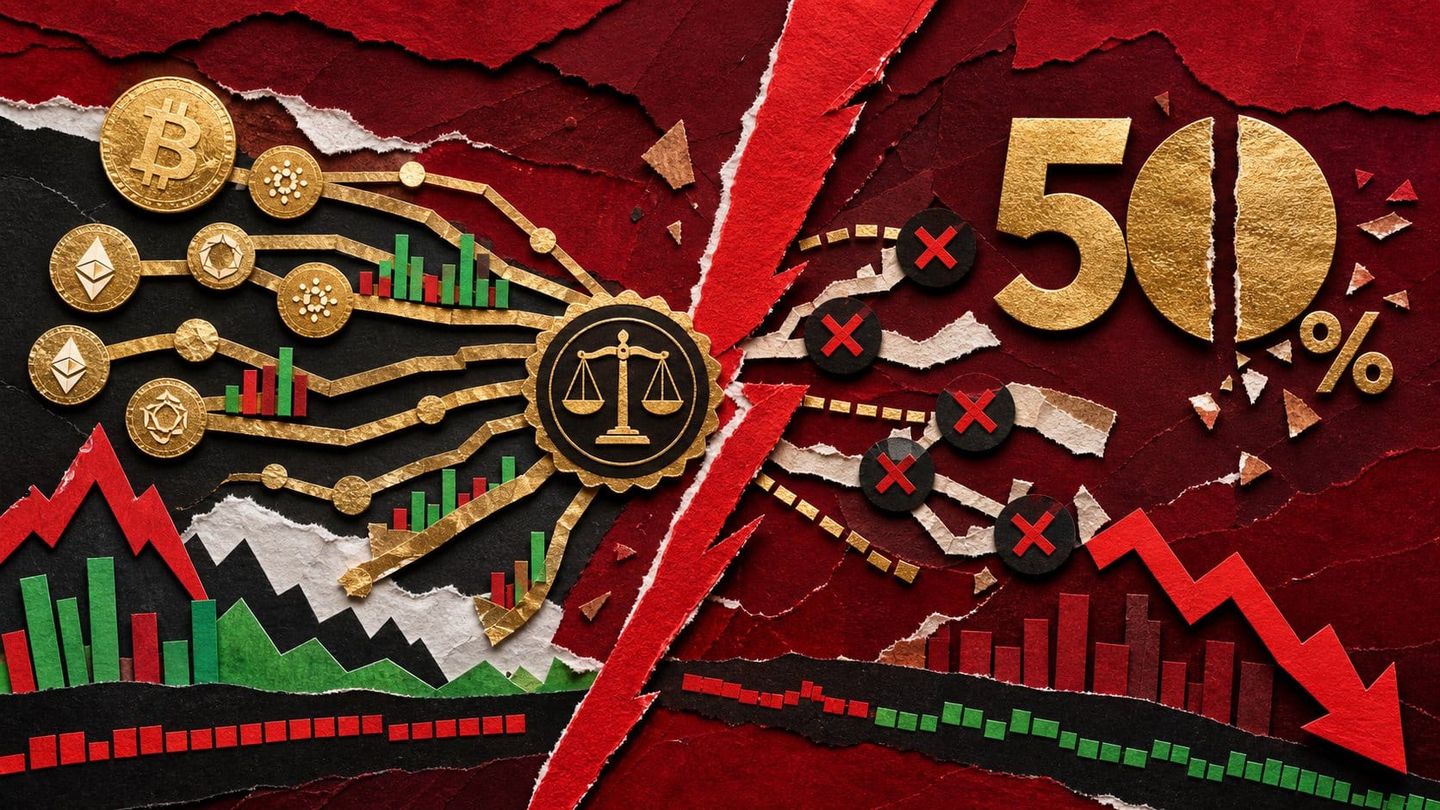
Nobitex was the centerpiece. Treasury says it processed more than 50% of all Iranian digital asset inflows in 2025, accusing it of facilitating IRGC-linked transactions and sanctions evasion . The other three platforms are framed as major parts of the same network.
| Exchange | Share of 2025 Iranian inflows | Treasury note |
|---|---|---|
| Nobitex | >50% | Largest exchange; IRGC-linked activity, rial support via stablecoins |
| Wallex | 12% | Second-largest by volume |
| Bitpin | 10% | Processed IRGC-linked transactions |
| Ramzinex | $2.45B+ lifetime | Tehran-based, founded 2018; used for sanctions evasion |
Source: Chainalysis; CoinDesk [1][2]
OFAC also named four Nobitex executives individually, including chairman and co-founder Amir Hossein Rad and current CEO Seyed Ali Khoee . The blocking extends to any entity 50% or more owned by them.
The scale of the broader campaign is the backdrop. Treasury Secretary Scott Bessent said his department had seized roughly $1 billion in crypto from Iranian exchanges and wallets since the U.S.-Israel conflict began . According to TRM Labs, the June 2 designations are the third distinct enforcement layer aimed at Iran's domestic exchanges in five months .
Why This Round of Sanctions Hits Differently
What separates this action is reach: it threatens entities far outside Iran. OFAC's newly published FAQ 1257 explicitly warns non-U.S. persons and foreign financial institutions that significant transactions with the four named exchanges could expose them to secondary sanctions — including their own designation for material support, or correspondent and payable-through account restrictions . In plain terms, a foreign bank that keeps processing flows for Nobitex risks losing access to the U.S. financial system .
The core allegation is a stablecoin pipeline, not vague "links." Elliptic reported that by January 2026 the Central Bank of Iran had acquired at least $507 million in USDT, most of it routed through Nobitex and sold for rials to prop up the collapsing currency . That reframes a domestic exchange as an arm of state monetary policy.
On-chain forensics also extend the exposure well past Iran. Elliptic traced Nobitex connections to a web of sanctioned and illicit counterparties, making this a cross-jurisdictional risk rather than a single-country one :
- The sanctioned Russian exchange Garantex
- Addresses tied to Hamas
- DPRK-affiliated hacking groups
- Syrian-linked actors
For any platform with indirect counterparty exposure, that chain matters more than the headline. A wallet two hops from Nobitex can now sit two hops from multiple separate sanctions regimes at once.
The capital-flight angle gives the timing weight. Elliptic's analysis found Nobitex outflows surged within minutes of the first U.S.–Israeli strikes and continued straight through Iran's internet blackouts — behavior consistent with regime-linked actors using the exchange as a real-time exit ramp . That pattern is precisely what Treasury says it is targeting.
"We will continue to follow the money in support of Economic Fury," — Scott Bessent, Treasury Secretary, U.S. Department of the Treasury (source: U.S. Treasury).
The combined message is that OFAC is treating these exchanges as financial infrastructure, not isolated apps — and putting the global banking system on notice that touching them carries downstream cost .
What Traders and Exchanges Need to Watch
The practical takeaway for traders is that secondary sanctions exposure is now the live risk. Any non-U.S. exchange still processing deposits or withdrawals for Nobitex, Wallex, Bitpin, or Ramzinex faces potential SDN designation or a cutoff from U.S. correspondent banking . FAQ 1257 makes that downstream cost explicit, so expect rapid de-risking from any platform with even indirect rails to these four entities.
Watch the stablecoin layer closely. Tether (USDT) sits at the center of this action — both the Central Bank pipeline of at least $507 million and the roughly $344 million in frozen wallets were USDT-denominated . Any compliance response from Tether or Tron-ecosystem platforms — freezes, blocklisting, or new screening — would ripple across legitimate USDT flows in the region.
Scale matters when judging knock-on effects. Chainalysis estimates IRGC-associated addresses accounted for over 50 percent of value received by Iran's crypto ecosystem in Q4 2025, with annual ecosystem volume near $7.78 billion . A crackdown of this size compresses legitimate Iranian retail access alongside the targeted illicit flows — a real cost to ordinary users that the designations do not separately address.
Here is what to monitor in the coming weeks:
- Tether/Tron response: wallet freezes or blocklisting tied to the named exchanges.
- Regional KYC tightening: platforms with Gulf and Central Asian counterparties pre-empting secondary exposure.
- P2P and nested VASP pressure: the channels most likely to absorb displaced Iranian volume.
- Banking cutoffs: any foreign financial institution publicly losing U.S. correspondent access.
FinCEN's May 11, 2026 IRGC alert already flagged nested VASPs, unregistered P2P exchangers, and stablecoin flows from petroleum, shipping, and trading firms as red-flag areas . Broader AML tightening for exposed platforms is the likely next step.
"These designations represent the third of three distinct enforcement layers imposed on Iran's domestic crypto exchanges within five months," — analysis from TRM Labs.
The concrete takeaway: treat any exposure to these four exchanges — direct or nested — as a compliance liability now, not a future one. Audit counterparty rails, watch how the USDT ecosystem reacts, and assume tighter screening is coming for anyone touching Iran-adjacent flows.
Frequently asked questions
What is Nobitex and why is it significant?
Nobitex is Iran's largest cryptocurrency exchange and the centerpiece of OFAC's June 2 action. Treasury says it processed more than 50% of all Iranian digital asset inflows in 2025 . Officials allege it facilitated IRGC-linked transactions, ransomware payments, and channeled hundreds of millions in stablecoins to the Central Bank of Iran to prop up the rial . That scale and alleged regime role made it the natural target.
What are secondary sanctions and why do they matter to non-U.S. exchanges?
Secondary sanctions extend U.S. enforcement reach to entities outside U.S. jurisdiction. Under OFAC FAQ 1257, non-U.S. persons and foreign financial institutions that conduct significant transactions with the four named exchanges now risk being designated themselves, or facing correspondent and payable-through account restrictions . In practice, a foreign exchange continuing to process these flows risks being cut off from the U.S. financial system — a powerful compliance deterrent even with no direct U.S. footprint .
Could this affect Tether or other stablecoin issuers?
Tether is not itself designated, but USDT sits at the center of the pipeline OFAC targeted. Elliptic reported the Central Bank of Iran had acquired at least $507 million in USDT by January 2026, most routed through Nobitex and sold for rials until mid-2025 . The action raises compliance pressure on USDT on-chain flows tied to these entities, and Tether has previously frozen wallets in response to OFAC orders — making proactive freezing of flagged addresses a realistic next step.
What happened to the $344 million in frozen USDT wallets?
In a related April 2026 action, OFAC froze two Central Bank of Iran-associated wallets holding roughly $344.2 million in USDT . TRM Labs found those wallets had received roughly $370 million across nearly 1,000 transactions since March 2021 . The freeze blocks the assets within U.S. jurisdiction and signaled the wallet-level forensic approach that preceded the June exchange designations.
Is this the first time OFAC has sanctioned Iranian crypto exchanges?
No. TRM Labs characterizes the June 2 designations as the third of three distinct enforcement layers imposed on Iran's domestic crypto exchanges within five months . OFAC FAQ 1250, released May 1, 2026, had already established that Iranian digital asset exchanges qualify as Iranian financial institutions blocked under E.O. 13599 and the ITSR even without individual listing . June 2 converted that broad prohibition into named, screenable SDN entries.