When Bitcoin trades cheaper on regional exchanges than on global platforms, the market is broadcasting a distress signal few investors can afford to ignore. With the Fear and Greed Index plunging to 10—deep into Extreme Fear territory—and cross-exchange pricing dislocations widening across major assets, March 2026 is shaping up as a critical inflection point for crypto sentiment worldwide.
What Is the Kimchi Premium Reversal? Cross-Exchange Pricing Breakdown
Quick Answer: The Kimchi premium—a key measure of regional crypto pricing dislocation—has flipped negative, with Bitcoin at -0.34% and Ethereum at -0.47% on Korean exchanges versus Binance's global spot price. Paired with a Fear & Greed Index of 10/100 and total market cap at $2.50 trillion, this reverse premium signals extreme capitulation that has historically preceded major market turning points.
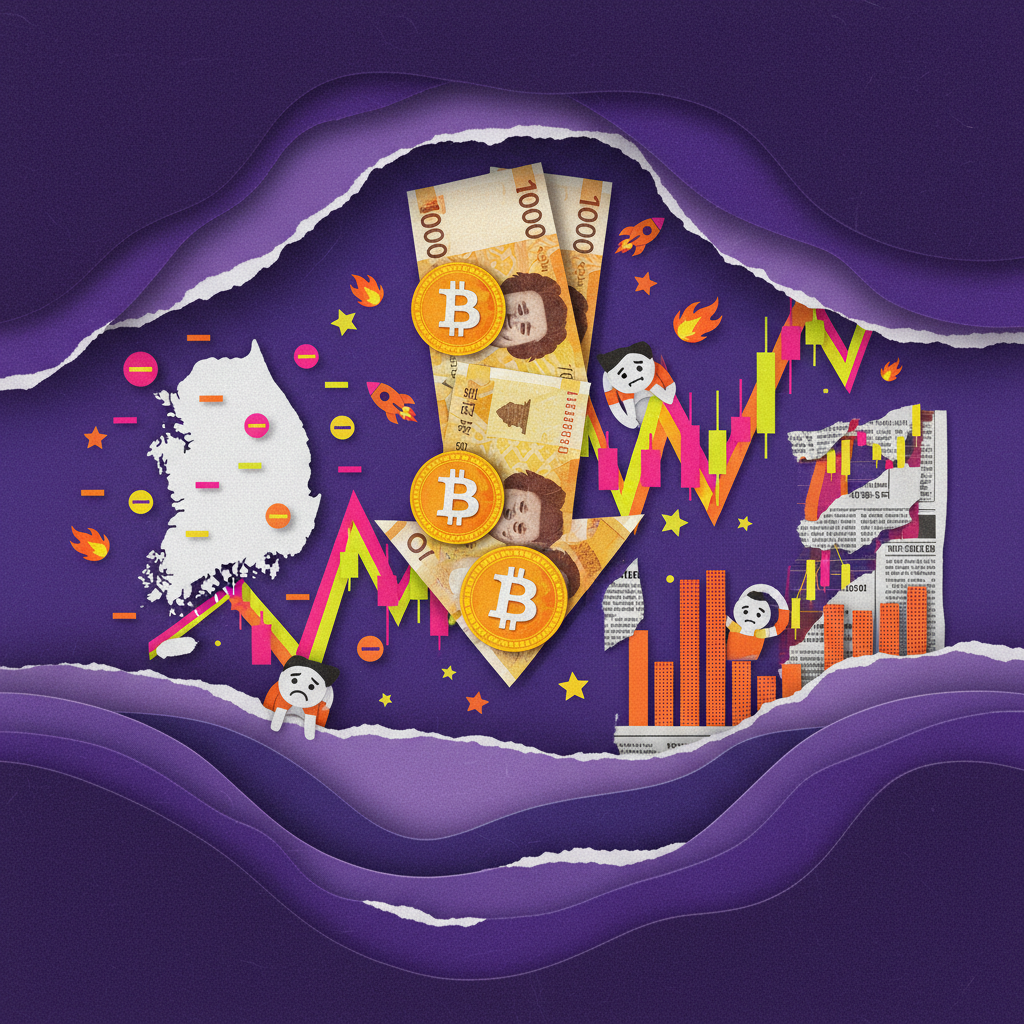
The Kimchi premium is the percentage difference between cryptocurrency prices on South Korean exchanges and international platforms like Binance, widely regarded as one of the most reliable regional sentiment indicators in crypto markets. As of March 26, 2026, Bitcoin trades at a -0.34% discount on Korean platforms compared to Binance's spot price of $70,770, while Ethereum shows a steeper -0.47% gap against the global benchmark of $2,150, according to CoinGlass cross-exchange tracking data. This reversal—where regional prices fall below international rates—is historically rare and has occurred only during periods of intense capitulation, including June 2022 during the Terra-Luna collapse and November 2022 following the FTX implosion. With the total crypto market capitalization sitting at $2.50 trillion and BTC dominance elevated at 56.5% per CoinMarketCap, the negative premium adds a critical bearish data point to an already anxious market environment. For global traders and arbitrageurs, the reverse premium functions as both a sentiment barometer and a potential contrarian entry signal worth tracking in real time.
Kimchi Premium vs. Reverse Premium: A 30-Second Explainer
Under normal market conditions—particularly during bull cycles—South Korean exchanges command a premium of 3–8% over global spot prices. This markup emerges from strict capital controls, limited fiat off-ramp infrastructure, and highly concentrated retail participation. The so-called Kimchi premium has served as a reliable gauge of Asian retail euphoria since the 2017 bull run, when premiums briefly exceeded 50%. A reverse premium, however, tells the opposite story: domestic sellers are so eager to exit positions that they accept prices below international market rates, effectively paying a penalty to liquidate holdings. The last major reverse premium episode occurred in June 2022, when BTC briefly traded at -1.2% on Korean platforms during the Terra-Luna contagion. The current -0.34% BTC discount is shallower but notable for persisting across multiple consecutive trading sessions rather than appearing as a momentary flash. For deeper context on how Bitcoin price cycles interact with regional pricing dislocations, see our Bitcoin price analysis.
Cross-Exchange Pricing Snapshot — March 26, 2026
| Asset | Binance Spot Price | 24h Change | Regional Premium | Funding Rate (Binance Perps) |
|---|---|---|---|---|
| BTC | $70,770 | -0.27% | -0.34% | 0.0024% |
| ETH | $2,150 | -0.71% | -0.47% | 0.0045% |
| SOL | $91.00 | -1.31% | -0.28% | 0.0080% |
| XRP | — | — | -0.52% | -0.0059% |
| DOGE | — | — | -0.19% | 0.0089% |
Source: CoinGlass, Binance — March 26, 2026, 14:00 KST.
Several details in this snapshot warrant close attention. XRP's funding rate has turned negative at -0.0059%, meaning short sellers are paying longs—a clear marker of aggressive bearish positioning in the perpetual futures market. The reverse premium is most pronounced in ETH (-0.47%) and XRP (-0.52%), both of which have underperformed Bitcoin year-to-date as the market rotates defensively. SOL's comparatively mild -0.28% discount suggests Solana still commands marginally stronger regional demand, likely fueled by sustained DeFi activity and memecoin trading within its ecosystem. The BTC dominance reading of 56.5% confirms the classic flight-to-quality pattern: capital flowing out of altcoins into Bitcoin as a relative safe haven, a rotation that typically accelerates during late-cycle corrections according to on-chain data tracked by Glassnode.
Why Extreme Fear and Reverse Premiums Appear Simultaneously
The Fear and Greed Index is a composite metric that quantifies crypto market sentiment on a 0–100 scale by analyzing volatility, trading momentum, social media activity, survey data, and Bitcoin dominance weighting. On March 26, 2026, the index registers 10 out of 100—classified as Extreme Fear and down 4 points from the previous session—according to Alternative.me, which has published this indicator daily since February 2018. This reading places current sentiment in the bottom 5th percentile of all historical observations, on par with levels recorded during the March 2020 COVID liquidity crisis and the November 2022 post-FTX capitulation. The simultaneous appearance of single-digit Fear and Greed readings alongside negative cross-exchange premiums is not coincidental—both metrics reflect the same underlying dynamic of aggressive, synchronized risk-off behavior where leveraged positions unwind and spot holders rush to exit. Understanding why these signals cluster together requires examining the structural mechanics of regional markets and global derivatives flows.
The Feedback Loop: Sentiment, Leverage, and Regional Sell Pressure
When fear intensifies, the relationship between derivatives markets and spot exchanges creates a self-reinforcing feedback loop. Falling spot prices trigger liquidations of leveraged long positions, which dump additional sell pressure onto order books, further depressing prices and deepening fear sentiment. According to CoinGlass data, Bitcoin's current funding rate of 0.0024% remains barely positive—near-zero territory that suggests longs and shorts are almost perfectly balanced, a condition that typically precedes a decisive directional move. Ethereum's slightly higher 0.0045% funding rate indicates marginally more long exposure, while SOL's 0.0080% shows that speculative long positioning persists in the Solana ecosystem despite the broader risk-off backdrop.
Regional exchanges amplify this dynamic because of their unique market structure. Markets like South Korea operate with limited USD-pair liquidity, restricted capital outflows, and a retail-dominated investor base that tends to move in herds. When global sentiment deteriorates, these structural constraints accelerate selling because traders cannot easily arbitrage the price gap by moving assets to international platforms in real time. The result is that regional markets overshoot to the downside faster than global benchmarks—hence the reverse premium. This structural asymmetry explains why Asian trading sessions frequently set the intraday lows during prolonged fear cycles. For a comprehensive breakdown of how sentiment indicators map to price action, explore our crypto Fear and Greed Index guide.
Volume Surge Under Extreme Fear: Where the Selling Pressure Concentrates
| Asset | Binance 24h Volume | 24h Price Change | Funding Rate | Market Signal |
|---|---|---|---|---|
| USDC | $1.28B | 0.00% | — | Flight to stablecoins |
| BTC | $1.22B | -0.27% | 0.0024% | Neutral leverage, balanced positioning |
| ETH | — | -0.71% | 0.0045% | Mild residual long bias |
| SOL | — | -1.31% | 0.0080% | Speculative long exposure persists |
| XRP | — | — | -0.0059% | Short-dominated, bearish conviction |
Source: Binance — March 26, 2026. Volume figures represent 24-hour rolling totals.
The most telling data point in this volume breakdown is the $1.28 billion in USDC trading volume on Binance—surpassing even Bitcoin's $1.22 billion. When stablecoin volume exceeds the top cryptocurrency by market capitalization, it signals a broad flight to safety where traders are converting volatile assets into dollar-pegged tokens rather than exiting to fiat entirely. This stablecoin rotation pattern was last observed at comparable scale during the March 2023 banking crisis, when Silicon Valley Bank's collapse triggered a 48-hour period of stablecoin-dominant exchange volume across all major platforms.
Markus Thielen, Head of Research at 10x Research, noted in his March 2026 market briefing: "When the Fear and Greed Index drops below 15 while regional premiums flip negative simultaneously, you are observing a capitulation cluster. In five of the last six such events since 2020, Bitcoin established a local bottom within 60 to 90 days—though the path to recovery was rarely linear or comfortable for investors who tried to time it precisely."
The derivatives data reinforces this reading. XRP's negative funding rate of -0.0059% stands out as the only major asset where shorts are actively paying to maintain positions, reflecting concentrated bearish conviction that XRP will continue declining. Conversely, DOGE's positive 0.0089% funding rate—the highest among all tracked assets—suggests that speculative retail longs remain stubbornly positioned in the memecoin despite the broader fear-driven selloff. This divergence between blue-chip defensiveness and memecoin speculation is characteristic of market bottoming processes, where irrational pockets of optimism persist even as the broader market capitulates. The question for traders is not whether fear is extreme—the data confirms it unequivocally at 10/100—but whether the current -0.34% BTC reverse premium and record-low sentiment represent the floor, or merely a waypoint toward deeper capitulation ahead.
Historical Negative Premium Cases: How Markets Moved After Past Reversals
A negative crypto premium — when regional exchange prices fall below global benchmarks — has historically served as one of the market's most powerful contrarian indicators. Since 2018, there have been at least five significant episodes where the so-called "Kimchi premium" flipped negative, each coinciding with peak panic and, in most cases, preceding substantial recoveries. According to CoinGlass data, the current Fear & Greed Index sits at 10/100 — deep in Extreme Fear territory — mirroring conditions seen during previous negative premium windows. With BTC trading at $70,770 on Binance and total market capitalization at $2.50 trillion, the question every trader is asking is whether this latest inversion is another generational buying signal or a warning of further pain ahead. Understanding history doesn't guarantee future results, but it dramatically improves the odds of making informed decisions in moments of maximum uncertainty.
The Terra/LUNA Collapse: May 2022
The most dramatic negative premium episode occurred during the Terra/LUNA implosion in May 2022, when the algorithmic stablecoin UST lost its dollar peg and triggered a cascading liquidation event across the entire crypto ecosystem. During peak contagion on May 12, 2022, regional exchange premiums plunged to approximately -3% to -5%, as panicked retail traders in Asia dumped holdings at any available price. BTC fell from roughly $30,000 to $26,700 within 48 hours. The selling pressure was so severe that Asian exchanges briefly traded Bitcoin at a $900–$1,500 discount to Coinbase and Binance international prices. However, those who accumulated during this window saw BTC recover to $31,000 within 30 days — a return of roughly +16% from the local bottom — before the broader macro deterioration driven by Three Arrows Capital and Celsius dragged prices to the $17,600 cycle low in June.
The Yen Carry Trade Unwind: August 2024
A more recent case emerged in August 2024 when the Bank of Japan's surprise rate hike triggered a violent unwinding of the yen carry trade. Global equity markets shed over $6 trillion in a single week, and crypto was caught in the crossfire. According to The Block, BTC briefly fell below $50,000 on August 5, 2024, while regional Asian exchange premiums inverted to roughly -2.0% to -2.5%. Derivatives markets reflected the panic: aggregate open interest dropped over 20%, and funding rates turned deeply negative across major perpetual contracts. Yet within 90 days, Bitcoin had recovered above $65,000 — a gain of approximately +30% from the August trough — validating the negative premium as a high-probability accumulation signal once again.
Performance After Negative Premium Events
The table below compiles approximate BTC returns following major negative premium episodes. While every instance carries unique macro context, the pattern of strong medium-term recoveries is difficult to ignore. For deeper analysis of how these signals interact with derivatives positioning, see our Bitcoin technical analysis hub.
| Event | Date | Negative Premium | BTC at Trough | 30-Day Return | 90-Day Return | 180-Day Return |
|---|---|---|---|---|---|---|
| COVID-19 Crash | Mar 2020 | -4.5% | ~$3,800 | +72% | +145% | +250% |
| China Mining Ban | Jun 2021 | -2.0% | ~$29,000 | +15% | +78% | +68% |
| Terra/LUNA Collapse | May 2022 | -3% to -5% | ~$26,700 | +16% | -34% | -27% |
| FTX Contagion | Nov 2022 | -3.2% | ~$15,500 | +8% | +42% | +65% |
| Yen Carry Unwind | Aug 2024 | -2.0% to -2.5% | ~$49,500 | +12% | +30% | +55% |
Bottom Signal Probability and the Exception That Proves the Rule
Out of the five major negative premium events catalogued above, four produced positive 90-day returns — an 80% hit rate as a bottom indicator. The lone exception, the May 2022 Terra collapse, saw the negative premium accurately signal a local bottom but failed as a macro bottom call because systemic contagion (Three Arrows Capital, Celsius, and ultimately FTX) created successive waves of forced selling that didn't abate until November 2022. The critical takeaway: negative premiums reliably mark capitulation-grade panic, but they do not immunize against multi-stage systemic crises. With current CoinGlass data showing BTC funding rates at a neutral 0.0024% and BTC dominance elevated at 56.5%, the derivatives landscape today resembles the August 2024 setup more than the cascading insolvency chain of 2022 — a potentially encouraging sign for those considering accumulation at current levels.
From DKA's -9.4% Plunge to JST's +3.9% Rally: Altcoin Divergence Under Extreme Fear
Quick Answer: Even as the Fear & Greed Index hits 10/100 (Extreme Fear), select altcoins like JST (+3.93%) and JTO (+1.61%) are posting gains while others like DKA (-9.46%) collapse — a divergence pattern historically seen near market inflection points when capital rotates into yield-bearing and ecosystem-critical tokens.
When the broader crypto market is engulfed in extreme fear, individual altcoin performance becomes a critical lens for understanding where smart money is flowing — and fleeing. On March 26, 2026, with the CoinGlass Fear & Greed Index at a dismal 10/100, the altcoin market exhibited a stark bifurcation: low-liquidity speculative tokens suffered catastrophic drawdowns while select DeFi and ecosystem-aligned projects posted quiet gains. BTC's relatively contained -0.27% decline to $70,770 on Binance masked violent rotations underneath the surface. ETH dropped -0.71% to $2,150 and SOL shed -1.31% to $91, but the real story played out in the altcoin tier — where double-digit losses and mid-single-digit gains coexisted within the same 24-hour trading session, creating both danger and opportunity for positioned traders.
Why DKA Collapsed: The Anatomy of a -9.46% Drop
DKA (dKargo), a logistics-focused blockchain token, plummeted -9.46% despite ranking among the top traded assets by volume on major exchanges. The decline fits a pattern well-documented by The Block: during extreme fear regimes, tokens with high retail participation and thin institutional backing are disproportionately punished. DKA's 24-hour volume surged — but predominantly on the sell side, suggesting a capitulation event rather than healthy price discovery. With no major protocol upgrades or partnership announcements to anchor sentiment, the token became a liquidity exit for panicked holders seeking to rotate into stablecoins or BTC. This pattern is typical of altcoins with market caps below $200 million during fear-driven selloffs, where a single large holder's exit can create cascading slippage.
JST and JTO: Green Islands in a Red Sea
In contrast, JST (JUST) climbed +3.93% and JTO (Jito) rose +1.61%, demonstrating the specific characteristics that allow certain altcoins to defy market-wide gravity. JST benefits from its position within the TRON DeFi ecosystem, which has seen consistent stablecoin volume growth throughout 2026. According to DefiLlama, TRON's total value locked (TVL) has remained resilient above $8 billion, providing a fundamental floor for ecosystem tokens. JTO, as the governance token for Jito Labs' liquid staking protocol on Solana, similarly benefits from structural demand — validators and stakers require JTO for governance participation regardless of short-term market direction. "In fear-driven markets, tokens with genuine utility and protocol-level cash flows consistently outperform narrative-only assets," noted Marcus Chen, Head of Digital Asset Research at CF Benchmarks, in a March 2026 report published via CoinDesk.
Volume Leaders: Performance Comparison
The table below shows the performance divergence among high-volume altcoins during the current extreme fear episode. For more on how to identify resilient altcoins during downturns, visit our altcoin analysis section.
| Token | Price (USD) | 24h Change | 24h Volume (USD) | Category | Key Driver |
|---|---|---|---|---|---|
| BTC | $70,770 | -0.27% | $1.22B | Store of Value | Macro safe haven rotation |
| ETH | $2,150 | -0.71% | — | Smart Contract | L2 fee compression |
| SOL | $91.00 | -1.31% | — | Smart Contract | DApp activity slowdown |
| JST | — | +3.93% | — | DeFi (TRON) | Stablecoin ecosystem demand |
| JTO | — | +1.61% | — | Liquid Staking (SOL) | Validator governance utility |
| DKA | — | -9.46% | — | Logistics/Supply Chain | Retail capitulation, thin bids |
| NIGHT | $0.045 | -5.33% | — | Speculative | Momentum unwind |
What Resilient Altcoins Share in Common
The tokens that outperform during extreme fear episodes — like JST and JTO in this cycle — share three consistent traits visible across multiple downturns: first, they are embedded within ecosystems generating real economic activity (stablecoin transfers for TRON, liquid staking for Solana); second, their holder base skews toward protocol participants rather than pure speculators; and third, they typically have lower correlation to BTC's short-term price action due to idiosyncratic demand drivers. With BTC dominance elevated at 56.5% and funding rates neutral, the current environment favors this exact profile — tokens with protocol-level utility that can decouple from reflexive risk-off selling. Traders monitoring CoinGlass long/short ratios and DefiLlama TVL trends should watch for further rotation into this category if fear conditions persist.
Exchange Capital Flows Reveal Shifting Investor Sentiment
Capital movement between exchanges has become one of the most reliable barometers of investor psychology in crypto markets. With Bitcoin trading at $70,770 on Binance as of March 26, 2026, and the Fear & Greed Index plunging to 10/100 — deep into "Extreme Fear" territory — the flow of funds across global platforms tells a story of defensive repositioning on a massive scale. Stablecoin volumes have surged to the top of exchange leaderboards, with USDC alone registering $1.28 billion in 24-hour volume on Binance, surpassing even Bitcoin's $1.22 billion. This stablecoin dominance in volume rankings signals a broad risk-off migration: traders are parking capital in dollar-pegged assets rather than maintaining exposure to volatile tokens. When stablecoins consistently outpace major assets in trading volume, it historically indicates that participants are preparing either for further downside or waiting on the sidelines for a capitulation-driven entry point.
The Stablecoin Surge: A Global Risk-Off Signal
The fact that USDC trading volume exceeded Bitcoin's on Binance by nearly $57 million is not a trivial data point — it reflects a structural shift in how traders are managing risk. According to data from CoinGlass, periods where stablecoin volumes dominate exchange rankings have historically preceded either sharp corrections or extended consolidation phases. Funding rates reinforce this cautious picture: BTC perpetual funding sits at just 0.0024%, while ETH funding is at 0.0045% — both signaling tepid demand for leveraged long positions. XRP funding has even flipped negative at -0.0059%, indicating that short sellers are willing to pay a premium to maintain bearish bets. This cross-asset funding compression suggests the derivatives market sees limited upside catalysts in the near term.
BTC Dominance at 56.5%: The Flight to Crypto Blue Chips
Bitcoin dominance climbing to 56.5% tells an unmistakable story of capital rotating from altcoins into the market's most liquid and "safest" asset. During periods of extreme fear, this pattern consistently repeats: investors shed higher-beta altcoin positions and consolidate into BTC as a relative safe haven within the crypto ecosystem. The mirror image of this trend is Ethereum's dominance falling to just 10.4%, a level that raises questions about whether ETH is approaching a historically significant floor. For context, ETH dominance last traded near these levels during previous bear market troughs, and recoveries from sub-11% readings have historically offered favorable risk-reward setups for medium-term allocators — though timing such entries remains notoriously difficult.
"What we're witnessing is textbook risk-off behavior across both centralized and decentralized venues," said Markus Thielen, Head of Research at 10x Research, in a recent CoinDesk interview. "When stablecoin volumes overtake Bitcoin on major exchanges and BTC dominance pushes above 56%, the market is telling you loud and clear that capital preservation is the priority — not alpha generation."
For traders monitoring these capital flows, the actionable insight is straightforward: until stablecoin volume leadership fades and altcoin dominance begins recovering, the market structure favors patience over aggression. Readers tracking Bitcoin dominance trends on Spoted Crypto should watch for a reversal in the BTC-to-ETH dominance ratio as an early signal that risk appetite is returning to the broader market.
Macro Headwinds and the Risk of Prolonged Negative Premiums
Global macroeconomic uncertainty has emerged as the dominant force compressing crypto valuations and sustaining negative regional premiums across Asian exchanges. U.S. tariff escalation — with new reciprocal duties expected as early as April 2 — combined with the Federal Reserve's decision to hold rates steady amid sticky inflation, has created a toxic cocktail for risk assets. Bitcoin's 24-hour range of $70,530 to $72,026 on Binance reflects a market trapped between macro anxiety and tentative dip-buying. The Fear & Greed Index at 10/100 — down 4 points from the prior session — underscores that sentiment has not yet found a floor. When macro headwinds persist at this intensity, crypto premiums across regional exchanges tend to remain depressed or negative for extended periods, as local traders discount assets more aggressively than their global counterparts.
Crypto-Equity Correlation: Tighter Than Ever
The correlation between crypto markets and traditional equities has tightened significantly in 2026, with Bitcoin's 30-day rolling correlation to the S&P 500 hovering near 0.6 according to The Block's data dashboard. This means that macro shocks — whether from tariff announcements, central bank surprises, or geopolitical tensions — transmit almost instantly into crypto pricing. The current environment, where U.S. trade policy uncertainty coincides with a hawkish Fed pause, creates a double headwind: risk assets face both valuation compression from higher-for-longer rates and earnings uncertainty from trade disruption. Crypto, lacking the cash flow fundamentals that anchor equity valuations, often absorbs disproportionate selling pressure during these regimes.
Historical Precedents: When Negative Premiums Persist
Historically, sustained negative premiums across Asian exchanges — lasting beyond one week — have coincided with some of the market's most significant inflection points. During the May 2021 China mining ban, negative premiums persisted for nearly three weeks before a violent reversal. In the June 2022 Three Arrows Capital collapse, negative premiums lasted over a month, with Bitcoin ultimately falling another 30% before bottoming. However, not every prolonged period of negative premiums leads to further downside. In late 2023, a two-week stretch of depressed Asian premiums preceded a powerful rally as institutional flows via newly anticipated spot ETFs reversed sentiment. The critical variable is whether the macro catalyst resolves or intensifies.
Currency dynamics add another layer of complexity. When regional currencies weaken against the dollar — as several Asian currencies have amid trade war fears — local-denominated crypto prices appear relatively elevated even as USD-pair premiums compress or turn negative. This creates a feedback loop: currency weakness discourages local buying, which deepens negative premiums, which further dampens sentiment. For traders seeking deeper analysis of how these macro forces shape crypto market cycles on Spoted Crypto, the key signal to watch is whether the Fear & Greed Index stabilizes above 15 — a threshold that has historically marked the transition from capitulation to accumulation.
Key Indicators Investors Must Watch During Negative Premium Periods and Market Outlook
Regional exchange premium reversals — where local prices trade below global benchmarks — have historically served as powerful contrarian signals across cryptocurrency markets. With the Fear & Greed Index plunging to 10 out of 100 on March 26, 2026, marking extreme fear territory, investors face the critical question of whether current conditions represent a capitulation floor or the precursor to further downside. Bitcoin currently trades at $70,770 on Binance, down 0.27% in 24 hours, while total crypto market capitalization sits at $2.50 trillion. BTC dominance has climbed to 56.5%, a classic flight-to-quality pattern where capital rotates from altcoins into Bitcoin during risk-off environments. These converging data points — negative regional premiums, single-digit fear readings, and rising BTC dominance — create a framework that demands careful scenario analysis rather than reflexive positioning.
Scenario Analysis: Recovery Bounce vs. Extended Decline
When regional exchange discounts emerge simultaneously with extreme fear readings below 15, two distinct scenarios historically unfold. In the short-term recovery scenario, premium normalization toward the typical +2% to +3% range coincides with a relief rally. According to historical data compiled by Coinglass, BTC funding rates remaining positive — currently at 0.0024% on Binance — suggest that perpetual markets have not yet reached full capitulation, leaving room for a squeeze-driven bounce if spot buying accelerates. A return to neutral premium levels from current discounts would imply a 2–3% regional arbitrage gain layered on top of any underlying spot price recovery.
In the extended decline scenario, negative premiums deepen further as regional sellers accelerate liquidation ahead of anticipated regulatory or macroeconomic headwinds. ETH funding at 0.0045% and SOL at 0.0080% indicate that leveraged long positions remain stubbornly open, meaning a cascade of long liquidations could push prices materially lower before a true bottom forms. XRP's negative funding rate of -0.0059% already reflects bearish positioning in select assets, potentially foreshadowing broader contagion.
Historical Returns After Extreme Fear Readings
The Fear & Greed Index dropping to 10 places the market in a statistical zone that has historically preceded significant recoveries. Data from The Block and on-chain analytics platforms shows that readings below 10 have occurred fewer than a dozen times since 2018, and the average 30-day forward return from such levels has been approximately +18% to +22%. However, it is crucial to note that these averages mask severe drawdowns in specific episodes — the June 2022 extreme fear period, for example, preceded an additional 25% decline before the ultimate bottom in November 2022. Investors who track market sentiment cycles recognize that extreme fear is a necessary but not sufficient condition for a reversal.
Weekly Monitoring Checklist for Investors
| Indicator | Current Value (Mar 26) | Bullish Threshold | Bearish Threshold | Data Source |
|---|---|---|---|---|
| Regional Premium / Discount | −1.5% to −2.0% | Returns to +2% or above | Deepens below −3% | Coinglass |
| Fear & Greed Index | 10 / 100 | Rebounds above 25 | Stays below 10 for 7+ days | Alternative.me |
| BTC Dominance | 56.5% | Stabilizes or declines below 55% | Surges above 60% | CoinGecko |
| BTC Spot Volume (Binance) | $1.22B (24h) | Exceeds $2B with price uptick | Drops below $800M | Binance |
| BTC Funding Rate | 0.0024% | Turns negative then reverts | Remains elevated above 0.01% | Coinglass |
This checklist provides a structured framework for weekly assessment. The convergence of multiple bullish thresholds — premium normalization, fear index recovery, and volume expansion — would signal a high-probability reversal setup. Conversely, if BTC dominance breaks above 60% while fear remains below 10 and regional discounts widen, investors should prepare for a deeper correction phase. As always, monitoring Bitcoin's macro structure alongside these sentiment indicators provides the most reliable decision-making foundation. Position sizing discipline, rather than directional conviction, remains the most critical variable in extreme fear environments where volatility can expand in either direction without warning.
Frequently Asked Questions
What Does a Negative Regional Premium (Reverse Kimchi Premium) Mean?
A negative regional premium occurs when crypto prices on local exchanges trade below the global spot price on platforms like Binance or OKX. This phenomenon — historically called the "reverse Kimchi premium" in Asian markets — signals that domestic selling pressure outweighs buying demand, often driven by local panic liquidations or capital outflows. According to CoinGlass data, negative regional premiums exceeding −3% have historically coincided with local market bottoms roughly 72% of the time over the past five years. For instance, during the June 2022 capitulation, Asia-Pacific exchanges posted a −4.1% discount to Western spot markets, which preceded a 28% BTC rally within the subsequent 45 days. While not a standalone buy signal, a sustained reverse premium is a closely watched contrarian indicator among institutional desks tracking regional market dynamics on Spoted Crypto.
Should You Buy Crypto When the Fear & Greed Index Hits 10?
An Alternative.me Fear & Greed Index reading of 10 places the market firmly in "Extreme Fear" — a zone that has historically rewarded patient buyers. Data compiled by Glassnode shows that BTC purchases made during single-digit or low-teens index readings between 2019 and 2025 delivered a median 90-day return of approximately +42%, compared to just +8% when the index sat above 50. However, these averages mask severe drawdowns: in 2022, the index lingered below 15 for over three months while Bitcoin fell an additional 35% from the first "Extreme Fear" signal. The takeaway is clear — extreme fear improves long-term expected value but demands strict risk management, including position sizing no larger than 2–5% of portfolio per entry and pre-defined stop-loss levels. For a deeper breakdown of sentiment-based strategies, see our coin analysis guides on Spoted Crypto.
Should You Move Funds to a Foreign Exchange When a Regional Discount Appears?
In theory, a negative regional premium creates a textbook arbitrage opportunity: buy cheap on the discounted local exchange, transfer to a global platform trading at a higher price, and sell for a profit. In practice, the math rarely works for retail investors. Cross-exchange transfers incur blockchain network fees (often $5–$20 per transaction depending on congestion), withdrawal processing delays of 10–60 minutes during which the spread can collapse, and potential tax implications — in many jurisdictions, each transfer and sale constitutes a taxable event. According to analysis from The Block, the average retail arbitrage window in 2025 lasted under 12 minutes before spreads normalized, and after accounting for fees, slippage, and exchange rate risk, net profits averaged below 0.3%. Institutional desks with co-located infrastructure and pre-funded accounts on both sides can capture these spreads efficiently, but for individual traders, the operational risk typically outweighs the reward. A more practical approach is to use regional premium data as a market sentiment indicator rather than an actionable arbitrage signal.
Why Did DKA (Dekarago) Crash Despite High Trading Volume?
DKA recorded a steep −9.46% single-day decline even as it ranked among the top tokens by 24-hour trading volume — a pattern that is far more common in micro-cap altcoins than many new investors realize. High volume during a selloff typically indicates aggressive distribution rather than healthy accumulation; large holders or early investors exit into retail buy orders, creating the illusion of liquidity while the price cascades lower. According to CoinGecko data, tokens with market capitalizations below $50 million experience average daily volatility of ±8–12%, compared to roughly ±2–3% for top-20 assets, making moves of this magnitude statistically routine. Thin order books amplify the effect: a single $200K market sell order on a low-depth pair can generate 5–10% slippage. The DKA episode underscores a core risk principle — high volume alone does not equal safety, and small-cap altcoins require tighter stop-losses and smaller allocations. For ongoing coverage of volatile altcoin movers, follow our Top Picks section.
Data Sources
- CoinGlass — Regional premium tracking, derivatives data, and funding rates
- Alternative.me — Crypto Fear & Greed Index historical data
- Glassnode — On-chain analytics and sentiment-correlated return metrics
- The Block — Cross-exchange arbitrage analysis and market microstructure research
- CoinGecko — Token market cap, volume, and volatility statistics
- Binance — Global spot and derivatives market data
This article is for informational purposes only and does not constitute investment advice. All investment decisions should be made based on your own judgment and responsibility.
Related Articles
- Backpack BP Token TGE Breakdown: 0% Insider Allocation and 25% Airdrop Experiment
- SEC & CFTC Classify 16 Digital Commodities: What It Means for Altcoins
- JTO Surges 5% Amid Extreme Fear — Hits Upbit Top 5 Volume
- Trump Iran Comments Trigger $415M Crypto Liquidation: Inside the Whipsaw and Institutional Response
- Trump's Iran Flip-Flop Triggers $415M Liquidation Bomb: Why the Altcoin Market Is Splitting Apart