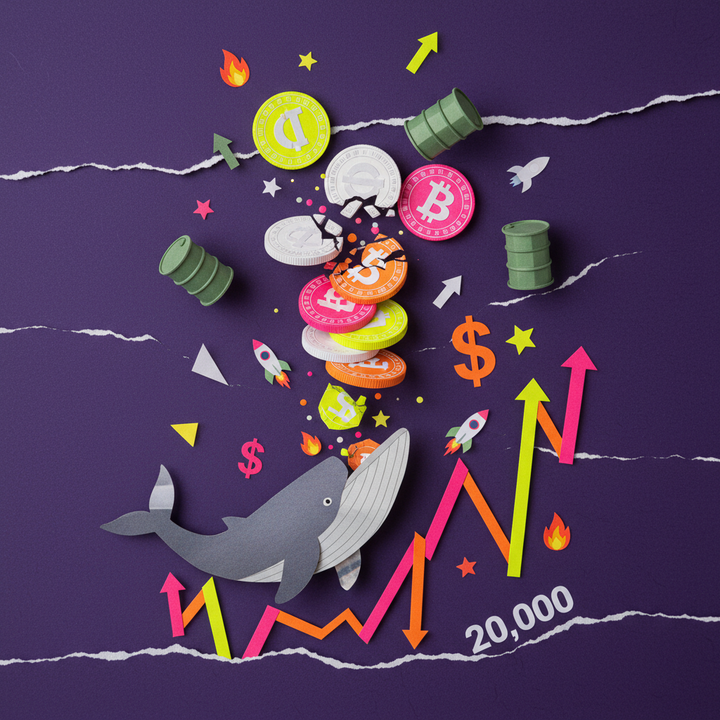
Fear & Greed Index Hits 8: Near All-Time Low — Crypto Market Briefing March 10, 2026
Fear & Greed Index plunges to 8—near all-time lows. BTC at $68K as whales accumulate 270K BTC amid extreme fear.
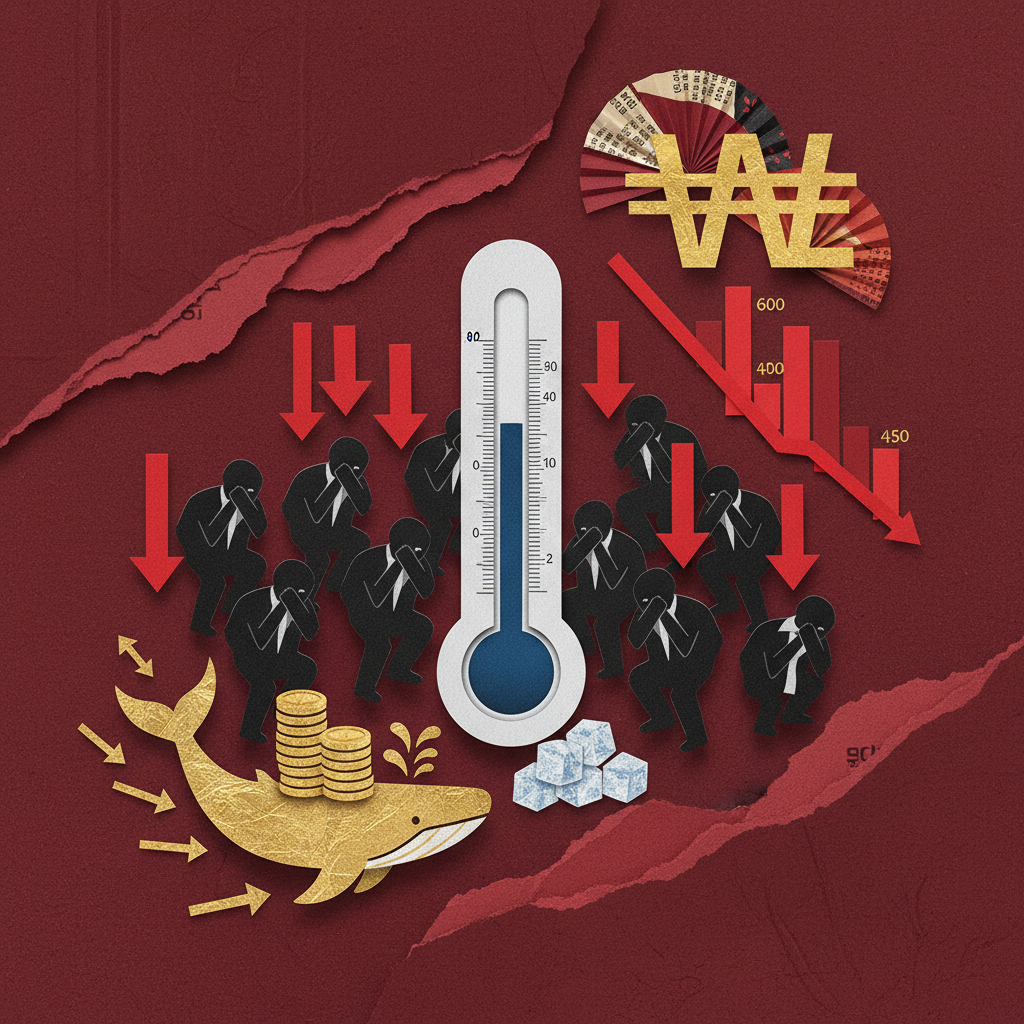
The crypto market enters March 10, 2026 under a wave of extreme fear not seen in Bitcoin's modern trading history. With the Fear & Greed Index plunging to 8 out of 100 and $334 million in 24-hour liquidations, traders confront sentiment conditions more severe than both the COVID crash and the FTX collapse. Here is what the data reveals—and what history suggests comes next.
Crypto Market Overview March 10, 2026: Key Metrics Dashboard
Quick Answer: Total crypto market cap stands at $2.42 trillion with BTC dominance at 56.7% and the Fear & Greed Index at a historic 8/100. Bitcoin trades near $68,635—down 46% from its October 2025 all-time high of $126,000 and 22% year-to-date—while 24-hour liquidations hit $334 million and funding rates are negative across nearly all major pairs on Binance.
The crypto Fear & Greed Index is a composite sentiment gauge that measures market emotion on a 0-to-100 scale, where any reading below 25 signals "extreme fear." As of March 10, 2026, the index sits at just 8 out of 100—down 4 points from the previous session—according to data cited by CoinDesk. Total cryptocurrency market capitalization stands at $2.42 trillion, with Bitcoin dominance at 56.7% and Ethereum dominance at 10.0%. Bitcoin is trading at approximately $68,635, reflecting a 3.6% bounce over the past 24 hours but still sitting 46% below its all-time high of $126,000 reached in October 2025 and down 22% year-to-date. Over the same 24-hour window, $334 million worth of leveraged positions were liquidated across centralized exchanges, while funding rates on Binance Futures have turned negative for virtually every major trading pair—a clear hallmark of deeply bearish positioning across the derivatives market.
Price Action and Volume Snapshot
Bitcoin bounced between $65,822 and $69,517 in the past 24 hours, generating $1.97 billion in spot volume on Binance alone. Ethereum followed with a 3.0% gain to $2,003, while Solana led the large-cap recovery with a 4.5% jump to $86. Despite the short-term relief, context matters: spot trading volumes across major exchanges have plunged 59% week-over-week, according to K33 Research, and perpetual futures open interest sits at a four-month low. Exchange reserves have fallen to 2.31 million BTC—the lowest since April 2018—as over 47,000 BTC ($3.2 billion) departed centralized platforms in the past week, per SpotedCrypto analysis.
| Metric | Value | 24h Change / Note |
|---|---|---|
| Total Market Cap | $2.42T | — |
| BTC Dominance | 56.7% | — |
| ETH Dominance | 10.0% | — |
| Fear & Greed Index | 8 / 100 | -4 (Extreme Fear) |
| BTC Price | $68,635 | +3.61% |
| ETH Price | $2,003 | +3.03% |
| SOL Price | $86 | +4.50% |
| 24h Liquidations | $334M | — |
| BTC Weekly RSI | 27.48 | Lowest since Dec 2018 |
| BTC Exchange Reserves | 2.31M BTC | Lowest since Apr 2018 |
Derivatives Signal: Funding Rates and Liquidations
Negative funding rates across nearly every major perpetual contract on Binance confirm that short sellers dominate the current market structure. When funding rates turn negative, traders holding short positions effectively pay those holding longs—a dynamic that typically reflects broad bearish conviction. As tracked by Coinglass, BTC perpetual funding sits at -0.0034%, XRP at -0.0038%, and SOL at -0.0018%. The lone exception is ETH at +0.0055%, hinting at modest long positioning likely tied to upcoming network upgrade speculation. Combined with $334 million in liquidations and open interest at multi-month lows, the derivatives landscape paints a picture of a market deep in capitulation mode.
| Asset | Funding Rate (Binance) | Signal |
|---|---|---|
| BTC | -0.0034% | Bearish |
| ETH | +0.0055% | Neutral / Slight Bullish |
| SOL | -0.0018% | Bearish |
| XRP | -0.0038% | Bearish |
| DOGE | -0.0009% | Bearish |
The combination of historically low sentiment, pervasive negative funding rates, and rapidly declining exchange reserves creates a rare alignment of capitulation signals. For traders monitoring these metrics in real time, the critical question is whether the 24-hour bounce represents a genuine inflection point—or merely a dead-cat rally within a broader downtrend driven by the ongoing Iran conflict and tightening global liquidity conditions.
Fear and Greed Index at 8: How Extreme Is This? Historical Crash Comparisons
A Fear and Greed Index score of 8 represents one of the most extreme capitulation readings in the entire history of cryptocurrency markets. The index, which aggregates volatility, market momentum, social media sentiment, Bitcoin dominance, and Google Trends data on a 0-to-100 scale, has now remained below 10 for the better part of a month—a sustained duration unmatched by any prior crash cycle. For context, the March 2020 COVID panic bottomed at 9, while the November 2022 FTX collapse only drove the index as low as 12, according to historical data compiled by SpotedCrypto. The current reading of 8 follows an all-time record low of 5 on February 6, 2026—a level never previously reached in the index's history. Historically, periods where the index drops below 15 have preceded positive 90-day Bitcoin returns approximately 80% of the time, making extreme fear one of the most reliable contrarian indicators in crypto.
Historical Extreme Fear Episodes: Side-by-Side Comparison
Every major market crash in Bitcoin's history has produced a spike in extreme fear—but the current episode stands apart in both depth and duration. The table below compares the five most severe Fear & Greed collapses on record. In four out of five prior episodes, Bitcoin posted substantial gains within the following 90 days, according to analysis from ETHNews.
| Period | Trigger Event | Fear Index Low | BTC Price at Low | 90-Day Return |
|---|---|---|---|---|
| Jan 2015 | Post-Mt. Gox collapse | ~10 | $200 | +45% |
| Dec 2018 | Crypto winter bottom | ~8 | $3,500 | +85% |
| Mar 2020 | COVID-19 crash | 9 | $4,800 | +123% |
| Nov 2022 | FTX collapse | 12 | $15,500 | +40% |
| Feb–Mar 2026 | Iran war / 4-year cycle bear | 5 (all-time record) | $65K–$69K | TBD |
What Happened After Previous Capitulation Lows
History offers a striking and consistent pattern. After the COVID crash drove the Fear & Greed Index to 9 in March 2020, Bitcoin rallied 123% within just six weeks, according to CoinDesk historical data. When the FTX collapse pushed the index to 12 in November 2022, BTC bottomed near $15,500 and then surged 150% by the end of 2023. Even the brutal 2018 crypto winter—when the index hit levels comparable to today's reading—preceded a 1,700% multi-year rally from $3,500 to Bitcoin's previous cycle peak of $69,000. The weekly RSI has plunged to 27.48, its lowest level since December 2018, reinforcing the technical parallels to prior cycle bottoms tracked by SpotedCrypto's RSI analysis.
"Current conditions closely resemble late September and mid November 2022, periods near the bear market bottom. Bitcoin is likely near, or at, a global bottom but set for a prolonged consolidation."
— Vetle Lunde, Head of Research, K33 Research (via CoinDesk)
Structural Differences: Why 2026 May Not Follow the Same Playbook
While historical odds strongly favor a rebound from these levels, the 2026 bear market carries structural variables absent from every prior cycle. The Iran conflict, now in its tenth day, has pushed WTI crude oil above $83 per barrel—a 60%-plus year-to-date surge that has tightened global liquidity conditions and dampened risk appetite across all asset classes, as reported by CoinDesk. On the other hand, institutional infrastructure is dramatically stronger than in any prior downturn. Bitcoin ETFs attracted $568 million in net inflows last week—the second consecutive positive week after a brutal $3.8 billion outflow streak—while Strategy (formerly MicroStrategy) added 17,994 BTC to its treasury, bringing total holdings to a staggering 738,731 BTC. Whale wallets have accumulated 270,000 BTC (over $18.7 billion) in the past 30 days, their largest net purchase in over 13 years, according to SpotedCrypto.
The divergence is stark: retail sentiment has capitulated to levels never before recorded, while institutional and whale accumulation is accelerating at a historic pace. Whether this tension resolves in a sharp V-shaped recovery—as it did after every prior extreme fear episode—or a prolonged bottoming process will likely depend on macroeconomic catalysts, particularly the trajectory of the Iran conflict and its cascading impact on global energy prices and broader risk markets.
Exchange Volume Trends and the Kimchi Premium Reversal: What Asian Markets Are Signaling
Asian cryptocurrency markets are flashing rare warning signals as the Kimchi premium — the price differential between Korean exchanges and global platforms — has turned negative for the first time since the 2022 bear market. Bitcoin is currently trading at a –1.18% discount on Korean exchanges compared to Binance spot prices, according to CryptoSlate, a historically bearish indicator that has consistently preceded extended drawdowns in prior market cycles. This reversal coincides with a broader collapse in global trading volumes, with spot volumes falling 59% week-over-week across major exchanges per CoinDesk reporting. The convergence of negative regional premiums, sharply declining retail participation, and a Fear & Greed Index reading of just 8 out of 100 suggests that Asian retail traders — once the most aggressive buyers during bull market runs — have fully retreated to the sidelines, raising the critical question of when global market sentiment will finally reach true capitulation.
Binance Volume Leaders and Funding Rate Signals
Despite the extreme fear backdrop, Binance spot data from March 10 shows tentative signs of dip-buying across major assets. Bitcoin leads exchange volumes at $1.97 billion in 24-hour turnover, bouncing 3.61% to $68,635 after touching an intraday low of $65,822. Ethereum gained 3.03% to $2,003, while Solana outperformed with a 4.50% rally to $86 — a potential sign of selective risk appetite in high-beta altcoins. However, the derivatives market tells a starkly different story: funding rates remain deeply negative across BTC (–0.0034%), SOL (–0.0018%), and XRP (–0.0038%), indicating short sellers continue to dominate perpetual futures positioning. Open interest sits at a 4-month low, confirming widespread deleveraging across the board.
| Indicator | Value | Market Signal |
|---|---|---|
| BTC Binance 24h Volume | $1.97B | Concentrated in majors |
| BTC Price / 24h Change | $68,635 / +3.61% | Relief bounce from $65,822 low |
| ETH Price / 24h Change | $2,003 / +3.03% | Tepid recovery |
| SOL Price / 24h Change | $86 / +4.50% | High-beta outperformance |
| BTC Funding Rate (Binance) | –0.0034% | Short-heavy positioning |
| ETH Funding Rate (Binance) | +0.0055% | Slight long bias — outlier |
| BTC Kimchi Premium | –1.18% | Bearish — first negative since 2022 |
| ETH Kimchi Premium | –1.18% | Bearish — mirrors BTC discount |
| Spot Volume (Week-over-Week) | –59% | Extreme participation decline |
| Perpetual Futures Open Interest | 4-month low | Deleveraging underway |
The Kimchi Premium Reversal: A Historically Rare Bearish Event
The Kimchi premium — which typically runs 2–5% positive during bull markets as Korean retail demand outpaces global prices — has flipped to a –1.18% discount for both BTC and ETH. This is a significant development because negative Kimchi premiums have only occurred during deep bear market phases: once briefly during the March 2020 COVID crash, and for an extended period during the 2022 collapse following FTX's implosion. The negative spread suggests retail investors who drove billions in speculative volume during the 2024–2025 rally are now selling at a discount to exit positions — a classic capitulation pattern. For a deeper look at how oversold RSI levels align with regional premium data, the current technical setup bears striking resemblance to December 2018.
Asia-Wide Regulatory Crosswinds and Capital Flows
Beyond exchange-level data, the broader Asian regulatory landscape is compounding uncertainty. Japan's Financial Services Agency continues advancing stricter custody requirements for digital asset exchanges, while Hong Kong's evolving licensing framework reshapes how crypto trades across the region. The EU's MiCA regulations — now fully in effect — add another layer of compliance burden that is dampening cross-border capital flows into Asian platforms. Coupled with $334 million in 24-hour liquidations globally and a total crypto market cap compressed to $2.42 trillion, the Asian trading session has become a leading indicator of risk appetite. Traders watching for a definitive sentiment bottom should monitor whether the Kimchi premium returns to positive territory and whether spot volumes begin recovering from their current 59% weekly decline — both historically reliable preconditions for sustained market recovery.
Why Whales and Institutions Are Accumulating Through Extreme Fear
While retail traders flee in panic, the largest and most sophisticated players in crypto are doing the exact opposite — buying at the fastest pace in over a decade. Whale wallets holding more than 1,000 BTC have accumulated a staggering 270,000 BTC, worth an estimated $18.7 billion to $23 billion, over the past 30 days alone — marking the largest net purchase wave in over 13 years, according to Spoted Crypto on-chain analysis. Strategy, formerly MicroStrategy, added 17,994 BTC in a single week, pushing its corporate treasury to 738,731 BTC as reported by Fortune. Simultaneously, more than 47,000 BTC worth $3.2 billion departed centralized exchanges in just seven days, dropping total exchange reserves to 2.31 million BTC — the lowest level recorded since April 2018. This stark divergence between institutional accumulation and retail capitulation has historically preceded the formation of major market bottoms.
Whale Wallets Post Largest 30-Day Accumulation in 13 Years
On-chain data reveals that whale wallets — addresses holding 1,000 BTC or more — have been aggressively absorbing sell pressure from smaller holders and forced liquidations throughout February and early March. The 270,000 BTC accumulated over 30 days dwarfs previous accumulation cycles, including the buying wave that occurred near the $15,500 bottom in November 2022. This pattern mirrors the classic Wyckoff accumulation phase, where institutional players quietly build positions while headlines scream doom. Bitcoin's weekly RSI at 27.48, its lowest reading since December 2018, provides crucial historical context: the last two times RSI reached these extreme levels — January 2015 at $200 and December 2018 at $3,500 — Bitcoin subsequently rallied 9,900% and 1,700%, respectively. While past performance never guarantees future returns, the statistical pattern is impossible for institutional desks to ignore.
Strategy's Relentless Acquisition Campaign
Michael Saylor's Strategy continues to be the most visible and aggressive corporate Bitcoin buyer on the planet. Between March 2 and 8, the company purchased 17,994 BTC for approximately $1.3 billion at an average price of roughly $72,258 per coin, according to Fortune. Strategy now holds 738,731 BTC at an aggregate average cost of approximately $66,385 — making it the single largest public-company Bitcoin holder with an estimated position value exceeding $50 billion at current prices. Benchmark analyst Mark Palmer maintains a Buy rating on the stock, noting that Strategy's new STRC preferred stock offering is expected to become a "primary funding vehicle" for continued purchases. Meanwhile, Bitcoin ETFs recorded approximately $568 million in net inflows last week — the second consecutive positive week after a brutal five-week, $3.8 billion outflow streak — with BlackRock's IBIT alone absorbing $306.6 million in a single session on March 4, per Investing.com.
Exchange Reserves at Six-Year Lows Signal Supply Squeeze
Perhaps the strongest structural bullish signal comes from exchange reserve data. With 47,000+ BTC departing centralized exchanges in seven days and total reserves dropping to 2.31 million BTC — the lowest since April 2018 — the supply available for immediate sale continues to shrink, as reported by Roscoe View Journal. This trend reinforces the narrative that large holders are moving coins into cold storage for long-term holding, systematically reducing the available trading float. When combined with ongoing ETF demand and corporate treasury purchases, the supply-demand equation increasingly favors price recovery once fear subsides and sellers are finally exhausted.
| Entity / Metric | BTC Amount | Period | Estimated Value | Significance |
|---|---|---|---|---|
| Whale Wallets (1,000+ BTC) | +270,000 BTC | Past 30 days | $18.7B–$23B | Largest accumulation in 13 years |
| Strategy (MicroStrategy) | +17,994 BTC (738,731 total) | Mar 2–8, 2026 | $1.3B weekly / ~$50.7B total | Largest corporate holder globally |
| Net Exchange Outflows | –47,000 BTC | Past 7 days | –$3.2B | Aggressive cold-storage migration |
| Total Exchange Reserves | 2.31M BTC | Current | ~$158.5B | Lowest level since April 2018 |
| Bitcoin ETF Net Inflows | ~$568M equivalent | Past week | $568M | 2nd consecutive inflow week |
| BlackRock IBIT (Single Day) | $306.6M inflows | March 4, 2026 | $306.6M | 66% of all daily ETF inflows |
Rony Szuster, Head of Research at Mercado Bitcoin, encapsulated the contrarian thesis driving institutional behavior: "Historically, buying during periods of fear has been more effective than buying during euphoria," as cited by Spoted Crypto. The data overwhelmingly supports his view: Fear & Greed readings below 15 have preceded positive 90-day Bitcoin returns approximately 80% of the time across all prior cycles. With the index currently at 8 — a reading lower than during both the COVID crash of March 2020 (index: 9) and the FTX collapse of November 2022 (index: 12) — the historical odds decisively favor those willing to buy when most of the market is too paralyzed by fear to act. The question is no longer whether smart money is accumulating — it is whether retail investors will recognize the signal before the window closes.
Bitcoin ETF Fund Flow Reversal: What $568M in Net Inflows Signals for the Market
After five consecutive weeks of hemorrhaging capital totaling $3.8 billion, U.S. spot Bitcoin ETFs have posted two straight weeks of net inflows amounting to $568 million, according to Cryptos News. This reversal represents a critical inflection point in institutional sentiment during the most punishing drawdown since spot ETF products launched in January 2024. BlackRock's iShares Bitcoin Trust (IBIT) dominated the recovery, absorbing $306.6 million in a single trading session on March 4—roughly 66% of all ETF inflows that day, per Investing.com. Yet context is essential: cumulative ETF outflows since November 2025 still stand at approximately $7.8 billion, meaning the current inflow streak has recovered less than 15% of total capital lost. The reversal suggests institutional buyers are selectively re-entering, but the broader rehabilitation of ETF positioning remains in its earliest stages.
BlackRock's IBIT: The Institutional Anchor in a Sea of Fear
BlackRock's dominance in the latest inflow cycle cannot be overstated. The $306.6 million single-session absorption on March 4 was not just the largest daily ETF inflow in six weeks—it represented a decisive vote of confidence from the world's largest asset manager while competitors saw mixed or negative flows. This concentration pattern mirrors the early 2024 ETF launch period, when IBIT consistently captured the lion's share of institutional demand. For investors monitoring extreme fear conditions across crypto markets, BlackRock's continued accumulation provides a structural counterweight to retail capitulation—a signal that the firm's multi-decade investment horizon sees current prices as opportunity, not crisis.
Spot Volume Collapse Meets Derivatives Deleveraging
While ETF inflows offer a glimmer of optimism, the broader market microstructure paints a far more cautious picture. Spot trading volumes fell 59% week-over-week, according to K33 Research via CoinDesk, while perpetual futures open interest dropped to a four-month low. On Binance, BTC funding rates sit at -0.0034%, confirming that short sellers continue to pay premiums—a hallmark of bearish derivatives positioning. BTC 24-hour volume on Binance registered $1.97 billion, with price oscillating between a $65,822 low and $69,517 high, reflecting heightened volatility on increasingly thin liquidity.
The divergence between institutional ETF buying and retail-driven spot market apathy is one of the defining features of this bear cycle. Historically, such disconnects—where smart money accumulates while retail exits—have preceded significant recoveries. Exchange reserves have dropped to 2.31 million BTC, the lowest since April 2018, as whale wallets accumulated 270,000 BTC over the past 30 days—their largest net purchase in over 13 years. The question is no longer whether institutions are buying the dip, but whether $568 million in ETF inflows can catalyze a broader sentiment shift when the Fear & Greed Index sits at a near-record low of 8.
Iran Conflict and Surging Oil Prices: How Geopolitical Risk Is Reshaping Crypto Markets
The Iran conflict, now entering its tenth day as of March 10, has sent shockwaves through global risk assets—and crypto markets are bearing the full weight of the fallout. WTI crude oil has surged past $83 per barrel, marking a staggering 60%-plus gain year-to-date, according to CoinDesk. The energy price spike is compressing risk appetite across equities, commodities, and digital assets simultaneously, as capital flees to traditional safe havens like gold and U.S. Treasuries. Bitcoin, despite its persistent "digital gold" narrative, trades at $68,635—down 46% from its October 2025 all-time high of $126,000—confirming that in acute geopolitical crises, crypto still behaves as a high-beta risk asset rather than a hedge. The convergence of war-driven inflation fears, collapsing trading volumes, and a Fear & Greed Index at 8 has created arguably the most challenging macro environment for digital assets since the pandemic crash of March 2020.
War Premium: Why Energy Shocks Hit Crypto Harder Than Expected
Geopolitical conflicts that drive energy prices higher create a cascading impact on digital assets through multiple transmission channels. Rising oil prices fuel inflation expectations, which in turn reduce the probability of central bank rate cuts—the very monetary easing that has historically acted as rocket fuel for crypto rallies. CK Zheng, Founder of ZX Squared Capital, issued a stark warning in an interview with CoinDesk: "Bitcoin's price is convincingly in deep bear market territory now. We expect a further 30% price drop during 2026 as the Iran war started. The four-year crypto cycle momentum is gaining strength and is extremely difficult to break due to individual investors' psychological behaviors." A further 30% decline from current levels would place Bitcoin near $48,000—a price not seen since early 2024 and well below the average purchase basis for most institutional ETF holders.
The Halving Cycle Debate: Dead or Merely Dormant?
The Iran conflict has reignited a fundamental debate among crypto strategists: does the traditional four-year halving cycle still govern Bitcoin's trajectory, or has institutional adoption fundamentally altered market dynamics? Matt Hougan, CIO of Bitwise, argues the latter with conviction: "The four-year halving cycle is dead. The long-term pro-crypto forces will overwhelm the classic four-year cycle forces," as cited by Spoted Crypto. Hougan's thesis rests on structural changes—ETF adoption, corporate treasury allocations like Strategy's 738,731 BTC holdings, and growing sovereign wealth fund interest—that create persistent demand floors entirely absent in previous cycles.
Yet the cyclical evidence remains compelling. The April 2024 halving produced a peak at $126,000 in October 2025, roughly 18 months post-halving—precisely on schedule with historical patterns. The 2014, 2018, and 2022 bear markets each followed this identical rhythm. Zheng's bearish thesis draws directly from this cyclical framework, arguing that individual investor psychology—the very fear reflected in today's index reading of 8—is the engine that perpetuates the cycle regardless of how many institutions enter the market.
What History Says About Crisis-Driven Recoveries
For investors weighing geopolitical risk against historically extreme fear readings, precedent offers cautious optimism. During the COVID crash of March 2020, when the Fear & Greed Index hit 9, Bitcoin rallied 123% within six weeks. After the FTX collapse drove the index to 12 in November 2022, BTC gained 150% by the end of 2023. The current reading of 8 is lower than both of those crises—and readings below 15 have historically preceded positive 90-day BTC returns approximately 80% of the time. However, the Iran conflict introduces an exogenous variable—sustained energy-driven inflation—that was absent in both prior recoveries, making this cycle's resolution timeline far less predictable than historical analogs might suggest. The war's duration and escalation trajectory may ultimately determine whether this extreme fear becomes a generational buying opportunity or the prelude to deeper capitulation.
Market Outlook: Where Does Crypto Go After Extreme Fear Hits Historic Lows?
Bitcoin's weekly RSI has plunged to 27.48, its lowest reading since December 2018, placing the asset in deeply oversold territory by virtually every technical measure. According to SpotedCrypto, the Fear & Greed Index at 8 is lower than during the COVID crash (9 in March 2020) and the FTX collapse (12 in November 2022), marking the most extreme capitulation sentiment in crypto history. However, historical data reveals a counterintuitive pattern: Fear & Greed readings below 15 have preceded positive 90-day BTC returns approximately 80% of the time. With $568 million in ETF net inflows last week, whale wallets accumulating 270,000 BTC over 30 days, and exchange reserves at their lowest since April 2018, the structural setup resembles prior generational bottoms—though the Iran conflict and oil prices above $83 per barrel introduce unprecedented macro variables into this cycle's recovery equation.
Historical RSI Oversold Signals and Subsequent Recoveries
Every previous instance of Bitcoin's weekly RSI dropping below 30 has preceded a massive rally—though timing varies dramatically. The table below, compiled from SpotedCrypto historical analysis and CoinGlass data, illustrates the pattern:
| Year | Weekly RSI | BTC Price at Signal | Peak Rally | Recovery Timeline |
|---|---|---|---|---|
| January 2015 | ~28 | $200 | +9,900% | ~36 months |
| December 2018 | <30 | $3,500 | +1,700% | ~24 months |
| March 2020 | ~30 | $4,800 | +1,500% | ~13 months |
| March 2026 | 27.48 | $68,635 | TBD | TBD |
At the current RSI of 27.48, Bitcoin is more technically oversold than during the COVID crash and sits at levels last seen when BTC traded at $3,500. That December 2018 signal preceded a 1,700% surge over the following three years. The critical question: does this pattern hold when the starting price is $68,000 rather than $3,500?
Why 2026 Is Structurally Different From Past Bear Markets
While RSI parallels are compelling, the 2026 market operates within fundamentally different infrastructure. Spot Bitcoin ETFs—nonexistent during the 2018 or 2020 oversold periods—posted $568 million in net inflows last week, with BlackRock's IBIT alone absorbing $306.6 million in a single session, per Investing.com. Strategy now holds 738,731 BTC after purchasing another 17,994 BTC for $1.3 billion last week, as reported by Fortune. These institutional demand floors did not exist in prior cycles, potentially compressing both the depth and duration of any drawdown.
James Check, onchain analyst and co-founder of Checkonchain, captured the asymmetric nature of Bitcoin's price action in an interview with CoinDesk: "Bitcoin does nothing most of the time, and then sometimes it goes up 100% in a quarter." That observation aligns with K33 Research head Vetle Lunde's assessment that current conditions "closely resemble late September and mid-November 2022, periods near the bear market bottom."
Five Key Indicators to Watch in Coming Weeks
For investors navigating this extreme fear environment, five metrics will determine whether the current oversold signal produces another historic recovery—or an extended consolidation:
- Fear & Greed recovery above 20: A sustained move from the current 8 past the 20 threshold would signal sentiment normalization. Historically, this shift has taken two to six weeks during prior bottoms.
- ETF flow persistence: Two consecutive weeks of inflows have broken the outflow trend, but cumulative net outflows since November 2025 remain at roughly $7.8 billion. Weekly inflows above $500 million would confirm a structural bid.
- Iran ceasefire developments: With WTI crude above $83 and the conflict now in its 10th day, any diplomatic breakthrough could rapidly unwind risk-off positioning across all asset classes.
- Funding rate normalization: BTC perpetual funding at -0.0034% on Binance reflects persistent short positioning. A flip to positive would indicate leveraged traders turning bullish.
- Exchange reserve trend: Reserves at 2.31 million BTC—the lowest since April 2018—suggest accumulation. Continued outflows would reinforce the whale buying thesis.
The bearish case remains credible. CK Zheng of ZX Squared Capital warned via CoinDesk that BTC could fall another 30% as the four-year cycle gains strength. Yet the weight of historical evidence suggests that buying when the Fear & Greed Index sits in single digits has been, as Mercado Bitcoin's Rony Szuster noted, "more effective than buying during euphoria." With every prior weekly RSI below 30 eventually leading to a multi-year rally, the question is not whether a recovery comes—but whether investors can withstand the volatility until it does.
Frequently Asked Questions About Bitcoin's Extreme Fear Zone in March 2026
Quick Answer: Bitcoin's Fear & Greed Index has plunged to 8—lower than the COVID crash (9) and FTX collapse (12)—while whale wallets have accumulated 270,000 BTC ($18.7B+) in 30 days, the largest net purchase in over 13 years. History suggests extreme fear below 15 has preceded positive 90-day returns 80% of the time, but the ongoing Iran conflict and crude oil above $83/barrel introduce macro risks that could delay any recovery.
Is a Fear and Greed Index Reading of 8 a Buy Signal for Bitcoin?
A Fear and Greed Index reading of 8 places the market in historically rare "extreme fear" territory—lower than the scores recorded during the COVID crash of March 2020 (9) and the FTX collapse of November 2022 (12), according to SpotedCrypto. Historical analysis shows that when the index has dropped below 15, Bitcoin has delivered positive returns over the subsequent 90 days approximately 80% of the time, making it a statistically favorable entry window for patient investors. However, this is not a guaranteed buy signal: the Iran conflict—now in its 10th day—has pushed WTI crude oil above $83 per barrel (up over 60% YTD), introducing macroeconomic headwinds that could drive further short-term declines, as reported by CoinDesk. With $334 million in 24-hour liquidations and all major funding rates on Binance Futures running negative, a dollar-cost averaging (DCA) strategy is widely recommended over lump-sum entries to mitigate volatility risk. For a deeper breakdown of current sentiment metrics, see our extreme fear and negative funding rates analysis.
What Does a Negative Kimchi Premium Mean for Global Markets?
The "Kimchi Premium"—the price gap between Bitcoin on South Korean exchanges and global spot markets—has flipped to -1.18%, meaning BTC is trading at a discount in Korea versus international prices, according to CryptoSlate. This negative premium is a regional sentiment barometer: it signals that retail selling pressure in one of Asia's largest crypto markets is overwhelming buy-side demand, reflecting deeply bearish positioning among individual investors. Historically, a negative Kimchi Premium has occasionally coincided with broader market bottoms—it last appeared during late-stage capitulation events—but it is not a reliable standalone reversal indicator. The phenomenon matters globally because Korean retail traders have historically been among the most aggressive participants in crypto rallies, and their absence from the buy side suggests that a key source of global demand has yet to re-engage. Spot trading volumes across exchanges have already fallen 59% week-over-week, reinforcing the picture of broad-based retail retreat as noted by K33 Research via CoinDesk.
Does Whale Accumulation Mean Bitcoin's Price Will Rise?
Whale wallets have accumulated approximately 270,000 BTC—worth between $18.7 billion and $23 billion—over the past 30 days, marking their largest net purchase in over 13 years, as tracked by SpotedCrypto's on-chain analysis. This accumulation pattern strongly suggests that large-scale, sophisticated investors perceive current prices around $68,000–$69,000 as a strategic entry point, particularly with BTC sitting 46% below its all-time high of $126,000. Additionally, over 47,000 BTC ($3.2 billion) departed centralized exchanges in just the past seven days, pushing exchange reserves to 2.31 million BTC—the lowest level since April 2018, according to Roscoe View Journal. Strategy (formerly MicroStrategy) alone purchased 17,994 BTC for $1.3 billion during March 2–8, lifting its total holdings to 738,731 BTC at an average cost of ~$66,385 per coin, as reported by Fortune. While whale accumulation has historically been a medium-to-long-term bullish leading indicator, it does not guarantee immediate price rebounds—perpetual futures open interest remains at a 4-month low, signaling that leveraged traders have not yet rejoined the market.
How Likely Is a Further Bitcoin Decline in 2026?
The probability of additional downside remains a contested debate among market analysts. CK Zheng, CIO of ZX Squared Capital, has warned that Bitcoin could fall another 30% from current levels based on the four-year cycle theory, which would target prices near the $47,000–$48,000 range, as cited by CoinDesk. Conversely, K33 Research analysts have argued that current market conditions—including the lowest Fear & Greed readings in history, negative funding rates, and collapsing open interest—closely mirror the late-2022 bear market bottom, suggesting BTC may be near a "global floor." The critical macro variable is the Iran conflict: with WTI crude already above $83 and the war entering its 10th day, a prolonged conflict could sustain inflationary pressures, delay central bank rate cuts, and extend risk-asset drawdowns. Meanwhile, Bitcoin ETF flows are showing tentative stabilization—$568 million in net inflows last week marked the second consecutive positive week after a brutal $3.8 billion, five-week outflow streak, according to Cryptos News. For ongoing price analysis and whale tracking, visit our Bitcoin RSI and whale accumulation report.
Data Sources
- CoinDesk — Bitcoin price analysis, ZX Squared Capital analyst commentary, oil price data
- SpotedCrypto — Fear & Greed Index data, funding rates, liquidation figures
- SpotedCrypto — Whale wallet accumulation and on-chain analytics
- Fortune — Strategy (MicroStrategy) Bitcoin purchases
- CryptoSlate — Kimchi Premium data
- Roscoe View Journal — Exchange outflow and reserve data
- Cryptos News — Bitcoin ETF flow data
- Investing.com — BlackRock IBIT inflow figures
- Coinglass — Derivatives data, open interest, funding rates
- K33 Research via CoinDesk — Trading volume decline, market bottom analysis
This article is for informational purposes only and does not constitute investment advice. All investment decisions should be made based on your own judgment and responsibility.
Related Articles
- Fear & Greed Index Hits 12: Extreme Fear — Weekly Crypto Market Briefing for March Week 2
- Bitcoin Drops Below $68K as Fear Index Hits 12 — Whales Quietly Accumulate 270,000 BTC
- Bitcoin Drops to $68,303 as Fear & Greed Hits 18 — US Jobs Shock Triggers $186M Liquidation Wave
- Crypto Market Today (March 6): Bitcoin ETF Sees $1.7B Inflows Amid Extreme Fear — Weekly Close Analysis
- Fear & Greed Index Hits 10 as Bitcoin Surges 7% to $73,000 — Is the $1.7B ETF Inflow a Bottom Signal?