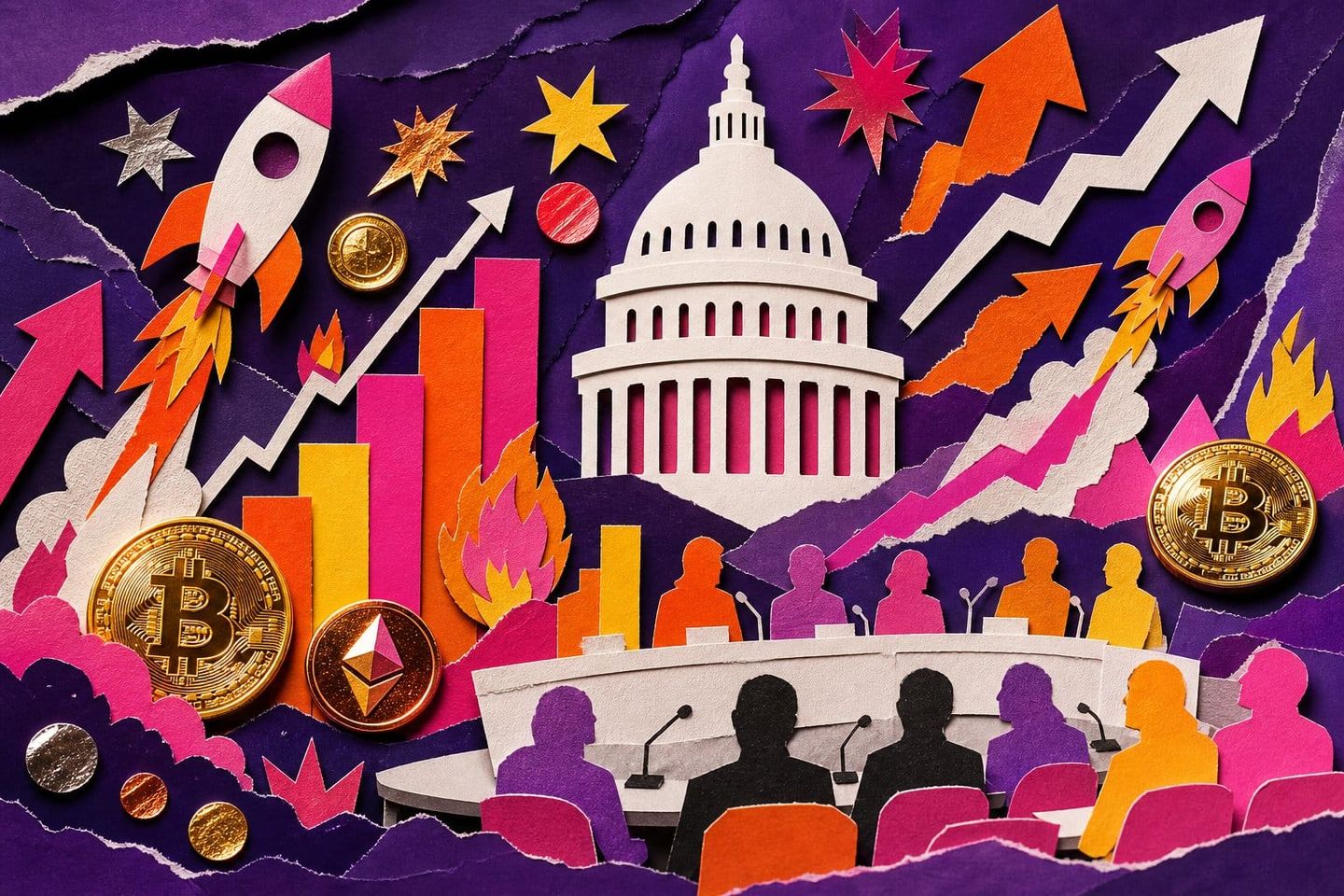
U.S. tax writers are about to put crypto on the table — literally. On June 9, 2026, the House Ways and Means Committee opens a hearing on how digital assets should be taxed, with seven discussion drafts already circulating.
Seven Drafts, One Hearing: What Congress Is Actually Proposing
The House Ways and Means Committee has scheduled a Full Committee Legislative Hearing on Digital Asset Taxation for Tuesday, June 9, 2026, at 2:00 p.m. ET in 1100 Longworth. This is a discussion hearing — not a markup or floor vote — so no law is enacted that day. Written submissions for the record are due by close of business June 23, 2026 .
Quick Answer: On June 9, 2026, the House Ways and Means Committee holds a discussion hearing on seven digital-asset tax drafts — covering staking timing, a $10 gas-fee de minimis capped at 5,000 transactions a year, wash-sale extension, and stablecoin treatment. It sets direction, not law.
Leadership is circulating seven standalone drafts rather than one omnibus bill — described as the first crypto tax package advanced at the tax-writing-committee level rather than as scattered member bills . Key topics span staking and mining income timing, a $10 gas-fee de minimis exemption capped at 5,000 transactions per taxpayer per year, wash-sale rule extension, stablecoin cash treatment, and a voluntary-disclosure amnesty .
Running alongside is the bipartisan Digital Asset PARITY Act, introduced May 19, 2026, by Reps. Max Miller (R-Ohio) and Steven Horsford (D-Nevada), which bundles overlapping provisions and serves as the primary cross-aisle vehicle. Here is how the four provisions retail traders care most about compare today.
| Provision | Current IRS rule | House drafts | Senate (Lummis) bill |
|---|---|---|---|
| Staking/mining timing | Taxed at receipt (Rev. Rul. 2023-14) | Exclude at receipt; tax at disposition | Deferred until sale; ordinary income (§451(l)) |
| De minimis | None — every disposal reportable | $10 gas-fee exemption, 5,000 tx/yr cap | $300 threshold, $5,000 annual cap |
| Wash-sale | Does not apply to crypto | Extended to crypto (30-day rule) | Not specified in reporting |
| Stablecoins | Taxed as property | Cash-like if within 1% of $1.00 (PARITY) | Not specified in reporting |
The Staking Flip — and the Everyday-Spending Gap Traders Missed
Two changes in these drafts hit retail traders directly: how staking rewards are taxed, and what "de minimis" actually covers. Under current IRS rules, proof-of-stake rewards count as ordinary income at fair-market value the moment you gain control of them — including when you stake through an exchange, per Revenue Ruling 2023-14 . You owe tax on tokens before you ever sell them.
The Tax Clarity for Mining and Staking Act draft would flip that. It would exclude mining and staking rewards from taxable income at receipt and push the tax event to sale or disposition, addressing the "phantom income" problem validators face . Because the text is unpublished, it may instead track the narrower PARITY compromise, which lets taxpayers elect to defer recognition for up to five years .
Now the surprise. The House's $10 de minimis provision is the Less Tax Paperwork for Digital Asset Owners Act, and it is narrow: it exempts crypto network transaction (gas) fees under $10, capped at 5,000 transactions per taxpayer per year . It does not cover everyday spending. Buying coffee, goods, or services with appreciated Bitcoin, ETH, or even a stablecoin remains a reportable taxable event requiring gain/loss tracking .
The Senate goes further. Sen. Cynthia Lummis's bill proposes a $300 per-transaction de minimis threshold with a $5,000 annual cap, inflation-adjusted beginning in 2026 . The House drafts instead direct the Treasury to study broader de minimis exemptions for everyday crypto spending .
Industry wants the gap closed. "Getting the tax treatment of digital assets right is essential to compliance, to everyday use, and to keeping this activity and its revenue in the United States," said Alison Mangiero of the Crypto Council for Innovation .
Wash-Sale Rules Are Closing: What Active Traders Need to Know Now
The wash-sale rule does not apply to crypto today, which is why active traders can still harvest losses freely. Equity investors who sell a stock at a loss must wait 30 days before rebuying to claim the deduction; crypto sits outside that rule, so selling ETH at a loss and rebuying the same day currently preserves the write-off . Both the PARITY Act and the House drafts would close that gap.
This is the area with the strongest bipartisan consensus, because extending wash-sale and constructive-sale rules to digital assets raises revenue and aligns crypto with equities . PARITY, introduced May 19, 2026, writes the 30-day restriction directly into crypto loss harvesting . For traders, the practical shift is concrete:
- Today: sell at a loss, rebuy immediately, claim the deduction.
- Under the new rules: wait 30 days after the sale to preserve the loss, or risk the deduction being disallowed.
A separate House draft, the Digital Assets Voluntary Disclosure Program Act, runs in the other direction. It opens a two-year amnesty window for U.S. holders to self-report past unreported crypto income; those who pay or enter a payment plan would be shielded from future criminal liability . The takeaway: the loophole that makes aggressive loss harvesting painless is the provision most likely to survive June 9 — so factor a possible 30-day wait into year-end tax planning.
What June 9 Decides — and What Traders Should Watch Next
June 9 sets direction, not law. The Full Committee Legislative Hearing on Digital Asset Taxation runs at 2:00 p.m. ET on Tuesday, June 9, 2026, in 1100 Longworth . It is a discussion hearing — no markup, no vote — that tests which of the seven drafts can become a committee product and whether the House and Senate converge on a de minimis framework .
Two specifics are worth tracking:
- De minimis design: the House $10 gas-fee exemption (capped at 5,000 transactions/year) versus the Senate's broader $300 spend-and-gain threshold with a $5,000 annual cap .
- Independence from market structure: tax experts say a crypto tax package can move without the stalled market-structure bill, so standalone action in 2026 is possible .
One thing does not wait for Congress: Form 1099-DA broker reporting is already live for the 2025 tax year, so compliance pressure is rising now . After June 9, the path is committee markup → House floor vote → Senate negotiation → presidential signature, with no dates confirmed for any step . The takeaway: treat June 9 as a signal of intent, file your 2025 transactions accurately, and watch which drafts get scheduled for markup.
Frequently asked questions
Does the House crypto tax bill let me spend Bitcoin or ETH tax-free?
No. The House de minimis provision in the Less Tax Paperwork for Digital Asset Owners Act only covers network gas fees — a $10 exemption per fee, capped at 5,000 transactions per taxpayer per year . Spending appreciated Bitcoin, ETH, or a stablecoin on goods or services remains a taxable event with gain/loss tracking . The Senate Lummis bill proposes a broader $300-per-transaction threshold, but that is not in the current House drafts .
How does the staking tax change affect me if I earn staking rewards?
Under current IRS rules, staking rewards are taxable income at receipt. Revenue Ruling 2023-14 holds that a cash-method taxpayer includes the fair-market value of proof-of-stake rewards in gross income when gaining dominion and control, including rewards earned through an exchange . The House Tax Clarity for Mining and Staking Act would move in the opposite direction, deferring taxation to when you sell or dispose of the tokens . No effective date is set — the bill must pass both chambers and be signed into law first.
Will I still be able to do crypto tax-loss harvesting after this?
Today, no wash-sale restriction applies to crypto, so traders can sell at a loss and immediately repurchase to bank the deduction . Both the PARITY Act and the House drafts propose extending the 30-day wash-sale rule to digital assets . If that passes, you would need to wait 30 days before repurchasing a sold-at-a-loss position to preserve the deduction — the same constraint that already applies to stocks.
What is the voluntary disclosure amnesty and who should care?
The Digital Assets Voluntary Disclosure Program Act would open a two-year window for U.S. holders to self-report past crypto tax failures . Holders who pay the taxes they owe — or enter a payment plan — would be shielded from future criminal liability for those past violations . Anyone who underreported staking income, trading gains, or disposals in prior years is the target audience.
Is June 9 a vote? When does any of this become law?
No. June 9, 2026, is a legislative discussion hearing before the House Ways and Means Committee, not a markup or floor vote, so no law is enacted that day . The path to law still requires committee markup, a House floor vote, Senate passage, and a presidential signature . None of those steps has a confirmed date as of June 2026.