Crypto Regulation 2026: SEC Enforcement Pullback and Hong Kong Stablecoin Licenses Reshape Global Landscape
The SEC halts 12 crypto enforcement cases while Hong Kong prepares March stablecoin licenses in 2026's historic regulatory shift from 'enforcement-first' to 'innovation-friendly' frameworks. From DOJ's $4M Paxful fine to UK FCA re-registration, explore how changing regulatory paradigms impact inv...
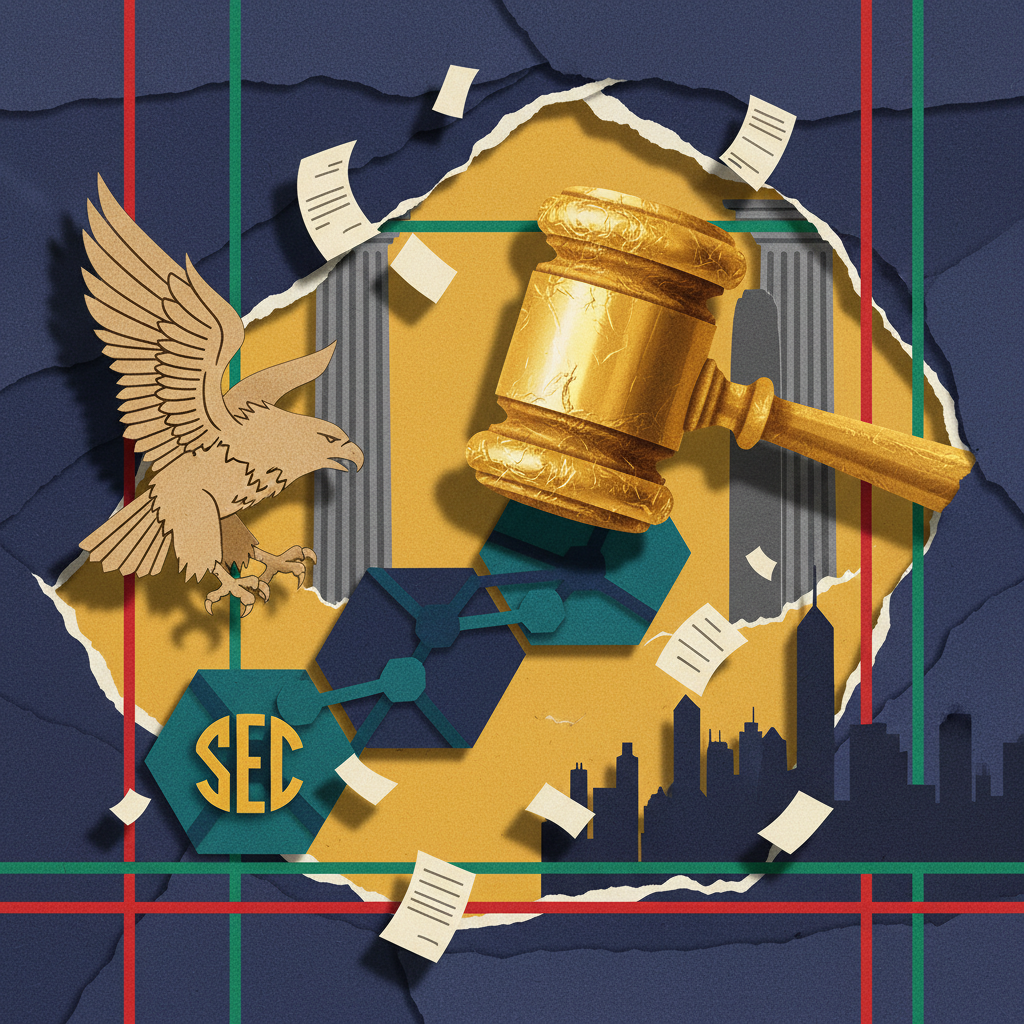
February 2026 marks a watershed moment in global cryptocurrency regulation. The US SEC has suspended 12 major crypto enforcement actions, Hong Kong is finalizing March stablecoin license issuance, and regulatory frameworks worldwide are pivoting from 'punishment-first' to 'innovation-friendly' approaches. This seismic shift is completely redrawing the global crypto regulatory map.
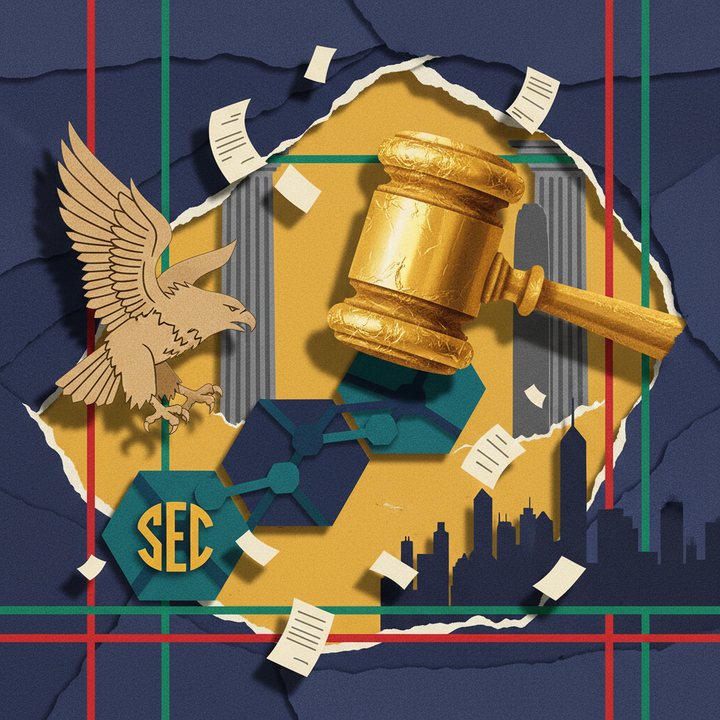
On February 11, SEC Chairman Paul Atkins faced intense questioning at a House Financial Services Committee hearing over the agency's suspension of enforcement against Justin Sun and the Tron Foundation. Democratic lawmakers raised "pay-to-play" concerns after the SEC withdrew or suspended at least 12 crypto enforcement actions since January 2025—including cases against Binance, Coinbase, and Kraken. This stands in stark contrast to former Chair Gary Gensler's regime, which pursued over 100 enforcement actions against crypto firms.
The same day, the US Department of Justice (DOJ) imposed a $4 million criminal fine on P2P crypto exchange Paxful for facilitating illegal sex trafficking and anti-money laundering violations—a 96% reduction from the originally sought $112 million. Meanwhile, Hong Kong Financial Secretary Paul Chan announced at Consensus Hong Kong 2026 that the city is ready to issue its first stablecoin licenses in March, while Blockchain.com successfully re-registered with the UK's Financial Conduct Authority (FCA) nearly four years after withdrawing its application.
These developments aren't isolated regulatory adjustments. They signal a fundamental paradigm shift in 2026 global crypto regulation. What do these changes mean for investors and project teams? What opportunities and risks accompany this transformation? This in-depth analysis explores the implications.
Executive Summary
- SEC Enforcement Policy Reversal: Since Chair Paul Atkins took office, the SEC has suspended 12+ major crypto enforcement cases, including Justin Sun/Tron. Democrats demand confidential briefings amid "pay-to-play" allegations.
- DOJ Fines Paxful $4M: For 2017-2019 transactions totaling $3B+, including $500M linked to illicit activity. FinCEN adds $3.5M civil penalty. Original $112M demand reduced 96% due to "ability to pay."
- Hong Kong March Stablecoin Licenses: First licenses under August 2025 legislation. Only "very few" from 36 applicants selected. Standard Chartered, Animoca Brands partnerships prominent.
- Blockchain.com UK FCA Re-Registration: Returns after 4-year absence following 2022 deadline withdrawal. Follows 2025 Europe MiCA license, positioning for UK market re-entry.
- US GENIUS Act Implementation Imminent: Stablecoin bill passed July 2025 requires detailed regulations by July 18, 2026. Mandates 100% reserves, enhanced AML/KYC.
- Global Regulatory Trends: UAE, South Africa, Nigeria adopt clear licensing frameworks. Europe's MiCA fully implemented. Shift from "enforcement-centric" to "innovation-friendly" policies accelerating.
- Institutional Investment Catalyst: Goldman Sachs reports 35% of institutions cite regulatory uncertainty as top barrier; 32% see regulatory clarity as primary adoption catalyst.
US SEC Enforcement Policy Transformation: Background and Political Implications of 12 Case Suspensions
The February 11, 2026 House Financial Services Committee hearing became a pivotal stage symbolizing crypto regulation's new era. SEC Chairman Paul Atkins faced concentrated fire from Democratic lawmakers. The issue was clear: Why has the SEC withdrawn or suspended 12+ major crypto enforcement cases—including Binance, Coinbase, and Kraken—since January 2025?
Particularly controversial was the Justin Sun and Tron Foundation case. The SEC formally charged in 2023 that Justin Sun conducted 600,000+ wash trades between two exchange accounts he controlled to artificially inflate TRX token volume. However, the agency suspended the case a year ago, citing "consideration of potential settlement," and this status persists into 2026.
Chairman Atkins refused comment on individual enforcement matters at the hearing but agreed to consider confidential briefings at Democratic lawmakers' request. Democrats alleged these enforcement suspensions coincided with massive crypto industry political donations and business connections to President Donald Trump's associates, raising "pay-to-play dynamic" concerns.
The policy shift since Gary Gensler's resignation in 2025 has been dramatic. Under Gensler, the SEC pursued a "regulation-by-enforcement" approach with 100+ crypto enforcement actions, attempting to classify most tokens as securities. In contrast, Chairman Atkins discussed an "Innovation Exemption" shortly after taking office, exploring frameworks allowing digital asset firms to operate without full registration for specified periods.
According to Elliptic's 2026 regulatory outlook, both the SEC and CFTC are expected to "prioritize clear policy statements and guidance over enforcement." This aims to provide legal certainty to businesses and foster innovation. However, as Democratic lawmakers noted, such abrupt policy reversals risk providing unfair advantages to specific industry actors or weakening investor protections.
For investors, this change is double-edged. On one hand, increased regulatory clarity may accelerate institutional investment inflows. Goldman Sachs' January 2026 report found "35% of institutions cite regulatory uncertainty as the top entry barrier, while 32% identify regulatory clarity as the leading adoption catalyst." On the other hand, enforcement relaxation could reduce oversight of fraudulent projects and illegal activities.
Understanding this regulatory landscape transformation is crucial for navigating cryptocurrency market dynamics in 2026. The shift from aggressive enforcement to innovation-friendly frameworks represents institutional crypto's coming of age—but vigilance remains essential as bad actors may exploit looser oversight.
Paxful's $4M Fine: The Real Cost of AML Violations and Exchange Compliance Signals
Contrasting the SEC's enforcement relaxation, the DOJ maintains strong action against anti-money laundering (AML) violations. On February 11, 2026, the DOJ imposed a $4 million criminal fine on P2P crypto exchange Paxful Holdings. Paxful accepted charges in 2025 for facilitating illegal sex trafficking, AML violations, and processing criminal proceeds.
The case scale is substantial. Federal investigators found Paxful processed $3B+ in crypto transactions from 2017-2019, with $500M+ linked to ransomware attacks, darknet marketplaces, and sanctioned jurisdictions. Notably, Paxful processed numerous transactions connected to sex trafficking site Backpage, shut down in 2018.
The dramatic fine reduction is striking. Prosecutors originally sought $112 million but ultimately settled at $4 million—a 96% reduction. The DOJ cited Paxful's "ability to pay" as the determining factor. Paxful suspended operations in April 2023 and is reportedly undergoing bankruptcy proceedings. Beyond the criminal fine, Paxful agreed to pay FinCEN an additional $3.5M civil penalty, totaling approximately $7.5M.
Federal prosecutor Eric Grant emphasized in sentencing: "This sentence sends a clear warning: companies that fail to prevent criminal activity on their platforms will face serious legal consequences under US law." This signals that despite SEC enforcement relaxation, DOJ and FinCEN remain uncompromising on AML compliance.
The Paxful case offers critical lessons for all crypto exchanges and projects. First, KYC (Know Your Customer) and AML systems are mandatory, not optional. Second, functional systems for detecting and reporting suspicious transactions to authorities are essential. Third, even P2P exchanges face regulatory responsibility once centralized platforms intermediate trades.
As of February 2026, most major jurisdictions including South Korea have legislated AML obligations for virtual asset service providers (VASPs). In Korea, the Act on Reporting and Using Specified Financial Transaction Information mandates reporting and real-name account requirements, with violations risking operational suspension and criminal prosecution. Investors should avoid exchanges lacking licenses or robust compliance—regulatory sanctions could trigger sudden service interruptions or, worst case, asset freezes.
For comprehensive guidance on crypto exchange compliance and security best practices, investors should prioritize platforms with clear regulatory standing and transparent operational frameworks.
Hong Kong March Stablecoin Licenses: Asia Crypto Hub Competition Intensifies
Concurrent with US regulatory restructuring, Hong Kong is taking concrete action to emerge as a global crypto hub. On February 11, 2026, at Consensus Hong Kong, Financial Secretary Paul Chan announced readiness to issue the first stablecoin licenses beginning in March.
Hong Kong's stablecoin regulatory framework took effect August 1, 2025, with the Hong Kong Monetary Authority (HKMA) managing license reviews. HKMA Chief Executive Eddie Yue stated: "License assessments are nearing completion stages, prioritizing evaluation of risk management, anti-money laundering controls, and reserve asset quality." Currently reviewing 36 first-round applications, only "very few" will be selected in March.
Financial Secretary Chan explained selection criteria: "We're identifying applicants with novel use cases, credible and sustainable business models, and robust regulatory compliance capabilities." This signals preference not for simple USDT or USDC replicas, but projects with differentiated value propositions.
Notable applicants include a joint venture between Hong Kong banking giant Standard Chartered, Web3 gaming firm Animoca Brands, and telecom HKT. They plan to combine financial infrastructure, technological capabilities, and regulatory experience to launch institutional-grade stablecoins. Multiple traditional financial institutions have also applied, demonstrating stablecoin market evolution beyond crypto-native players toward TradFi (traditional finance) integration.
Hong Kong's stablecoin regulation is advanced in several respects. First, mandatory 1:1 reserves: issuers must maintain 100% backing with highly liquid assets like US dollars or short-term treasuries. This prevents Terra/LUNA-style collapses or algorithmic stablecoin failures. Second, mandatory periodic audits: independent auditors must verify actual reserve holdings and valuation. Third, robust AML/KYC systems are essential.
Hong Kong's aggressive moves are particularly intriguing geopolitically. Per CNBC reporting, Hong Kong is pursuing stablecoin licenses despite mainland China's comprehensive crypto ban. This represents Hong Kong's strategic choice to maintain independent financial policy under "One Country, Two Systems" principles and secure global crypto hub status. Simultaneously, competition with Singapore and UAE Dubai for Asia-Middle East hub dominance is intensifying.
For investors, Hong Kong-licensed stablecoins present new opportunities. First, regulated stablecoins carry higher credibility, increasing institutional investor preference. Second, Hong Kong dollar (HKD) pegged stablecoins would enhance convenience for Asian retail users. Third, licensed issuers gain direct Hong Kong banking system connections, facilitating fiat on/off-ramps.
However, risks exist. Initial license scarcity could create market oligopolies, while excessive regulatory costs may barrier small innovative projects. Political relationship changes with mainland China could also trigger policy shifts.
The emergence of regulated stablecoin frameworks in Asia represents a critical inflection point for cryptocurrency's integration into mainstream financial systems, offering both unprecedented opportunity and complex new challenges for market participants.
Blockchain.com UK FCA Re-Registration Success: What 4-Year Return Signifies
On February 10, 2026, London-based crypto exchange Blockchain.com announced successful UK Financial Conduct Authority (FCA) registration. The firm was added to the FCA's licensed crypto firm registry under trading name 'BC Operations.' This marks nearly a four-year return after withdrawing its application ahead of the March 2022 deadline, symbolizing UK crypto market regulatory environment evolution.
Why did Blockchain.com withdraw in 2022? The FCA then applied extremely stringent standards, with 90%+ of applicant firms failing to secure approval or voluntarily withdrawing. Requirements for AML systems, client asset segregation, and cybersecurity infrastructure were particularly demanding, with firms facing UK operational prohibition without pre-deadline approval. Blockchain.com chose withdrawal citing insufficient preparation, subsequently spending four years substantially improving systems.
The 2026 re-registration success reflects multiple converging factors. First, Blockchain.com secured the European Union's MiCA (Markets in Crypto-Assets) license in 2025. This qualifies the firm to provide crypto services under unified regulatory frameworks across 30 European Economic Area (EEA) nations, likely positively influencing FCA review. Second, UK government policy shifts. Since 2024, the UK has adopted 'crypto hub' development as national strategy, with the FCA also rationalizing approval processes alongside clearer guidelines.
What does FCA registration specifically enable for Blockchain.com? First, legal provision of digital asset custody and wallet services to UK customers. Second, institutional-grade compliance and treasury management tools, expanding institutional investor business. Third, enhanced access to brokerage services meeting FCA standards. Fourth, strengthened partnership potential with UK-regulated financial institutions.
Blockchain.com's press release stated: "We plan to apply for the authorization gateway later this year, aiming to secure full authorization when the new permanent regime takes effect in 2027." Current FCA registration is 'temporary' in nature, with a phased strategy to obtain complete licensing under the new regulatory regime launching in 2027.
Interestingly, Blockchain.com's UK entry temporally overlaps Gemini exchange's UK market exit. In late 2025, Gemini ceased UK retail services, focusing only on institutional business. This suggests UK market regulatory costs remain high with profitability challenges. Conversely, Blockchain.com appears to pursue UK-Europe integrated strategy leveraging MiCA license synergies.
For investors, FCA-registered exchanges represent trustworthy choices. The FCA mandates client asset segregation, periodic audits, cybersecurity standards, and investor compensation schemes, providing protection levels even during exchange bankruptcy or hacking incidents. However, Blockchain.com hasn't reached 'full authorization' status, requiring reassessment during the 2027 permanent regime transition.
US GENIUS Act and CLARITY Act: 2026 Legislative Finalization Significance
Beyond individual SEC and DOJ enforcement actions, the US Congress is advancing comprehensive crypto industry legislation. The two most critical bills are the GENIUS Act and CLARITY Act.
The GENIUS Act (Guiding and Establishing National Innovation for US Stablecoins Act) passed in July 2025 with bipartisan support, establishing America's first federal stablecoin regulatory framework. Key provisions include:
- 100% Reserve Requirement: Stablecoin issuers must maintain 1:1 backing with highly liquid assets like US dollars or short-term treasuries.
- Enhanced AML/Sanctions Compliance: All issuers must implement mandatory anti-money laundering and economic sanctions compliance programs.
- Regulatory Deadline: Supervising agencies must publish detailed implementing rules by July 18, 2026, with regulations effective January 18, 2027.
The GENIUS Act applies to existing stablecoin issuers like Tether (USDT) and Circle (USDC), plus PayPal's PYUSD and future bank-issued stablecoins. This legislation's passage signifies stablecoins are no longer mere "crypto experiments" but recognized formal components of the US financial system.
The CLARITY Act (Clarifying Law Around Regulatory Innovation and Technology) passed the House in July 2025 and awaits Senate consideration. This bill clarifies regulatory jurisdiction between the CFTC and SEC, establishing criteria for which digital assets constitute securities versus commodities. Core elements include:
- Token Classification Criteria: Distinguishes securities from commodities based on decentralization degree, network functionality, and investment contract presence.
- DeFi Regulatory Framework: Clarifies conditions under which decentralized finance (DeFi) protocols become regulatory subjects.
- Tokenized Asset Treatment: Establishes regulatory approaches for tokenized real assets like real estate, stocks, and bonds.
Industry stakeholders emphasize CLARITY Act passage in H1 2026 is particularly critical. With November 2026 midterm elections scheduled, post-election congressional composition changes could render passage uncertain. Sidley Austin law firm's 2026 outlook notes: "CLARITY Act passage would end years-long 'is this a security or commodity' debate, enabling projects to develop under clear legal standards."
Both bills' passage would be game-changers for US crypto industry. First, legal certainty provision will surge institutional investment. Pension funds, insurers, and asset managers have hesitated on crypto investments due to regulatory risk, but clear legal frameworks could unlock trillions in capital inflows. Second, US project global competitiveness strengthens. Many crypto projects relocated to Singapore, Switzerland, or UAE due to regulatory uncertainty, but now can remain US-based. Third, stablecoins integrate into the real economy. Stablecoin use in payroll, international remittances, and trade settlement becomes legalized and mainstream.
Understanding these legislative developments is essential for investors tracking US cryptocurrency policy evolution and market implications throughout 2026 and beyond.
Global Regulatory Trends: UAE, Singapore, Europe, and Africa Competition and Cooperation
US and Hong Kong movements are components of broader global trends. As of February 2026, major nations and regions worldwide are pivoting from "enforcement-centric" to "innovation-friendly regulation."
UAE Dubai pursues the most aggressive crypto hub strategy. The Dubai Virtual Assets Regulatory Authority (VARA) released Rulebook 2.0 in May 2025, simplifying compliance for smaller firms while strengthening marketing regulations. Dubai successfully attracted global exchanges like Binance, Crypto.com, and Bybit as regional headquarters, with 500+ crypto firms securing VARA licenses by early 2026. Dubai's strategy combines "zero tax + clear regulation + infrastructure support," particularly targeting high-net-worth individuals and institutional investors.
Singapore remains Asia's traditional crypto hub, renowned for the Monetary Authority of Singapore's (MAS) cautious yet open approach. In 2025, Singapore strengthened retail investor protections with leverage trading restrictions, marketing regulations, and mandatory staking risk disclosures. While drawing some exchange criticism, this is assessed as establishing sustainable growth foundations through long-term market credibility enhancement. Singapore's motto is "responsible innovation."
The European Union's MiCA fully implemented in 2025, is evaluated as the world's most comprehensive crypto regulatory framework. MiCA mandates stablecoin 1:1 reserves, mandatory audits, comprehensive AML/KYC compliance, and market manipulation prevention measures, with the European Securities and Markets Authority (ESMA) overseeing enforcement alongside member state regulators. Critically, MiCA licenses enable single passport operations across 30 EEA nations. This provides efficiency but raises entry barriers.
Africa is the fastest-growing crypto adoption region. South Africa's Financial Sector Conduct Authority (FSCA) mandated exchange licensing, approving 300+ Crypto Asset Service Provider (CASP) licenses by December 2025. Nigeria introduced the Accelerated Regulatory Incubation Program (ARIP) in 2025, with major local exchanges receiving "Approval-in-Principle." African nations actively embrace cryptocurrency for remittances, financial inclusion, and inflation hedging, with regulation evolving to support these uses.
These global trends share commonalities. First, transition to licensing-based regulation. Where past approaches prohibited or neglected, clear standards now guide license issuance. Second, balancing investor protection and innovation. Efforts to prevent fraud and manipulation without excessive regulatory innovation hindrance are prominent. Third, strengthening international cooperation. Nations adopt international standards like FATF's Travel Rule, actively reducing regulatory arbitrage.
Institutional Investment Catalyst: Goldman Sachs and Traditional Finance's Crypto Entry
Regulatory clarity's biggest transformation will be institutional investment formalization. Goldman Sachs' January 2026 report predicted "regulation will drive next-generation institutional crypto adoption." The report found 35% of institutions cite regulatory uncertainty as the top entry barrier, while 32% identify regulatory clarity as the primary adoption catalyst.
Indeed, 2025-2026 has accelerated TradFi (traditional finance) professionals' crypto/DeFi entry. Consensus Hong Kong 2026 panelists noted "regulation and derivatives markets are drawing traditional finance experts to decentralized finance, with non-participation becoming career risk." This represents remarkable perception transformation. Just 2-3 years ago, crypto was viewed as "speculative and unregulated fringe," now perceived as "core markets where non-participation means falling behind."
Institutional investment formalization fundamentally restructures markets. First, volatility reduction. Institutional capital tends toward long-term investment, cushioning sharp price movements like retail investor panic selling. Second, liquidity increase. Large asset managers and hedge funds deepen market depth and narrow spreads. Third, infrastructure advancement. Institutional-grade custody, prime brokerage, and derivatives markets develop, enabling sophisticated investment strategies. Fourth, valuation rationalization. Institutional investors base decisions on fundamental analysis, culling overvalued projects while elevating genuine value creators.
Regulatory clarity particularly benefits Bitcoin and Ethereum ETF markets. Following US Bitcoin spot ETF approval in 2024, tens of billions flowed in, with Ethereum spot ETF approval in 2025. 2026 discussions include Solana ETFs and DeFi index ETFs. ETFs are institutional investors' most convenient means to gain crypto exposure without direct token custody and management burdens.
However, institutionalization brings downsides. Some worry Wall Street entry dilutes crypto's "decentralization" ethos, enabling few large players to dominate markets. Additionally, rising compliance costs may hinder small project and individual developer entry. Investors should understand both sides, selecting projects aligned with their investment philosophy.
For investors seeking to capitalize on institutional trends, tracking institutional crypto adoption metrics and investment flows provides critical strategic intelligence for portfolio positioning.
Key Points Investors and Project Teams Must Watch
- July 18, 2026: US GENIUS Act detailed implementing rules deadline. Stablecoin issuers and related projects should expect critical announcements around this date. Reserve standards, audit requirements, and licensing procedures clarify.
- March 2026: Hong Kong's first stablecoin licenses. Selected firm announcements may trigger short-term appreciation in related project tokens or ecosystem assets. Watch Standard Chartered-Animoca Brands joint ventures and related stocks.
- SEC Enforcement Suspensions: Beyond Justin Sun/Tron, Binance, Coinbase, Kraken case suspensions. These exchange tokens (BNB, etc.) and ecosystem projects see temporary regulatory risk mitigation. However, keep political environment changes potentially reigniting issues in mind.
- Blockchain.com FCA Registration: UK market re-entry resumes. UK-based investors gain expanded FCA-regulated exchange options. Contrasts with Gemini withdrawal, altering competitive landscape.
- AML Compliance Mandatory: Paxful case demonstrates AML failures risk criminal prosecution and massive fines. Investors should avoid unlicensed exchanges and platforms with inadequate KYC. Particularly verify counterparty identities thoroughly when using P2P exchanges.
- Institutional Capital Inflow Timing: Expect substantive inflows post-GENIUS Act effectiveness (January 2027) and CLARITY Act passage (H1 2026 target). Short-term, each bill passage acts as positive catalyst.
- Regional Regulatory Differentiation: US clarity increases, Hong Kong-UAE aggressively attract, Europe implements stringent MiCA. Projects must differentiate regulatory strategies by target market. Global projects need multiple licenses for competitiveness.
- Stablecoin Market Restructuring: Potential separation between compliant stablecoins (USDC, Hong Kong licensed coins) and non-compliant stablecoins (USDT in some jurisdictions). Institutional investors prefer regulated stablecoins; retail prioritizes accessibility.
Risk Factors: Regulatory Relaxation's Flip Side and Political Uncertainty
While regulatory clarity and enforcement relaxation are clearly positive, risks accompany them. First, fraud increase potential from enforcement weakening. Democratic lawmakers' concerns about SEC's 12-case suspensions stem from enforcement relaxation potentially signaling "now it's okay" to bad actors. Indeed, regulatory relaxation periods tend to increase Ponzi schemes, pump-and-dumps, and rug pulls. Investors shouldn't relax due to improved regulatory environments—rather, conduct more thorough due diligence.
Second, political uncertainty. November 2026 US midterm election results changing congressional composition could alter bills like CLARITY Act's fate. Additionally, 2028 presidential elections changing administrations could swap SEC chairs, potentially returning to aggressive enforcement. Crypto investment must always account for political risk.
Third, excessive regulatory costs. Hong Kong stablecoin licenses, Europe's MiCA, and US GENIUS Act all demand high compliance costs. Large firms can absorb these, but small startups or decentralized projects may struggle. This could create market oligopolies, concentrating innovation among few large corporations. "Regulatory clarity" doesn't necessarily mean "innovation-friendly."
Fourth, international regulatory fragmentation. Nations introducing independent regulations force global projects to comply with dozens of differing jurisdictional rules. For example, US GENIUS Act requires 100% dollar reserves, but other nations may apply different standards. This increases operational complexity, ultimately passed as costs.
Fifth, centralization risk. Strengthening regulation favors centralized exchanges and custody services, potentially disadvantaging decentralized exchanges (DEXs) or self-custody use. This risks weakening crypto's core values of "decentralization" and "self-sovereignty." Investors must balance convenience and autonomy.
Future Outlook: Optimistic vs. Pessimistic Scenarios
Optimistic Scenario (65% probability):
H1 2026 sees US CLARITY Act passage, July GENIUS Act detailed rules publication, and smooth Hong Kong-UAE-Europe license issuance. Global institutional investors' crypto asset allocations increase from current average 1-2% to 5-10% by end-2027. Bitcoin forms $95,000-$120,000 range by end-2026 on regulatory clarity and ETF inflows, with Ethereum reaching $5,500-$7,000 alongside DeFi ecosystem growth. Stablecoin market cap expands from $300B end-2026 to $500B end-2027, with real-world international remittance and trade settlement use formalizing. Compliant projects dominate markets while fraudulent projects naturally cull.
Pessimistic Scenario (35% probability):
November 2026 midterms see Democrats reclaim House majority, derailing or substantially amending CLARITY Act. SEC internal "pay-to-play" investigations begin, resuming some enforcement cases. Hong Kong stablecoin license issuance delays or contracts under mainland China pressure. Europe's excessive MiCA regulatory costs drive small projects to US or Asia, contracting European crypto ecosystems. Regulatory uncertainty reignites, institutional investment inflows disappoint expectations, with markets correcting in H2 2026. Bitcoin ranges $55,000-$75,000, Ethereum $3,200-$4,500. Investor sentiment contracts, with "regulatory clarity" expectations converting to disappointment.
Neutral Scenario (baseline):
CLARITY Act passes H2 2026 with amendments but leaves some key provisions ambiguous. GENIUS Act detailed rules publish but implementation delays to mid-2027. Hong Kong issues few licenses with limited market impact. Institutional investment increases but progresses slower than expected. Bitcoin ranges $70,000-$90,000, Ethereum $4,000-$5,500. Markets gradually mature without dramatic breakthroughs or collapses, sustaining mixed conditions.
For deeper regulatory analysis and investment strategies, explore Spoted Crypto Premium Analysis for real-time global policy insights and portfolio strategies tailored to the evolving regulatory landscape.
Frequently Asked Questions
Why did the SEC suspend the Justin Sun and Tron case?
The SEC officially stated only that it's "considering potential settlement." However, Democratic lawmakers raised "pay-to-play" concerns, noting Justin Sun's 2024-2025 business relationships with Trump administration associates and massive crypto industry political donations (Fairshake PAC, etc.) coincided with enforcement suspension timing. SEC Chairman Paul Atkins refused individual case comments at hearings but agreed to consider confidential briefings for lawmakers. While political pressure likely played a role in enforcement suspensions, no official confirmation exists.
Why was Paxful's fine reduced to 4% of the original demand?
The DOJ reduced the originally sought $112 million to $4 million—a 96% reduction—citing Paxful Holdings' "ability to pay." Paxful suspended operations in April 2023 and is reportedly undergoing bankruptcy proceedings. Authorities determined the company lacked financial capacity to pay hundreds of millions, adjusting to a realistically recoverable amount. This demonstrates "ability to pay" is a critical factor determining actual fine amounts in crypto firm enforcement. Beyond the $4M criminal fine, Paxful agreed to pay FinCEN an additional $3.5M civil penalty, totaling approximately $7.5M.
Don't Hong Kong stablecoin licenses contradict mainland China regulations?
Superficially, this appears contradictory. Mainland China comprehensively banned crypto trading and mining post-2021. However, Hong Kong maintains independent financial regulatory authority under "One Country, Two Systems" principles. Per CNBC reporting, Hong Kong is pursuing stablecoin licenses despite Beijing's reservations. This represents Hong Kong's strategic choice to maintain global financial hub competitiveness. While political relationship changes with mainland China could trigger policy shifts, Hong Kong government currently actively pursues crypto hub strategy with apparent central government acquiescence.
What impact will the GENIUS Act have on USDT (Tether)?
The GENIUS Act requires stablecoin issuers to maintain 100% reserves, undergo periodic audits, and enhance AML/KYC. Tether has long faced controversy over reserve asset transparency and incomplete independent audits. When GENIUS Act takes effect January 2027, Tether faces two US market choices: First, fully comply with regulatory standards by disclosing reserve assets and undergoing periodic audits. Second, exit the US market, operating only in loosely regulated jurisdictions. With USDT comprising ~60% of global stablecoin market cap, this decision will significantly impact overall markets. Circle's USDC has already strengthened transparency for US regulatory compliance, positioning it advantageously. Some experts predict GENIUS Act effectiveness will increase USDC market share while contracting USDT.
Will institutional investors entering crypto disadvantage retail investors?
Short-term, institutional entry may drive price appreciation benefiting retail investors. Long-term, effects are dual-sided. Positively, institutional capital inflows increase market liquidity and stability, improve infrastructure, and elevate project quality standards. Negatively, institutional investors possess overwhelming advantages in information, capital, and networks, potentially disadvantaging retail investors relatively. Additionally, institutionalization may make market structures resemble traditional finance, diluting early crypto's "decentralization" ethos. Retail investors can discover early-stage projects before institutional entry or track institutional capital flows to move alongside them. Crucially, reduce information asymmetry and develop fundamental analysis capabilities.
What are 2026's most critical regulatory events?
From an investor perspective, 2026's most critical regulatory events include: First, March Hong Kong stablecoin license issuance. Selected firm announcements may trigger short-term related asset volatility. Second, July 18 US GENIUS Act detailed rules publication. This key date determines entire stablecoin market structure. Third, H1 2026 CLARITY Act congressional passage status. Passage would end security/commodity classification debates, significantly positively impacting markets. Fourth, November US midterm elections. Congressional composition changes could alter crypto policy directions. Fifth, year-round SEC major enforcement case resumptions or closures. Final conclusions on Binance, Coinbase, Justin Sun cases will directly impact related assets. Mark these dates on calendars and adjust positions accordingly.
Conclusion: 2026 as Crypto Regulation's Inflection Point
The regulatory transformations unfolding in February 2026 aren't simple policy adjustments—they signify fundamental paradigm shifts in the crypto industry. US SEC enforcement relaxation, Hong Kong's stablecoin license issuance, Blockchain.com's UK return, and US GENIUS and CLARITY Act legislation all point in the same direction: transition from "punishment-centric regulation" to "innovation-friendly frameworks."
These changes present enormous opportunities for both investors and project teams. Regulatory clarity will catalyze institutional investment, enhance market stability, and accelerate real economy integration. However, new risks accompany this: fraud increase potential from enforcement relaxation, political uncertainty, excessive regulatory costs, and dilution of decentralization values.
Investors shouldn't judge these changes through simple "positive" or "negative" binary lenses. Continuously monitor regulatory environment changes, evaluate each project's compliance readiness, and deploy differentiated strategies by region and asset class. March 2026 Hong Kong license issuance, July US GENIUS Act detailed rules publication, and November midterm elections are milestones demanding attention.
History repeats itself. Just as the internet navigated 1990s regulatory uncertainty to achieve 2000s mainstream integration, cryptocurrency now traverses similar processes. 2026 will be that transformation's inflection year. Only prepared investors and projects will emerge as next era's winners.
Risk Disclaimer: Cryptocurrency investments carry substantial risk. Regulatory environments remain fluid and unpredictable. This analysis is for informational purposes only and does not constitute investment advice. Always conduct thorough due diligence and consult qualified financial advisors before making investment decisions. Past regulatory trends do not guarantee future outcomes.
Sources
- U.S. DOJ hits Paxful for $4 million in case tied to illegal sex work, money laundering, CoinDesk
- SEC's Paul Atkins grilled on crypto enforcement pull-back, including with Justin Sun, Tron, CoinDesk
- Hong Kong ready to issue first stablecoin licenses in March, Financial Secretary says, CoinDesk
- Blockchain.com wins UK registration nearly four years after abandoning FCA process, CoinDesk
- Elliptic's 2026 regulatory and policy outlook: US sets the pace, Elliptic
- 2026 Crypto Regulation Outlook, The Block
- Goldman Sachs sees regulation driving next wave of institutional crypto adoption, CoinDesk
- Hong Kong proceeds with stablecoin plans despite Beijing's reservations, CNBC