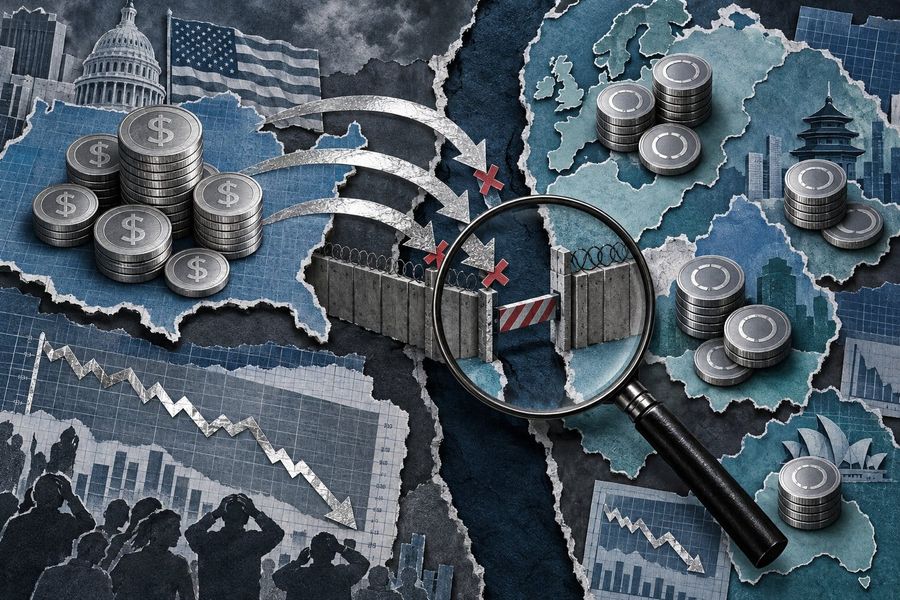
Circle Internet Group had already been sliding for weeks, but June 30, 2026 delivered the sharpest blow yet — not to its product, but to the business model underneath it. In a single session, more than 140 firms lined up behind a rival dollar stablecoin, and the market repriced Circle almost immediately.
What Happened on June 30, 2026
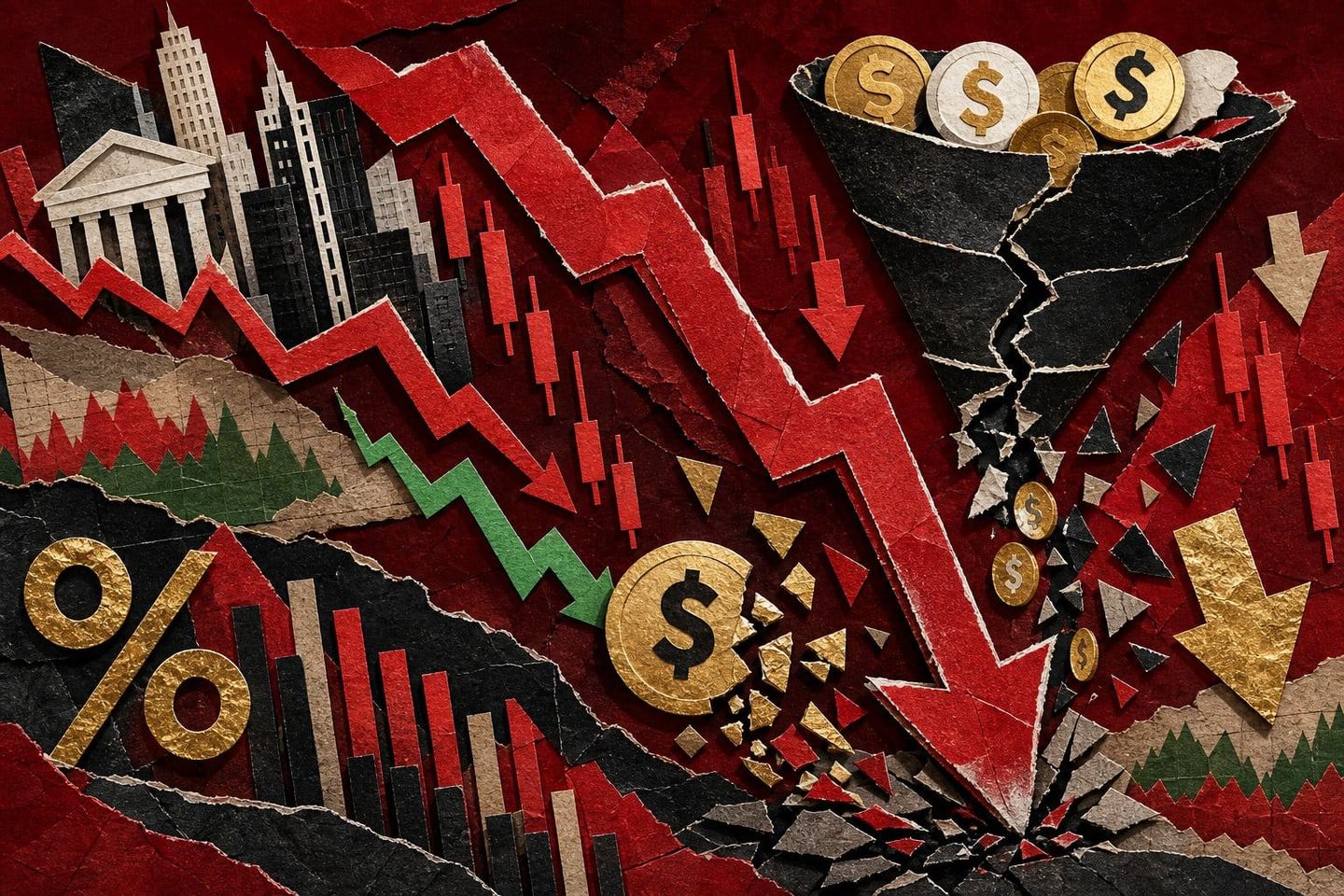
Shares of Circle (NYSE: CRCL), the issuer of USDC, fell roughly 17.5% to close near $62.63 — a four-month low not seen since late February . That left the stock down about 55% from its mid-May 2026 highs and roughly 80% below its June 2025 all-time high near $299 .
The trigger was a product announcement that read like a repricing event. A new independent entity, Open Standard, unveiled Open USD (OUSD), a dollar stablecoin backed by more than 140 partner firms and slated to launch later in 2026 . The roster spanned payments, banking, big tech and crypto infrastructure, including:
- Payments: Visa, Mastercard, American Express, Stripe, Discover
- Finance: BlackRock, BNY, Standard Chartered, DBS, U.S. Bank
- Big tech: Google/Alphabet, Samsung, IBM, Shopify
- Crypto: Coinbase, Ripple, Bybit, OKX, Gemini
Notably, both Tether and Circle were excluded from the consortium . The fallout spread to Coinbase, whose shares fell about 6% to $142.37 the same session — even though Coinbase itself is listed as an OUSD partner . A simultaneous FTSE Russell annual reconstitution removed Circle from several Russell growth indexes, forcing mechanical selling from index-tracking funds that amplified the OUSD-driven move .
The One Revenue Source: Why 96% Yield Concentration Made CRCL Vulnerable
The selloff targeted Circle's profit engine, not its product. Roughly 96% of Circle's income derives from reserve yield — interest earned on the short-duration US Treasuries backing USDC . With USDC's market cap near $73.6 billion at the announcement, that yield funds the whole business .
The scale of that dependence is stark against the financials. Circle reported fiscal-year revenue of about $2.75 billion, yet carried a trailing-12-month net loss of roughly $69.5 million . When one interest-rate-linked stream carries the model, any threat to that stream reprices the equity.
Open USD (OUSD) is engineered to invert exactly this model. Reports say businesses can mint and redeem the token with no fees and no volume limits, and that most reserve income on the backing assets is returned to participating partners after operating costs and a small management fee . That hands the yield to the firms driving adoption.
The structural difference decides the bargaining power:
- Circle's model: retain the yield, then pay distributors — most prominently Coinbase — a revenue share to secure reach .
- OUSD's model: more than 140 partners supply distribution channels directly and receive the yield in return, removing the need to buy reach .
That matters because the incumbent economics are not dominant. As of April 2026, USDT held roughly 62% of the stablecoin market versus USDC's ~25% . A yield-sharing rival with built-in distribution attacks the margins that funded that near-duopoly. Tether CEO Paolo Ardoino framed the arrival bluntly: "Welcome OUSD. Player 2 has entered the game" .
Credible Threat or Libra 2.0? What the Precedent Says
Wall Street splits sharply on whether OUSD is existential or an overreaction. The bear case is concrete: Mizuho downgraded Circle to Underperform with a $50 target, and JPMorgan flagged structural threats to USDC's economics . But the sharpest argument is historical, not analytical.
The Libra parallel is unavoidable. Facebook's 2019 stablecoin consortium featured a nearly identical roster — Visa, Mastercard, Stripe, PayPal and eBay — before it collapsed under regulatory pressure within months . The closer precedent is Paxos' consortium-backed, yield-sharing Global Dollar Network (USDG), which uses the same economic structure OUSD proposes. Since its late-2024 launch it has reached only about $3 billion, against USDC's ~$73 billion. Logos do not equal adoption.
Governance is the other soft spot. Coordinating 140-plus competing commercial interests through a partner-run board adds execution risk that a partner list cannot show.
"Consortiums are hard and they break easily," — Rob Hadick, General Partner at Dragonfly (source: CoinDesk).
The bull case leans on incumbency. William Blair reaffirmed Outperform, citing Circle's first-mover advantage, deep liquidity and established payments infrastructure, while Clear Street called the selloff overdone . Analysts who watched USDC survive earlier challenges argue built liquidity is a moat a launch announcement cannot replicate (video: AF ROKIB). The gap is stark on price: Wall Street's average 12-month CRCL target sits near $130–$138, roughly double the ~$62 close that followed the news . Whether that gap closes depends on real minting volume, not the strength of the founding roster.
What to Watch Next
The next two quarters will settle whether OUSD compresses Circle's economics or fades like prior consortiums. Three concrete catalysts matter more than headlines, and one price zone defines the risk.
- Coinbase renewal (August 2026): Circle's revenue-sharing agreement with Coinbase — the deal that funds a large slice of USDC reserve economics — is reportedly up for renegotiation . Adverse terms would directly pressure the yield model already under attack.
- OUSD launch (later 2026): Open Standard plans to go live on Base, Solana, Stellar, and Polygon, with Stripe reportedly making OUSD a default payment option and Coinbase integrating it into Base L2 . Watch actual circulation figures, not press releases.
- Circle National Trust (approved): Circle won OCC approval for a national trust bank able to directly manage USDC reserves and support custody, though it cannot take deposits or make loans; the news triggered a ~7% bounce, yet shares stayed almost 20% down in 2026 . The regulatory moat is defense, not offense.
On price, analyst bear targets cluster near $50–$65, the current trading range after the ~$62 close . USDC market-cap growth already stalled over the prior six months (video: Investing Talk Podcast), so any further deceleration — or unfavorable Coinbase terms — would validate the downside case.
The takeaway: OUSD is a credible threat because of who backs it, but Circle's ~$73 billion USDC base and existing liquidity buy time. Minting volume and the August renewal, not the founding roster, decide the next move.
Frequently asked questions
What is OpenUSD (OUSD) and how does its revenue model differ from USDC?
OpenUSD is a dollar stablecoin issued by Open Standard, an independent entity governed by a board of its 140-plus partner companies rather than a single issuer . The core difference is who keeps the yield. USDC's issuer, Circle, retains interest earned on the Treasuries backing the token as revenue. OUSD instead returns most reserve income to participating businesses after operating costs and a small management fee, with no mint or redemption fees and no volume caps .
Why did Circle (CRCL) stock fall 17.5% on a single day?
Two hits landed at once on June 30, 2026. The OUSD announcement directly threatened Circle's revenue model, which draws roughly 96% of income from interest on the Treasuries backing USDC . The same day, FTSE Russell's annual reconstitution removed Circle from several Russell growth indexes, forcing mechanical selling from index-tracking funds and amplifying the drop to a close near $62.63, a four-month low .
Is Coinbase backing Circle or OpenUSD?
Both. Coinbase co-founded USDC and earns revenue-sharing from it; its subscription and services segment, which includes that income, was reported at 44% of Q1 revenue . Coinbase is also listed as an OUSD partner, integrating the token into its Base L2 . Morgan Stanley considers it very unlikely Coinbase would exit its lucrative USDC deal voluntarily, so the OUSD partnership reads as a hedge rather than a defection .
What are analysts' price targets for CRCL after the crash?
Wall Street's 12-month consensus sits near $130–$138, well above the roughly $62.63 close on the day of the crash . The bear low-end is Mizuho at $50 after its downgrade to underperform, while the bull high reaches about $243 . That spread implies meaningful upside on paper, but it is contingent on OUSD failing to scale enough to compress Circle's reserve-income economics.
Has a stablecoin consortium like OpenUSD succeeded before?
History is cautionary. Facebook's 2019 Libra project featured a similar roster — Visa, Mastercard, Stripe, PayPal and eBay — before regulatory pressure dismantled it within months . More directly, Paxos' yield-sharing Global Dollar Network (USDG) has grown to only about $3 billion since late 2024, far behind USDC near $73 billion and USDT near $145 billion . As Dragonfly's Rob Hadick put it, "consortiums are hard and they break easily." Scale requires adoption, not logos.
Enjoyed this article? Subscribe to get new stories by email whenever they're published.