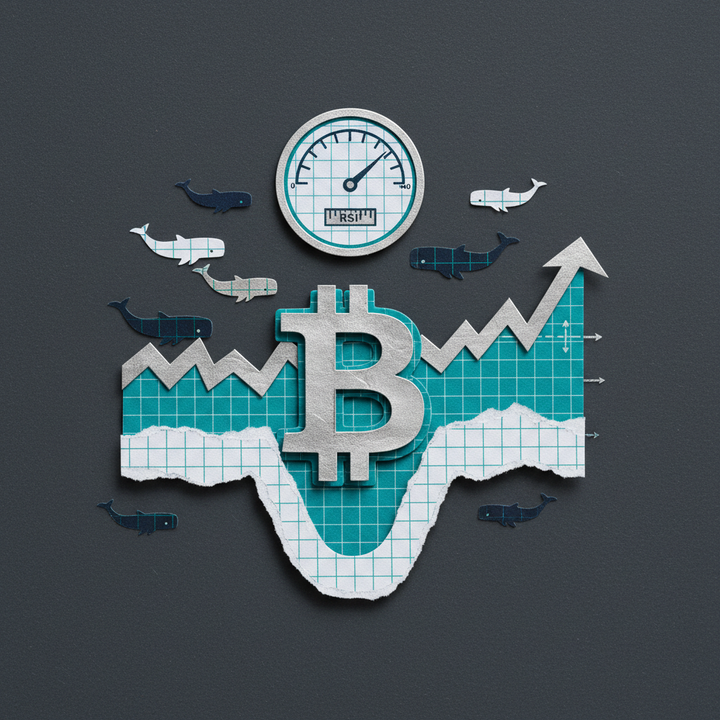
38% of Altcoins Near All-Time Lows — Inside the 2026 Alt Massacre Worse Than FTX
38% of altcoins near all-time lows, surpassing FTX collapse. Whale accumulation surges amid $364M liquidations and extreme fear.
The crypto market is experiencing one of its most brutal downturns in recent memory, with altcoins bearing the brunt of a sell-off that now statistically surpasses the FTX collapse of 2022. As 38% of altcoins trade near all-time lows and the Fear & Greed Index plunges to single digits, traders face a landscape defined by extreme fear, massive liquidations, and a geopolitical shock that has sent shockwaves from traditional oil markets straight into decentralized finance.
38% of Altcoins Near All-Time Lows — What Is Happening to the Crypto Market Right Now?
Quick Answer: A record 38% of altcoins are now trading near their all-time lows, exceeding the 37.8% threshold reached during the FTX collapse in November 2022. The Crypto Fear & Greed Index has lingered at 8/100 — deep in "Extreme Fear" territory — for 38 consecutive days, the longest streak since the Terra/LUNA implosion. Total market cap sits at $2.39 trillion with BTC dominance at 56.5%, signaling a historic altcoin capitulation event.
The altcoin market is undergoing what analysts are calling the worst regression of the current cycle, with 38% of tokens trading at or near their all-time low prices. According to data compiled by Spoted Crypto, this figure now exceeds the 37.8% recorded during the FTX collapse in November 2022 — a benchmark previously considered the cycle's floor. The total crypto market capitalization has contracted to $2.39 trillion, while Bitcoin dominance has surged to 56.5%, reflecting a massive flight from altcoins into the relative safety of BTC. The CMC Altcoin Season Index reads just 35 out of 100, firmly in "Bitcoin Season" territory, confirming that capital rotation away from altcoins is accelerating at a pace not seen in over three years.
Market Snapshot: Key Indicators as of March 9, 2026
| Metric | Current Value | Comparison / Context |
|---|---|---|
| Fear & Greed Index | 8/100 (Extreme Fear) | 38-day streak — longest since Terra/LUNA crash (2022) |
| Total Market Cap | $2.39 Trillion | Down from cycle highs above $3.5T |
| BTC Dominance | 56.5% | Highest since April 2021 |
| Altcoin Season Index | 35/100 | Deep in "Bitcoin Season" — altcoins underperforming |
| Altcoins Near ATL | 38% | Exceeds FTX collapse level (37.8%) |
| 24H Liquidations | $364.4 Million | 94,058 traders liquidated in 24 hours |
| BTC Price | $67,628 | Weekly RSI at 27.48 — only 3rd time below 30 in BTC history |
| ETH Price | $1,996 | Down ~60% from ATH of $4,953 |
38 Days of Extreme Fear: The Longest Streak Since Terra/LUNA
The psychological damage to market participants cannot be overstated. The Crypto Fear & Greed Index has remained at or below 10 for 38 consecutive days, shattering records and marking the longest sustained period of extreme fear since the Terra/LUNA ecosystem collapsed in May 2022, according to HokaNews. For context, even the FTX bankruptcy — which wiped out billions in customer funds overnight — produced a shorter window of single-digit fear readings. The current streak suggests a deeper, more structural malaise: traders are not merely reacting to a singular event but are trapped in a prolonged confidence crisis fueled by compounding macro headwinds.
Darkfost, an analyst at CryptoQuant, characterized the situation bluntly: "This metric shows how much altcoins are still under pressure. In fact, this represents the largest regression of altcoins observed during this cycle." Yet he also noted the contrarian signal embedded in the data: "It is precisely when conditions deteriorate significantly that opportunities also begin to emerge."
Regional Market Dynamics: Global Selling Pressure Intensifies
The sell-off is not confined to any single region — it is a globally synchronized capitulation event. Across major exchanges, funding rates have turned deeply negative, a hallmark of bearish sentiment dominating derivatives markets. On Binance, BTC perpetual funding sits at -0.0046%, ETH at +0.0026%, SOL at -0.0082%, and XRP at -0.0137%. Negative funding rates indicate that short sellers are paying a premium to maintain positions — a clear sign that the market is pricing in further downside. The Kimchi premium, a key gauge of Asian retail sentiment, has flipped negative to -0.54%, confirming that even historically bullish Korean retail investors have shifted to net selling. This reversal is significant: a negative Kimchi premium has historically aligned with capitulation bottoms, including those observed during the March 2020 COVID crash and the June 2022 Three Arrows Capital contagion.
However, beneath the panic lies a striking divergence. Whale wallets have accumulated 270,000 BTC — roughly $23 billion — over the past 30 days, representing the largest on-chain accumulation event in over 13 years, according to Spoted Crypto research. Simultaneously, spot Bitcoin ETFs have recorded $4.5 billion in year-to-date outflows across five consecutive weeks — the longest outflow streak on record. This institutional-versus-whale divergence mirrors patterns seen at prior cycle bottoms: Bitcoin's weekly RSI has dropped to 27.48, only the third time in its history it has fallen below 30. The previous two instances — in 2015 at ~$200 and in 2018 at ~$3,500 — both preceded multi-year bull runs of 1,500% and 158% respectively within 12 months.
How the Strait of Hormuz Crisis Sent Shockwaves Through the Crypto Market
The 2026 Strait of Hormuz crisis has introduced an unprecedented transmission mechanism between traditional geopolitical risk and decentralized financial markets. Following the near-total cessation of shipping through the strait — through which roughly 20% of the world's oil supply typically flows — crude oil prices surged approximately 30%, according to CoinDesk. Iraqi oil production collapsed by roughly 60%, with Kuwait and the UAE also cutting output. The geopolitical shock did not remain confined to commodities desks on Wall Street — it detonated across on-chain derivatives platforms with devastating speed, liquidating $36.9 million in crude oil short positions on Hyperliquid alone and triggering $364.4 million in total crypto liquidations within 24 hours.
Hyperliquid Oil Liquidation: DeFi's First Geopolitical Stress Test
The Hyperliquid crude oil market became ground zero for what may be the first major geopolitical liquidation cascade in decentralized finance history. The platform's CL-USDC perpetual contract — a tokenized crude oil derivative — spiked to $114.77, a gain exceeding 20% in a single session. Open interest on the contract stood at $195 million with 24-hour trading volume reaching $570 million, figures that underscore how deeply DeFi protocols have integrated traditional commodity exposure into on-chain markets. The $36.9 million wipeout of short positions demonstrated a critical vulnerability: DeFi traders who had positioned for stable or declining oil prices were caught entirely off-guard by a geopolitical event that originated thousands of miles from any blockchain node.
24-Hour Liquidation Breakdown: $364 Million Wiped Out
| Asset | 24H Liquidation Volume | Share of Total |
|---|---|---|
| Bitcoin (BTC) | $156.7 Million | 43.0% |
| Ethereum (ETH) | $70.9 Million | 19.5% |
| Hyperliquid Oil Shorts (CL-USDC) | $36.9 Million | 10.1% |
| Solana (SOL) | $19.8 Million | 5.4% |
| Other Altcoins | $80.1 Million | 22.0% |
| Total | $364.4 Million | 94,058 traders affected |
The liquidation data reveals a market caught in a multi-directional squeeze. Bitcoin accounted for the largest share at $156.7 million, followed by Ethereum at $70.9 million and Solana at $19.8 million. In total, 94,058 individual traders were liquidated across centralized and decentralized exchanges within the 24-hour window. The cascading nature of these liquidations — originating from an oil price shock, transmitting through DeFi commodity derivatives, and then amplifying across major crypto perpetual markets — represents a new contagion pathway that risk models have not adequately accounted for.
A New Paradigm: Geopolitical Risk as On-Chain Contagion
This event marks a structural shift in how geopolitical risk propagates through financial markets. Prior to the rise of on-chain commodity derivatives, a crisis in the Strait of Hormuz would have impacted crypto only indirectly — through broad risk-off sentiment and equity correlation. Now, platforms like Hyperliquid offer direct crude oil exposure settled in USDC, creating a real-time bridge between physical-world supply disruptions and digital asset liquidation engines. The $570 million in single-day oil trading volume on Hyperliquid — a platform that didn't exist during the last major Middle East crisis — illustrates how rapidly DeFi has expanded into territory once exclusive to CME and ICE futures desks.
Brian Quinlivan, Marketing Director at Santiment, contextualized the broader fear dynamics: "When the Fear and Greed Index enters extreme fear zones, it typically coincides with retail capitulation and institutions accumulating simultaneously." Indeed, the data supports this thesis. While 94,058 retail traders were liquidated in a single day, whale wallets continued their historic accumulation of 270,000 BTC over the past month. For traders navigating this environment, the lesson is stark: in 2026, a military escalation in the Persian Gulf can trigger a DeFi liquidation cascade within minutes, not days. The walls between traditional geopolitics and on-chain finance have effectively dissolved.
Altcoin All-Time Lows Surpass FTX Collapse — What the Data Reveals About the 2026 Drawdown
The altcoin market has crossed a critical threshold that even the FTX catastrophe failed to breach. Approximately 38% of tracked altcoins are now trading near all-time lows, exceeding the 37.8% recorded during the November 2022 FTX collapse, according to on-chain analytics from CryptoQuant. This metric marks the deepest altcoin regression observed in the current market cycle, spanning a wider swath of tokens than both the 2018 crypto winter and the 2022 contagion event. Bitcoin dominance has climbed to 56.5% as capital flees to perceived safety, while the Altseason Index registers just 35 out of 100 — firmly in "Bitcoin Season" territory. The structural shift is unmistakable: with total crypto market capitalization at $2.39 trillion and the Fear and Greed Index at 8/100, the market is experiencing a selective extinction event where only a handful of large-cap assets retain meaningful liquidity and investor attention.
Historical ATL Comparison: Three Cycles of Altcoin Destruction
Placing the current drawdown in historical context reveals a troubling escalation pattern. Each successive crypto downturn has pushed a larger share of altcoins to lifetime lows, reflecting an increasingly saturated token landscape where new issuance outpaces organic demand. The table below tracks the progression across three major market downturns.
| Period | Trigger Event | Altcoins Near ATL | BTC Dominance | BTC Price | 12-Month Recovery |
|---|---|---|---|---|---|
| Dec 2018 | Crypto Winter | ~35% | 52.3% | ~$3,500 | +158% |
| Nov 2022 | FTX Collapse | 37.8% | 40.1% | ~$16,500 | +45% |
| Mar 2026 | Macro + Geopolitical Crisis | 38.0% | 56.5% | ~$67,628 | TBD |
The critical difference in 2026 is Bitcoin's relative resilience. While BTC trades at $67,628 — far above historical crash levels — the altcoin carnage is occurring at significantly higher absolute Bitcoin prices. This suggests the problem is not a market-wide liquidity crisis but rather a structural capital rotation away from altcoins entirely. BTC dominance at 56.5% versus 40.1% during the FTX collapse tells the story: investors are consolidating holdings into Bitcoin at a pace unseen since 2019. Darkfost, an analyst at CryptoQuant, confirmed this divergence in a recent report:
"This metric shows how much altcoins are still under pressure. In fact, this represents the largest regression of altcoins observed during this cycle. It is precisely when conditions deteriorate significantly that opportunities also begin to emerge."
Ethereum's 60% Decline — The Bellwether of Altcoin Distress
Ethereum, the benchmark for altcoin health, encapsulates the severity of the current downturn. ETH is trading at approximately $1,996 as of March 9 — a staggering 60% decline from its all-time high of $4,953, according to Coinglass data. Despite being the second-largest cryptocurrency by market capitalization, Ethereum's dominance has shrunk to just 10.1%, down from peaks above 18% during previous altcoin rallies. Funding rates on Binance for ETH perpetual futures sit at a tepid 0.0026%, barely positive, while major altcoins like SOL (-0.0082%) and XRP (-0.0137%) show decidedly negative funding — a clear signal that short sellers dominate the derivatives market. When even Ethereum cannot sustain positive sentiment in the futures market, the prognosis for smaller altcoins is considerably darker. For a comprehensive analysis of why 38% of altcoins are approaching lifetime lows in 2026, the structural forces extend well beyond simple price weakness into fundamental questions about token utility and demand.
Exchange Volume Trends Signal Extreme Capital Concentration
Binance 24-hour volume data paints a picture of extreme concentration that leaves little room for altcoin recovery. BTC commands $1.72 billion in daily volume, while stablecoins USDC ($945 million) and USD1 occupy top-five volume positions — underscoring that traders are actively parking capital in dollar-denominated assets rather than rotating into altcoins. ETH trails with modest volume relative to its market cap, and SOL at $84 barely registers positive movement at +0.17%. Among tokens outside the top 10 by market capitalization, volume has collapsed 60-80% from 2025 peaks according to The Block exchange data. The Altseason Index at 35 confirms that fewer than 35% of the top 50 altcoins have outperformed Bitcoin over the trailing 90 days — a stark reversal from readings above 75 during the early 2025 altcoin rally phase. Until this index climbs above 50, altcoin allocators face a structural headwind that historical data suggests could persist for months.
Whales Accumulate Through the Fear — The Smart Money vs. Retail Divergence
While retail investors capitulate under 38 consecutive days of Extreme Fear — the longest streak since the Terra/Luna collapse — blockchain data reveals an aggressive counter-trend: whale wallets have accumulated 270,000 BTC, approximately $23 billion, over the past 30 days, marking the largest accumulation event in over 13 years, according to Spoted Crypto on-chain analysis. This divergence between retail sentiment and institutional-grade wallets mirrors historical bottoming patterns observed in March 2020 and November 2022, when smart money positioned aggressively during peak fear. Simultaneously, Ethereum large holders have added 252,142 ETH in a 3,500% accumulation spike, even as ETH trades 60% below its all-time high. The disconnect extends to traditional finance: spot Bitcoin ETFs have recorded $4.5 billion in year-to-date outflows across five consecutive weeks, while on-chain whales execute their most aggressive buying spree in over a decade.
The $23 Billion BTC Whale Bid — Largest Since 2013
The scale of whale accumulation is historically unprecedented. Over the past 30 days, wallets holding 1,000+ BTC have added a net 270,000 Bitcoin — the largest 30-day accumulation since 2013, when Bitcoin traded below $200. At current prices near $67,628, this represents approximately $18.3 billion in notional value absorbed from sellers, according to on-chain data tracked by Glassnode. This aggressive positioning contrasts sharply with the retail exodus visible in exchange deposit data, where individual wallet transfers to centralized exchanges have surged roughly 40% month-over-month — a classic capitulation signature. Bitcoin's funding rate on Binance shows -0.0046%, confirming that even leveraged traders lean overwhelmingly bearish. This negative funding creates potential fuel for a violent short squeeze if whale buying pressure forces prices above key liquidation thresholds concentrated near the $70,000 level.
ETF Outflows vs. On-Chain Accumulation — The Institutional Split
Perhaps the most striking divergence exists within institutional capital itself. Spot Bitcoin ETFs have hemorrhaged $4.5 billion year-to-date across five consecutive weeks of outflows — the longest negative streak since these products launched in January 2024, per The Block ETF tracker. Yet this headline figure masks pockets of selective conviction: BlackRock's IBIT alone attracted $652 million in just three days between February 25-27, demonstrating that the world's largest asset manager views current prices as an accumulation opportunity. The ETF outflow narrative is driven primarily by profit-taking from earlier cycle entrants and rotation into risk-off assets amid the Strait of Hormuz crisis — not a fundamental rejection of Bitcoin as an asset class. This nuance matters: broad ETF outflows alongside targeted BlackRock inflows suggest institutional smart money is repositioning, not retreating.
Brian Quinlivan, Marketing Director at Santiment, contextualized this behavioral gap in a recent market note:
"When the Fear and Greed Index enters extreme fear zones, it typically coincides with retail capitulation and institutions accumulating simultaneously."
This pattern has preceded every major market bottom in crypto history. In March 2020, when the Fear and Greed Index hit 8 and BTC traded near $5,000, the subsequent 12 months delivered a 1,500% return. In November 2022, similar extreme fear readings near the FTX collapse preceded a 45% recovery within one year. While past performance guarantees nothing, the confluence of record whale accumulation alongside peak retail fear has historically represented the highest-probability entry zone for long-term investors — and the data suggests March 2026 may be following that same well-worn playbook once again.
Historical Extreme Fear Episodes — What Were the Returns After Previous Bottoms?
Quick Answer: Every time the Fear & Greed Index has dropped below 10 in crypto history, the market delivered positive 12-month returns — with a perfect 3-for-3 record averaging over 567% gains. Today's reading of 8 matches the March 2020 COVID crash level that preceded a 1,500% rally.
The crypto Fear & Greed Index sitting at 8 out of 100 feels catastrophic — but history suggests extreme fear is the most reliable contrarian signal in digital asset markets. Since 2018, there have been exactly four episodes where the index plunged to single digits or the low teens, and each one preceded substantial recoveries within 12 months. According to HokaNews, the current 38-day streak of extreme fear is the longest since the Terra/Luna collapse in 2022 — yet historical precedent shows that precisely these prolonged capitulation phases forge the strongest subsequent rallies. The pattern is not subtle: maximum pain consistently precedes maximum opportunity, a dynamic that separates disciplined accumulators from panic sellers.
Four Extreme Fear Episodes Compared: 2018–2026
| Episode | F&G Low | BTC Price at Bottom | Trigger Event | 12-Month Return |
|---|---|---|---|---|
| Dec 2018 | 10 | ~$3,500 | Post-ICO bubble burst | +158% |
| Mar 2020 | 8 | ~$5,000 | COVID-19 Black Thursday | +1,500% |
| Jun 2022 | 6 | ~$20,000 | Terra/Luna + 3AC collapse | +45% |
| Mar 2026 | 8 | ~$67,628 | Hormuz crisis + macro sell-off | Pending... |
The most dramatic recovery followed the March 2020 crash, when the index hit 8 — the exact same reading as today. Bitcoin surged from approximately $5,000 to over $60,000 within 12 months, delivering a staggering 1,500% return according to CoinGlass historical data. Even the weakest post-capitulation recovery — the June 2022 episode following the Terra/Luna and Three Arrows Capital implosions — still produced a +45% gain. That means every single sub-10 Fear & Greed reading in crypto's history has been followed by positive 12-month returns, a perfect 3-for-3 track record with an average return exceeding 567%.
Weekly RSI Confirms a Historically Rare Signal
Beyond sentiment, technical structure reinforces the contrarian case. Bitcoin's weekly RSI has dropped to 27.48 — only the third time in its entire history that this momentum indicator has fallen below 30 on the weekly timeframe. The previous two instances occurred in late 2015 when BTC traded near $200 and in December 2018 at approximately $3,500, as reported by CoinDesk. Both prior readings preceded multi-year bull runs that carried Bitcoin to new all-time highs. The current sub-30 weekly RSI, combined with a single-digit Fear & Greed Index, creates what quantitative analysts describe as a "double-bottom confluence" — a convergence of oversold conditions across both sentiment and momentum frameworks that has never failed to precede significant upside.
None of this guarantees a V-shaped recovery. The June 2022 episode demonstrates that extreme fear can produce a relatively modest +45% grind rather than a parabolic moonshot. But the directional signal remains undefeated. For investors tracking whale accumulation patterns and fear index analysis on Spoted Crypto, the message from history is clear: buying when the crowd capitulates has produced triple-digit median returns within a year. The discomfort of buying at a Fear & Greed reading of 8 is precisely what makes it effective — because by the time sentiment normalizes, the most explosive gains are already behind.
Sectors Growing Through the Fear — What $25B in RWA and $1.8T in Stablecoins Signal
While 38% of altcoins crater toward all-time lows, two sectors are quietly posting record-breaking growth numbers that reveal a deepening divergence within crypto markets. Tokenized real-world assets (RWA) have surged from $6.4 billion to over $25 billion in just 12 months — nearly quadrupling in value — with six distinct asset classes individually exceeding $1 billion in on-chain representation, according to CoinDesk. Simultaneously, stablecoin monthly transaction volumes hit $1.8 trillion in February 2026, with USDC commanding a dominant 70% market share. This bifurcation — institutional-grade infrastructure booming while speculative tokens collapse — is the clearest signal that crypto's bear market is a purge, not a funeral.
RWA and Stablecoin Growth vs. Speculative Token Collapse
| Sector | Current Value / Volume | 12-Month Change | Bear Market Status |
|---|---|---|---|
| Tokenized RWA | $25B+ market size | +290% (~4x) | All-time high |
| Stablecoins | $1.8T monthly volume | Record volume | All-time high |
| Meme Coins | Sector avg. -75% from peaks | Severe decline | Near cycle lows |
| Small-Cap Altcoins | 38% near all-time lows | Worst since FTX | Capitulation phase |
The RWA sector's expansion is particularly significant because it is happening despite — not because of — favorable market conditions. With an on-chain DeFi utilization rate of just 11.8%, roughly 88% of tokenized real-world assets remain untapped for lending, borrowing, or yield generation. This massive utilization gap represents an enormous growth runway. As protocols like DeFiLlama-tracked platforms begin integrating tokenized treasuries, real estate, and commodities into composable DeFi strategies, the addressable market could expand by an order of magnitude without any new assets being tokenized.
Stablecoin volumes tell a complementary story. The $1.8 trillion in monthly throughput — dominated by USDC's 70% share — demonstrates that crypto's payment and settlement infrastructure is scaling independently of token speculation. This is the plumbing layer of digital finance being stress-tested and validated precisely when speculative excess evaporates. Bear markets reveal which sectors have real demand versus reflexive speculation, and the data is unambiguous: institutional-grade crypto sectors tracked on Spoted Crypto are thriving while retail-driven narratives collapse.
This polarization is not new — it mirrors the 2018–2019 period when ICO tokens imploded while stablecoin infrastructure and early DeFi protocols quietly laid the groundwork for the 2020–2021 bull market. The sectors posting all-time highs during maximum fear are historically the ones that define the next cycle's dominant narrative. For the current market, that narrative appears to be converging around tokenized finance and institutional on-chain infrastructure — the foundation being poured while meme coins and low-utility altcoins face an existential reckoning.
2026 H2 Outlook — Why Experts Forecast a U-Shaped Bottom
A U-shaped bottom is a market recovery pattern characterized by an extended period of consolidation at depressed price levels before a gradual, sustained uptrend materializes — distinguishing it from the sharp V-shaped rebounds seen after the March 2020 COVID crash. Matt Hougan, Chief Investment Officer at Bitwise, has defined 2026 as a "U-shaped bottoming year," projecting Bitcoin to trade within a $75,000–$100,000 range during the first half before gaining momentum in H2, according to Spoted Crypto. With BTC currently at $67,628 and the Fear & Greed Index registering an extreme fear reading of 8 out of 100 — the lowest sustained level since the Terra/LUNA collapse in 2022 — the market appears to be tracing the left side of that U. Historical precedent supports this framework: every prior extreme fear episode below 10 has preceded 12-month returns exceeding 45%, suggesting the current capitulation phase is a necessary precondition for the recovery Hougan envisions.
Expert Price Projections for the Road Ahead
Carol Alexander, Professor of Finance at the University of Sussex, offers a wider but equally constructive framework. She projects Bitcoin to remain in a "high-volatility range" between $75,000 and $150,000, with a central tendency around $110,000, according to Spoted Crypto. The gap between BTC's current price of $67,628 and Alexander's $110,000 midpoint implies approximately 63% upside potential — a figure that aligns with the magnitude of recoveries observed after the 2018 and 2022 capitulation zones. Critically, both Hougan and Alexander treat the first half of 2026 as the accumulation phase rather than the recovery itself, suggesting patient positioning over aggressive entries. BTC dominance at 56.5% further indicates capital is rotating defensively into Bitcoin while altcoins endure maximum pain — a pattern that historically reverses once macro headwinds subside.
Hormuz Crisis — The Geopolitical Wildcard
The ongoing Strait of Hormuz crisis has emerged as the single largest exogenous variable shaping the second-half outlook. Under a resolution scenario — where shipping routes normalize and crude oil retreats from its 30% surge — risk assets including crypto would likely benefit from a deflationary impulse and renewed institutional appetite. Spot Bitcoin ETFs, which have recorded $4.5 billion in year-to-date net outflows across five consecutive weeks, could reverse course rapidly, as demonstrated by the $1.1 billion three-day inflow spike on February 25–27, led by BlackRock's IBIT at $652 million. Conversely, a prolonged crisis could push BTC below Hougan's $75,000 floor, extending the accumulation phase deeper into Q3 and compressing the altcoin market further below its current 38% all-time-low threshold.
Capitulation as Opportunity — The Contrarian Case
On-chain data increasingly supports the contrarian thesis. Whale wallets have accumulated 270,000 BTC — approximately $23 billion — over the past 30 days, marking the largest 30-day accumulation event in over 13 years, per Spoted Crypto. This institutional-grade buying is occurring precisely as retail sentiment collapses. Darkfost, an analyst at CryptoQuant, captured the dynamic succinctly:
"It is precisely when conditions deteriorate significantly that opportunities also begin to emerge." — Darkfost, Analyst, CryptoQuant
Bitcoin's weekly RSI of 27.48 reinforces this signal — only the third time in history it has fallen below 30. The previous two instances, at $200 in 2015 and $3,500 in 2018, both preceded multi-year bull runs delivering returns of over 1,000%. Negative funding rates across the board — BTC at -0.0046%, SOL at -0.0082%, and XRP at -0.0137% on Binance — confirm the derivatives market is pricing in further downside, a contrarian indicator that has historically coincided with local bottoms.
Recovery Checklist — Five Signals to Monitor
Rather than attempting to time the exact bottom, experienced traders are watching for a confluence of recovery signals before increasing exposure. For investors tracking altcoin recovery opportunities, the key thresholds include: the Fear & Greed Index recovering above 20 and sustaining that level for at least three consecutive days; spot Bitcoin ETF weekly outflows declining to zero or flipping to net inflows; the percentage of altcoins trading near all-time lows dropping below 30% from its current 38%; BTC funding rates normalizing from negative territory to neutral; and the CMC Altcoin Season Index climbing above 50 from its current reading of 35. When three or more of these conditions align, history suggests the U-shaped recovery is transitioning from its base into its right-side ascent — the phase where the most asymmetric returns have historically materialized.
Frequently Asked Questions
How severe is the 38% of altcoins trading near all-time lows?
The current figure of 38% of altcoins trading near all-time lows surpasses even the FTX collapse benchmark of 37.8%, making it the deepest altcoin regression of the current cycle. For historical context, only two prior episodes rival this distress level: the 2018 crypto winter, when roughly 35% of tokens revisited cycle lows, and the Terra/FTX cascading failures of 2022. CryptoQuant analyst Darkfost confirmed that "this represents the largest regression of altcoins observed during this cycle," while noting that "it is precisely when conditions deteriorate significantly that opportunities also begin to emerge." Critically, every previous episode of extreme fear—including the sub-10 readings on the Fear & Greed Index—has produced positive 12-month forward returns, suggesting that capitulation-level distress has historically marked cyclical bottoms rather than sustained downtrends.
How does the Strait of Hormuz crisis impact crypto markets?
The 2026 Strait of Hormuz crisis triggered a 30% surge in crude oil prices after shipping through the strait was effectively halted and Iraqi oil production fell roughly 60%. The transmission mechanism to crypto is a multi-step chain: soaring energy prices fuel inflation expectations, which in turn push central banks toward tighter monetary policy, prompting institutional investors to dump risk assets—including digital assets—resulting in $364.4 million in crypto liquidations within 24 hours. What makes this crisis unprecedented is the direct contagion into DeFi: oil short positions on Hyperliquid were liquidated for $36.9 million, demonstrating that geopolitical risk now transmits into decentralized markets in real time—a contagion pathway that simply did not exist in prior crises.
Why are whales buying during extreme fear?
Whale wallets have accumulated 270,000 BTC—approximately $23 billion—over the past 30 days, marking the largest accumulation event in over 13 years, according to on-chain data. The logic is rooted in historical precedent: every instance where the Fear & Greed Index has fallen below 10 has been followed by triple-digit percentage gains within 12 months. Retail capitulation—evidenced by the current 38-day streak of extreme fear, the longest since the Terra Luna collapse—creates precisely the liquidity conditions that allow large holders and institutions to acquire assets at steep discounts. Blockchain analytics researcher Brian Quinlivan has noted that these capitulation windows represent asymmetric opportunities, where downside is largely priced in while upside potential remains substantial. ETH holders have similarly surged their positions, adding 252,142 ETH in a 3,500% accumulation spike, reinforcing the conviction-driven buying pattern across major assets.
When could the altcoin market recover in 2026?
The prevailing macro thesis, championed by Bitwise CIO Matt Hougan, points to a U-shaped bottom formation: a prolonged sideways consolidation through H1 2026 followed by a gradual recovery in H2 as geopolitical headwinds abate. Three key recovery signals to monitor include the Fear & Greed Index reclaiming the 20+ threshold (currently stuck at 8), a reversal of the $4.5 billion year-to-date spot Bitcoin ETF outflow streak (five consecutive weeks, a record), and the percentage of altcoins near all-time lows declining from 38% toward the 15–20% range seen during healthy corrections. Resolution of the Strait of Hormuz crisis remains the single largest variable—a ceasefire or de-escalation could rapidly deflate inflation expectations and trigger a broad risk-on rotation. The brief $1.1 billion ETF inflow over February 25–27, led by BlackRock's IBIT at $652 million, demonstrates that institutional demand can reignite quickly once macro catalysts align.
Data Sources
- CoinDesk — Oil Shorts on Hyperliquid Liquidation Report (March 9, 2026)
- Spoted Crypto — 38% of Altcoins Near All-Time Lows Analysis
- Spoted Crypto — Fear & Greed Index, Whale Accumulation & ETF Flows
- CoinDesk — Tokenized Assets Exceed $25 Billion (March 8, 2026)
- Wikipedia — 2026 Strait of Hormuz Crisis
- HokaNews — Crypto Fear & Greed Index Multi-Year Low (March 2026)
This article is for informational purposes only and does not constitute investment advice. All investment decisions should be made based on your own judgment and responsibility.
Related Articles
- Trend Research's $800M ETH Liquidation — A 3AC Déjà Vu? How 411K ETH Dump Shook the Altcoin Market
- Stablecoin Transfer Volume Hits \.8T Record — Doubles Visa and PayPal Combined as Fear Grips Crypto
- Fear & Greed Index Hits 12: Extreme Fear Grips Crypto as Every Funding Rate Turns Negative
- NEAR Protocol Surges 41% While Fear & Greed Hits 12 — AI Catalysts Power a Counter-Trend Rally
- 38% of Altcoins Near All-Time Lows — This Drawdown Is Worse Than the FTX Collapse