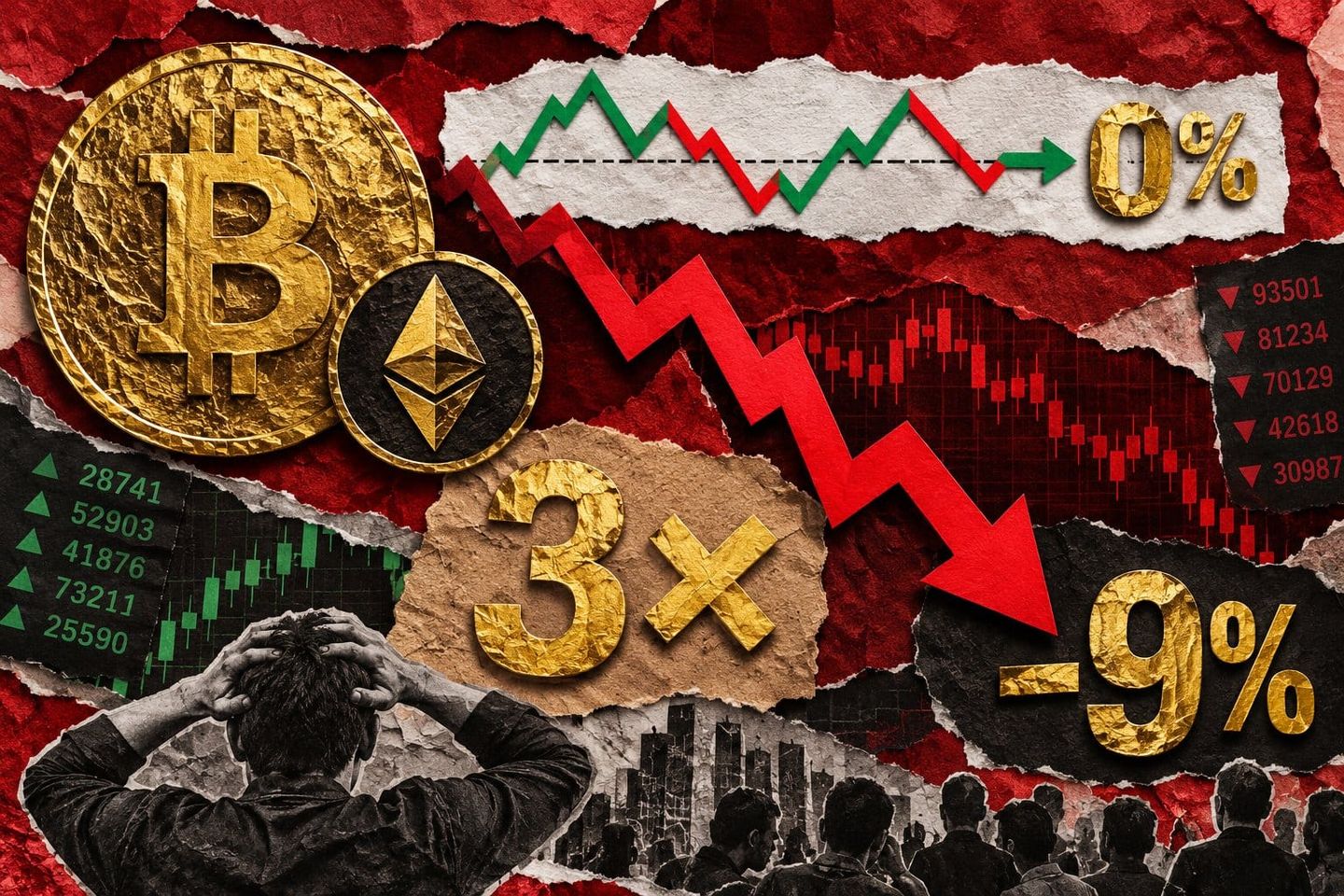
Bitcoin can finish a week exactly where it started while a 3x product tracking it finishes several percent lower. That gap is not a glitch — it is the arithmetic of daily-reset leverage, and U.S. retail traders are about to meet it in crypto form.
Is the 3x Bitcoin ETF Trading Yet? What the SEC Approved
No — the 3x Bitcoin ETF is not trading yet. On October 2, 2026 the SEC issued Release No. 34-106577, approving a Cboe BZX rule change that lets six triple-leveraged funds — 3x Gold, 3x Silver, 3x Bitcoin, 3x Ether, 3x Crude Oil, and 3x Natural Gas — list under BZX Rule 14.11(e)(4) . That order clears the listing standard, not the launch. Cboe BZX filed on August 10, 2026; notice followed August 14 with comments due September 9 .
Quick Answer: The SEC approved listing rules for the first U.S. 3x Bitcoin and 3x Ether ETPs on October 2, 2026 (Release 34-106577), not trading. Shares cannot change hands until each fund's Form S-1 is effective — no date disclosed. The funds hold CME futures, not spot coins, and reset leverage daily.
What the approved products actually are:
- Structure: Commodity-Based Trust Shares (ETPs, not 1940 Act funds), each a series of the VS Trust, sponsored by Volatility Shares LLC, with Wilmington Trust as trustee and U.S. Bank as custodian .
- Holdings: no spot Bitcoin or Ether — exposure comes from first- and second-month CME Bitcoin and Ether futures plus pledged cash equivalents .
- Status: no shares may be offered or sold until the Form S-1 becomes effective; VS Trust's August 17 preliminary prospectus proposes BITH and ETHK as working symbols, still unconfirmed in effective registration documents .
A bespoke filing was required because BZX Rule 14.11(e)(4)(F) bars leveraged products from the generic listing standard, forcing a standalone 19b-4 and an affirmative Commission order .
The Decay Math: Why Flat Bitcoin Still Means a 9% Loss
Volatility decay is the gap between a daily-reset leveraged product's return and three times the benchmark's return over any period longer than one session. It is the same compounding math the SEC's own investor bulletin uses to illustrate 2x decay, carried one leverage step further: a benchmark that rises 10% and then falls 10% ends down 1%, while a 3x product gains 30%, loses 30%, and finishes down 9% . Direction alone does not determine the outcome — path does.
The sponsor says the same thing in its own filing. Volatility Shares' prospectus language for the 3x Bitcoin strategy states the fund "seeks daily investment results, before fees and expenses, that correspond to three times (3x) the return of the price of bitcoin for a single day, not for any other period," and warns that longer-period results "will very likely differ in amount — and possibly even direction" from 3x Bitcoin's return .
"Seeks daily investment results… for a single day, not for any other period… results for longer periods will very likely differ in amount — and possibly even direction," — prospectus disclosure, Volatility Shares LLC, sponsor of the VS Trust (source: SEC EDGAR filing).
Two more numbers define the shape of the risk:
- Round-trip to flat: +10% then −9.09% leaves spot Bitcoin unchanged, but the 3x product finishes roughly 5.45% lower .
- The wipeout floor: a single 33% down day mathematically erases the fund — SEC-filed prospectus language for existing 3x leveraged products spells out the identical threshold, warning a fund "could lose an amount greater than its net assets in the event of a movement of the Index in excess of 33% in a direction adverse to the Fund" .
| Two-day path | Spot Bitcoin (1x) | 2x product (BITX-style) | 3x product |
|---|---|---|---|
| Day 1: +10% | +10.0% | +20.0% | +30.0% |
| Day 2: −10% | −10.0% | −20.0% | −30.0% |
| Net after 2 days | −1.0% | −4.0% | −9.0% |
Regulators have published the 2x version of this table since 2009: the SEC's own bulletin walks through a two-day case where an index falls 1%, from $1,000 to $990, while the 2x ETF falls 4%, from $1,000 to $960 . Crypto's realized volatility makes that drag faster, not slower — Bitcoin alone traded an intraday range of roughly 8%, from a low of $80,899 to a high of $87,363, on September 21, 2026 .
Why It Matters: Fees, Futures Basis, and the Wipeout Floor
Decay is only the first cost layer; fees, roll mechanics, and futures basis stack on top of it. The existing 2x Bitcoin product, BITX, launched in June 2023 and held roughly $1.3 billion in assets in early October 2026 at an expense ratio reported at 2.75% . The 3x fund's own preliminary prospectus hasn't gotten that far: its fee table is still a "Subject to Completion" placeholder with the expense percentage left blank, pending the effective registration . And BITX's 2.75% doesn't include futures roll costs, which stack on top of either fund's fee.
That roll is a separate drag. The reference portfolio moves expiring CME contracts over five sessions, roughly 20% of the position per day . In contango, each roll sells cheaper expiring contracts and buys pricier ones. The practical effect for a retail holder watching a spot chart:
- No spot exposure. The funds hold first- and second-month CME Bitcoin and Ether futures plus cash collateral, not coins .
- Tracking error by design. A 3% spot move does not translate into a clean 9% product move once basis and roll cost are applied .
- An absolute floor. A single 33% down day mathematically wipes out a 3x fund, the same threshold existing 3x leveraged-product prospectuses disclose on SEC EDGAR .
The historical case study is blunt. FINRA documented a 3x Russell 1000 Financial Services product that fell 53% between December 1, 2008 and April 30, 2009 while the underlying index gained roughly 8%; the −3x version lost 90% .
Daily-reset leveraged and inverse ETFs "typically are unsuitable for retail investors who plan to hold them for longer than one trading session, particularly in volatile markets," — FINRA Regulatory Notice 09-31, issued jointly with the SEC's investor alert of August 18, 2009 (source: FINRA, 2009-08).
Those 2009 mechanics are unchanged; the underlying asset is simply more volatile.
What to Watch Next: S-1 Effective Date, Tickers, and Suitability Rules
The launch signal is the S-1, not the October 2 approval. No shares of the 3x Bitcoin or 3x Ether ETF may be offered or sold until each fund's Form S-1 registration statement under the Securities Act of 1933 becomes effective, and the Commission's order disclosed no timeline . Until then, there is nothing to trade — only a listing standard that permits trading once registration clears.
Four concrete markers are worth tracking in the interim:
- S-1 effectiveness — the actual go-live trigger for each of the six VS Trust series .
- Final tickers — BITH and ETHK are the working symbols proposed in VS Trust's August 17 preliminary prospectus, still unconfirmed in effective registration documents .
- Confirmed expense ratios — the existing 2x product BITX is reported at 2.75%; the 3x fund's preliminary prospectus still leaves its own fee table blank, so the 3x line's figures remain pending .
- CME futures open interest — whether the funds' daily rebalancing becomes a visible share of first- and second-month Bitcoin and Ether contracts as assets build .
Two listing conditions shape day-one mechanics: a minimum of 100,000 shares outstanding at the commencement of exchange trading, and mandatory trading halts whenever the daily asset valuation is not available to all market participants simultaneously . Broker recommendations also stay inside FINRA's non-traditional ETF framework, which applies a suitability test per customer rather than a blanket prohibition.
The takeaway: treat these as single-session trading instruments with a known arithmetic cost, and wait for the effective S-1 before assuming anything about launch date, fees, or symbols.
Frequently asked questions
Can I buy the 3x Bitcoin ETF right now?
No. The SEC approved the listing rule change on October 2, 2026 under Release No. 34-106577 (File No. SR-CboeBZX-2026-065), which lets Cboe BZX list the shares — it does not authorize trading . No shares may be offered or sold until each fund's Form S-1 registration statement under the Securities Act of 1933 is declared effective, and the Commission's order disclosed no timeline for that step (source: KuCoin Research, 2026-10).
Why does a 3x leveraged ETF lose money even if Bitcoin ends up flat?
Because leverage resets daily, so any holding period longer than one session is path-dependent. The standard illustration, extending the SEC's own 2x case one leverage step further: a benchmark that rises 10% and then falls 10% ends down 1%, while a 3x product gains 30% and then loses 30% and ends down 9% . On a true round-trip to flat (+10%, then −9.09%), the benchmark is unchanged while the 3x product finishes roughly 5.45% lower (source: KuCoin Research, 2026-10). Volatility Shares' own prospectus language says results over longer periods "will very likely differ in amount — and possibly even direction" from 3x Bitcoin's return (source: SEC EDGAR filing).
Does the 3x Bitcoin ETF hold actual Bitcoin?
No. Despite "ETF" in the name, each fund is a Commodity-Based Trust Shares ETP — a series of the VS Trust sponsored by Volatility Shares LLC — and holds no spot Bitcoin or Ether. Exposure comes from first- and second-month CME Group Bitcoin and Ether futures plus cash and cash equivalents pledged against those positions, with permitted use of benchmark-linked ETPs and exchange-traded options (source: SEC Release 34-106137). The reference portfolio rolls expiring contracts across five sessions, shifting about 20% of the position per day . That adds roll cost and futures-versus-spot basis on top of leverage decay, so a 3% spot move does not translate into a clean 9% move in the product.
Who should avoid holding this ETF for more than a day?
Anyone whose plan is to hold past the close. FINRA Regulatory Notice 09-31, issued alongside the SEC's August 18, 2009 investor alert, concluded that daily-reset leveraged and inverse ETFs "typically are unsuitable for retail investors who plan to hold them for longer than one trading session, particularly in volatile markets" . The cited example is blunt: a 3x Russell 1000 Financial Services product fell 53% between December 1, 2008 and April 30, 2009 while the index gained roughly 8%, and the −3x version fell 90%. The SEC's bulletin, "Leveraged and Inverse ETFs: Specialized Products with Extra Risks for Buy-and-Hold Investors," makes the same point for retail investors.
What are the confirmed tickers for the 3x Bitcoin and Ether ETFs?
There are none yet. The working symbols come from VS Trust's own August 17 preliminary prospectus, which proposes BITH for the 3x Bitcoin product and ETHK for the 3x Ether product, but neither appears in an effective registration document, so both should be treated as pending (source: KuCoin News, 2026-10). The same caution applies to launch date and final expense ratios — the existing 2x product BITX, launched June 2023, was reported at a 2.75% expense ratio with roughly $1.3 billion in assets in early October 2026, which is a reference point, not a confirmed figure for the 3x funds, whose own preliminary prospectus still leaves its fee table blank . Verify against the SEC filing record before trading.
Watch / Sources
- True Trading Group — NO MATTER WHAT This Is How You Make Money Trading in The Stock Market Today LIVE!
- CryptoTV — BITCOIN WILL BREAKOUT ASAP | XRP Ripple Will Go Parabolic! Check This Out Before Everyone Knows!
- Lions Den Investments and reviews — Can THETA hit 2 dollars and Are your Cryptos clear of the SEC?
Last updated: 2026-10-06. Figures reflect the SEC's October 2, 2026 listing approval order; launch date, final fees, and tickers remain pending the effective Form S-1.
Enjoyed this article? Subscribe to get new stories by email whenever they're published.